
Welcome to The Neuro Nest, a podcast about autism and neurodivergence.
I’m your host, Sarah Shotts. I’m an artist, author, and late-diagnosed autistic.
This podcast is sponsored by How It Feels To Me, a picture book about neurodiversity and sensory processing, which I co-created with autistic illustrator Gracie Klumpp.
[Sound of lips vibrating.]
Just a little vocal stim to shake out the nerves a little bit. If you’re listening, you probably subscribed to my podcast a long time ago. I have been on a hiatus and I am rusty.
So if you don’t recognize the name of the podcast, you may have subscribed back when I did Kindle Curiosity, a podcast about creativity, or when I was a new parent, I renamed it The Messy Middle before realizing that there were like a dozen different podcasts called The Messy Middle. I still love the concept I was going for there. And then I had a couple different attempts at podcasting over on Substack before coming back to my own self-hosted thing. So this is The Neuro Nest.
My focus now is specifically to talk about neurodivergence, autism, ADHD. I may bring in people who have different kinds of neurodivergence like synesthesia, dyspraxia, dyslexia, dyscalculia. Some of us have multiple.
So the first couple episodes, I’m just going to be talking. And then once I kind of get the groove, I have some neurodivergent friends that I would love to invite on and just have a nice fun chat with about their projects and the things they’re making in the world. I am just going to reintroduce myself for this episode for anybody who has forgotten who I am.
Or if perhaps this podcast was shared with someone and you’re looking for who is the host? What are they talking about? What is this podcast about? So this podcast is specifically from my perspective, I am a late diagnosed autistic adult. I was diagnosed 10 years ago. I think it’ll be 11 come this fall. And it’s really taken most of that time to kind of process that what I thought where my character flaws are actually just how my brain works.
Also I am an artist. I work in a lot of different media. I’m an interdisciplinary artist and an author. And I’m also the parent of a seven-year-old neurodivergent child. And over the past 10 years of knowing that I’m autistic and the past few years of parenting, I’ve really slowly been learning about how to work with our brains and not against them. Kind of reframing that neurodivergence is just how our brains work and sometimes we need a little bit of support and there are challenges with that and there are also strengths. Just like every person has challenges and strengths, ours are just specifically rooted and our brains kind of being wired in a little bit of a different way.
So I’ve typically been blogging. I do a lot of writing about neurodivergence and creativity specifically. I write about those two things because for me, I interface with the world through creativity.
Creativity is how I self-regulate my nervous system.
It’s how I express myself. It’s how I process understanding things. It’s how I connect with others. Autistic people can have lots of different interests and it just so happens that creativity is like almost like one of my go-to languages more so than spoken words which is why podcasting is not really my strength but like I when I was coming back as the middle like it doesn’t have to be perfect to be like a form of communication. So I’m experimenting with coming back to podcasting.
My first experience with podcasts was almost like exposure therapy for talking because I’m a very introverted autistic and growing up I actually learned to read before I spoke. It’s very unusual but it also happened to my child so it must be genetic that some of us have like a proclivity for the written word, especially for read to a lot as babies. It’s called hyperlexia. I guess the opposite of dyslexia, it’s just like you have an affinity, you’re kind of like self taught how to read from a very, very young age. And so to me, I feel like the written language is my first language and spoken is my second.
So growing up, I had, I coped with this by like scripting a lot. Like I never in social circumstances really knew like what to say to even like very simple questions. Even now, if someone asks me like, hey, what are you going to do for the weekend? Or what did you do yesterday? I just like freeze. Everything goes completely out of my mind.
So as a kid, as a teenager, I would spend hours like scripting what I was going to say, how I was going to interact. And yeah, so I just turned 40. I’m 40 years old. And now I’ve found that if I’m in a place where I am comfortable being myself, that that social anxiety can kind of turn off and I can connect more authentically with people, especially other autistic and neurodivergent friends. And especially if it’s something I’m passionate about, I can just talk ad nauseum. But if I’m having to like, kind of like, enter a conversation with lots of different voices, or somebody asked me a question that I don’t already have a lot of thoughts cataloged for, I can still struggle with that.
So here I am, podcasting again. And that first year or so of podcasting, like I said, it really was exposure therapy. I have the episodes archived on YouTube and they are super awkward, but I also spent like five hours a week editing them to make them as smooth as possible. So what into is not what really happened. I definitely had the kind of approach where I like took out all the dead space and all the ums and ahs and I tried to make me and the guests sound as articulate as possible. That was my approach. It was very time consuming and very draining.
So something that I’ve learned from my creative coach Amy McNee is that some things are draining and some things are energizing. And podcasting for me is one of those draining things. And so it doesn’t mean that I can’t do it. But especially if I’m coming at it from a perfectionist lens, and I’m going to spend hours and hours editing, that is not something that gives me a lot of creative energy and joy.
So my new approach post becoming a parent, when I rebranded as the messy metal… messy middle… is just to record. As you can see, I just like misspoke and just kept going. So it’s like a raw ramble style podcast. I might have a direction for where I want to go.
I have a few bullet points here today because I tried to record an introduction off the cuff last week and I just kept talking and talking and talking and it was not, it was unhinged. So I’m a little bit more focused today. I have like a map for where I’m going, but I don’t have the exact words planned.
So the general idea is that when I podcast by I pretty much I might cut off the beginning and the end and I might have a theme song. I’m thinking I’d like to do that have like an intro and outro template that I can pop this into but to try to keep the editing as minimal as possible and then if I have guests hopefully we can have the kind of conversation that it can just go up as is and won’t need a lot of like hours and hours of editing because I don’t have hours and hours of editing nor the energy for that at this point in my life.
So where was I? Yes. So basically what I’m trying, what I was saying is that that first season of podcasting was like exposure therapy for conversations. And what I did notice is that the times that I tried to keep more rigidly to a set of predetermined questions, like the scripting strategy, was actually much worse. And the more I got comfortable with it, and the more that I connected with the guests, and we would just like, go off down these rabbit holes of shared interest, that’s when it got really interesting and exciting.
So that’s kind of what I’m hoping for is to find people and have like, okay, here’s our starting point. And let’s just talk for an hour, like to other and kind of like forget there’s an audience and see what happens. So that’s what I hope this podcast will be.
If I haven’t run you off already, it’s not just for neurodivergent listeners. If you have noticed, we really need neurotypical allies right now. There’s a lot of misinformation going around. There’s a lot of misunderstanding about what it means to be autistic or ADHD or neurodivergent in different ways. And this listening to this podcast is a way that you can have a window into what our brains are like. And when you hear somebody speak up and say something harmful, that you can kind of correct them. And if you have kids, you can talk to them about what this means. And yeah, so I hope that it is not just helpful for neurodivergent listeners, but also for neurotypicals as well. So just a little bit about my background.
So in university, I studied fine art and theatre, I have two degrees in theatre. But I also took like an equal amount of credit hours in fine art. I just didn’t get that on my diploma, because they told me, they told me that I couldn’t have a minor because my credits were quote “too advanced”. So do it that way you will. I was going off to a theater internship and was not about to stick around to retake a bunch of beginner classes that I had transferred from community college.
So that’s another little stubborn autistic streak in me. It’s like I didn’t play all the social games correctly in university to get all of the official, but like I have the education whether my diploma says it or not. So anyway, I spent my time after graduating, working, I did, I did some wedding photography for a while. And then I started teaching theater classes for my alma mater, I taught university for 10 years.
And I stepped away from that just a year ago because of the onset of chronic illness. These are genetic conditions I’ve had my whole life. But the symptoms were really starting to impact my daily life. And the job was very stressful. And the stress flares the chronic illness. It was like this Ouroboros of bad. The stress and the pain and the stress and the pain was like kept going.
And so the year that since I’ve stepped away from doing that, I have started to see some improvement. I’ve very, very recently been diagnosed with hypermobile Ehlers-Danlos syndrome, POTS, and MCAS.
Those are all genetically connected to neurodivergence. I know specifically to autism, but I believe to ADHD as well. We may get into this in a future episode, but there’s a lot of interesting research that are showing that autism and ADHD might be part of the same spectrum.
And it’s more like, you know, two autistic people could be very different. So someone who might consider to be autistic or ADHD probably have some overlapping traits from both, whether it’s enough to get the full diagnosis. But we won’t go down that full rabbit hole today.
So yeah, so some of us, we have these challenges with our brains not working the same as most people. So we’re trying to navigate a world that’s set up for neurotypicals. And then also we have these chronic illnesses. And since our whole life, we’ve kind of gaslit ourselves and people will be like,
Oh, that that doesn’t hurt you. That’s just a little sensitive.
Like, why are you overreacting?
We’ve been told we’re overreacting our whole life. So then we think we’re overreacting to our pain and we have legit health problems. So I’m learning about those things and trying to figure out like how best to support my body as well as my brain.
So let’s see, what else?
I am a home educator. We tried to put my child in public school. There are many different reasons that a neurodivergent child might struggle in school. For us, it was overstimulation, which that’s a really hard one because no matter how many times you offer them to put on like the earphones or whatever, like schools are in general a very overstimulating environment for kids. And just having some ear defenders is not really going to solve that.
But also my child is twice exceptional. So he was late to talk. He didn’t really start forming his own unique sentences until five years old. And then at the same time, when he started speaking, we realized he could already read.
He was reading at a fifth grade level.
And he was, he had already learned multiplication from watching number blocks. Thank you, BBC.
And so trying to send a child to school where they’re supposed to like sit down and be quiet and learn the ABCs when they already had like a massive vocabulary and could pick up like the classic original Winnie the Pooh and read it and tell you the multiplication tables that was just not going to work.
We did try it for a short time. But the school was not able to offer the kind of accommodations that my kid really needed. And my partner and I were both homeschooled. So, you know, I knew how to do it. I actually have, I have a particular interest in education. I was already teaching university. I enjoy teaching. It’s something I feel very passionate about.
So I’m not at all suggesting that every parent of an autistic or neurodivergent child should have to homeschool them. But it’s a skill set that I have. It’s something that I enjoy doing. And it’s something that where we live, there weren’t enough resources available to us. So that’s a choice we made.
It’s not easy when you have a kid with a super spiky profile. So like some trying to figure out like what the right challenge level is for school work and things. So I very occasionally blog about that. It’s not like a main focus of what I write about. But just yesterday, I did a post about hypermobility handwriting supports because we’re trying to figure out handwriting, potentially dyspraxia. We’re going to meet with an occupational therapist and look at that. I had trouble with handwriting as well as a kid. So I really, really get it. A lot of it’s just patience. But I am wondering if there are different supports that we can put in place knowing more than what my parents knew when I was a kid and didn’t have any diagnoses at all.
So now that I don’t teach university anymore, I use my time to make art, to home educate, to write books. I blog pretty much every week, maybe not every single, I’m trying to be a little bit less rigid. So especially with my chronic illness, like even with autism, my energy fluctuates, adding parenting, it’s a lot. But with the chronic illness as well, I’m really trying to allow things to ebb and flow. So rather than I must post my blog and newsletter every single week, it’s more like:
Do I have something to post this week?
Do I have the energy for that?
And that is what I want to bring to this podcast as well. I know I can’t do this every single week. It might be every other week. It might be once a month. I’d like something semi-regularly, but I know I can’t commit to a super rigid upload schedule. And I know I don’t have the energy to show up on video. I know like video is like the thing to do for podcasts now as everyone, I keep getting all these spam emails. I haven’t even uploaded a podcast in ages. I keep getting all these spammers that are like, you are missing out because you’re not posting your podcast to YouTube.
And I’m like, I don’t have to maximize everything to like the extreme perfectionist, like best practices. I am allowed to show up in the way that works for me. And so that’s what I’m attempting to do with this podcast. I do think when I have guests on, I will already be on video call with each other because my auditory processing. So those special episodes may be video. But for me, as soon as I’m on video, there’s a level of like masking or like I have to feel like I have to wear different clothes and make sure my hair is not a mess. And I’m aware of the camera and it’s much more draining for me. So just showing up for the audio is what I’m going to do for most episodes. And we’ll see how often I have the energy to do it.
If I can manage to do it without needing a lot of editing, maybe I can do it every other week. Maybe this can be in place of one of those blog posts that I would be writing because something else I’m trying to do is to balance my time, like I said, with the things that are draining and the things that are energy giving.
And right now I’m in the middle of launching a book. And there’s a lot of admin with that. And that’s the draining side of like, you make the art and you’re so excited. But then you have to like, order proofs and do copy edits and do marketing and like all these little fiddly administrative email things. And what I have learned is that I really need, I can’t let everything be that. I can’t do everything draining and just ignore the things that give me energy and regulate my nervous system.
So something I’ve been doing over the past year is tracking my time specifically with my creative projects.
And I’m doing a pie chart to see like where my time is going. And this year, something new I’m doing is I’m making all of the kind of like draining tech things gray on the pie chart. And then my like life-giving, creative, like using my hands to make zines or make art, colorful. So, so far, I have had a pretty good mix. Since April, it’s all gray. This is going to be gray too.
So I really need to have a balance of, that’s one of the reasons I love that I make zines every month, because that’s something that I do with my hands. So I might type them on my typewriter, or I might, you know, make visual art, I might do a printmaking, or any, I’ve used so many different collage, so many different creative mediums. I think I might do a lino cut this month.
So, yes, if this is in the gray admin draining category, and we’ll see when I am talking to my creative friends, it might feel a little bit less draining, but still you have to like deal with the files and upload them. And there needs to be a transcript for accessibility. There’s a certain level of draining with this. And it might be that I don’t need to write a blog post and do a podcast in a week. So maybe I can just kind of like weave this in as an element. But I think for a lot of us, we have this perfectionist, completist, something about the autism.
It’s like, okay, if I’m going to do something, I want to do it in the best possible way. I want to follow all the rules and I want to, you know, do everything just right. And we don’t have to do that. We can just show up with the capacity we have. And maybe it’s not the same every day. Maybe someday it’s audio. Someday, maybe I want to turn on the video. Maybe I’m interviewing somebody cool. So part of what this is is an experiment in finding a way to make podcasting accessible to me.
But to not let the fact that I can’t, I don’t have the capacity or the time or the resources to show up in podcasting in the like, quote, “best way”, like absolutely every week with video, with this, with that, with whatever. That I think sometimes when we have these like best practices in mind, it can exclude people who just either, you know, for whatever reason, may not be able to do that consistently. So I have some really, really cool guests that I’ve kind of like touch base with and that are interested in coming on the podcast, even though it’s like doesn’t even exist yet.
And I was so excited about that originally, I remember, I had this huge list of people. And I just knew people were going to turn me down. So I sent out tons and tons of invitations. And then everybody said yes. And so I suddenly had this packed schedule where I was recording a podcast every single week, editing and uploading it every single week, and I burned out really fast. So I know I’m not going to do that again. I’m only going to schedule one at a time, definitely not more than one a month interview. But I have a lot of people that I know I would love to talk to that have different creative projects that you need to hear about.
So what else? My books. So I am going to be completely transparent. The main reason I’m coming back to podcasting right now, it’s not a coincidence that I have a book coming out. I stepped away from a lot of social media. I quit Substack. I took my blog back to my own newsletter. and yet when I am trying to figure out like what are healthy accessible ways that I can get the word about the book out that feel in alignment for me so Substack is not it for me right now. I met a lot of you there I’m very glad that we connected I follow a lot of people over there but when I’ve tried to come back to the platform it has not been the right fit so I finally completely cut ties as a as a creator I don’t use Substack at all I merged all my newsletters mailing lists into one and I published directly to my blog so I have my archive on my own website. And then that goes out over email.
I also struggle with Instagram. I am experimenting with that with maybe posting like one time a week. The thing about Instagram is it’s like Russian roulette. So like they design these apps to keep your attention and they design these apps to flare up your nervous system because if you’re upset or excited, you’re going to engage more. And if I hit the wrong post, if I see the wrong thing, it can derail me completely for a day or more. But recently, I hopped on Instagram, I shared a video of the book, and we had a ton of engagement. I had people pre-ordering the book. And so I feel like I’m going to try to see if I can use it in a relatively healthy way.
And this kind of circles back to that whole, there was a time where I used Instagram and I was trying to do best practices and that included posting every single day and doing whatever the algorithm wanted. And it’s like, instead of following everybody else’s external rules, I just need to find a way that I can use the tools that are available to me to communicate with people in a way that’s not too draining.
So I have to figure that out.
I think that’s everything I had on my list. Of course, now I have no idea how to close out the conversation. I believe the other day I recorded an outro. I don’t know if it is usable or not because I haven’t edited it. But I will be coming back to talk more about my picture book. I’m going to invite the illustrator on and we’re going to have a nice little chat about the process.
And I may make other podcast ramble chats like this about certain topics. If there’s something about autism or neurodivergence that you would like to hear me talk about, let me know.
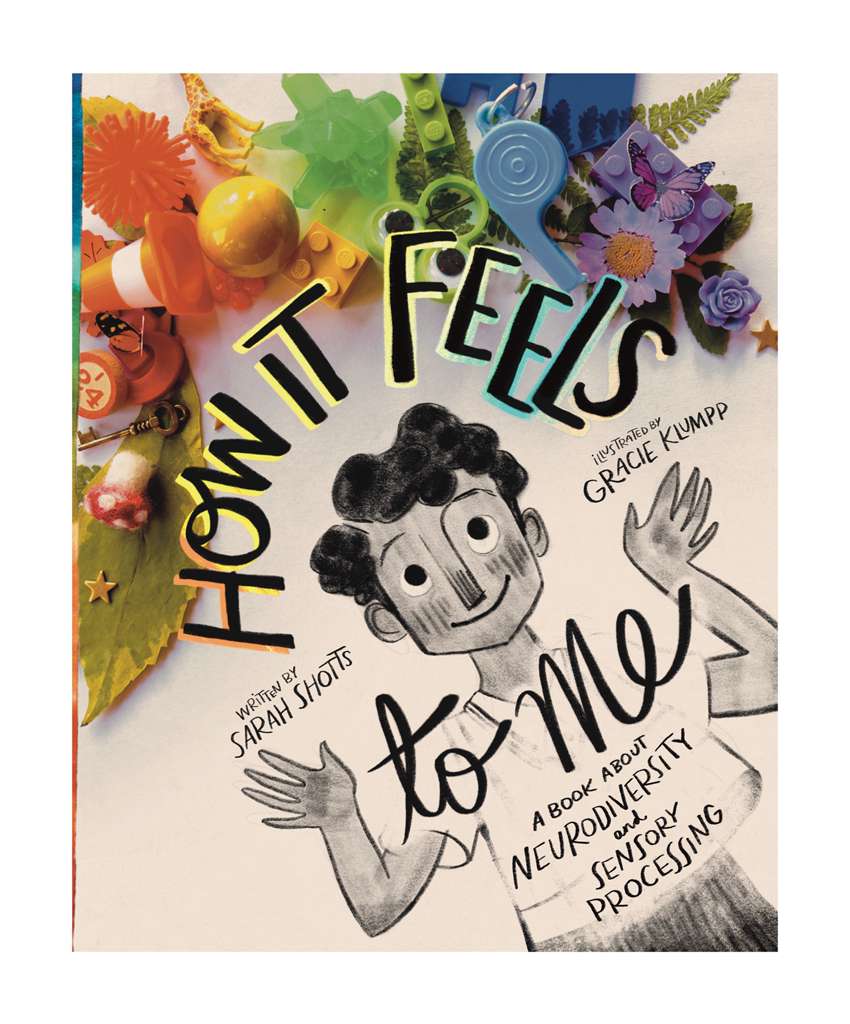
This podcast is sponsored by How It Feels To Me, a picture book about neurodiversity and sensory processing, which I co-created with autistic illustrator Gracie Klump.
Thanks for listening to The Neuro Nest.
You can find links to everything, including show notes and podcast transcripts, at neuronestpodcast.com.