From the Compost Heap header. A pencil style illustration of a compost heap with flowers and plants growing around it. A bee buzzes by and a white rabbit hops by.
  • Rearranged my bookshelf.

    Read more: untitled post 466
  • Test

    Read more: untitled post 485
  • Entwined Blog Hop

    Entwined weaves together stories of creativity and motherhood from mothers on the west coast of America, to Canada, Mexico, and the UK. Contributors include painters, writers, potters, visual artists, musicians, poets, and multipassionates.

    Every mother has their own creative ecosystem. By sharing our stories we hope to inspire you to entwine creativity and motherhood in your own way.

    If you want to know more about this project check out these posts from our virtual blog tour!


    Blog Hop

    Podcasts


    New around here? Subscribe for updates from Sarah Shotts about pursuing creativity as a neurodivergent parent. 💌


    Shoutout to all of the contributors! 🥰

    I’m so honored to have such a brilliant constellation of mothers involved in this project. There are over 55 mothers involved from the writers and cover artists to our editor.

    Creative Team: Twiggy Boyer, Annie King, Emily Jalinksy & Jocelyn Mathewes.

    Anthology Writers: Alexa Villanueva, Anong Migwans Beam, Autumn Fox, Bethany Howard, Christina Marshall, Claire Venus, Emily Perron, Faith Shaw, Hayley J. Dunlop, Joanna Wolfarth, Jocelyn Mathewes, Lauren Oakey, Lindsey Smith, Lisa Mabberly, Mariah Friend, Marisa Pahl, Marina Gross-Hoy, Mary Beth Keenan, Megan Driving Hawk, Natalie Ward, Odeta Xheka, Shelley Wallace, Sheree Mack, Susan Chiang, Vanessa Novissimo Wright, and Zoe Gardiner.

    Ember Contributors: A. Westgate, Alexia Cameron Casiano, Amy Walsh, Catherine Fortey, Chanel Riggle, Ciara Froning, Claire MacKinnon, Daisy Thomasstone, Devon Bennet, Emma Carpendale, Erica Settino, Genevieve Beech, Grace Esteignhagen, Jordan Haley, Kati Overmier, Katie Gresham, Katherine Mills-Yatsko, Kayla Huszar, Lindsay Joseph, Lucy Beckley, Marissa Huber, Mindy Wara, Claudia Plata, Rebecca Potts, Tamsin Chennell, Melanie Webster & more. (Still accepting prompt submissions!)


    Read Entwined’s Origin story.

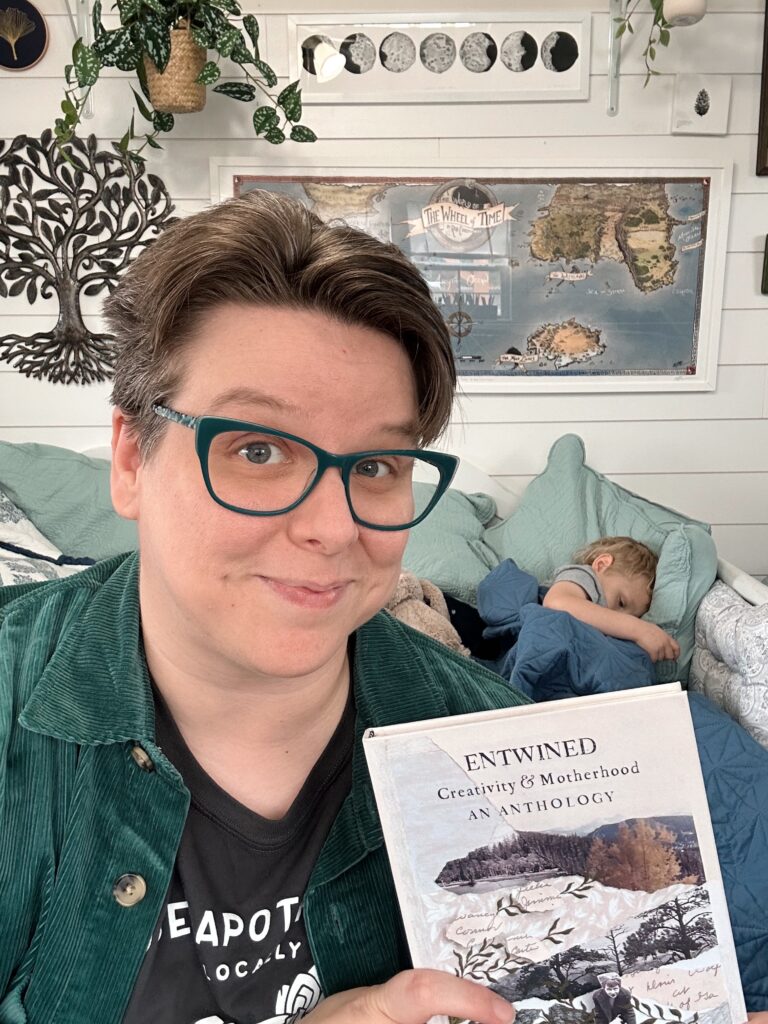
    Entwined Anthology with collage of mother and child on desk with typewriter, magazine clippings, teddy bear toy and Hot Wheels car

    I’ll be turning into goo next week to recover my energy. (Like a caterpillar in a cocoon.) Even gentle book launches are a lot.

    Thanks for your patience with the extra emails. We’ll go back to our normal creative compost heaps next month. I just want this book to reach as many mums as possible.

    Cheers,


    Originally Published to Kindle Curiosity on September 29, 2024

    Read more: Entwined Blog Hop
  • The Five Year Origin Story of Entwined 🌿

    I’m so excited to (finally) open up preorders for Entwined & Ember an anthology and art journal for mums. This passion project has taken a lot of my energy this year along with 55 other mothers who submitted stories, prompts, and art.

    I’ve been working at on this book for almost five years.

    Here’s the origin story as documented on Instagram.

    If you’d rather read more details about the books you can find those here.


    It started when I was seven months postpartum.

    “Last week when I was journaling I accidentally started writing a book. It’s a creative handbook for new mums. Not a one size fits all method, but a series of reflections and prompts to help other mothers nurture their inner artist.”

    Blue journal and pen sit on a desk with sunlight coming in through sheer curtains

    I read SO MANY books about motherhood as research.

    Books that affirmed creativity is good for mental health. Books that explained the myth of equal parenting. I read about burnout and overwhelm and “the art of doing nothing.”1 I read The Artist’s Way and immediately put it down because I needed sleep more than I needed morning pages.

    I took notes on my iPhone. I journaled. I cobbled together the bones of the book I thought I needed. Starting in January of 2020 I went to the library each week to turn these notes into a book while my mom watched David.

    Then COVID quarantine hit.

    I started navigating a deep depression. I wrote my way through it.2

    By June of 2020 I had a rough draft,

    “It turns out the three months I took away from this work were actually very helpful. I’ve had enough distance it’s much easier to make cuts and changes. I’ve also spent that time doing more visual art like pottery and weaving and this is informing my book in a good way… This pandemic is teaching me to honor my creative rhythms and that’s no bad thing.”

    Mother Maker Manifesto first draft typed document with giant bulldog clip holding pages together.

    I made it through one round of edits before I crashed into burn out. Whatever resilience and hyperfocus had propelled me through the early months of the pandemic vanished. My world shifted into survival mode and my manuscript got set to the side.

    When I picked it up again it was like a different person had written it. But that space let me see that my manuscript was actually 2-3 books crammed together.

    I took the first chapter and expanded that into my first book Discover Your Creative Ecosystem. I launched that book in autumn of 2022 and met my goal to break even with self publishing costs.

    Overhead shot of my desk adding library pockets and red maple leaves to the inside cover of my book Discover Your Creative Ecosystem.

    I still wanted the book that I needed as a new mum.

    I just wasn’t sure I had written it.

    Over the next year I considered a lot of avenues for reviving my “creative mama” book. Meanwhile, I was cautious of centering my own narrative because every mama needs different things. Early on in the process I knew I wanted alternate voices in the book, but I wasn’t sure how to weave them in.

    Then I considered an anthology.

    It was the perfect solution! I completely scrapped 30,000 words of my own and started reaching out to mothers I’d like to collaborate with. When Twiggy Boyer agreed to be our cover artist my vision snapped into place.

    The visual team expanded to include Annie King as cover artist for the workbook, Emily Jalinsky for interior illustrated elements, and Jocelyn Mathewes for cyanotype textures.

    Truly a dream team!

    Ember: an art journal for parents. The cover is a burned piece of wood layered with transparent white paint.

    It was my honor to curate the stories and prompts that came rolling in for Entwined & Ember.

    The last year I have been hard at work creating this book, designing the layout, printing proofs, preparing for the crowdfunding campaign, and sending sooooooo many emails to my collaborators.

    This book baby has been gestating for almost 5 years and the last year has been one big “push” process.

    I am so excited (and exhausted) to reach this phase.

    Now I need your help.


    Here are the best ways to support.

    1. Buy a copy. 📖

    Your preorder signals “social proof” that this is a trustworthy project. The first 30% of preorders almost always come from people who know you directly. Then pledges tip into friends of friends. So it’s more important to pledge now and share later.

    1. Donate a copy! 💞

    If you don’t need a copy you can donate a book to your chosen library or nonprofit. This was a huge hit for our picture book project last year so I’m offering it again. You can also donate a copy to be made available to a mum in financial hardship.

    1. Write a review. 🔥

    After reading the the best way to help books reach new readers is to post a review on Amazon (even if you didn’t buy it there). Once a book has 100 Amazon reviews it gets an algorithmic bump which will help new people discover it. If you don’t have an Amazon account you can tell a friend, write a blog post, or ask for a local bookshop to carry it.

    Entwined ebook mockup on iPad

    Yes, there is an ebook version! It is free for parents in financial hardship.


    Shoutout to all of the contributors! 🥰

    I’m so honored to have such a brilliant constellation of mothers involved in this project. There are over 55 mothers involved from the writers and cover artists to our editor.


    Ways to Support drawing of a white rabbit hopping into flowers

    We need your help to bring this project to life!

    Here are the best ways to lend your support: preorder, donate a copy, or share!

    Brownie points for interacting with posts on social media. Every comment, heart, emoji, or save helps signal to the algorithm that this is worth reaching more people. If you don’t have capacity to write a thoughtful comment I welcome a string of celebratory emojis! 🥳🌿🥰💫

    I’m really excited to bring this to life! If you’d like to chat with one of the mother artists on your podcast, Instagram Live, or blog please reach out. I’d love for this project to reach as many mamas as possible.

    Cheers,

    Sarah signed with a swoopy S

    P.S. If you haven’t watched the crowdfunding video yet do it now! It took 7 hours to edit and was a hyperfocus delight. There are dozens of short clips of everyday life woven together with a peek at our newest proof.

    Screencap of video editor for Entwined crowdfunding video

    1 Are you interested in a creative parent reading list? I have all the titles saved here.

    2 Shoutout to my fellow hyperfocus buds Alexander Hamilton and Lin Manuel Miranda. (Also, why do GIFS only move half the time Substack?!)

    Gif of Alexander Hamilton in musical singing "I pick up a pen, and I write my own deliverance." while cast members dance around him.

    52 Likes

    12 Restacks

    Read more: The Five Year Origin Story of Entwined 🌿
  • Home Education

    A record of the books and resources we are using for home education.

    We didn’t buy everything at once, but have been collecting resources gradually.

    Books laying on an outdoor table including a children's dictionary and handwriting book
    A Note on Affiliate Links

    All of the links you’ll find here point to Bookshop.org. This is a cool bookshop where online orders can support your local bookstore. (Yes, yours!)

    My intention is to give you all the information you need to buy the book wherever you wish. (Including secondhand! We often buy books secondhand. Our favorite used bookshops and tips for finding books on a budget are at Free and Secondhand Books.

    You can see all our home education books in one place click here.

    Aside from Bookshop.org none of the links on this page are affiliate.

    Science 🐞

    Child holds Insect Field Guide over face

    Insects of North America Pocket Guide

    Gorgeous photos. Easy navigation. It holds a LOT considering it’s size.

    So far we’ve found 2 bugs that weren’t included. Yellow Jacket we found in the dictionary. Milkweed Beetle we identified with iPhone’s visual look up feature.
    Even if it doesn’t have every insect, it’s nice to have a physical book to flip through. I keep our field guides on the table each morning while we have breakfast outside.

    No word of a lie – while I was typing this up David spotted a butterfly out the window I asked him what kind it was and he said – correctly, “Western Tiger Swallowtail.”

    Hand holding Birds of Arkansas book with sunflower leaves in the background

    Birds of Arkansas

    Again, beautiful photos. Color coded by the predominant color of the bird. I loved having an option that only included birds local to us. There is whole series of these.

    Cloudspotting books

    David’s been asking a lot of questions about clouds so I recently purchased Cloudspotting for Beginners and The Cloud Collectors Handbook.

    Both were recommended by Austin Kleon. The smaller one has photographs and the larger one has colored pencil style illustrations (like the cover.)

    For biology we are using (out of print) flapbook Usborne See Inside Your Body.

    And of course the Magic School Bus books. (And these out of print unit study books.)

    Cover of Magic School Bus Lost in the Solar System. Yellow bus rocket ship flying past saturn.

    I’m also starting to save Science Experiment Ideas for all ages.


    Language Arts 📖

    Children's Dictionary with color coded letters

    Webster’s Children’s Dictionary

    Gorgeous full color photographs. Lovely to peruse and easy to look up definitions. Letters are color coded in rainbow order.

    This also inspired me to buy my childhood dictionary, because it’s so nostalgic. This 80’s dictionary has fewer images, and they are all illustrations, but I love it. This book represents the beginning of my love affair with learning new words.

    Webster's Elemetary Dictionary yellow cover with push pins

    Language Games are really big for us as David has an asymmetrical experience with spoken language and reading.


    Handwriting

    We love these handwriting fonts to make our own printables with David’s name and the names of characters he loves. These are designed by a Canadian teacher. I love that these include right and left handed! Don’t miss the free printables.

    Handwriting sheet with ZELDA

    We have two different pencil grips. This one really tells all your fingers what to do. And this one is more of a gentle suggestion to open your web space.

    We also use the iTrace handwriting app.

    And a wipe off copy of Alphaprints Workbook (pictured at the top of this page.)

    I’m also making notes ar Holistic Handwriting to document creative approaches to handwriting that overlap with art.

    We’ve also added a magnetic poetry set recently for sentence building.

    Not to mention tons and tons of picture books and early chapter books. We love reading together. Maybe I’ll write about those another time.


    Social & Cultural

    I wanted a book to introduce the concept of homeschool and was so pleased to find this one written from the perspective of a picture book author & artist who was home educated.

    I’m including a few spreads just to give an idea of the style.

    Picture book This is My Home This is My School by Jonathan Bean. Illustrated house with child outside.
    Illustrated picture book of a homeschool classroom an energetic cluttered space filled with books plants and life
    Illustrated picture book of homeschool classrooms carpentry, baking, music, and exploring nature.
    Illustration of astronomy class with telescope and family reading in bed

    History ⏳

    Davy’s reading above his grade level and he is loving Magic Tree House books. We read them together and he also listens to the audiobooks (with his Yoto Player) to fall asleep. These would be great to inspire unit studies and there are companion books (called Fact Trackers) about the historic setting of each adventure.

    These books combine magic and history so if that’s not your thing this series is not for you.


    Art 🖍️

    I’ve taught art on and off since 2004. So I thought I’d share my favorite art supplies for kids. None of these are affiliate links.

    Prang Watercolors have the most pigment of any student watercolors.

    Crayola Crayons are worth paying extra for (for the same reason – there is nothing worse than a crayon that barely colors.)

    Crayola Slick Sticks glide almost like oil pastels. I learned about them from Austin Kleon.

    Stabilo Woody Pencils are similar with no plastic. I find they hold up better and are less apt to break. They’re expensive, but long lasting. I like drawing with them myself. You can also add water and use them like watercolor pencils. Or use them on wipe off booklets or windows.

    Kitpas Block Crayons are also creamy and delightful. I got lost of questions about them when I made my post coming out as nonbinary and queer.

    2023-06-Pride-Flag-Kitpas.jpg

    Canson Watercolor Paper is a great quality for the price and you can even find it at Walmart. Their mixed media paper is also good. The thickness really does matter for watercolor painting – thin paper will wrinkle up.

    For day to day drawing we use Melissa & Doug’s sketchpad or a roll of IKEA paper. But for pencil and crayon pretty much anything you have on hand will work fine – recycling cardboard and cereal boxes can be great for crayon and markers.


    Cooking & Baking 🥄

    Food Play board book of very simple food prep and activities by Amy Palanjian (she also shares tons of recipes for free on her blog and IG and has a flexible meal plan that we subscribe to.)


    Music 🎹

    De Colores a beautiful board book with lyrics to this song.

    Everything Grows another lovely book with lyrics to this song by Raffi. This has diverse representation in the illustrations. The lyrics are structured around a gender binary (boys & girls, brothers & sisters). I still love it.

    This whole series is great. We also love Baby Beluga.

    Little Prodigies Podcast is really fun to sing along to in the car.


    Am still researching language options.

    Considering gestalt language processing I’m looking into the audio lingual method. I want to prioritize learning phrases and songs (versus vocabulary and grammar conjugation.)

    Español 🇪🇸

    Saving this sample lesson to try.
    Japanese 🇯🇵

    Japanese Songs

    More resources and more

    Free printable curriculum from University of Oregon


    Apps 💫

    We tried minimal screentime for a long time, but when I started including more videos & apps Davy’s spoken language exploded. (We are both autistic and he was late to speak.) I am very selective with the apps we use. Here are some of our favorites.

    I often prefer to pay for apps because they don’t have ads. I’m not including any apps that constantly ask for upgrades or unlocking new content.

    Interactive Books

    There’s a Monster at the End of This Book

    The Tale of Peter Rabbit

    Music

    Prodigies Bells (Free! There’s a very cool game called Pitch Quiz that would be great for all ages.)

    Sesame Street defies category, but one of the reasons we love it is clips from classic Sesame Street including the songs Nathan & I grew up with. There are also games and clips from new shows. But no full episodes.

    Science

    Little Mouse’s Encyclopedia (Free & paid versions. A little mouse explores ecosystems. Lovely illustrations. Gentle music.)

    Geography

    Barefoot Books Atlas App David loves the flag matching game. He knows African countries better than I do now. (There’s also a book version I just found and ordered used for $5.)

    Math

    Numberblocks (Based on the UK show. A paid app and worth every penny. David has used this app to teach himself multiplication and other advanced math concepts in self directed play. There are games as well as clips from the show.)
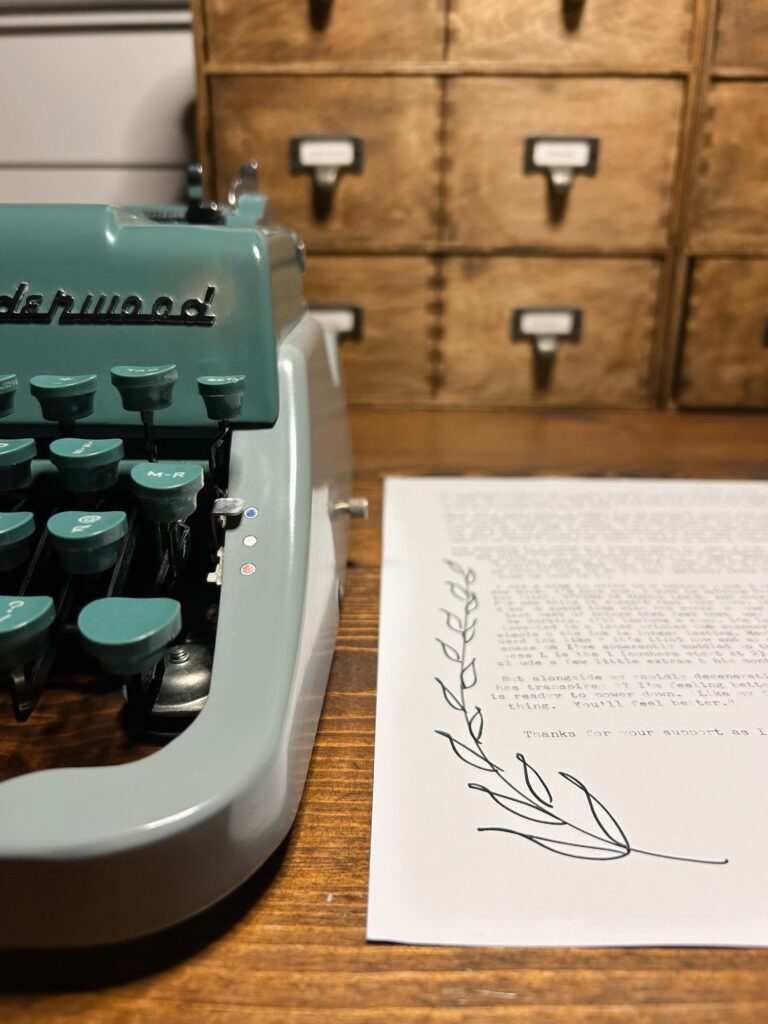
    We made Numberblock counting beads with pony beads and pipecleaners that we are now using to learn about currency.

    Khan Kids (Free! This one is new to us and includes math and reading. You choose the grade level Pre K – 2nd grade.)

    Puzzles

    Monument Valley This is a beautifully designed puzzle game designed for adults, but David loves it. It has an M.C. Escher inspired style and could tie in well with an art history lesson.

    Polygrams Tangrams & a slow paced TETRIS style puzzle game. Muted color palette. No timer.

    Preschool

    David is outgrowing these, but at 3-4 he loved…

    Colorblocks (Similar to the Numberblocks app, but for colors.)

    The Very Hungry Caterpillar


    (Le, gasp!) TV 📺

    There are lots of reasons TV is a great educational resource for autistic kids. It’s multi media (visual, auditory). You can turn on the captions. Professional actors are dynamic and engaging (this is especially helpful for late talkers with gestalt language processing.) Kids can watch the same thing over and OVER to absorb the material.

    That said, I’m pretty discerning about what we watch. Mostly so I don’t end up overstimulated myself. And also because David is likely to echo or mimic nearly everything he sees (it’s a neurodivergent way of learning.)

    Our favorite shows are:

    Magic School Bus (Netflix)

    Old and new versions – we love them all.

    Magic School Bus transforms into rocket

    Puffin Rock (Netflix)

    A very gentle show that teaches both social skills and nature. It’s by the BBC so it has a gentle musical score and narration.

    Puffins blowing a feather

    Numberblocks & Colourblocks

    We love almost everything by the BBC better than American TV. 🤷

    In the US these shows are on Netflix (although they don’t have all the episodes.)

    There’s also Alpha Blocks, but Davy was an early reader so he never took to it.

    Sesame Street

    Davy watches this mostly on the Sesame Street App because even when we did subscribe to HBO it doesn’t have all the archives.

    Super Grover wears cape and knight's helmet flying across the sky

    Reading Rainbow

    It’s hard to find these episodes, but Nathan tracked some down on Internet Archive (and there are a few on Amazon and YouTube.) Sure, the live action is dated, but narrating picture books is timeless. Also, Levar Burton is a national treasure.

    Daniel Tiger

    Before Davy could talk he would hum songs from Daniel Tiger as communication. I also find they are very useful to play before we do something new (go to the doctor, gymnastics class, etc.) For those who haven’t heard of Daniel Tiger – it’s an animated series inspired by Mr. Roger’s Neighborhood.

    My Neighbor Totoro

    This is the first film Davy watched all the way through so it has a special place in my heart. Sometimes we watch in Japanese with English subtitles turned on. Watching favorite shows (the ones you’ve seen a million times and have memorized) can be a great tool for language immersion.

    Gif-Totoro-Butterflies.webp

    Traditional Curriculum 🍎

    I’m mostly using a home brew approach (meaning I’m making my own curriculum from books and various resources), but we may weave in more traditional home ed materials for certain subjects.

    For preschool we used Oak Meadow’s Seasons of Wonder – which is full of poems, songs, and crafts for each season. There’s still plenty here for us to weave in throughout elementary years.

    Likewise we invested in a Montessori moveable alphabet when we were all in on Montessori. We’ve diversified our approach, but are still using that material for spelling, writing, and punctuation.

    Montessori alphabet hands are moving letters to spell sit

    We are also trying out the free Language Arts curriculum from The Good & the Beautiful. It’s made up of illustrated workbook pages and they offer PDF versions for free.*

    Heads up – this is a Christian curriculum, but from what I’ve seen so far it hasn’t proven to be overly religious. Your mileage may vary. You can also pay for printed materials if you prefer that to digital.

    Prodigies Music Curriculum is the biggest financial investment we’ve made in home ed so far. We signed up for this before David was talking and singing “Do Do Do” and “Re Re Re” were some of his first voiced sounds. It’s an investment, but the quality is excellent and I believe is a great fit for neurodivergent brains.

    You can start out with their free resources to try it out. If you don’t want the video lessons you could also buy a songbook and a set of bells from Amazon (that’s where we got ours – we painted them to match.) Or try their free app!

    Read more: Home Education
  • Rediscovering the Gift Economy

    (Or) The Internet Before It Became a Capitalist Hellscape

    The year is 1999.

    Every morning I sit down at a computer that looks roughly like this:

    Screenshot of Meg Ryan in You've Got Mail. She is at her bookshop with a blocky gray 1990s desktop computer on the counter.
    You’ve Got Mail, 1998

    And I engage with an Internet that is much different than our own. Rather than being served up content from various data mining corporate entities I am very intentional with how I spend my time.

    1. I doodle while listening to this insufferable sound as I waited for the Internet to load.
    2. Log into Wotmania and check the message boards. (Every single day.)
    3. Check my email – hosted through the local phone company. There were so few messages each one was actually exciting.
    4. Visit other websites by “surfing the web” either from website to website through hyperlinks or typing very specific and intentional search terms into search engines. When I found something I loved I would bookmark it to come back to.
    5. Join a virtual scavenger hunt called Cyber Surfari where search engine Lycos partnered with various collaborators to hide clues across websites for participants to find. It was sponsored by Discovery Channel, Hewlet Packard, and National Education Association. The time I spent participating in Cyber Surfari had an outsized impact on my ability to find what I’m looking for online.
    Tiny screenshot of Cybersurfari website. Pale yellow text and pixelated icons on a black background. Gray and blue windows border around the frame.

    4. When I did find what I wanted I often printed it out. One printout I still have in the attic is Lewis Carrol’s Eight or Nine Wise Words About Letter Writing. I also printed quotes and images (rarely because ink was expensive) for my actual cork board.

    6. Log into NaNoWriMo message boards every day of October and November.

    Screenshot of National Novel Writing Month circa early 2000. A plan white website with black text and an illustrated typewriter.

    6. Save drafts of my novel on 3 1/2 floppy disks.*

    Three sizes of floppy disks on a white table.
    The smallest of these 3 and the only floppy disk which wasn’t actually floppy. We used the larger kind when I was a kid. Source.

    The Internet wasn’t “better” but it was more intentional.

    Furthermore, what we’ve gained in image resolution and loading times we’ve lost in connection. Those early days of the Internet it felt like a playground of possibility. Websites weren’t easy to monetize yet.

    Everything on the Internet was a labor of love.

    Writing, images, even software was given freely.

    No one was using click bait because the structures that favored clicks weren’t yet created. Websites were shared and linked to because users found them interesting or funny.

    Over the last 6 months I’ve done a deep dive into the “early” Internet.

    Rory Gilmore researching for a newspaper article at night

    I took over 10,000 words of notes from various articles and books (which you can trawl here). I have more than enough to write a scholarly article. But now that I’m here I don’t really care to use them.

    It’s not about pointing with forensic clarity at the moment the Internet “changed.”

    (But I am wondering… when did we stop capitalizing it?)

    There was no single moment of corruption. Over time capitalism did capitalism. Spaces became monetizable and websites with a lot of traffic began to monetize.

    There are definitely benefits. Artists & makers & authors can find new audiences and patrons can support creators to keep doing what they love.

    But there’s also * waves hands * the rest of the garbage that came with monetization. The algorithms, the data collection, the noise, the click bait, the paywalls, the walled gardens, the misinformation, and the rise of reactionary content.

    Most of the time the Internet feels like this:

    Broadsheet of Fire in Sky from 1560. Source.

    But it didn’t always.


    The early Internet was a gift economy.

    Because there wasn’t a robust system of monetization the incentive you had to create online was to contribute to a growing gift economy.

    There was a culture of creating to share with others – from flashing GIFs, to “seamless” tiled backgrounds, to fan message boards. Artists and coders made free wallpapers and screensavers and even free software called “freeware.” I was part of a “sig tag” group where members used fonts and clip art to make signatures you could attach to “sign” your email. We’d type in each member’s name (around 15-20) and email the image files for the group.

    You gave your time and energy and others were generous in return. It wasn’t barter or trade. No one was keeping a tally of how much each person contributed. But there was an overwhelming spirit of generosity and reciprocity.

    Over the last year I’ve reconnected to the Wheel of Time fandom.

    Coming from the “creative entrepreneur” corner of the Internet it has been a complete culture shock (of the best kind.) And it reminds me of my early days online. It’s no coincidence that this fandom has been around since the early days of the Internet on forums like Theoryland and Dragonmount.

    Robert Jordan's The Wheel of Time large blue books in a line
    14 Blue Wheel of Time Books (image credit: Juniper Books)

    The Wheel of Time fandom still functions in a gift economy.

    For most of us it is not a job. It’s our passion. Among this fandom I have seen a depth of generosity that seems unfathomable.

    A gift economy functions because when you feel the warmth of generosity you want to contribute. When you walk into a new space and are welcomed you turn and welcome the next person. When you see someone create a cool fanwork you want to join in.

    I wrote a bit about this last August.

    One year later, I’ve found clarity.

    I cannot continue to pivot between these paradigms anymore.

    It’s dizzying.

    I want to engage in the Internet as a gift economy.

    I have no interest in selling art, content, memberships, or courses. Every time I have charged for this kind of content it has felt like I am pulled off course. I’ll continue writing and selling books, but I have no intention to leave my day job and become a “full time” writer. That allows me to make what I want without focusing on creating content that “converts to sales.”

    I don’t begrudge anyone who chooses a different path.

    If you’re a full time artist be a full time artist. I love that for you. I support lots of creatives online and will continue to do so.

    But if the capitalist framework isn’t sitting well for you there is another way.

    Your art isn’t any less valuable if you gift it.

    Is a handsewn quilt less valuable than a bedspread from Pottery Barn?

    Of course not.

    We need to stop letting the dominant culture brainwash us into undervaluing the gift exchange.

    What if we treated the Internet as a communally tended garden?

    Or a fermenting compost heap?


    But how would that work?

    Promotional photo for Ghost Writer. Three 90s kids gathered around a blocky desktop computer smiling and looking cool.
    To be fair, this is early 90’s, but I had to shoutout my show Ghostwriter.

    Let’s Internet like it’s 1999

    1. Create from your passion. Forget everything you’ve been told about offering value, funneling customers, and capturing eyeballs. Be authentically you and I guarantee that will resonate with someone.
    2. Give freely. I’m not going to begrudge you a shop or a paywall, but if you want to Internet like it’s 1999 most of what you offer is going to be for free. When you give freely people will want to support you when they have the opportunity to do so. A lot of the people harping on about funnels actually built their careers over decades of working for free. But they can’t sell you a $$$ marketing course for that.
    3. Spend your time and energy engaging with, appreciating, and sharing work that other people make. You are not the main character of this story. It is about us all.
    Gif of Nynaeve from Wheel of Time standing at a river and saying, "We all stand with you."

    Time to walk the walk

    I’m in the process of removing the paywall here on Substack.

    This month I’ve unlocked another session of Camp Kindle. (Last month I unlocked the Wonder session.) I created both of these for adults, but I’ve heard families really love doing the activities together.

    Vintage photograph of Girl Scouts refilling a water barrel at camp. They are in uniform and smiling.
    Vintage Photograph of Girl Scouts filling water bucket at camp. To my memory this was scanned from my personal collection and is archived here.

    If you’d like to support my work you can:


    Let’s Discuss

    To everyone: How can we create spaces of reciprocity and connection in an online world that wants us to see each other as a “target audience”? How do we reframe the value of our work outside of capitalism?

    To creative business owners: How can we make our businesses less extractive? How might we contribute to a gift economy alongside work that we do charge for?

    Cheers,

    Sarah signed with a swoopy S

    P.S. If you missed last month I’ve decided to remove the paywall and send snail mail to my paying supporters instead. You can read that here.

    ** Personally I experienced the crush of change online between 2013 and 2016 (which incidentally is the time we stopped capitalizing the Internet… maybe there is something there.)

    *** To bring more intentionality into my own Internet experience I’m spending more time on RSS and less time on apps, using Ecosia instead of Google (the AI snippets are killing me), and burrowing into my cozy Discord groups.

    Read more: Rediscovering the Gift Economy
  • Draft no. 4

    by John McPhee

    Cover of John McPhee's Draft No. 4 simple cream cover with typewriter font

    This book is half writing craft / half memoir. Here are some of his gem’s about writing.

    First, one of the graphs that inspired me to buy the book. I am fascinated how he thinks so visually about his structural process.

    Flatlay of book showing shapes like circles on a line and a spiral


    (The book was second hand and dog eared when I bought it.)

    Notes on Structure

    Almost always there is considerable tension between chronology and theme, and chronology traditionally wins.

    McPhee is talking about non fiction here, but this is doubly true for novels.

    Readers are not supposed to notice the structure. It is meant to be about as visible as someone’s bones.

    a basic criterion for all structures: they should not be imposed upon the material. They should arise from within it.

    This is a very actionable step.

    Often, after you have reviewed your notes many times and thought through your material, it is difficult to frame much of a structure until you write a lead. You wade around in your notes, getting nowhere. You don’t see a pattern. You don’t know what to do. So stop everything. Stop looking at the notes. Hunt through your mind for a good beginning. Then write it. Write a lead.

    I would go so far as to suggest that you should always write your lead (redoing it and polishing it until you are satisfied that it will serve) before you go at the big pile of raw material and sort it into a structure.

    I wonder if writing a novel that is underpinned with research and note making could move forward similarly to the process of writing non fiction. I’m curious about this as I am someone who is more comfortable writing non fiction and trying to find my feet with novels.

    The lead—like the title—should be a flashlight that shines down into the story. A lead is a promise. It promises that the piece of writing is going to be like this. If it is not going to be so, don’t use the lead.

    More stunning imagery. I love the idea of the lead as a flashlight shining down through a story.

    Another way to prime the pump is to write by hand… get away from the computer, lie down somewhere with pencil and pad, and think it over. This can do wonders at any point in a piece and is especially helpful when you have written nothing at all. Sooner or later something comes to you. Without getting up, you roll over and scribble on the pad. Go on scribbling as long as the words develop. Then get up and copy what you have written into your computer file.

    Another actionable tip. And yet acknowledging what works for him is not universal:

    Alternating between handwriting and computer typing almost always moves me along, but that doesn’t mean it will work for you.

    Finding Your Style

    Young writers find out what kinds of writers they are by experiment.

    If they choose from the outset to practice exclusively a form of writing because it is praised in the classroom or otherwise carries appealing prestige, they are vastly increasing the risk inherent in taking up writing in the first place. It is so easy to misjudge yourself and get stuck in the wrong genre.

    You avoid that, early on, by writing in every genre. If you are telling yourself you’re a poet, write poems. Write a lot of poems. If fewer than one work out, throw them all away; you’re not a poet. Maybe you’re a novelist. You won’t know until you have written several novels.

    This is so interesting. Particularly the bit about getting stuck writing in a way that was praised in school.

    Young writers generally need a long while to assess their own variety, to learn what kinds of writers they most suitably and effectively are…

    “Though a man be more prone and able for one kind of writing than another, yet he must exercise all.” Ben Jonson

    One of my favorite quotes in the book.

    No one will ever write in just the way that you do, or in just the way that anyone else does. Because of this fact, there is no real competition between writers. What appears to be competition is actually nothing more than jealousy and gossip. Writing is a matter strictly of developing oneself. You compete only with yourself. You develop yourself by writing. An editor’s goal is to help writers make the most of the patterns that are unique about them.

    On omission and selection,

    Writing is selection.

    … You select what goes in and you decide what stays out. At base you have only one criterion: If something interests you, it goes in—if not, it stays out.

    … Forget market research. Never market-research your writing. Write on subjects in which you have enough interest on your own to see you through all the stops, starts, hesitations, and other impediments along the way. Ideally, a piece of writing should grow to whatever length is sustained by its selected material—that much and no more.

    Drafting

    McPhee on the difference between drafts and a ratio of how long each draft takes that he observed in his own writing over time.

    First drafts are slow and develop clumsily because every sentence affects not only those before it but also those that follow. The first draft of my book on California geology took two gloomy years; the second, third, and fourth drafts took about six months altogether. That four-to-one ratio in writing time—first draft versus the other drafts combined—has for me been consistent in projects of any length, even if the first draft takes only a few days or weeks. There are psychological differences from phase to phase, and the first is the phase of the pit and the pendulum. After that, it seems as if a different person is taking over. Dread largely disappears. Problems become less threatening, more interesting. Experience is more helpful, as if an amateur is being replaced by a professional. Days go by quickly and not a few could be called pleasant, I’ll admit.

    I’m intrigued to see him using the same metaphor as Neil Gaiman [[Throwing Mud at the Wall]]. I wonder who said it first and if one is referencing the other or if it arose naturally because it is so fitting to the task at hand.

    The way to do a piece of writing is three or four times over, never once. For me, the hardest part comes first, getting something—anything—out in front of me. Sometimes in a nervous frenzy I just fling words as if I were flinging mud at a wall.

    And in a letter to his daughter (writer Jenny McPhee),

    You finish that first awful blurting, and then you put the thing aside. You get in your car and drive home. On the way, your mind is still knitting at the words. You think of a better way to say something, a good phrase to correct a certain problem. Without the drafted version—if it did not exist—you obviously would not be thinking of things that would improve it. In short, you may be actually writing only two or three hours a day, but your mind, in one way or another, is working on it twenty-four hours a day—yes, while you sleep—but only if some sort of draft or earlier version already exists.

    In another letter to Jenny,

    Dear Jenny: What am I working on? How is it going? Since you asked, at this point I have no confidence in this piece of writing. It tries a number of things I probably shouldn’t be trying. It tries to use the present tense for the immediacy that the present tense develops, but without allowing any verb tense to become befouled in a double orientation of time. It tells its story inside out. Like the ship I’m writing about, it may have a crack in its hull. And I’ve barely started. After four months and nine days of staring into this monitor for what has probably amounted in aggregate to something closely approaching a thousand hours, that’s enough. I’m going fishing.”

    Fiction

    Art is where you find it. Good writing is where you find it. Fiction, in my view, is much harder to do than fact, because the fiction writer moves forward by trial and error, while the fact writer is working with a certain body of collected material, and can set up a structure beforehand.

    “Fiction must stick to facts, and the truer the facts the better the fiction—so we are told.” Virginia Woolf, A Room of One’s Own.

    Editing

    An editing tip he uses himself and taught his students at Stanford,

    You draw a box not only around any word that does not seem quite right but also around words that fulfill their assignment but seem to present an opportunity.

    While the word inside the box may be perfectly O.K., there is likely to be an even better word for this situation, a word right smack on the button, and why don’t you try to find such a word? If none occurs, don’t linger; keep reading and drawing boxes, and later revisit them one by one. If there’s a box around “sensitive” because it seems pretentious in the context, try “susceptible.” Why “susceptible”? Because you looked up “sensitive” in the dictionary and it said “highly susceptible.” With dictionaries, I spend a great deal more time looking up words I know than words I have never heard of—at least ninety-nine to one. The dictionary definitions of words you are trying to replace are far more likely to help you out than a scattershot wad from a thesaurus.

    On knowing when he is done,

    When am I done? I just know. I’m lucky that way. What I know is that I can’t do any better; someone else might do better, but that’s all I can do; so I call it done.

    William Shawn, McPhee’s Editor at The New Yorker when asked how he has so much time to work with each writer on the smallest details,

    “It takes as long as it takes.”

    McPhee’s advice on maintaining your voice when working with editors,

    There are people who superimpose their own patterns on the work of writers and seem to think it is their role to force things in the direction they would have gone in if they had been doing the writing. Such people are called editors, and are not editors but rewriters.

    My advice is, never stop battling for the survival of your own unique stamp. An editor can contribute a lot to your thoughts but the piece is yours—and ought to be yours—if it is under your name.

    And then on how invaluable editors can be,

    Editors are counselors and can do a good deal more for writers in the first-draft stage than at the end of the publishing process.

    The help is spoken and informal, and includes insight, encouragement, and reassurance with regard to a current project.

    Confidence and Imposter Syndrome

    If you lack confidence in setting one word after another and sense that you are stuck in a place from which you will never be set free, if you feel sure that you will never make it and were not cut out to do this, if your prose seems stillborn and you completely lack confidence, you must be a writer.

    And unless you can identify what is not succeeding—unless you can see those dark clunky spots that are giving you such a low opinion of your prose as it develops—how are you going to be able to tone it up and make it work?

    This is encouraging because this is the same reframe I used when returning to fiction writing after giving it up. If I see the problems I can work on fixing them.

    Notes on Technology

    Howard thought the computer should be adapted to the individual and not the other way around. One size fits one.

    Howard was a computer programmer who helped McPhee customize the software he used.

    Hat Tip to Austin Kleon

    Read more: Draft no. 4
  • Emotional Contagion

    I first heard about the Emotional Contagion scale while reading Becca Caddy’s screentime. It is a scale to measure how likely you are to take on emotions of others.

    The academic study says the mean (average) is 3.62.

    My score is 60 and I am more likely to take on negative emotions (anger, fear, anxiety).
    That means I’m having an experience that is markedly more intense than most people have when exposed to the same content.

    This explains why some people can drink from the “the internet firehose” (as John Naughton calls it) and still function in daily life while I find it impossible to continue coping if I am constantly exposed to anxiety inducing news or angry people shouting at each other. Witnessing intense emotions it physiologically overstimulating and causes dysregulation.

    The scale itself is in this PDF if you’d like to see what your results are. It’s based on self reporting your reactions to emotion so it does require a level of self awareness for an accurate score.

    Most people would be surprised by this because the stereotype is that autistic people lack empathy (which may be because we sometimes emote or react differently) whereas many of us are in fact hyper empathetic. Katherine May mentions that in this podcast chat with Glennon Doyle.

    It’s the same old story of autistics being told we are “worse at” dealing with something when we are in fact having a completely different experience. The test involves physiological reactions that your body has to emotional content and I’m amazed that most people don’t feel these things in their body. Food for thought as I consider boundaries with online platforms during an election year.

    Read more: Emotional Contagion
  • Leap Before You Look (2015)

    By Helen Molesworth


    These early index cards were specifically collected for ideating the type of creative community I want to cultivate.

    Handwritten index cards. Quotes typed below.

    There are a lot of threads to pull on here.

    “the aspirations of Black Mountain College: namely to inspire us in an expansive notion of the arts and creativity through close observation, physical engagement, service, and play…”

    Jill Medvedow (p. 18)

    Keeping an expansive view of art and what it can do and be. It also feels important that creativity can both be of service and play which so often seem at odds with one another.

    Handwritten index cards. Quotes typed below.

    “artistic exchange” and “the cultural ecosystem is a theme”

    Jill Medvedow, p. 18

    “the effect of a long gestation period cannot be under estimated”

    p. 20

    “Josef Albers insisted that art display a rigorous understanding of its material properties.”

    p. 25

    Handwritten index cards. Quotes typed below.

    This quotes are at the heart of a desire for social change. It still feels very radical to value the wisdom of youth. And also the focus on practical learning.

    “We must realize that the world as it is isn’t worth saving; it must be made over.”

    John Rice, p. 30

    “We should realize there is a wisdom of youth as well as wisdom of old age.”

    John Rice, p. 31

    “There are things to be learned through observation (that) cannot be learned any other way.”

    John Rice, p. 31

    Handwritten index card. Quotes typed below.

    “Whatever cannot be expressed in words cannot be learned in words.”

    John Rice, p. 31


    This ties in to a conversation I had with Morgan Harper Nichols and this idea that art is a form of communication.

    It feels very relevant to Neurokind as platform to share experiences that may transcend or defy language.


    Black and white photograph of white man lighting pipe
    John Andrew Rice and student David Bailey, Blue Ridge campus, Black Mountain College, circa 1933 or ’34

    “…there is something of the artist in everyone and the development of this talent, however small, carrying with it a severe discipline of its own, results in the students becoming more sensitive to order in the world and within himself than he can ever be through intellectual effort alone.”

    John Rice, Black Mountain College Bulliten, 1935 (p. 34)

    Black and white photograph of Buckminster Fuller, Elaine de Kooning, and Josef Albers in field of collapsed geometric dome at Black Mountain College.
    Bucky Fuller, Elaine de Kooning, Josef Albers, students, and a thing that would become, a year later, the first geodesic dome

    “The summer sessions permitted an extraordinary form of cross-pollination.” 🐝🐝🐝

    “Almost none of the summer faculty was paid a salary but received instead room and board and some relaxing time in the country.”

    Helen Molesworth , p. 42

    “The summer sessions modeled a form of artistic community, one that de Kooning took with him to New York in 1950, when he helped to found the Artists’ Club, a gathering dedicated to the presentation of avant-garde ideas.“

    “Black Mountain helped to establish the idea that an art school is a place of competing and diverse ideas, where the task of the faculty is to commit to a sense of rigor instead of personal taste, and the job of the students is to navigate the complexity of the options, in the hope of finding their own paths through what John Cage called “the big question,” namely, “What are you going to do with your time?”[^3]

    Helen Molesworth, p. 45

    “the relation is not so much of teacher to student as of one member of the community to another.”

    Black Mountain College Catalogue
    Leap Before You Look, p. 80

    “In essence there exists the utmost freedom for people to be what they please. There is simply no pattern of behavior, no criteria to live up to. People study what they please, as long as they want to, idle if they want to, graduate whenever they are willing to stand on examination, even after only a month here, or a year, or whatever, or they can waive all examinations, and graduations. They can attend classes, or stay away. They can work entirely by themselves, or they need not work whatever. They can be male, female, or fairy, married, single, or live in illicit love.”

    Jack Tworkov , p. 42

    These examples highlight an egalitarianism and exchange of ideas that I’d like to foster in creative spaces I facilitate.


    Students and John Andrew Rice sitting outside a stone building

    John Andrew Rice holding court with students (including Dave Bailey, in hat), Black Mountain College, circa 1933 or ’34

    “What you do with what you know is the important thing. To know is not enough.”

    John Rice, pg. 77

    “There were no letter grades at Black Mountain College, nor were there required courses, set curricula, standard examinations, or prescribed teaching methods.”

    “When John Rice established Black Mountain College in 1933, he sought to create a school that dissolved distinctions between curricular and extracurricular activities, that conceived of education and life as deeply intertwined, and that placed the arts at the center rather than at the margins of learning.“

    “For Rice, education was registered not by grades or other standard criteria but in a heightened desire to learn and to question, which would lead students to an expanded aptitude for solving a range of problems and to a richer sense of self.”

    Ruth Erikson, p. 77


    “WE DO NOT ALWAYS CREATE ‘WORKS OF ART,’ BUT RATHER EXPERIMENTS; IT IS NOT OUR AMBITION TO FILL MUSEUMS: WE ARE GATHERING EXPERIENCE.”

    Josef Albers, p. 33

    Josef Albers giving Nan Chapin (and others) painting pointers, Lee Hall porch, Blue Ridge campus, Black Mountain College, spring 1936

    Josef Albers giving Nan Chapin (and others) painting pointers, Lee Hall porch, Blue Ridge campus, Black Mountain College, spring 1936

    “Josef Alber’s thought of teaching art as analogous to teaching a language, hence the students had to begin with the building blocks of aesthetics; he called drawing a ‘graphic language’ that was both a ‘visual and manual act.’ “

    “Alber’s color course… proved that the experience of color was ultimately fungible.”

    For example: Cutting up and collating bits of paper to see how they change in relationship to each other.

    Helen Molesworth, p. 34

    “The relativity of our experience of color has philosophical and ethical implications, as well. If our experience of a piece of colored paper can change so demonstrably, then what side footing do we have when we appeal to ‘common-sense’ truths like color?”

    “forms are subject to perception – what Albers calls experience.”

    “The task of training students to see, “to open eyes,” as Albers often said, was to facilitate their critical awareness of the made qualities of the world around them, to make them self-aware of their own experiences to better prepare them for the democratic work of making considered choices.”

    “Rather Albers insisted on the relativity of color, the perceptual instability of human experience, and the need for a constant performance or testing of innumerable variables.”

    Helen Molesworth, p. 41

    This basis for experimentation is really key to BMC – although every artist interpreted that in their own way. Albers’ way was questioning your own perception and experience as a lesson to think deeply about the world.


    Footnotes
    1. Image Source: https://www.flickr.com/photos/davidsilver/29287248690/in/album-72157673611048125/

    2. Image Source: https://www.flickr.com/photos/davidsilver/7364006522/in/album-72177720312993838/

    3. John Cage question from interview in 1968. Interviewer: “But does that alter the fact that you might have preferred going to a different happening?” Cage: “That’s not an interesting question; for you are actually at this one where you are. How are you going to use this situation if you are there? This is the big question. What are you going to do with your time? If you use it negatively, you really are not consuming. You’re rather doing some other kind of thing which, as I’ve explained just now, loses tempo. You have somehow to use it posi-tively. We have illustrations of how to get at this, and it would be part and parcel of the new ethic or new morality or new aesthetic.” Source: p. 28 in John Cage: An Anthology (1991)

    4. Image Source: https://www.flickr.com/photos/davidsilver/29523433136/in/album-72157673611048125/

    5. Image Source: https://www.flickr.com/photos/davidsilver/18655203702/in/album-72157673611048125/


    Leap Before You Look Black Mountain College book over. Large yellow background with brown pressed leaves.
    Book Information
    Edition

    Hardcover

    Source

    Personal Library

    Publisher

    Yale University Press

    Publication Date

    2015

    ISBN

    9780300211917

    Length

    400 pages

    Dimensions

    9.50 x 12.50 in

    Book Information

    318 color + 170 b-w illus.

    I haven’t bought a book that cost this much since university, but it is a beauty. If you’re interested in reading I’d suggest checking out an interlibrary loan or trying library at your nearest art museum. But compared to going back to school for a Ph.D., which I briefly considered this Spring, this book is basically a steal. 😉


    Cross Pollinate 🐝

    More posts about Black Mountain College.

    Read more: Leap Before You Look (2015)
  • AJ = Alan Jacobs (source)

    AK = Austin Kleon (source)


    We think we should be living in the chaotic, cacophonous megalopolis and retreat to our cottage only in desperate circumstances. But the reverse is true: our attention cottage should be our home, our secure base, the place from which we set out on our adventures in contemporaneity and to which we always make our nostos.

    Alan Jacobs on The Attention Cottage

    Read more: untitled post 156077294