Saving links on the intersection of art & technology to explore later on. So I naturally had to include this Fabrication page from Ashley Jane Lewis.
-
Read more: untitled post 156077284
Portrait of the Artist from Ages 16-21
2022, laptop, cement, water, rocks, dirt.
Alt text: Laptop (with data still on it) cast in hammered and chiseled concrete on a white background.
by Blair Simmons
-
Read more: untitled post 156077267
touching computers by Spencer Chang
Discussion of tangible computing and a very cool idea about NFC chips / ceramics / business cards.
-
Read more: untitled post 156077260
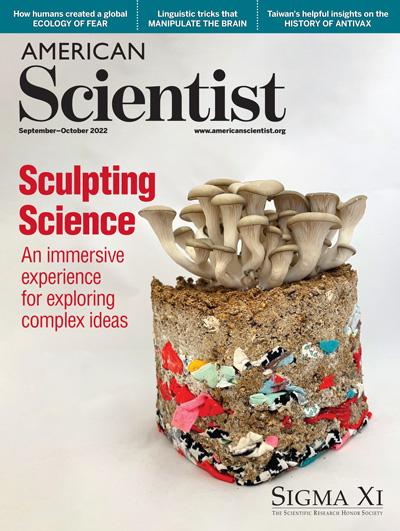
Textile artist Minga Opazo creating work with textile waste. Some of her work incorporates mushrooms to explore solutions for dealing with waste.
In her practice, she is dedicated to research the textile industry further and to create work that exposes, reflects and finds a solution to the current situation of the textile waste industry.
…one of the reasons that I got into growing mushrooms into my sculptures and having grass into my sculptures is that when I made one of the first sculptures, there were layers of mud and clothing. I made it with dirt from the outside. It was already outside my studio. And it started naturally growing because it was wet. …“Oh, what happens if I start growing stuff in my sculptures?” And having this conceptual moment between nature and the sculptures…The pieces do what they want to do. So it’s a collaboration between nature and my work.
Source: The Creative Independent
-
Rekindling a Note Taking Practice
Read more: Rekindling a Note Taking PracticeI’ve always loved note taking.
Even as a kid I would collect notes and information, magazine pages, booklets. I think it’s something of a neurodivergent impulse. Autistic folks often love collecting things and I’ve only just realized that part of that drive for me is in collecting information. I love learning things, but I also love cataloguing what I’m learning.
(Important to note this is not a universal love among autistics. There are a lot of different ways our passions and interests can show up.)
Through the years I’ve tried on different styles of note taking, but I’ve always loved the idea of a centralized system. The problem is I kept trying on other people’s systems and they were never the quite right fit.
Recently, I’ve been working out how to create my ideal note taking system.
A caution, dear reader, not to try and recreate my own system for yourself. But I hope by sharing this it can shatter some misconceptions about research and note taking and open up the realm of possibilities to you.
If you’ve been around for a while you’ll notice this is kind of an amalgamation of several different note taking projects I have had. Gathering up everything under one roof as it were. Over the years I have tried: physical notebooks, file folders, the Pocket app, Evernote app, traveler’s notebooks, blog posts, podcasts, Notion, and finally a library card catalogue drawer. Each of those attempts was, in a way, trying to create a system that I saw outside of myself and they were all too rigid.
My new system is a digital analogue hybrid.
I love handwriting notes. Typing them. Shuffling around papers. For years my ideal system (the one of my university mentor) was a series of matching composition notebooks. (1)
Then it was digital. I went “all in” on Evernote and it didn’t take long to reach the threshold where they wanted to charge a monthly fee. I think I was between degrees at this point and couldn’t imagine paying for that so I pivoted back to paper again.
Austin Kleon blogged about commonplace books and I was hooked. I tried to create a color coded indexing system. I tried numerical systems.
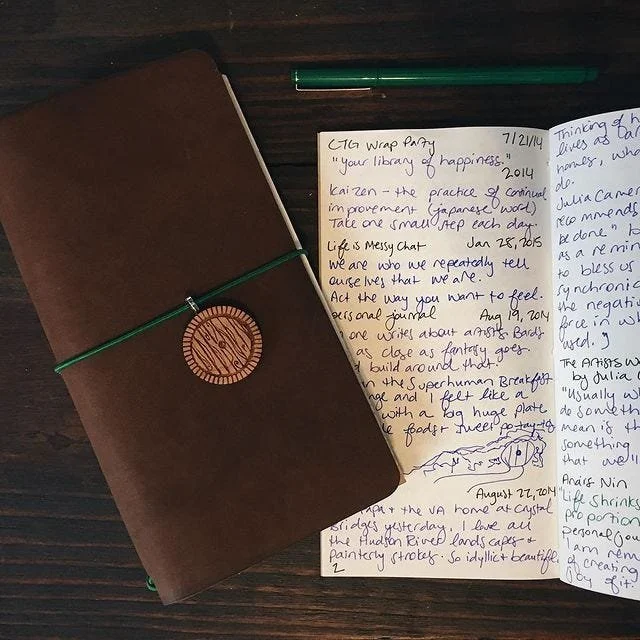
The trouble with notebooks is no matter what kind of system you use it can be hard to find what you’ve recorded in the past. (2)
After a while I gave up on that and started sharing monthly updates on Patreon. A round up of everything I’ve read, watched, or listened to with some of my favorite quotes.
I always circle back to physical though. Early 2019 I tried a physical notebook to document what I wanted to share to Patreon. This was shortly before Davy was born and it quickly went out the window.
But the digital format survived. It lives on as my newsletter.
The trouble is when I’m really in research collecting mode I have more than I can reasonably share in this format. And it’s also not easily search-able.
So in 2020 I started a Notion. That also has stuck with me, but there are some caveats.
- It’s a third party app that could disappear or start charging at any moment.
- And I haven’t kept up with cataloguing the details like I did in the beginning and it’s starting to become a bit of a tangled mess.
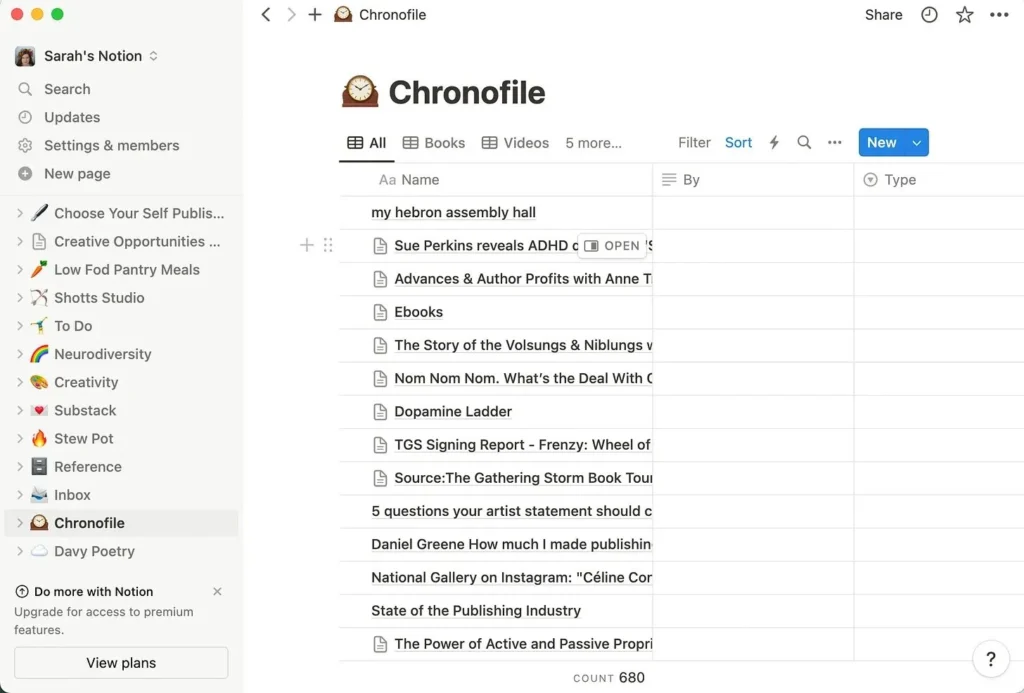
Part of the problem is I created this system when Davy was still napping in my lap a lot. So I had ages to poke around on my phone. Now I have other things to do and this type of cataloguing is not at my top of priorities. Here’s a screenshot where you can see I no longer take the time to fill out “by” and “type” which are kind of essential when it comes to finding what I’m looking for.)
So I swing back analogue…
When Davy started school I read yet another book about note taking and I fell in love with the idea of writing or typing up all my notes on index cards in my “free time.” But Davy was only in school for half days and by the time you take the commute into account I was lucky to get a couple of hours each day. I spent most of them writing a book and making art.
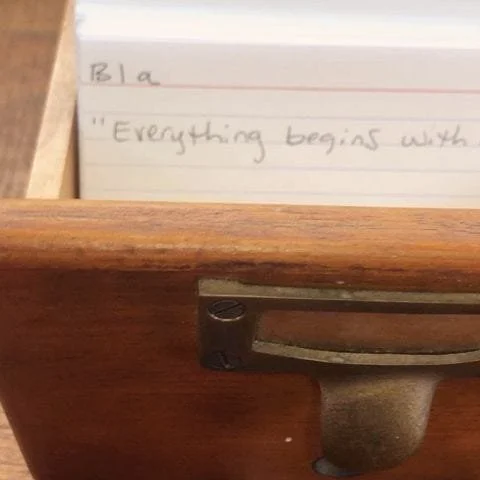
Now we’re home educating so it’s all a muddle of life and creativity without any clearly delineated “studio time.
If you’re neurodivergent you may have a similar cycle…
Get excited by a project.
Find a creative spark to create a system.
Abandon system.
Feel guilty.
But something was different this time around.
In all of the research about neurodiversity and autism to support David I am learning to support myself. And to reframe my perceived “deficits” as differences.
Instead of feeling guilty I got curious.
Why did some methods work better than others? What would really work best for me?
When I switched up my Substack schedule I freed up some mental bandwidth.
That extra capacity is really key here. I rarely innovate when I’m at capacity.
The second magic ingredient was playing around.
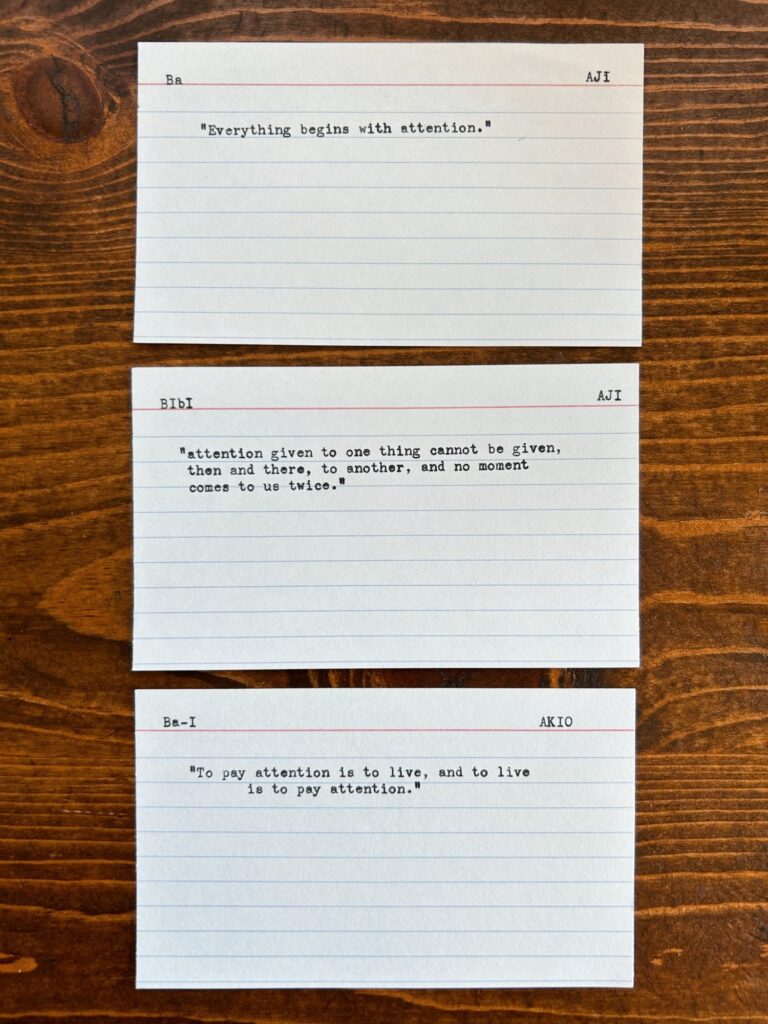
I was reading a new book and wanted to take notes. Instead of using Notion I followed my impulse and wrote them up on index cards. I knew it wasn’t something I could maintain, but I did it anyway.
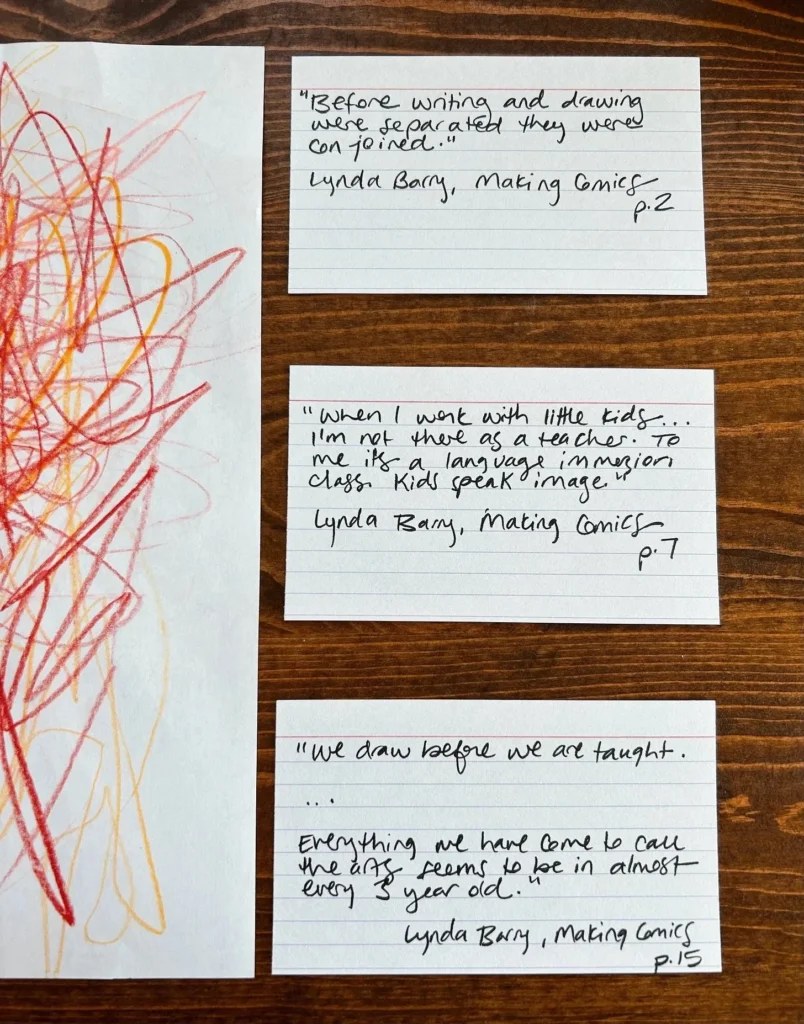
Kids Speak Image, Lynda Barry, September 20, 2023
Meanwhile I’d been thinking about how to document and share content in a more casual way online. The weekly Substack posts had been too time consuming, but I knew if I slowed my publishing schedule to monthly (or even fortnightly) I would have so much I wanted to share and document in the in between.
Then Austin Kleon linked to his Tumblr. I played around with a Tumblr account for a couple weeks and fell in love with the ease of it.
- Find something lovely.
- Share it.
- Type in some tags.
It didn’t take long for me to see the caveats though.
Mostly I was still creating content for someone else’s machine. Tumblr is old (in internet years) and who knows how long it will be around. Also, people started seeing and liking my posts and I was afraid I might start feeling social media feels about the value of posts based on their engagement.
But there were also things I loved about it! One of which was how visual it was! My brain loves scrolling through a visual archive versus something that looks like a giant excel sheet (no offense Notion.)
What I needed was a private Tumblr. Somewhere I could archive notes, images, even videos or podcasts. With a simple tagging system.
Enter the microblog.
I’m not sure how long it took me to realize that I could just make this on my own website.
Not a blog, but a microblog. My blog is a place to share long form writing with other people. Whereas this microblog is a collection of bits and bobs. A place to archive research and document my creative process as a tool for myself. Which I might sometimes point to.
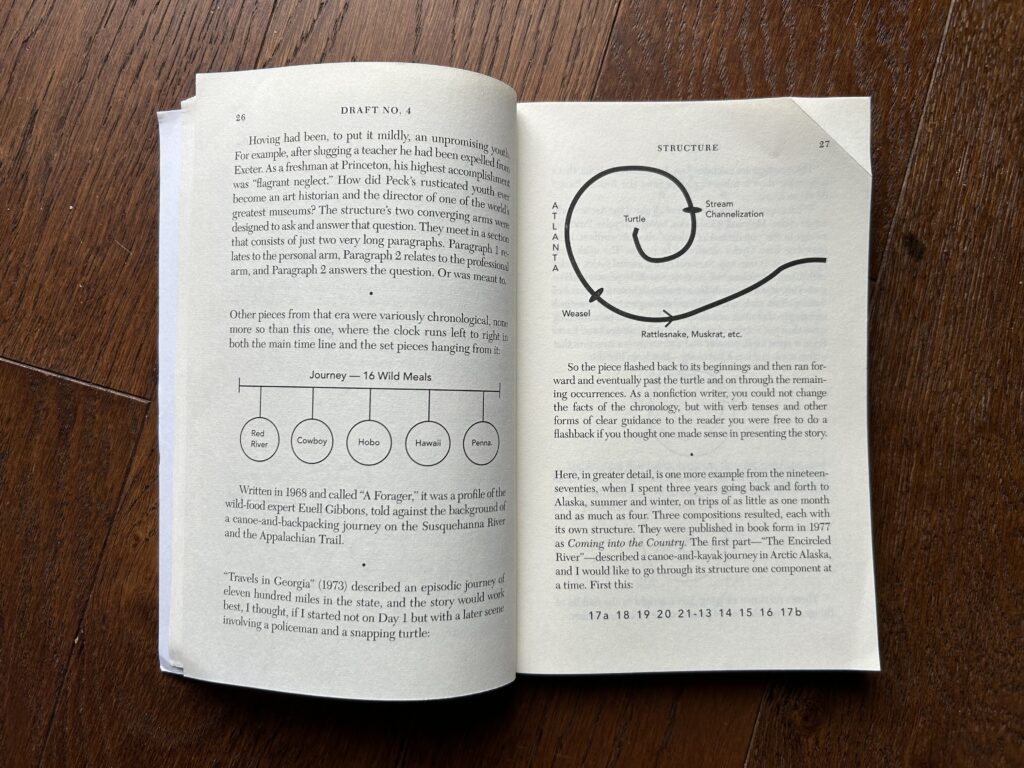
I love it.
It feels like such a simple way to make a visual record of my thoughts and ideas. If you scroll through it’s essentially like taking a peek inside my brain. What am I reading? What am I thinking about? What was the obsession of the day?
I am fascinated by the process of ideas unfolding and layering and coming alive. It’s something I’m always unraveling when I look at other people’s work and it’s part of why I love following artists and creators online. (3)
What I got stuck on was the name. At first I called it scraps, but that didn’t really fit. Eventually I realized the answer had been there all along.
Welcome to the Chronofile
Sometime along the way I started calling my notes “The Chronofile.” You can see the hashtag in early Instagram posts and a note taking folder on Notion.
The name come from one of my creative muses – Buckminster Fuller.
He was a brilliant inventor and artist and writer and is known largely as the creator of the geodesic dome. I could go on and on about him (and I probably will some other time) but for now I’ll explain that he too was an obsessive notetaker. He documented everyday of his life in something he called the Dymaxion Chronofile. His file includes “more than 140,000 papers and 1,700 hours of audio and video” (all of which are archived in physical form and take up 1,400 linear feet.) (4)
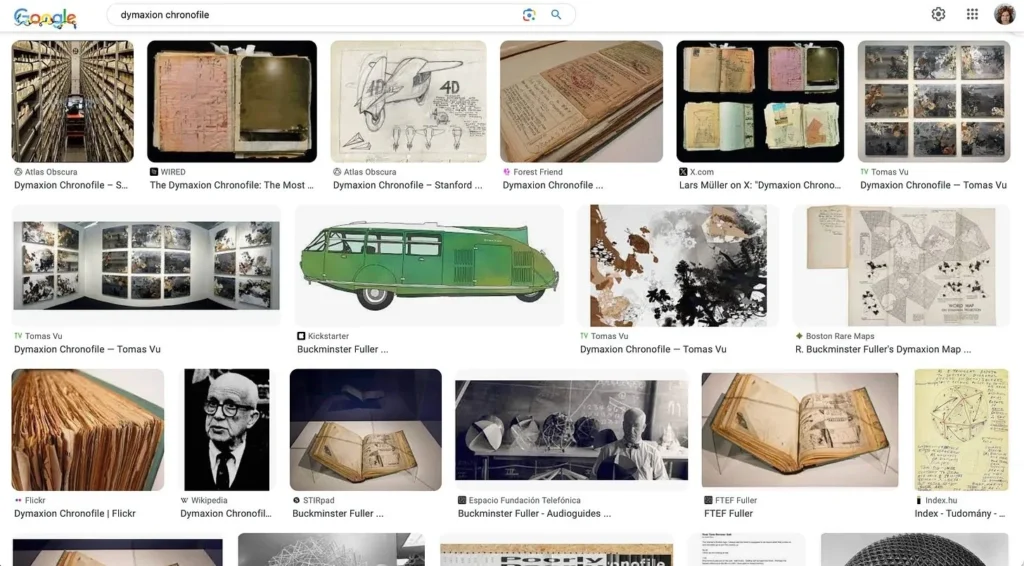
Google Search results for “dymaxion chronofile” December 4, 2023
All the more reason to go digital! I do not have that kind of space. 😂
But there’s something about analogue.
Writing things down engages a different part of the brain than typing. (5)
Not to mention the physical record and embodied act of moving around notes and seeing them in visual conversation with each other.
What I happened upon by writing those notes about Lynda Barry’s books was that I can have the best of both worlds.
Physical notecards of my favorite quotes – in a card catalogue drawer, and a searchable digital archive – hosted on my own website.
I can easily type up notes on my phone (using the Squarespace app) and then later jot them down or type them onto a card for my physical file. This also adds a layer of curation for my physical chronofile.
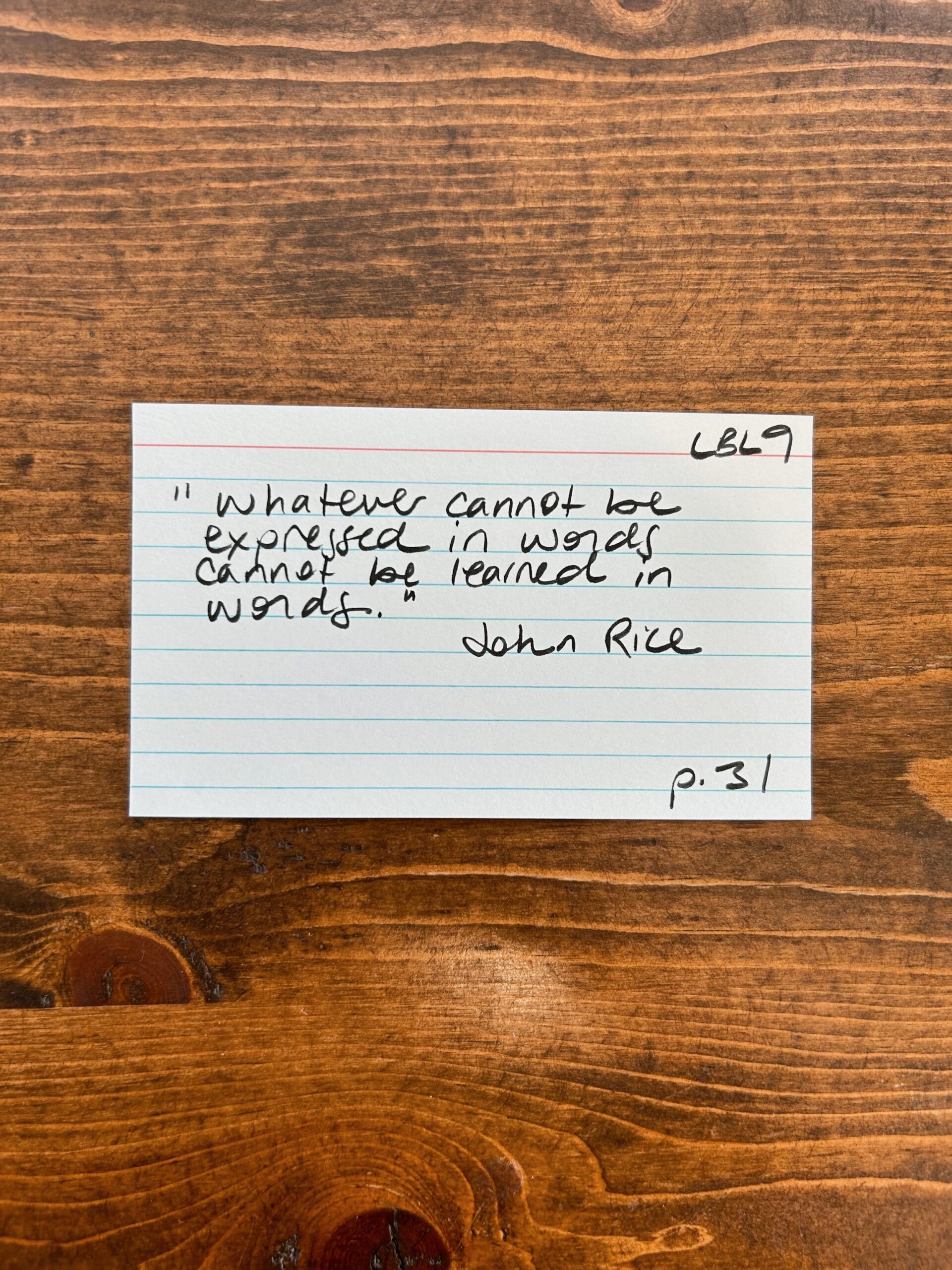
It also means the letter and number codes (used above) are largely irrelevant due to the search-ability of my digital chronofile. Which is quite a relief because they never felt natural – just another outside system I was trying to use to reinvent the wheel. Why create analogue reference systems when digital search does that so easily?
I fully accept this process will shift and change. But what I’m trying to do is to utilize the best features of each medium.
Analogue for muscle memory. For embodiment. For serendipitous connections. And for aesthetic share-ability.
Digital for search-ability. For time lord technology (fitting a lot in quite a small physical space). And for the ability to include photos, videos, and audio files.
Embracing my inner Magpie
The real delight here is that scaling back my Substack publishing schedule has freed up bandwidth to rekindle my passion for research.
From deep dives into artist communities like Black Mountain College and the Arts & Crafts Movement to the mundane history of tenterhooks.
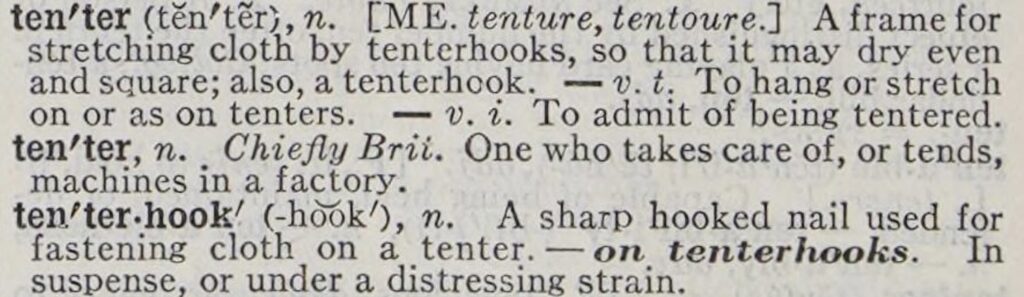
This hybrid system feels in alignment with my brain and the way it works and that makes all the difference.
The Saga Continues
One of the coolest things about Substack (or blogs) is that you can update posts as you have more information. Here’s a space I’m creating to do that as I evolve my note taking practice.
2/9/24: I’m experimenting with adapting this method to Obsidian. It resolves a few problems I was having with the Squarespace app and hosts everything locally instead of using my web hosting space. I may still use the Chronofile on my website occasionally as a microblog, but I’ve taken it off the site navigation for now.
I’ll be honest I was drawn in by the constellation visuals (these are called graphs.) I saw this twitter thread from Morgan Harper Nichols and was immediately enchanted.
My own graphs are still small for now, but it’s cool seeing how ideas connect.
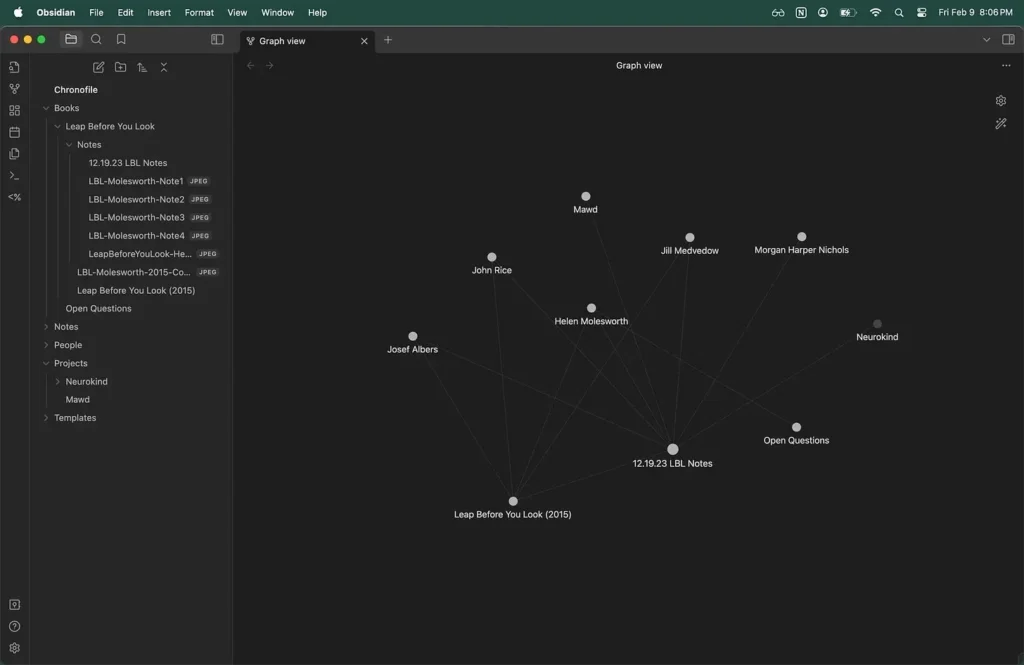
There are lots of aesthetic reasons I’m really enjoying the app, but from a practical side it makes sense too. Instead of uploading your data into an app you’re creating text files and nesting folders on your own computer.
This means if Obsidian goes defunct you’ll still have all of your notes.
And that’s the main reason I’m transitioning away from Notion.
The stars are just a bonus. 💫
Still here? You must be a creative kindred.
How do you collect notes and information?
Do you prefer analogue or digital or a bit of both?
Thanks for being here.
FOOTNOTES
- I might have stuck with this one for simplicity sake, but around this time the paper and binding quality of composition notebooks went right down. I still remember the gummy goo of one particular notebook binding that peeled up. *shudders*
2. At least it is for me. Kudos to you if you’ve figured it out.
3. After watching every single one of the Vlogbrother’s videos I finally read John Green’s The Fault in Our Stars. And it felt like reading a book by a friend. I could see all of the random obsessions he’d had over the years come together in his book. The same for Hank Green’s An Absolutely Remarkable Thing.
4. Dymaxion Chronofile:an archive of nearly every day of Buckminster Fuller’s life. Atlas Obscura. July 11, 2013.
5. Study shows stronger brain activity after writing on paper than on tablet or smartphone, University of Tokyo, March 19 2021.
-
The Ancient Technology of RSS
Read more: The Ancient Technology of RSSHow have you been?
Since taking my foot off the gas here at Substack I’ve freed up a lot of time and creative energy. If you’re feeling pressure to post weekly it’s worth asking yourself what your intentions are. If it’s all about growth there’s no doubt there is a benefit to posting weekly.
But if you’re looking holistically at your creative ecosystem there may be another rhythm that’s better for you.
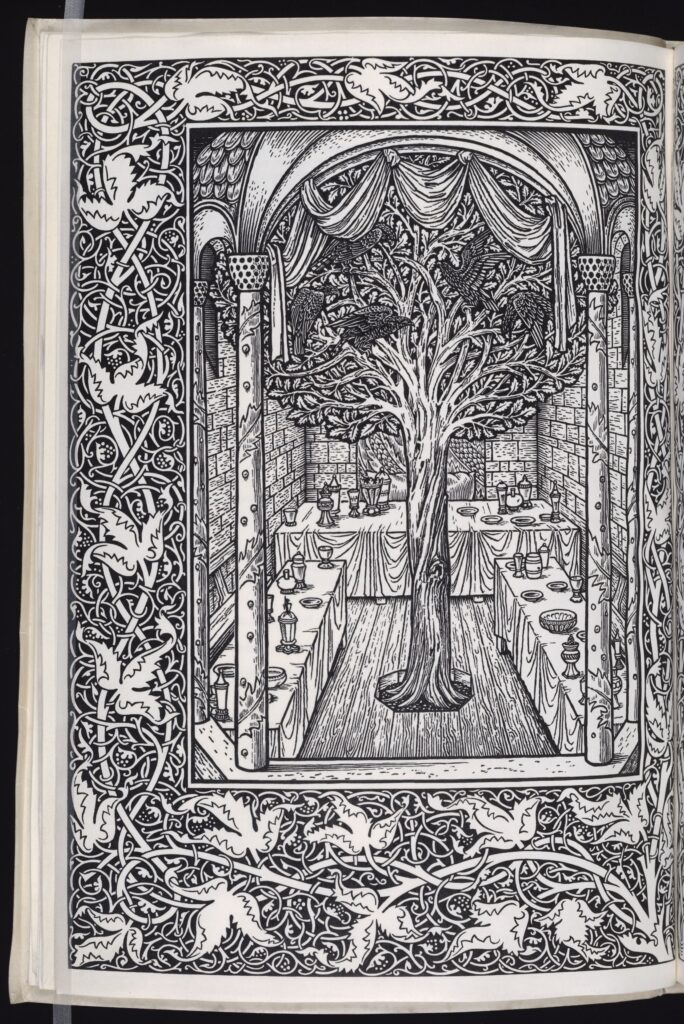
Illustration of Yggdrasil (Norse Tree of Life) from The story of Sigurd the Volsung and the fall of the Niblungs by: William Morris.
The time that I didn’t spend writing newsletters I’ve been…
- Reading Norse poetry.*
- Baking sourdough bread.
- Studying The Wheel of Time from a craft perspective.
- Trying out a new note taking platform called Obsidian. †
- Working on my anthology project.
- Curating my feed (and subsequently reading more blogs.)
As an elder of the internet, I’d like to take a moment to point out the ancient technology of an RSS feed.
An RSS feed is a chronological, non-algorithmic feed of what you choose to add.
It is basically the holy grail of the internet.
But we left it behind in favor of the siren song of social media.
Before socials, if you wanted to follow updates from multiple sources, you used an RSS reader. Every blog and podcast has an RSS feed (even Substack.)
It’s baked into the DNA of the internet.
What I’ve done is moved most of my Substack reading to a free RSS reader called Feedly.
Most RSS feeds will automatically pull the post and strip away the formatting – meaning you don’t see certain Substack features like embedded posts. I have my Feedly set to open all posts in the web browser. (Here’s how.) This also makes it easy to comment or share. There are lots of ways to show love to posts without subscribing.
My actual subs are now the newsletters I read pretty much every time. The ones I don’t want to miss. If I have time to read more I can pop over to Feedly to see what’s new or to check certain categories like Food or Art.

I haven’t done much art making recently because I’ve been focusing on curation projects (like Neurokind & Entwined.) But I have submitted a poem to Motherlore magazine and am preparing works for Painting at Night & Mothering.
I’ve also been doing a lot of journaling and research for my fiction novel. I’ve started writing at my antique secretary instead of the couch and it’s been a lovely change (I’m writing at it now.) Davy has finally reached a stage where he’s happy to play LEGO beside me while I write and it’s a game changer!
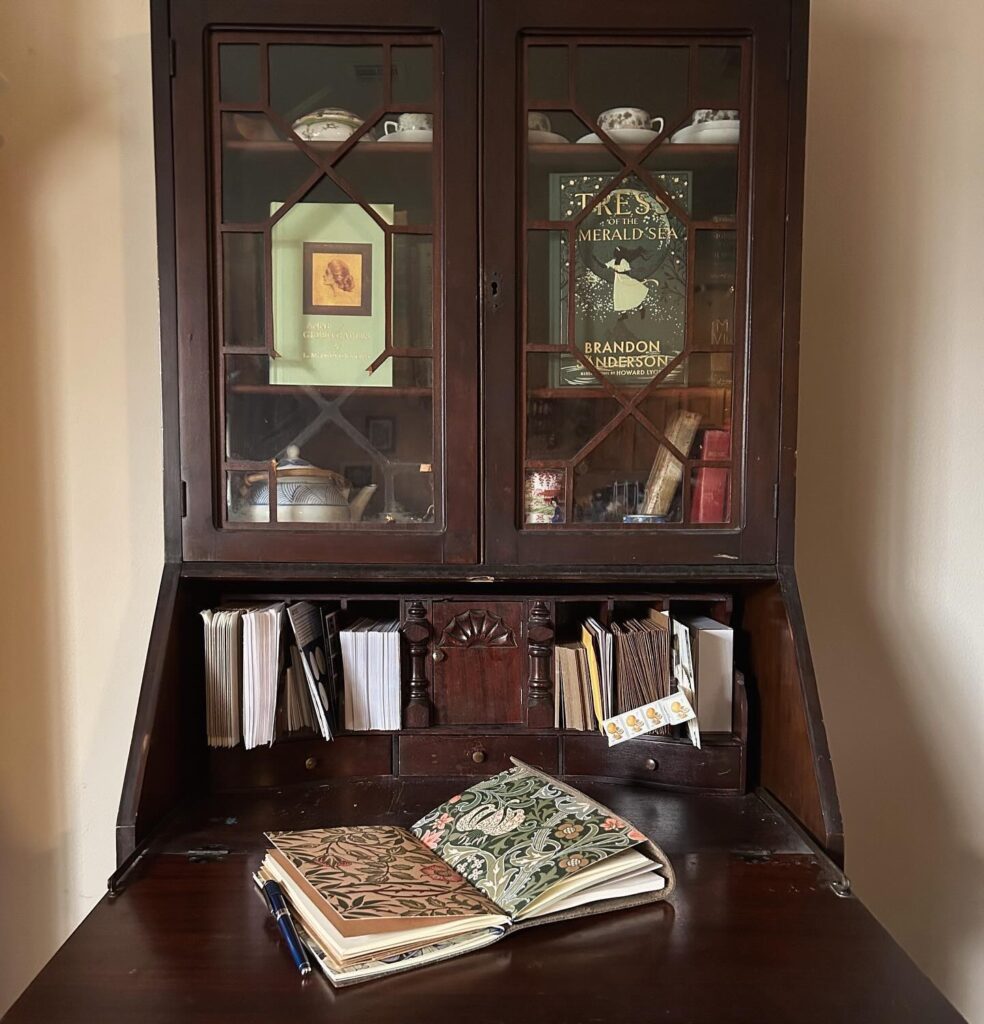

Other bits and bobs I’d like to recommend this week.
Read
My favorite new sub is SOCIAL MEDIA ESCAPE CLUB. It reminds me of old days of the internet. Just because social media wants us all to yell over each other and be content machines doesn’t mean we have to comply. This post is a great place to start.
If you’re neurodivergent I can’t recommend Moving from Burnout to Balance by Louise Brown enough. This sounds deceptively simple, but if you struggle to make time for the things you love this process can be revolutionary.
Looking back this is how I climbed out of a very dark place in 2020 to where I am now.
Listen
Another process chat from Helen Stephens.
What comes first? The idea or the material?
Play
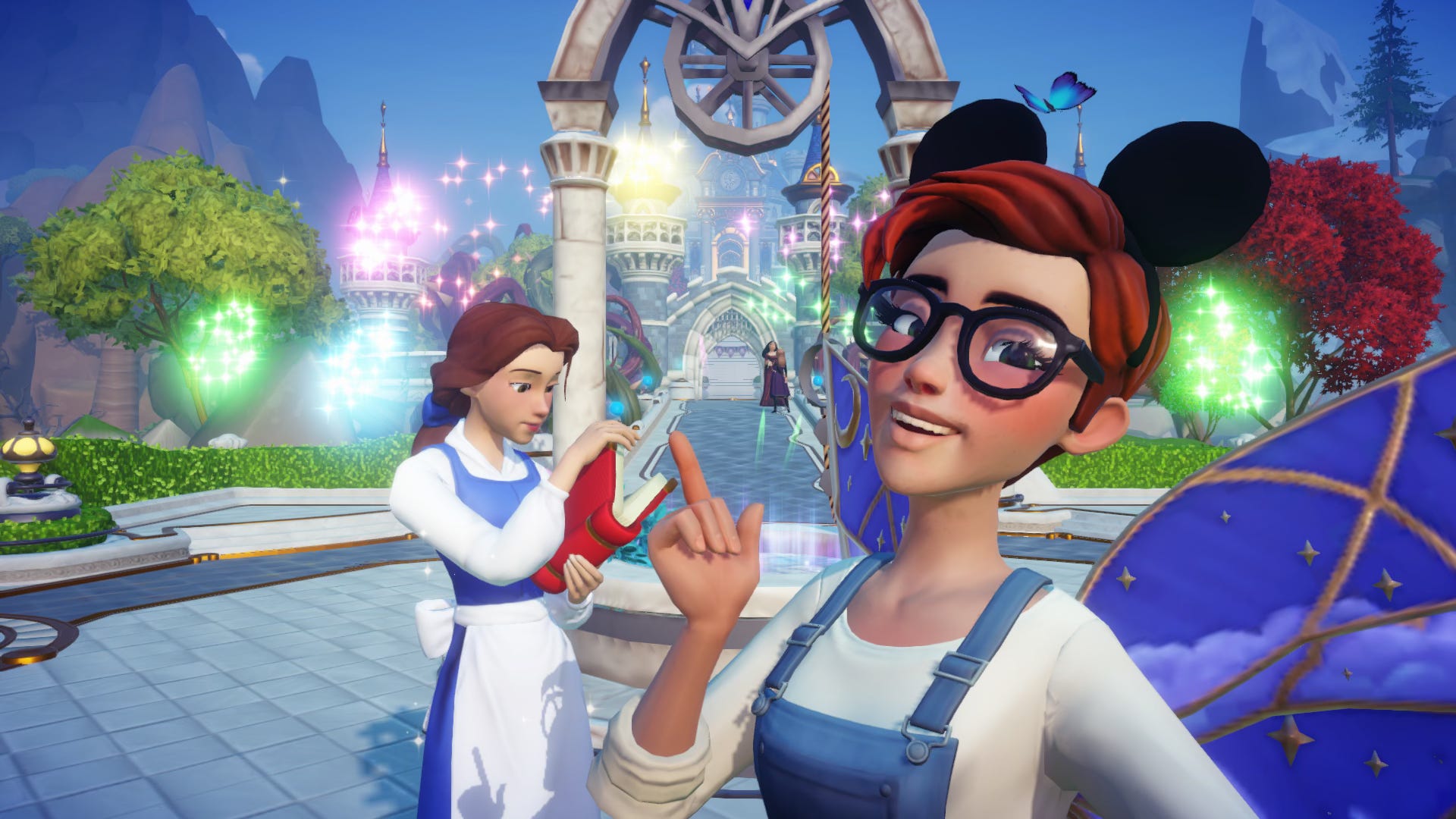
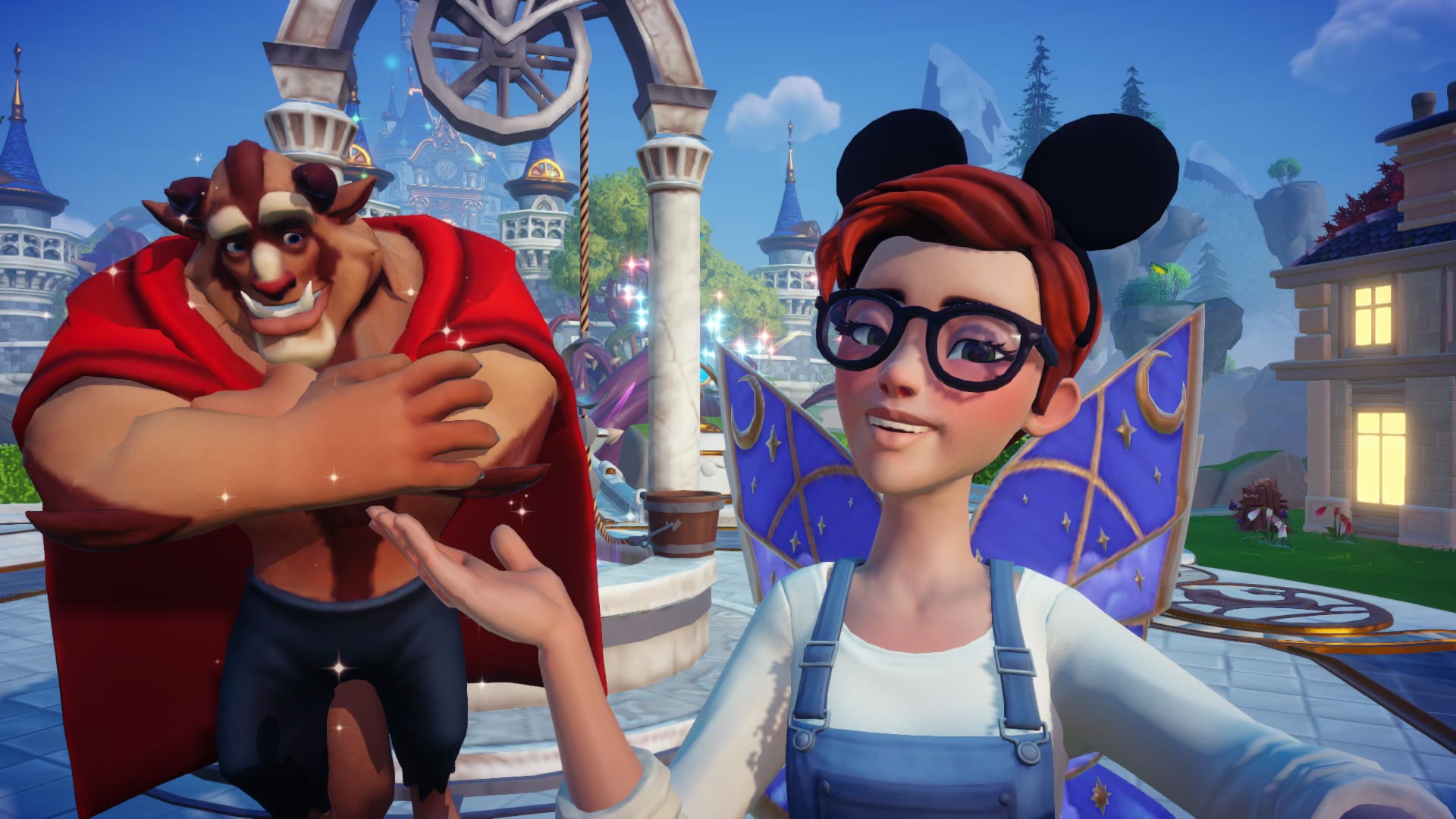
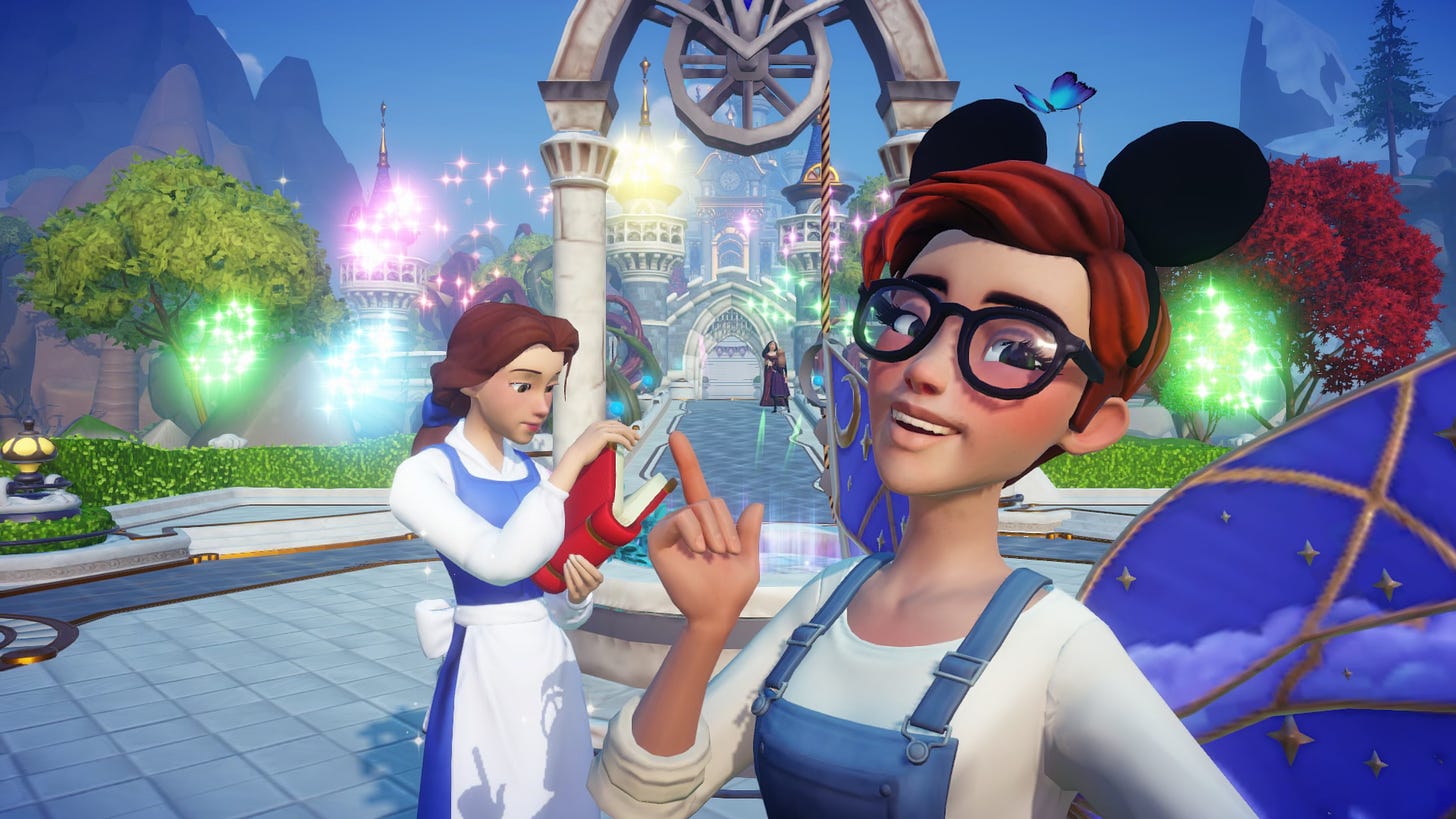
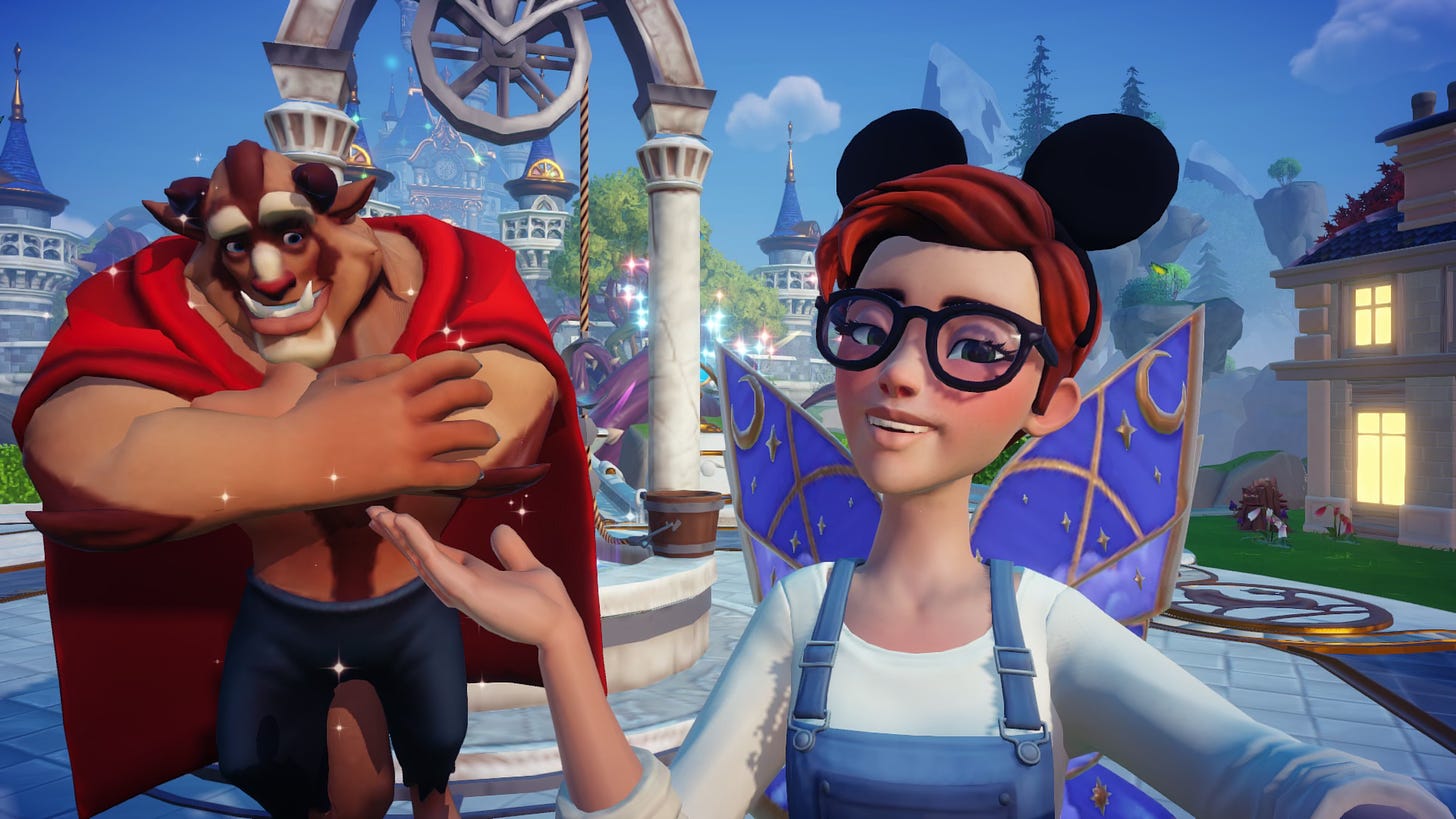
We played a lot of Dreamlight Valley over the holidays. If you’re a Disney nerd and you like cozy games (where you harvest plants, craft, and collect things) this game is for you. I don’t know why I find this type of game play so regulating, but I just do. Here are some selfies!

One Year Ago
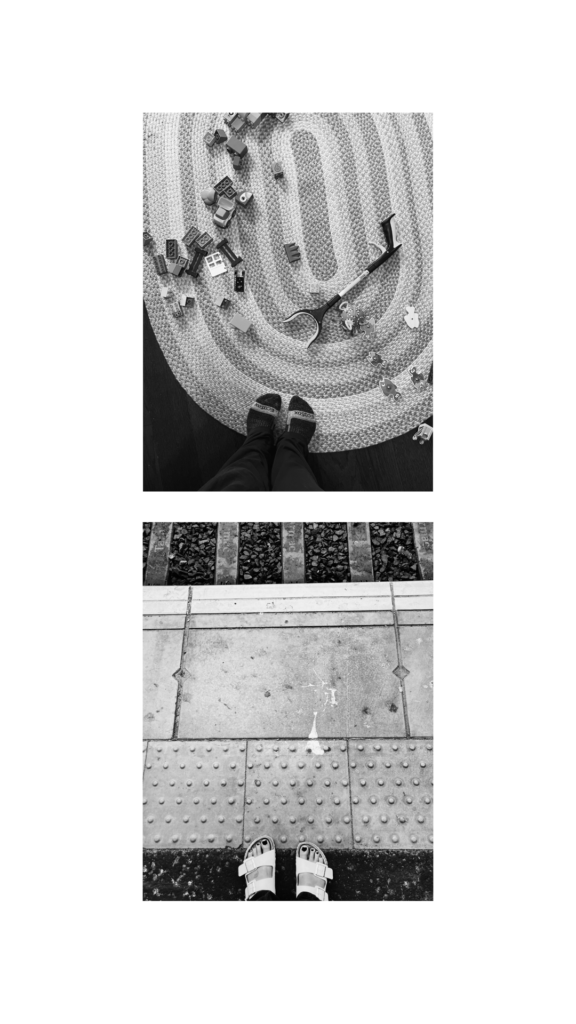
This time last year I was reflecting on a year long creative collaboration with Claire Venus.
Instagram brought us together and I’m so thankful for it.

This is an indie passion project! Here are some of the ways you can support me.
- Leave a comment. (This one’s my favorite. And it’s free!)
- Share this post.
- Sign up for Self Publishing 101.
- Subscribe or submit work to Neurokind.
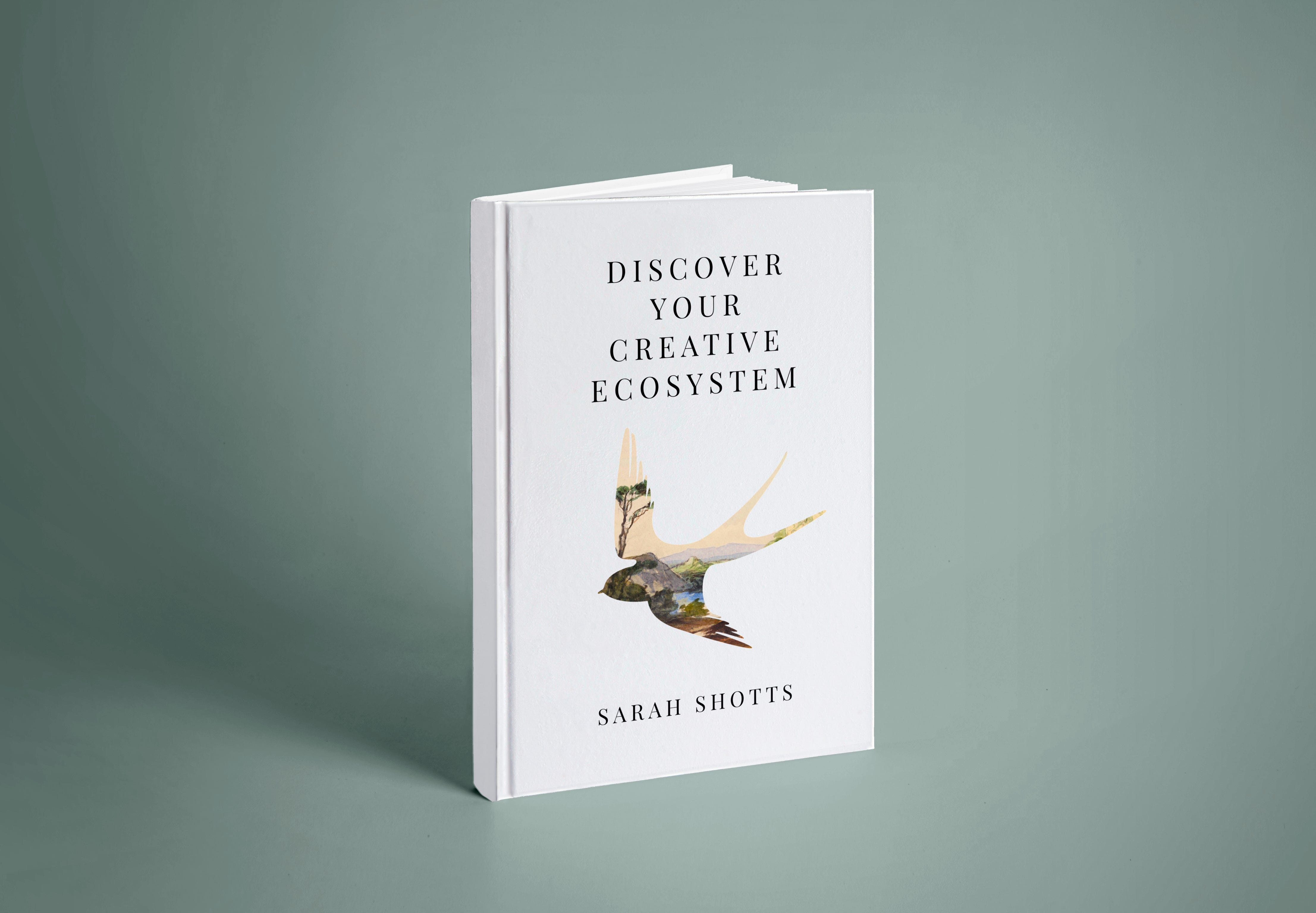
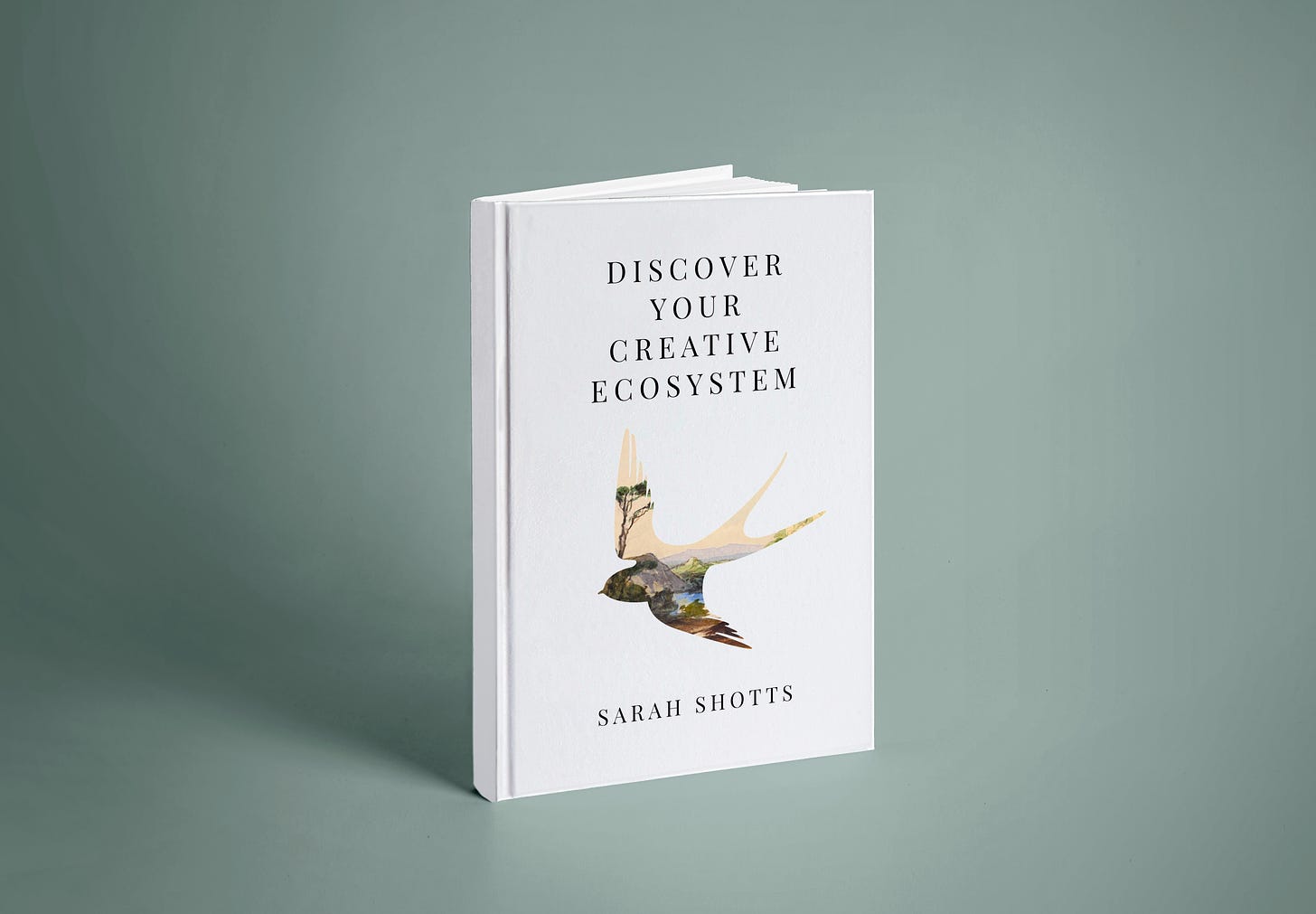
- Read my book Discover Your Creative Ecosystem (Curious what I mean by creative ecosystem? Start here.)
Let’s discuss.
- How do you manage your reading queue for Substack and blogs?
- Are you an internet elder? What do you miss about the old magic?
- What does your creative ecosystem need right now?
Cheers,
*
Specifically listening to the audiobook of this version whilst reading along in hardcover and taking notes. I’m researching the Norns (Norse Fates) and Yggdrasil (Norse Tree of Life) for a fantasy novel I’m working on.
†
You can scroll down to the bottom of this post for a little update about how I’m integrating Obsidian into my hybrid (analogue / digital) note taking practice.
-
From the kitchen table to NYC 🗽
Read more: From the kitchen table to NYC 🗽Flashback to four years ago…
It was Christmas Day and I was sitting at the kitchen anxiously trying to finish a weaving to submit to an exhibition about motherhood.
Here’s a video showing the weaving process. I made data weavings recording each time I was interrupted by tying a knot.
I barely finished and photographed that work in time for the deadline. Looking back that first weaving (smaller and less textured than the one in this video) wasn’t a strong piece and I’m not surprised it was rejected.
But the rejection stung because I was also told off for being unprofessional by photographing my work on a wall that wasn’t white. I felt like the art world was a secret club I didn’t have the passcode for. *
The next year I submitted another weaving to another show. No snooty response, but it still didn’t connect.
One submission a year clearly wasn’t working for me.
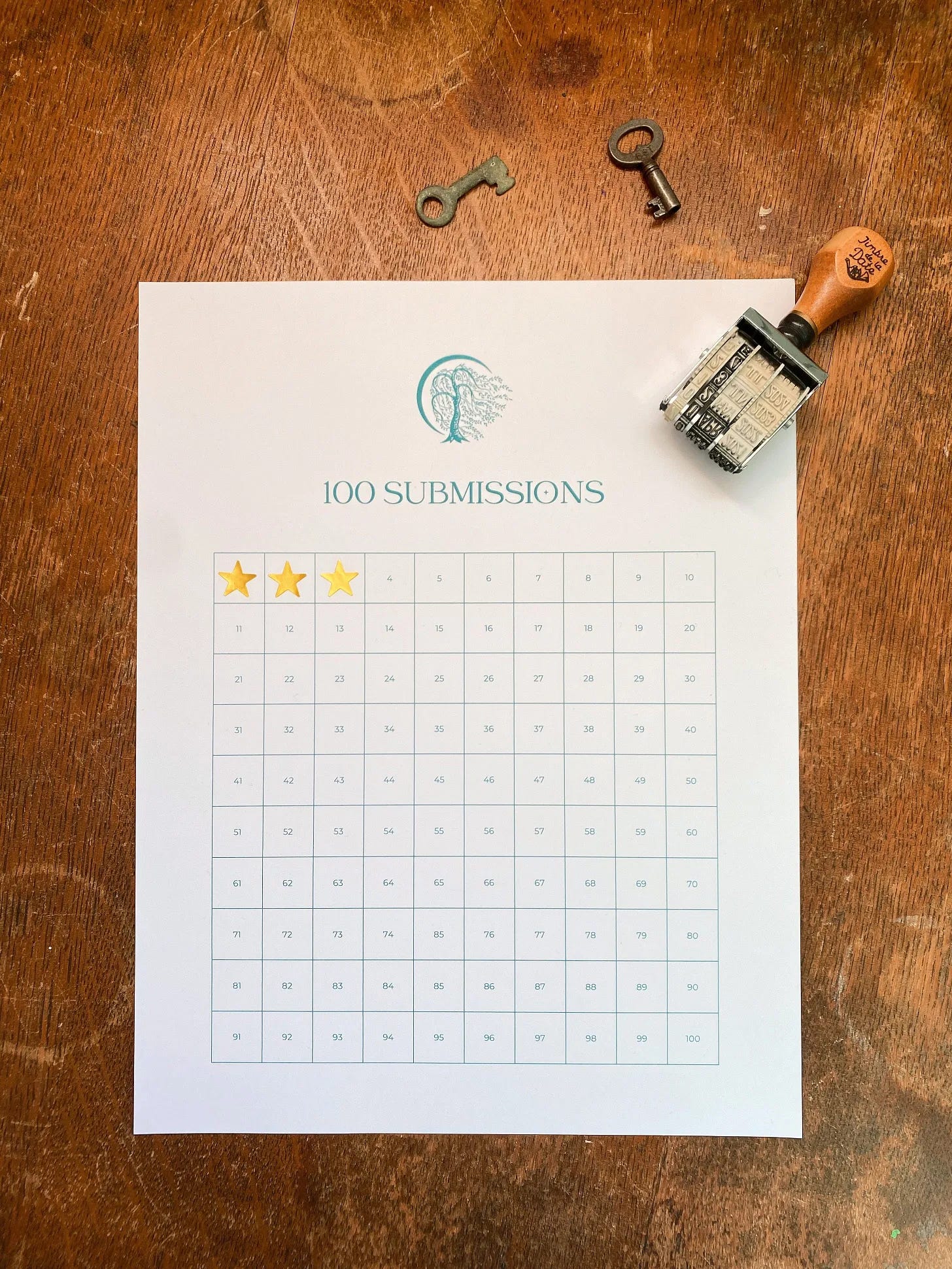
So my 100 Submissions project was born.
This was an energetic shift from holding each submission so closely to casting a wider net.
I managed 11 submissions last year and the strangest thing happened…
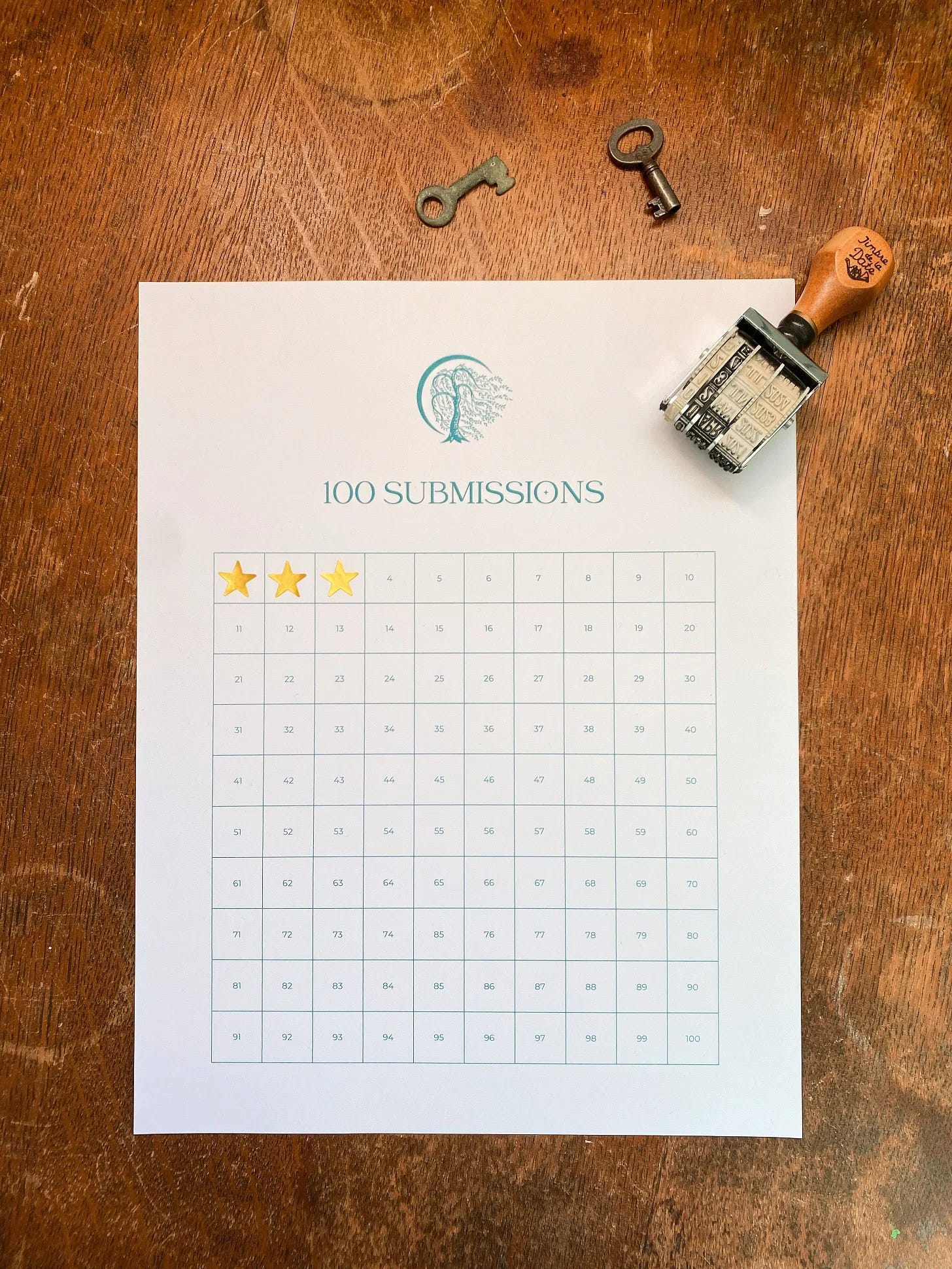
Grab yours here.
Every submission connected.
11 out of 11.
There’s some bit of luck in submitting the right piece at the right time.
But I think the real magic was putting myself out there without worrying if I had a “chance.”
This led to…
– exhibiting my art for the first time
– speaking at my first author event
– my first publication in an academic journal
That’s a lot of firsts!
I’m going to share this process – not to brag – but to encourage you to put your own work out into the world.
I meant to share this process in real time, but I quickly became overwhelmed at the amount of admin work involved (emails, mailing art, etc.) and I couldn’t keep up with writing Substack posts too.
Here goes!
I kept track of everything in Notion. If you have the bandwidth I found this really useful because you can resuse / adapt submission materials instead of starting from scratch each time. This way you can build up some momentum.
Submission #1 – NWA Book Fest
Venue: NW Arkansas Book Festival
Cost to Submit: None
The first acceptance I had was to do a book reading and signing at a local book festival (NWA Book Fest). It was a great learning experience which I wrote about here.
Takeaway: Author events are a massive energetic drain.
What I learned was I simply I don’t have capacity for book festivals at this time. This was a very short appearance and it took me quite a long time to recover. So paying to be a vendor for a full day (or weekend) event would definitely push me past capacity.
Here’s a clip of actual footage of me after the event. †
“Success” isn’t worth it if it pushes you into burnout.
Submission #2 – Carve Out Time for Art
Venue: Instagram
Cost to Submit: $25
I considered this application to be a complete shot in the dark.
I was stunned at the invitation to takeover Carve Out Time for Art on Instagram. This one gave me big imposter syndrome, but was actually a delight. This was one of the first acceptance emails that came in, but the takeover itself didn’t happen until much later in the year.
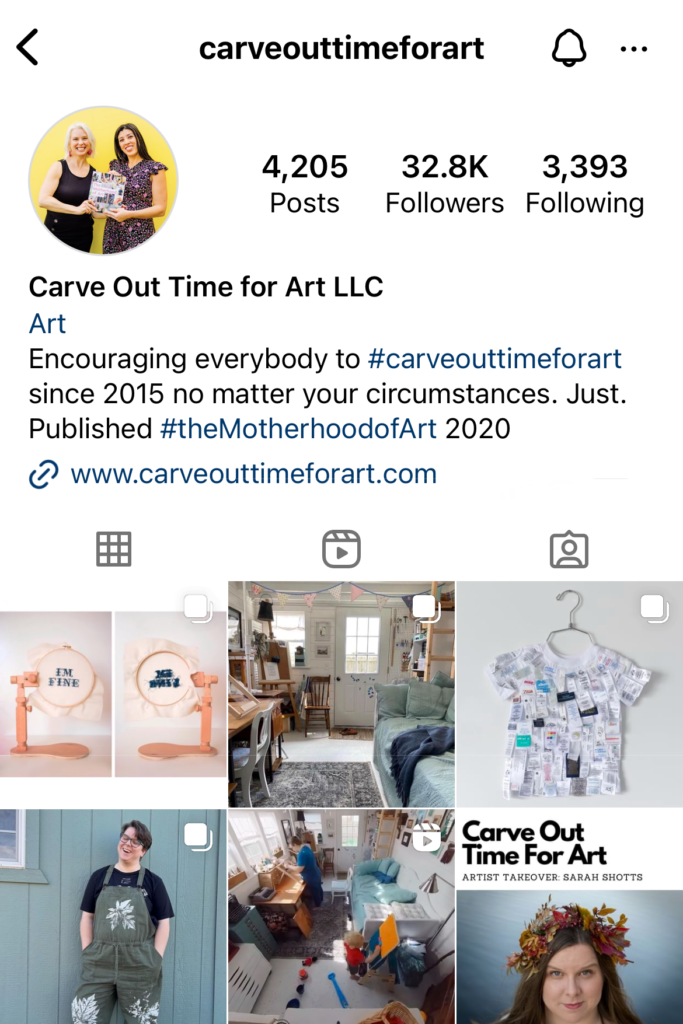
The takeover is pinned to @carveouttimeforart’s highlights if you want to see.
Takeaway: There are more people out there.
Before I did this takeover I pretty much thought “everyone who wants my book already has it so I should stop talking about it.” It’s easy to fall into this trap when growth is slow or nonexistent. Reaching people beyond my normal subscribers brought a breath of fresh air. I made some new friends who followed me here! *waves* And sold a couple copies of my book. Not loads, but it broadened my horizons.
Submission #3 – Stay Home Gallery
Venue: Art Gallery (Paris, TN)
Cost to Submit: $10
Next, my textile piece Maternal Mental Health was accepted to an art exhibition about paradox in caregiving. Here’s a statement from the curator Tara Carpenter Estrada,
“In Together/Alone, the paradox of emotions between “never alone” and “very lonely” felt by caregivers is given the spotlight. The societal devaluing of care-work places the responsibilities of care (and self-care) on individuals. Without structural support, a tension can arise between love and devotion, and resentment or anxiety— the need for alone time, and the need for togetherness.”
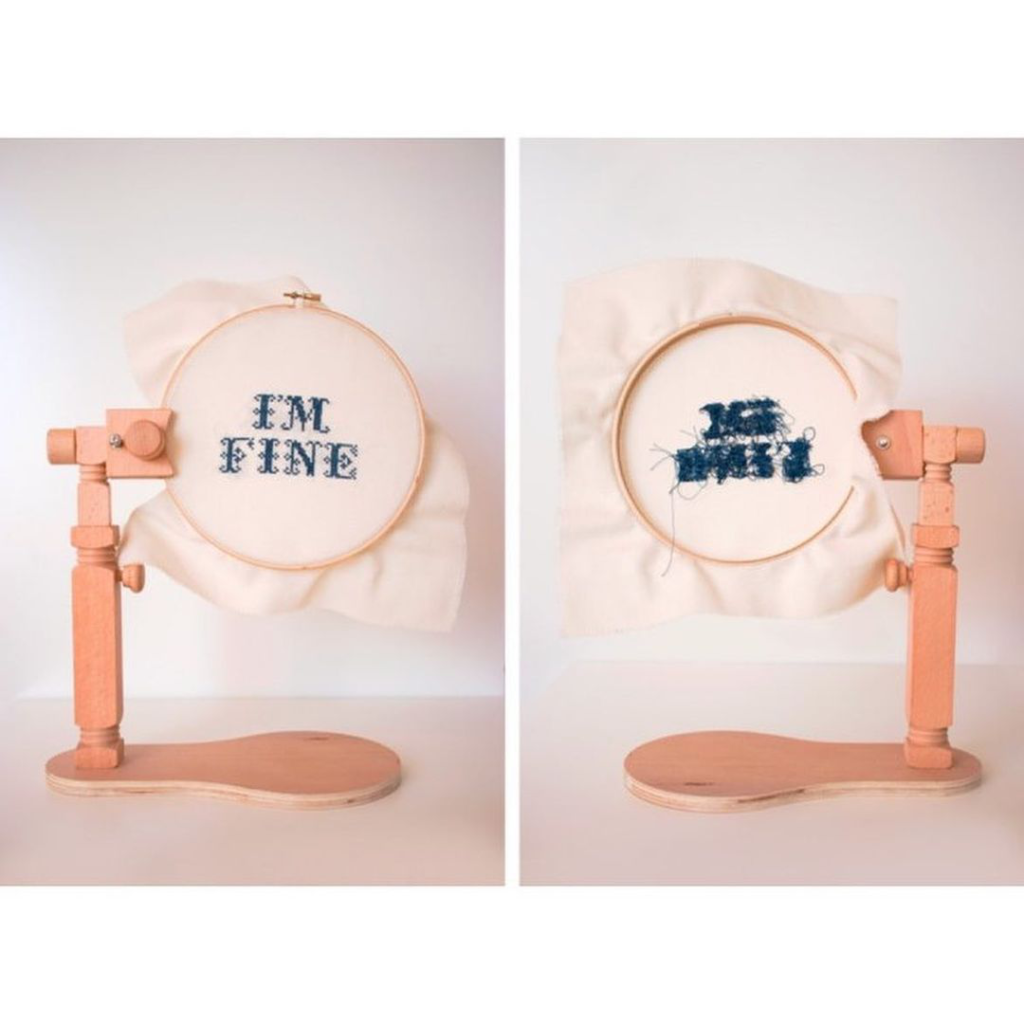
Maternal Mental Health / 2022 / textile / 11” x 15” 17”
Stay Home Gallery is now closed, but you can see the show archived here.
Takeaway: Try to align your expectations with reality.
Because this was my first time exhibiting art outside university I really wanted to travel to the gallery opening. The whole situation was confusing because it was a hybrid show. On one hand it was a physical exhibition at an artist retreat – so I had to mail my work. But the main exhibition was on the Stay Home Gallery website. The physical location was not open to the public and was only seen by the artist residents. So there was no opportunity to visit and see the work in person. I was a bit heartbroken, to be honest, because my expectations weren’t aligned with reality. But it was my first tiny baby step into the fine art world.
Submission #4 – Ought
Venue: Ought: The Journal of Autistic Culture (Grand State University, MI)
Cost to Submit: FREE
The next thing I knew I was being published in an academic journal. My piece, The Benefits of Asynchronous Friendship, exploring my collaborative project with
Claire Venus was accepted to Ought: Volume 4, Issue 2 (2023) The Internet.
I wrote a short introduction to the article here.
I have a lot to say about this one that should probably live behind a paywall, but I found this process very challenging. I’m an academic – my day job is teaching university theatre courses – but I’m a theatre instructor. (Not an autism researcher.) And I’ve never written for an academic journal before.
Takeaway: Academic writing = time consuming revision.
The challenge came from writing a piece that was “too academic” to be creative and “too creative” to be academic. The editor didn’t quite know what to do with me. They literally said, “it is neither beast nor fowl.” 😂
In the end, we decided to treat it as a creative piece, meaning I had to strip out the research I’d done and root the writing in my lived experience. It was a stronger piece afterward, but the timing couldn’t have been worse. Trying to edit this piece whilst also running a crowdfunder almost killed me.
If I submit in the future it will be a visual artwork which wouldn’t require revision.
Submission #5 – Cut, Torn & Mended
Venue: Spilt Milk Gallery (Edinburgh, Scotland)
Cost to Submit: Free to Members
Cut, Torn & Mended was an open call for members of Spilt Milk Gallery including a virtual exhibition and printed zine. I submitted my bricolage, The Mental Load, which I created as a self regulation process after publishing my first book.
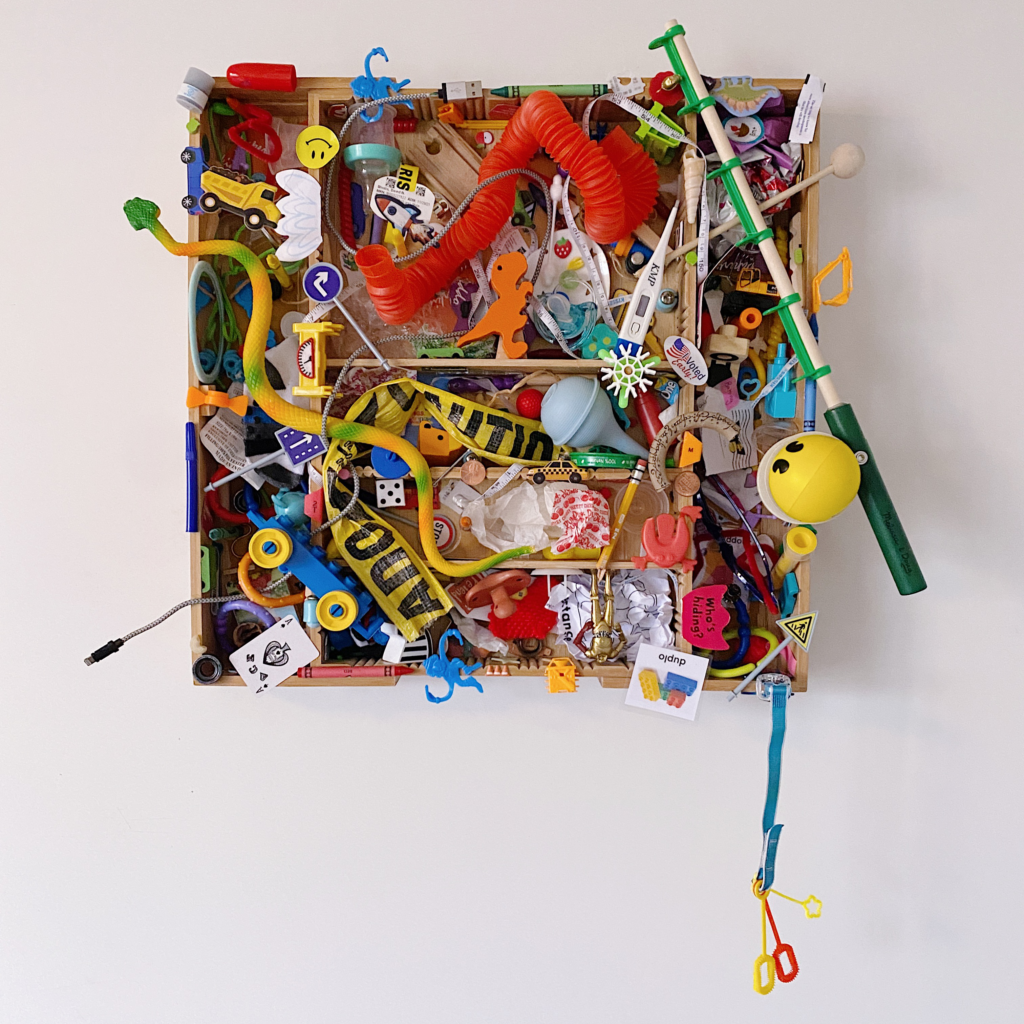
The Mental Load / 2023 / broken toys, detritus of motherhood / 28” x 25” x 8”
Takeaway: Virtual exhibitions are perfect for large or heavy works that are hard to mail.
There’s no way I could afford to ship this piece due to it’s size and fragility so a virtual exhibit & zine was a perfect fit.
View the virtual exhibition or purchase a copy of the Cut, Torn & Mended zine here.
Submission #6 – Anthropology of Motherhood
Venue: Three Rivers Art Festival (Pittsburgh, PA)
Cost to Submit: FREE
Anthropology of Motherhood Culture of Care was curated by Amy Bowman-McElhone, PhD and has traveled from Pittsburgh Three Rivers Art Festival to Dyer Art Center at National Institute for the Deaf.
This is also the only exhibition I participated in that had funding to pay the artists.
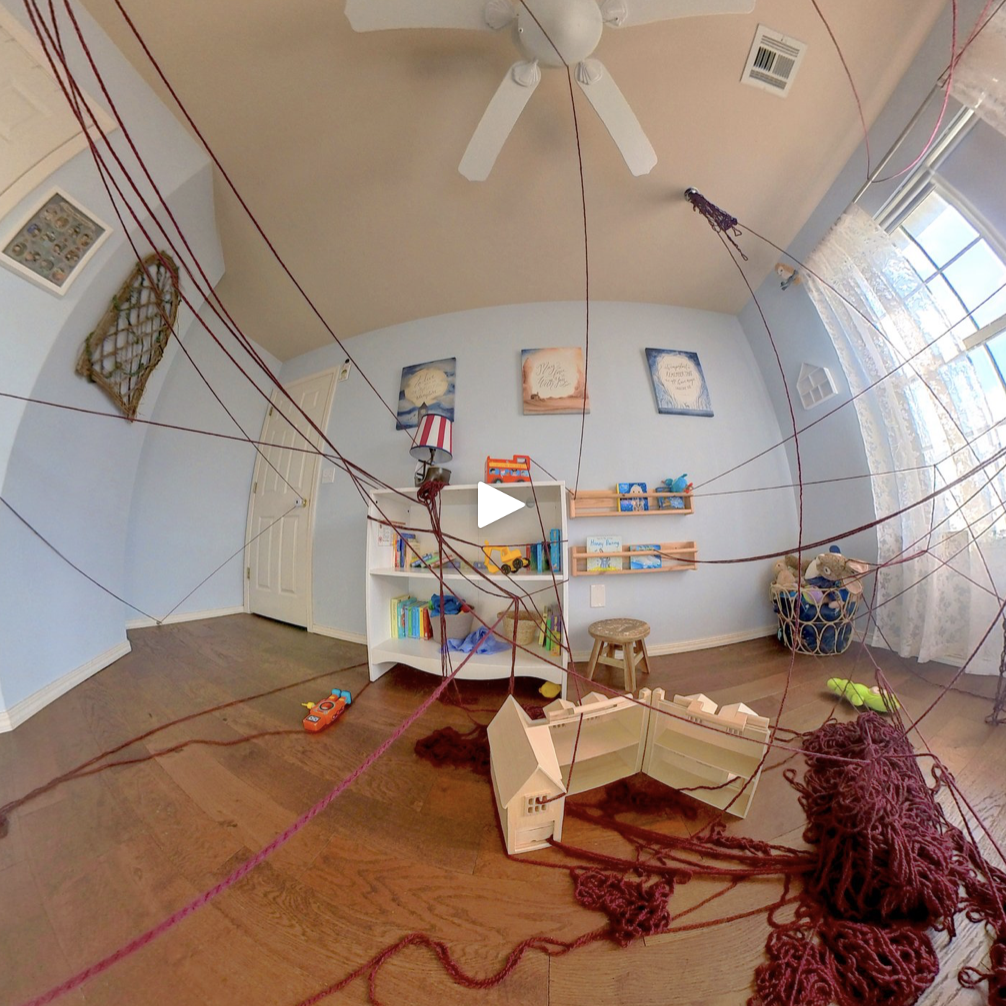
Experience this work in 360 with the YouTube app.
The work that was originally submitted was my 360 VR piece From Where I Stand. Once we started talking about the logistics of the VR headset the curators asked to show My Brain on Motherhood instead. It felt like a double acceptance because they considered both works worthy of exhibition.
I also learned that this work was not the physical object itself, but the video. This makes sense in retrospect, but wasn’t obvious to me until they asked to exhibit the video. I changed the details in my portfolio to list this as a video piece.
Takeaway: Video works are low cost. They don’t require framing or postage and are always “ready to hang” if a screen is available.
I have a few other video WIPs I need to finish up and get into my portfolio. I’m also keeping an old iPad to display works as needed.
Submission #7 – WoT Idol
Venue: The Dusty Wheel, YouTube
Cost to Submit: FREE
This one was just for fun.
Every submission was aired, but for me this submission was about putting myself out there and doing something for myself outside of my “professional” portfolio.
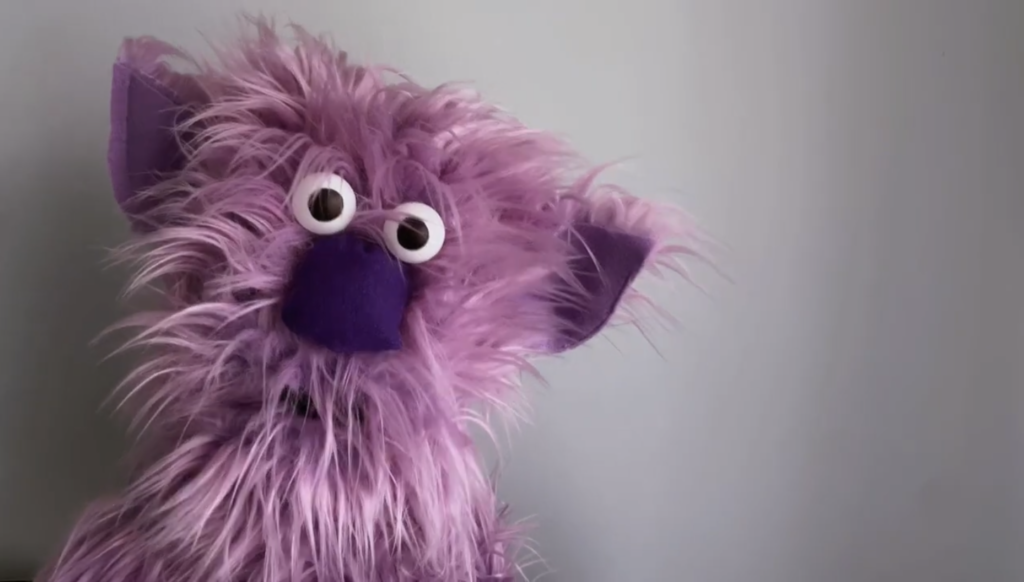
If you’re new around here I’m passionately dedicated to the Wheel of Time and have recently reconnected to the community. Last April I submitted a WoT Idol parody video turning Wheel of Time characters into Sesame Street style puppets. I wrote about the experience here:
Submission #8 – Spilt Milk Member Exhibition
Venue: Spilt Milk Gallery (Edinburgh, Scotland)
Cost to Submit: Free to Members
Do you hear us… are you listening? was “curated through an open submission to members, without a defined theme, nor a selection process. All members were invited to have their work included. The process of removing the selection committee allowed for a more democratic way of exhibiting our artists’ works, free of judgement or censoring and for all voices to be heard with equal importance.”
For this exhibition, members were invited to submit two works, and I submitted Meltdown and Meltdown Prevention. It felt like a nice opportunity to exhibit these works together and both were included.
If you’d like to see this exhibition it is archived here.
Takeaway: Exhibitions and open calls can come in many forms.
The way Spilt Milk Gallery includes both curated and member exhibitions is a big inspiration in how I’ve decided to structureNeurokind.
Submission #9 – Euphoria Quilt Project
Venue: Instagram
Cost to Submit: FREE
When I saw this project by
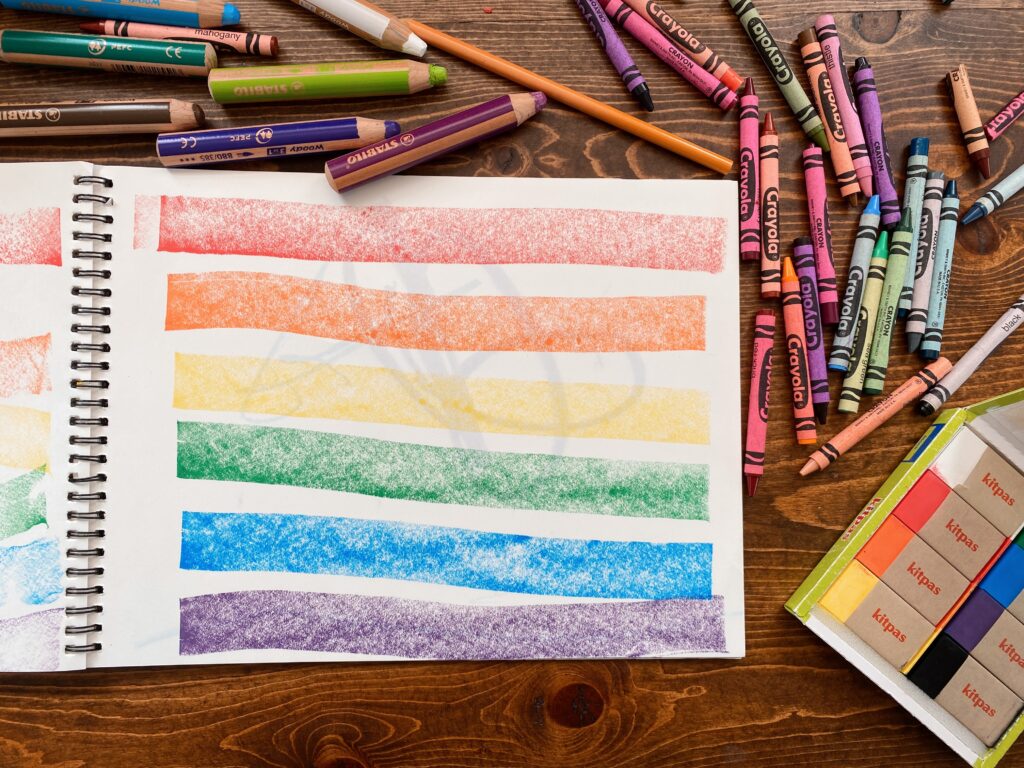
Euphoria Quilt Project I knew I wanted to submit a block, but I didn’t know if I had time to make one. Eventually I realized I could utilize the crazy quilting skills I’d developed while making my gleeman’s cloak and I made a quilt square from textured scraps.
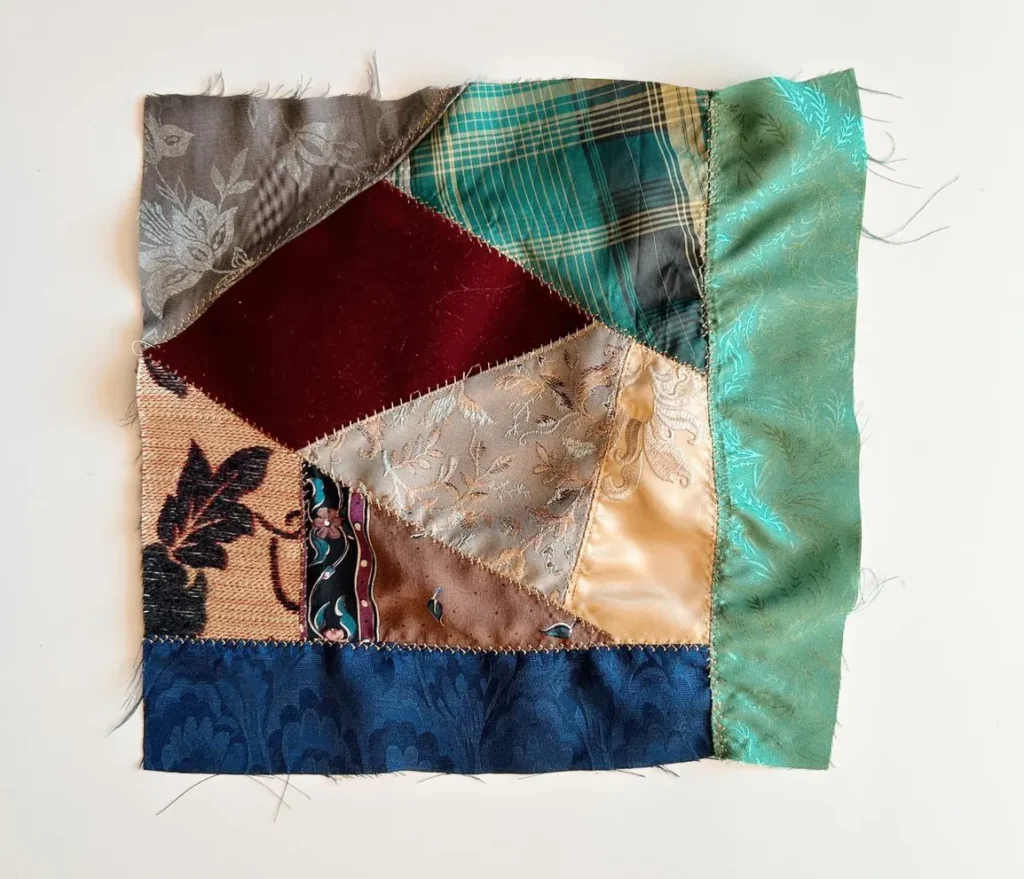
This piece will be included in a quilt representing gender expansive joy organized by Eliot Anderberg. You can see some of the squares that have been submitted over on Instagram.
I wrote the following about my square, “Embracing into my neuroqueer and nonbinary gender identity means leaning into the fact that I may appear eccentric. I explored that in this project by using the “wrong” side of several fabrics and improvising a “crazy quilted” design. Gender expression is also tied up in sensory experience for me so I also included some soft stimmy textures.”
If you’re new here and didn’t know I was nonbinary maybe give this a read…
Submission #10 – HNDL Magazine
Venue: Instagram
Cost to Submit: FREE
HNDL stands for Highlighted Neurodivergent & Disabled Life and is a “magazine featuring the work of creatives who identify as neurodivergent, disabled &/or chronically ill”. Give them a follow over on Instagram.
My piece Domestic Archaeology was included in HNDL Issue 2 (Fall 2023).
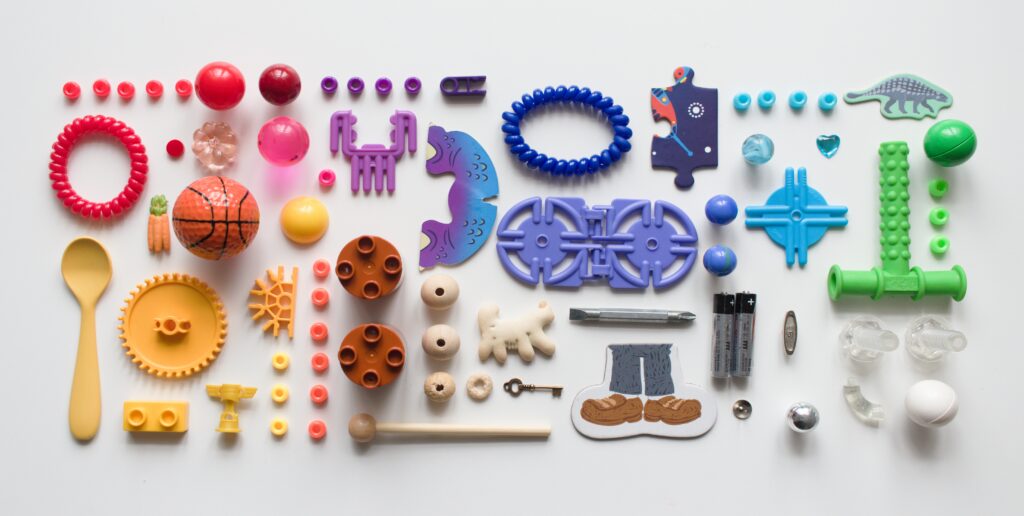
Domestic Archaeology / 2023 / lost items
This was a piece I created with things we found under the couch. I wrote a bit about the process here.
Takeaway: Virtual publications are a very accessible way to share work without printing and framing.
I’m also noticing how this magazine has flexible deadlines which inspired the rolling deadline I implemented over at Neurokind.
Submission #11 – Queer Anxiety
Venue: All Street Gallery (New York City, NY)
Cost to Submit: FREE
After such a wild run of acceptance I was sure that this one was going to be my first rejection of the year. You’ll notice this is the second work I submitted to a queer space. I’m a baby queer – only openly identifying as nonbinary, ace, and neuroqueer as of last year. So I felt some imposter syndrome stepping into these communitites, but I’ve been embraced into these spaces with open arms.
There’s something about exhibiting in NYC that feels like a right of passage. Even when I was packing up my work to mail it didn’t feel real. Luckily I had some friends who visited the exhibit on my behalf and documented that it was. (Thanks to everyone who sent me photographs and videos. You can see my work in situ here.)
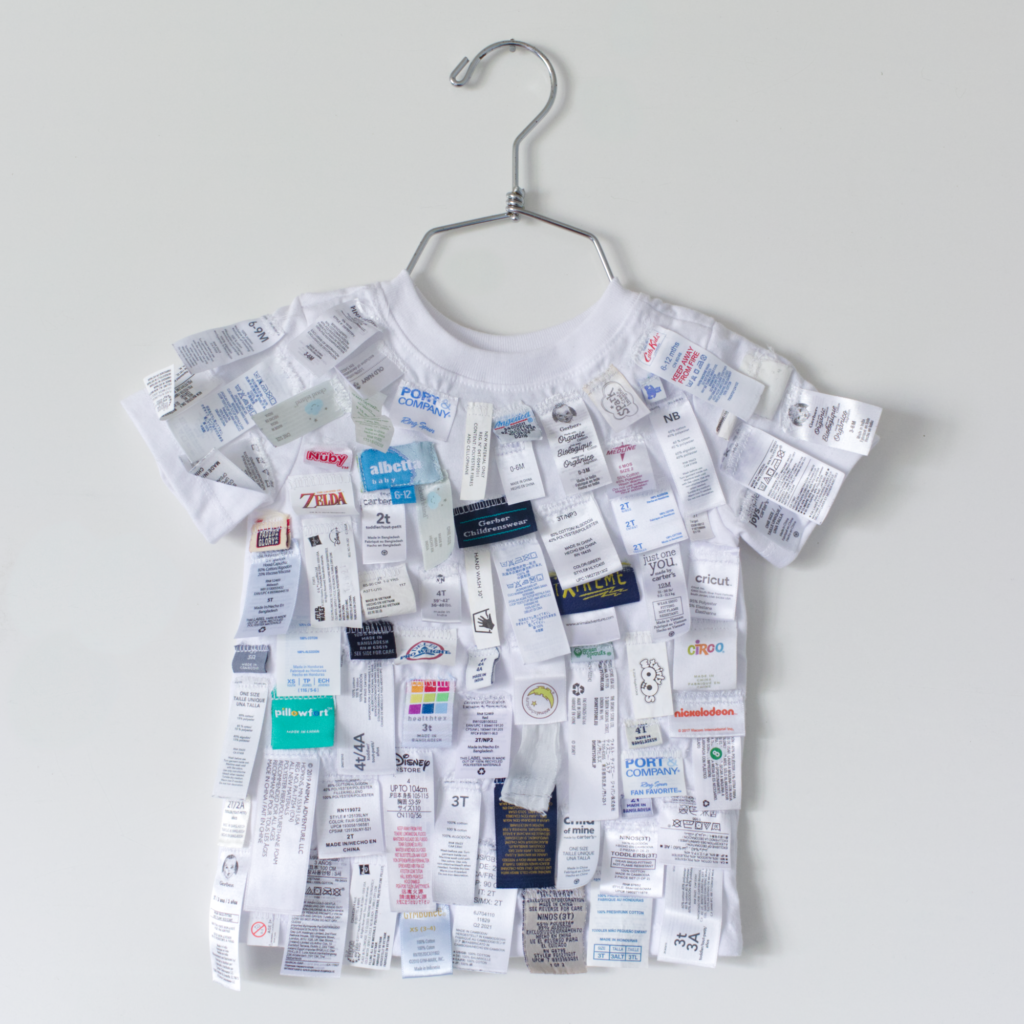
Meltdown / 2023 / shirt & clothing tags / 16” x 20”
QUEER ANXIETIES was curated by Blair Simmons, Eden Chinn, Sarah Hallacher, and Shuang Cai.
“Through sculpture, the 13 exhibiting artists make objects that stand outside of normative interpretations of usefulness and conventionality, thereby expanding our worldview and possibilities for engagement. If queerness is an act of making things strange (or challenging norms), strangeness identifies potential points of rupture within social conditioning.”
Takeaway: Submit the maximum amount of works possible (if you can.)
I actually created a new piece specifically for this call, but when I saw that there was the opportunity to submit 3 works I also included Meltdown and Unravel. It’s always nice to give the curator choices.
Some people have asked how I know about opens calls.
The truth is by serendipity.
Over the years I’ve connected with a variety of artists with similar overlapping interests. Many of them generously share opportunities (often on Instagram stories) which spark my interest.
Huge shoutout to these lovelies who often share art exhibitions and residencies:
Jocelyn Mathewes, Lauren Frances Evans, Catherine Reinhart, and Ashley Jane Lewis.
And Tamzen Bryant who shared the local book festival.
I’ve also really loved being a member of Spilt Milk Gallery who hosted 2 of these exhibits.
I hope I’ve demystified the process and inspired you to submit your work.
I wish you the best in making work and putting it out into the world. The next one I’m working on is a piece about roots for Motherlore Magazine. And if you’re neurodivergent I’d love to see your work submitted to Neurokind.
It’s not scary. We’re all people making things happen.
Cheers,
P.S. I’m rubbish at marketing, and this has been on my “to do” list for over a year. But I finally made a new footer to remind people I wrote a book / have courses / love comments. 🥰
I’m a Renaissance Soul so I always have lots of irons in the fire. Here are just a few of the ways that we can connect. (Psst… comments and shares are my favorite. And they’re free!)
- Leave a comment!
- Share this post.
- Sign up for Self Publishing 101.
- Subscribe or submit work to Neurokind.
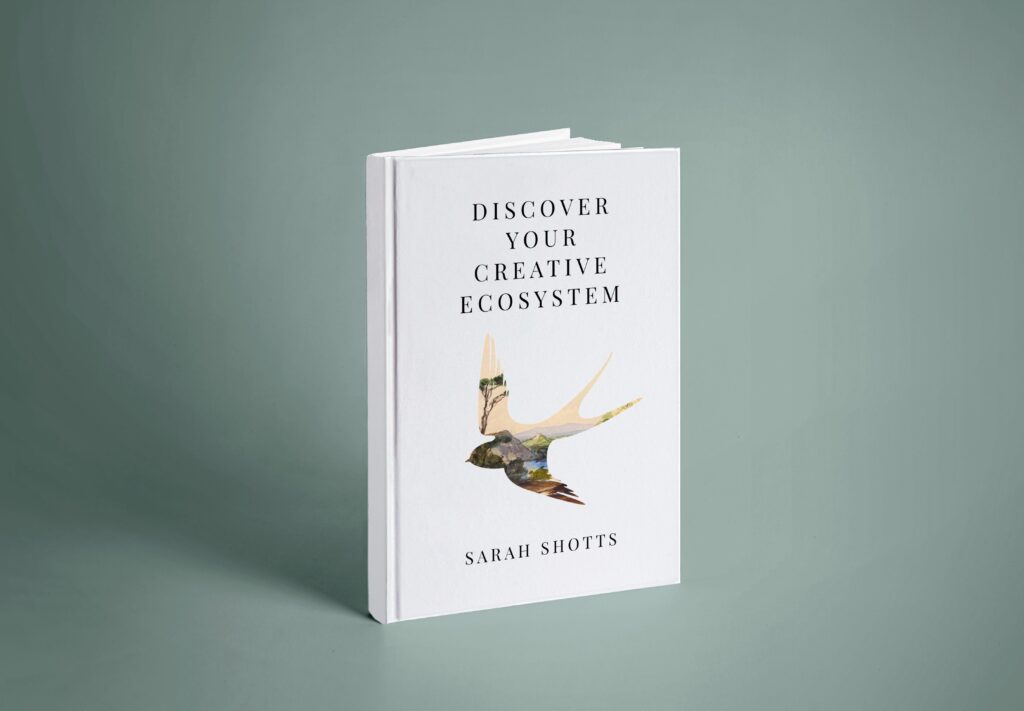
- Read my book Discover Your Creative Ecosystem (Curious what I mean by creative ecosystem? Start here.)
Footnotes
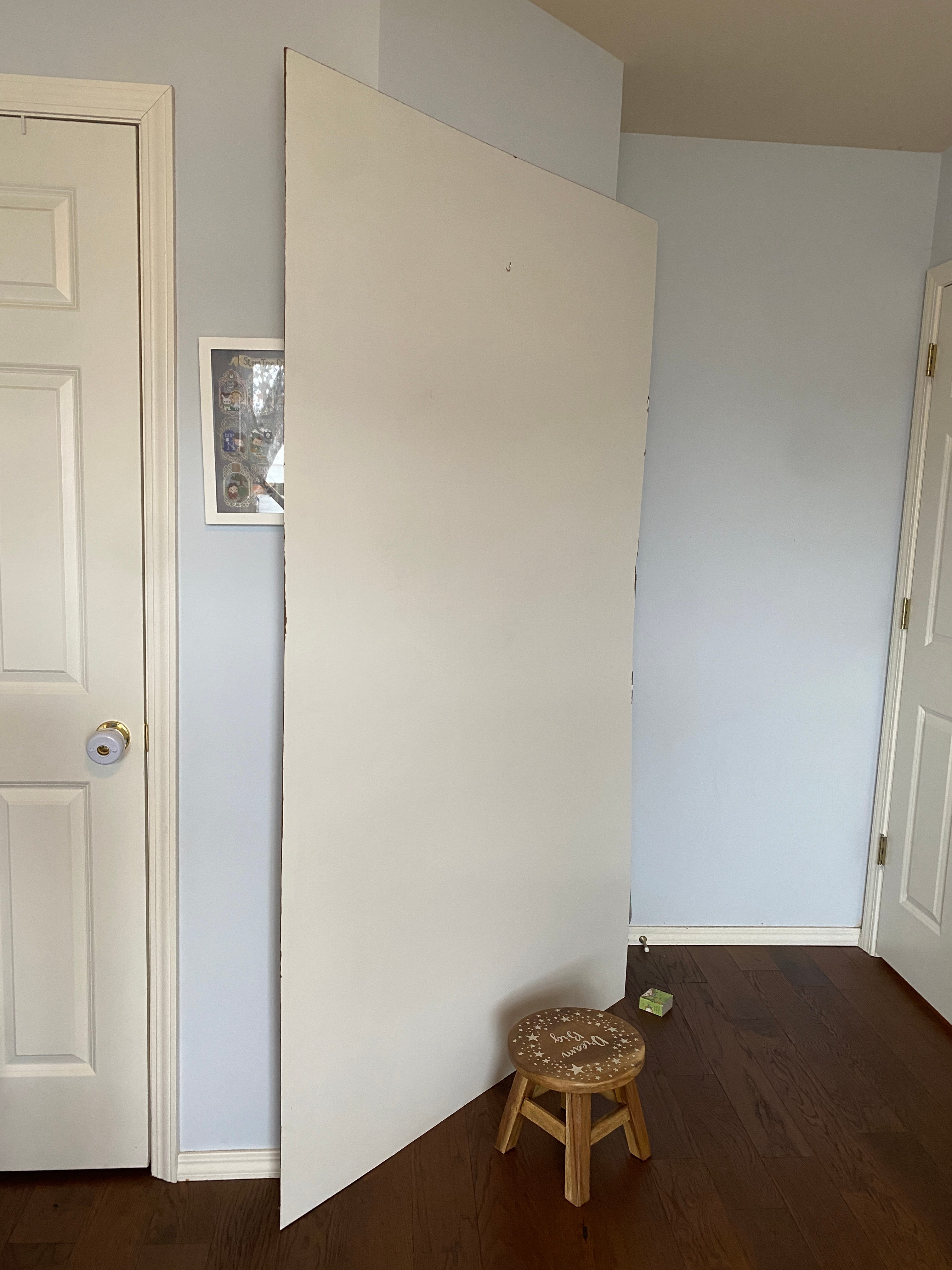
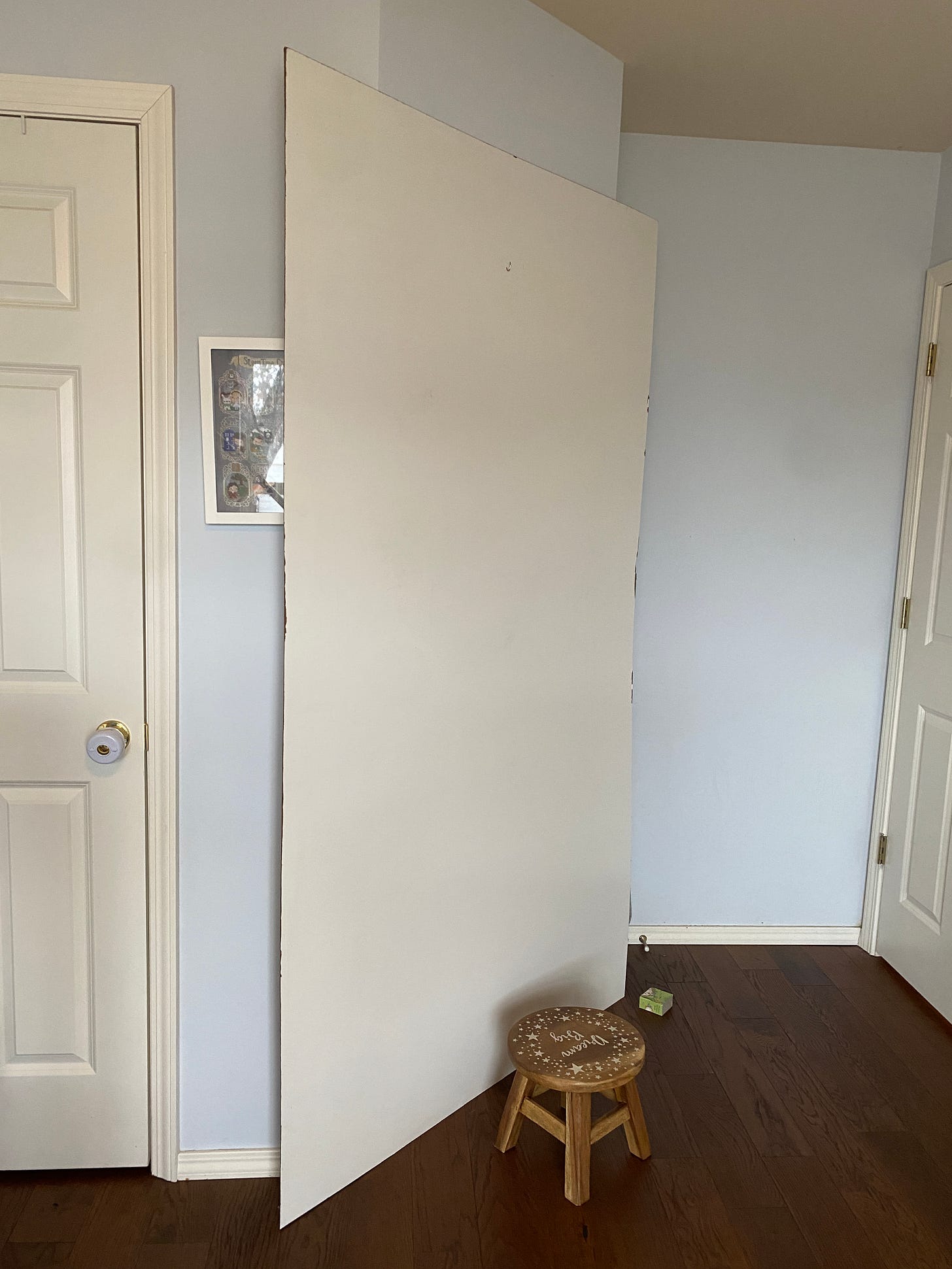
* We don’t have white walls in our house so I purchased a large sheet of white hardboard from the hardware store. There is a small hole drilled that lines up with a nail in Davy’s nursery where I often hang works to photograph them. I also have a smaller board I can set up on an easel and photograph in the backyard. Light is almost always the problem so I tend to use a tripod for portfolio photos even though I hate them. I also have a small white IKEA table I use to photograph 3D works. Here’s a peek at my set up. It’s a relatively inexpensive solution. If your work is small and lightweight you could probably get away with a piece of foamcore and a pin stuck in, but my larger works have needed a nail to hang from.
† (That’s Odo from Star Trek Deep Space Nine.) It took a lot out of me.
-
How it Feels to Me Update
Read more: How it Feels to Me UpdateNot yet archived.
Read here: https://sarahshotts.substack.com/p/how-it-feels-to-me-update
-
A wind rose in Charleston, South Carolina 🍃
Read more: A wind rose in Charleston, South Carolina 🍃“The wind was not the beginning. There are neither beginnings nor endings to the Wheel of Time. But it was a beginning.”
Last week I went on a creative pilgrimage to Charleston, South Carolina.
- I visited a library.
- I saw a tree.
- I met up with my “book club.” *
That’s the easy to digest version.
The facts, if you will.
But this trip was not about facts. It was about metaphysics.
For the uninitiated, metaphysics is:
“the branch of philosophy that deals with the first principles of things, including abstract concepts such as being, knowing, substance, cause, identity, time, and space.”2
This journey was about all of these things in a really intricate and profound way.
But first, let’s take a step back into the late 90s.
Observe Sarah, who has fallen asleep on the bed with a dictionary. Again. To the side of the bed is a stack of large thick blue books and several notebooks. If you thumbed through the notebooks you’d find clumsily written facts and lists of names.
Or carefully calligraphed prophecies.

At this point in my life I had no concept of neurodivergence or autism. But I had fallen for the deepest special interest of my life. When I wasn’t doing schoolwork or working I was thinking about these books.
The Wheel of Time.

I’ve written about this before, but it’s almost impossible to get across how important these books are to me or why. Here’s where metaphysics comes in.
There’s something about connecting with someone’s art that goes beyond the physical plane. Beyond logic.
It would be easy to say I love the characters, the genre, the use of language. That I’m drawn in by the depth of world building, the complexity of the magic system, and the sheer scope of the books. All of these things are true.3
Yet, I don’t think these are why I connect so deeply to this story.
It’s more ephemeral than that.
More metaphysical.

There’s something in me that feels seen by these books.
A sense of belonging and knowing that runs deeper than thought processes. A recognition at the soul level.4
The same feeling as when you meet a friend who just “gets it.” When the things that felt weird and unknowable about you become points of connection.
“You too? I thought it was just me.”
But it’s not just about similarities. Differences form this bond as well. And they expand your worldview. You begin to see the world through the eyes of your friend.
That is how I feel about these books. They see me and they also stretch me.
These characters were my peers. The fact that they weren’t real didn’t make their influence any less impactful.
I read these books at the height of my social anxiety. And I took away important lessons from the Aes Sedai. I saw their confidence and how they carried themselves in the world. I learned that perception can be more powerful than reality. And the that the truth you hear isn’t always the truth you think you hear.
I also saw teenagers leave their village and reshape the world. Everything felt possible.
When I finished the series I put the books on a shelf and didn’t touch them for a decade. (I talked about this a bit in my podcast chat with Morgan Harper Nichols.)

I didn’t realize at the time that my interests are a tool for self regulation and a lens I use to process the world. I had no idea what function they had in my life until they were no longer there.
In 2020 I hit rock bottom.
I couldn’t cope.
Then I started re-reading The Wheel of Time.
I’d forgotten how these books made me feel. I knew I loved them. But I also enjoy other stories and books that don’t have the same resonance. These stories are different.
They are etched into my bones.
When I re-read the Wheel of Time I’m always surprised at the curious mix of what I’ve retained – the details I know as if I lived them. And what became hazy over time.
There’s always something new to notice.
And in a story of 4.4 million words and 2787 distinct named characters I suppose there would be.5
Sometime after that re-read I also reconnected to the Wheel of Time community. I was surprised and delighted to find there were other nerds who still loved these stories as much as I do.
It felt like rediscovering part of myself that I’d forgotten existed. My joy at listening to livestreams on The Dusty Wheel was palpable.. an embodied sense of belonging. “These are my people.”
The more time I spend in this community the more incredible I realize it is.
There’s a generosity in spirit and a value in creative joy that I haven’t seen in other corners of the internet. The more I watched these people nerding out the more I knew I needed to make time and space for this in my own life.
This January I wrote down “Wheel of Time convention” and “Pilgrimage to Robert Jordan’s Notes” as long term goals. It felt impossible at the time, but also important. Never in my wildest dreams did I imagine both would happen this year.
Intention invites opportunity.
After winning a ticket to WoT Con this summer one thing led to another and I signed up for Ogier Con – a small gathering of fans who were planning to make the pilgrimage to Charleston…together.
Instead of traveling alone I was destined to go there in community.
The wheel weaves as the wheel wills.
When I made it to the library I found myself reading Wheel of Time manuscripts with Matt Hatch, Tamrylin of Theoryland, Innkeeper of The Dusty Wheel.
In that moment, time collapsed in on itself. I existed in four timelines simultaneously:
- the moment I learned these notes existed
- thinking this trip was impossible
- writing the intention
- holding RJ’s notes in my own hand
Over time other hard core fan freaks joined us at the table. We’d each come with a different purpose.

My purpose was to study Robert Jordan’s creative process.
My curiosity about RJ’s writing process doesn’t come from a desire to replicate it. I could no more write in his particular style than you could teach a bird to swim.
But I’m learning that his process was messier and more intuitive than what I had come to accept as “the right way.” It’s given me inspiration to toss out the rule book and develop a writing process that works for me.
There’s something about the Wheel of Time that reverberates with the storyteller inside me.
It shakes my inner writer awake. I wondered if I’d feel that reading his notes. And I did. The more I learn about Robert Jordan’s writing process the more I see pieces of myself.
Don’t get me wrong. We’re wildly different people. But there are mundane similarities.
Looking at his notes I found lists. Facts, idioms, and so much research. He filled notebooks with information about plants and herbal remedies. Historical and mythological figures.
Other notebooks had a single list and the rest was empty.
(I vow never to feel guilty about abandoning notebooks again.) 😂
These were just the kind of notes I used to keep as a teenager. I had one small green notebook that was a collection of names – especially for writing.
I also have an obsession with collecting what I call colloquialisms. An interest originally sparked by their use in Robert Jordan’s writing, and expanded during my time living abroad.
For example, I love the contrast between
“I feel like I’ve been hit by a Mac truck.” (Mississippi)
and
“I feel like I’ve been pulled through a bush backwards.” (Ireland)
It’s even better with accents, trust me.
I looked up some of the phrases RJ had collected and determined they were from films. I can only imagine that he then studied those to work out how to create his own. He was an expert at this and it made his world feel rich and lived in. For example, a character who grew up in a fishing village says,
“You bore a hole in the boat and worry that it’s raining.”6

I love seeing evidence that Robert Jordan had similar drive to collect information.
There was a conspicuous lack of outlines.
Instead there were plenty of notes in a style that RJ called “rambling.”
These ramble files read almost like freewriting about the story. He seemed to craft his plot on the page. Not in an outline.
The first ramble file I read opened with a few paragraphs about Emonds Field – the houses, the economic structure, the village’s contact with the outside world (peddlers, grain traders, and gleemen.) Then he starts working through details. I love the bits where he asks himself questions or sets down two different options to consider.
“The peddler is dead(?)”7
“Tea: where does it come from?”8
“Lan falls in love with Eguene (?) or with Nyneve (?)”9
“????? the Rods of Dominion ?????”10
Many of Jordan’s early ideas are very different to what happens in the books while others remain unchanged.
I think my writing process could do with a bit more rambling on paper.
I already use freewriting to process experiences in life. So it feels like a natural fit to weave that into my storytelling.
I stayed in the library until a librarian came up quietly and asked, “Did you know we close at 4?” It was 4. I thanked her and packed up. I paused to look at the display outside the library. RJ’s old desktop computer was there with a sticker,
“Any sufficiently advanced technology will be indistinguishable from magic.”
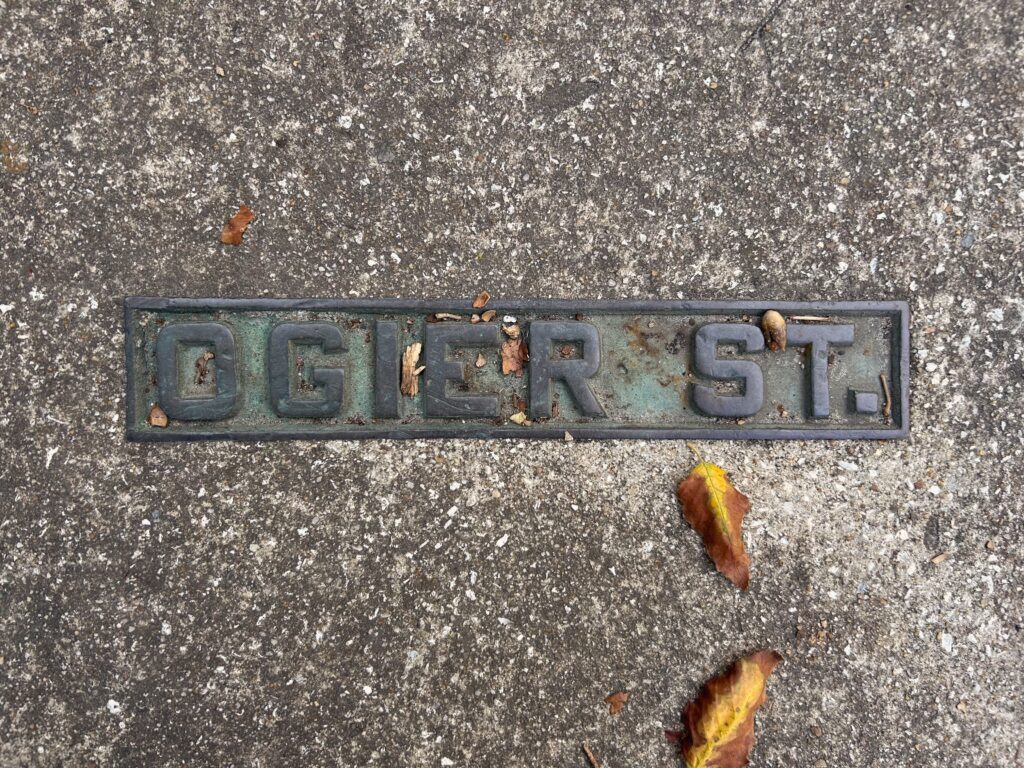
I started a 15 minute walk to the Air B&B my rolling suitcases in tow. Along the way I serendipitously came across Ogier street. The Ogier are a forest dwelling people in the Wheel of Time who have a penchant for long winded stories and info dumps. (Sound familiar?)
I took a photo.
The rest of the weekend was an exploration of Charleston and the places that inspired the books.
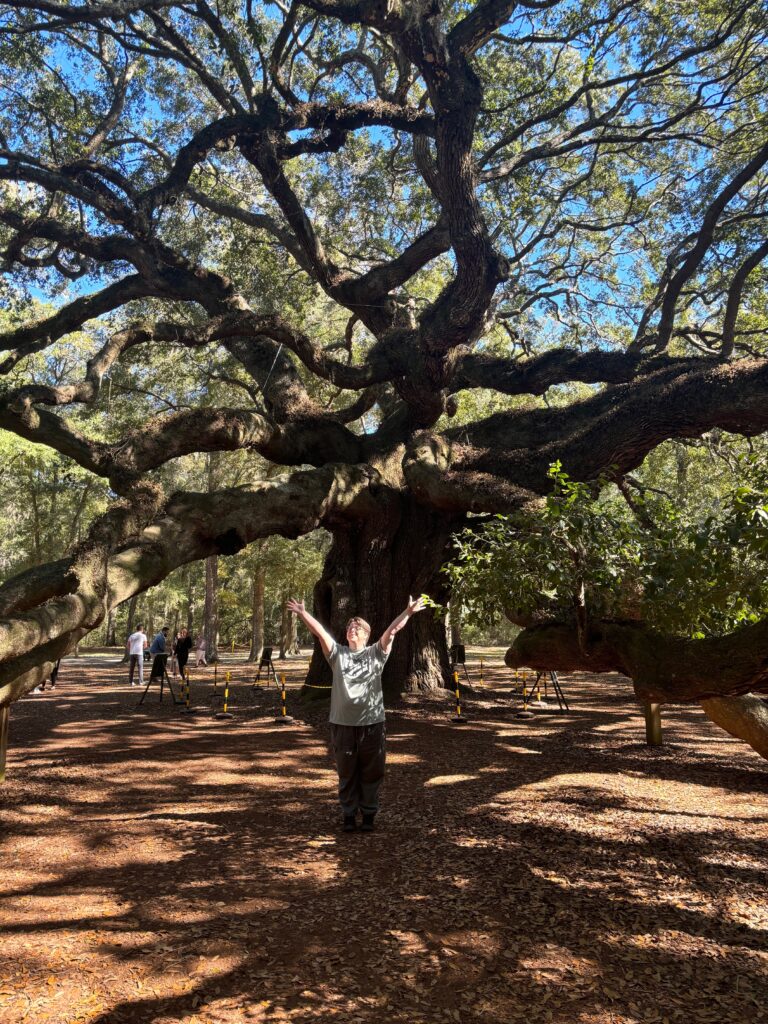
We visited the Angel Oak, known affectionately by the fandom as Avendesora, the Wheel of Time’s version of the Tree of Life. I’ve seen live oaks before, but the scale of this one was otherworldly. It’s impossible to convey the sense of scale with a photograph.
The next day we walked the gardens of Harriet McDougal’s home (Robert Jordan’s widow and editor). We were given a tour by Maria Simons (Head of the Brown Ajah). Every time I thought we’d seen it all we would turn a corner or step into a passageway and discover more. A true secret garden.
I took photos of flowers to plant in my own garden next year (including these tithonia which the butterflies loved… I even spotted a monarch.)

Next, we met with military historian and author of Origins of the Wheel of Time Michael Livingston.
He talked about his own creative process and showed us around The Citadel – the military college where RJ drew inspiration for The White Tower. There was also an impromptu book signing at Robert Jordan’s desk, which is now his. Michael signed a copy of his fiction book Shards of Heaven for me, which I look forward to reading. It is a historical fantasy novel set in Ancient Rome.
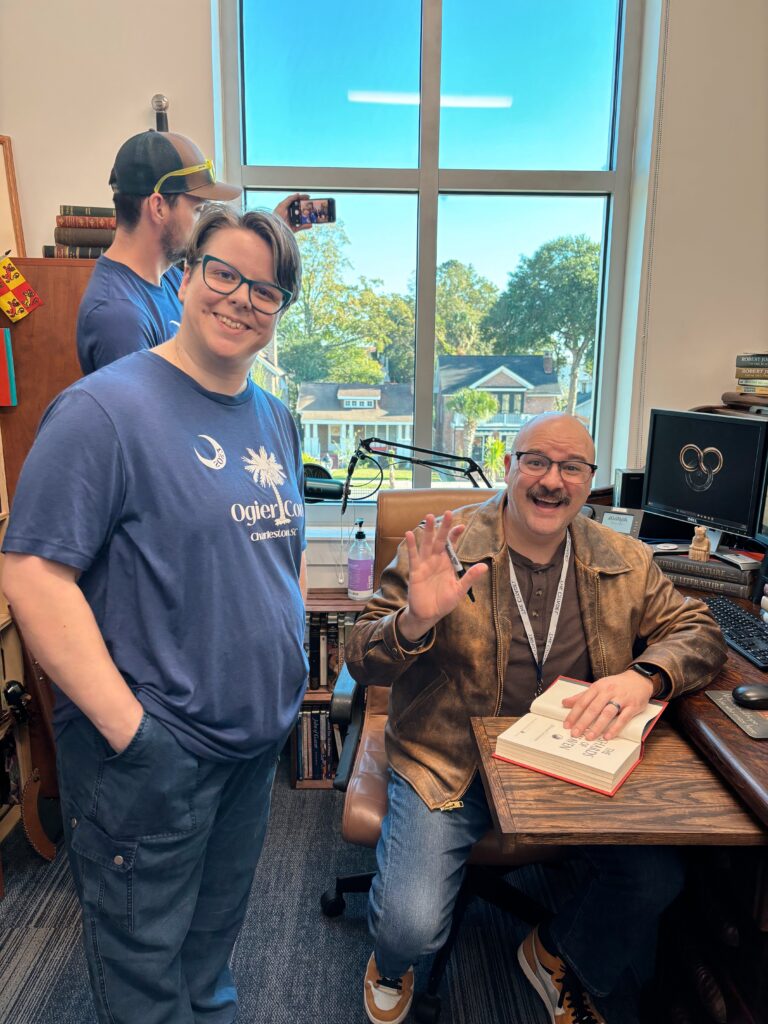
I’m still processing everything I was able to see.
Most of it didn’t seem real. Kind of like seeing Big Ben for the first time.
And between every surreal moment was soul to soul connection.
The intimate size and setting of the gathering made space for expansive and meaningful conversation.
It was like a bubble of peace that existed outside of time and space.
A Dreamshard, if you will.
I went looking for Robert Jordan and I found his spirit alive in these people.
If that’s not metaphysics at work I don’t know what is.

Many thanks to everyone who worked hard to make this weekend come to be, and also to every single sweet spirit who was there.
You are all doing The Light’s Work in your own way.
Your names sing in my ears.

I’m in proper long winded Ogier mode today, but I’ll try to wrap things up.
Circling back to my creative process:
I’ll never be Robert Jordan.
No one will.
But I can be Sarah Shotts.
I can tell the stories that are important to me in the ways and timelines that are right for me. My goal isn’t capitalistic success, but creative expression. To make something that’s true to me and share it with others who may find bits of themselves in it.
I’ll always have multiple projects. But I’m learning how to them weave them together. One project bubbling away in the slow cooker. One on the stovetop. And another fermenting in a dark cupboard.11
That cupboard is where my fiction writing has been. It’s time to wake up that sourdough starter and start proving some bread.
Kindle Curiosity is a reader-supported publication. To receive new posts and support my work, consider becoming a free or paid subscriber.
Let’s discuss.
Do you have any projects in the fermentation cupboard you’re ready to pull out?
Have you ever had a creative pilgrimage? Where did you go and what did you learn?
Cheers,
P.S. Did you miss my first post about rediscovering Wheel of Time? Catch it here.
P.P.S. Want to know more about The Wheel of Time? I wrote this for you.
Footnotes
We realized over the weekend that the easiest way to explain why 12 strangers were flying across the country to visit a library and an old tree was simply to call ourselves a book club. It worked on my chiropractor.
Metaphysics definition via Oxford Languages
Also true, and something I love about this fandom is that we each bring our own criticisms to these books we love. I don’t love these books in a way that is infallible. I know they are flawed. Everything human is. And I love them anyway.
Perhaps I should reread John O’Donohue’s Anam Cara with this in mind. Maybe there are answers there. (Anam Cara means “soul friend” in Gaelic.)
For the curious that’s 88 NaNoWriMo novels. The reason I went for words instead of pages.
Siuan Sanche, The Great Hunt by: Robert Jordan
Box 20, EOTW Revision #1, Filename: Ramblings, pg. 10 (James Oliver Rigney, Jr., papers, College of Charleston Libraries, Charleston, SC, USA.)
Box 24, Folder 1, TGH, “Misc Random thoughts” (James Oliver Rigney, Jr., papers, College of Charleston Libraries, Charleston, SC, USA.)
Box 24, Folder 1 “Notes on course of books” (James Oliver Rigney, Jr., papers, College of Charleston Libraries, Charleston, SC, USA.)
Box 75, Folder 2, “Additional White Goddess Notes” (James Oliver Rigney, Jr., papers, College of Charleston Libraries, Charleston, SC, USA.)
It turns out fermentation is actually a key part of my creative process, and not one I’m going to feel guilty about any more. Maybe I’ll write more about this another day.