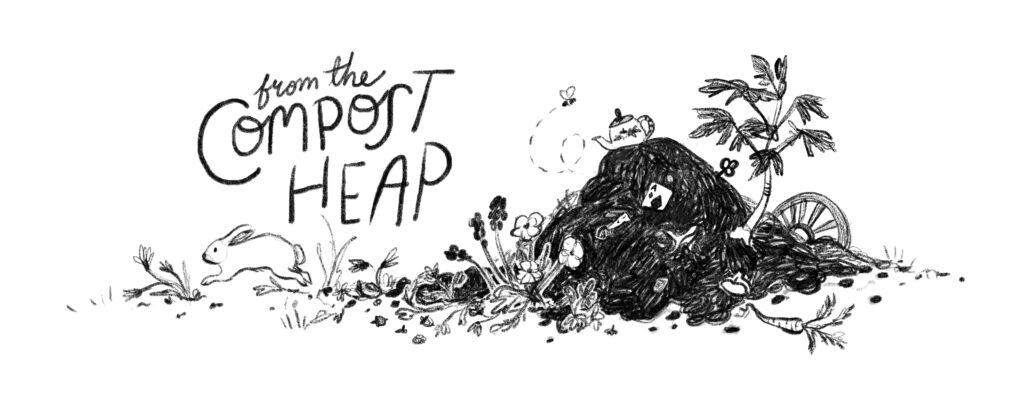
From the Compost Heap header. A pencil style illustration of a compost heap with flowers and plants growing around it. A bee buzzes by and a white rabbit hops by.
  • How it Feels to Be Time Blind ⏳

    Growing up I had no idea I was time blind.

    But I was already establishing coping mechanisms. Because I had no internal chronometer to distinguish between 5 minutes and 50 I would prepare for every outing far far in advance and find myself in a state of limbo unable to do anything but wait.

    This is effective, but is also a black hole for both energy and time.

    Doctor Who says "People assume that time is a strict progression of cause to effect, but actually, from a non-linear, non-subjective viewpoint, it's more like a big ball of wibbly-wobbly, timey-wimey stuff."

    People with time blindness tend to be chronically early or chronically late.

    It’s funny that the same internal experience can result in two such seemingly different behaviors, but it makes sense. One approach to time is a rigid controlled white knuckling. A hyperfocus that saps both time and energy from your life. The other holds on with a looser grip and time slips away.

    You might construe the first stereotype as autism and the second as ADHD, but time blindness is an internal experience shared by both.

    White Rabbit from Disney's Alice in Wonderland hopping frantically with an oversized pocket watch

    Now that I’m a mother I simply don’t have bandwidth to white knuckle my way through the day hyperfocusing on time.

    I cannot wait in the car for an hour. I do not have an hour to spare.

    Not to mention the chaotic element of a small human who has all sorts of urgent needs that can’t always be anticipated.

    How do normal people know when to leave the house to arrive somewhere on time?

    I never realized I was working SO HARD at something most people find simple.

    I was obsessed with planners a few years ago. I never would have described myself as disorganized, but this was down to the fact that I relied on a series of complicated systems to keep track of the most basic things.

    Lorelai Gilmore sits at kitchen table with laptop and says "Tomorrow at 10:00 Roz darling?"

    Like what day of the week it is. (I’m not kidding.)

    When Davy was in his human goat phase I gave planners up. As a result I’ve been flying blind for 3.5 years now. During this time I have learned a few things:

    First, go gentle on people who show up late and forget things. They are doing their best.

    Second, I really thrive with structure and systems.

    It’s impossible to overstate how much having a plan helps me.

    Structure frees up my brain for other things in a way that I can only compare to breathing oxygen versus being waterboarded.

    I’ve been metaphorically drowning for actual years now.

    Alice in a bottle floating in a sea of her own tears

    At first I thought the lesson I was meant to be learning was how to “let go” and embrace fluidity.

    There is nothing less helpful you could suggest to a human whose brain needs structure.

    The last few months I have been experimenting with themed days. With one focus per day my nervous system has improved dramatically. It also seems to help Davy. (We are both the type of neurodivergent who likes to know what’s coming.)

    But we all need different things.

    If your brain needs freedom embrace that. Don’t let people shame you and push you into a rigid structure if that doesn’t work for you.

    When we’re forced to work in ways that run counter to our neurotype it’s important to recognize this is legitimately difficult for us.

    Life seems determined to deal out changed plans, external deadlines, and an ungodly amount of urgent paperwork.

    When this happens we should treat ourself like we’re doing something really hard (because we are.)

    Without a plan my brain feels like it is on high alert all the time just trying to get through the day. Imagine a tennis player bouncing with bent legs ready to sprint in any direction*. That’s how I feel without a plan. It’s exhausting. And I am far more likely to become overstimulated.

    Professional tennis players

    *I know nothing about sports. But we were told to stand this way in Improv class and I quit immediately. 😂

    When our nervous system is on high alert we can help ourselves by:

    • providing sensory support (comfortable clothes, fidgets, movement, regulating environments)
    • seeking comfort (a cozy blanket, a favorite book or tv show, a cup of tea)
    • asking for help
    • finding someone to work alongside us (sometimes this is called “body doubling”)
    • rewarding our own efforts (treat yo’self)

    I could say more, but I’ve run out of time. 😂😂😂
    Read more: How it Feels to Be Time Blind ⏳
  • Neurodivergent Boundaries

    Boundaries can be extremely difficult for neurodivergent folks to navigate. This is particularly true for those of us who were late in life to realize our neurodivergence. For decades I saw my autistic traits as my character flaws. Reframing them to ask for the supports I need has been a seismic shift for me.

    This is the first holiday season since my child’s autism diagnosis and I am drawing some lines in the sand about what we really need. I wrote these as a pep talk for myself and decided to share.

    But you don’t need a diagnosis to advocate for your own needs.

    The diagnosis isn’t a magic paper. It doesn’t actually do anything on an interpersonal level.*

    I was officially diagnosed seven years ago and even so I have never properly advocated for my own needs. It took my child’s diagnosis (and the resulting inner work) to reframe my autism and start to see my own needs as neutral and valid.

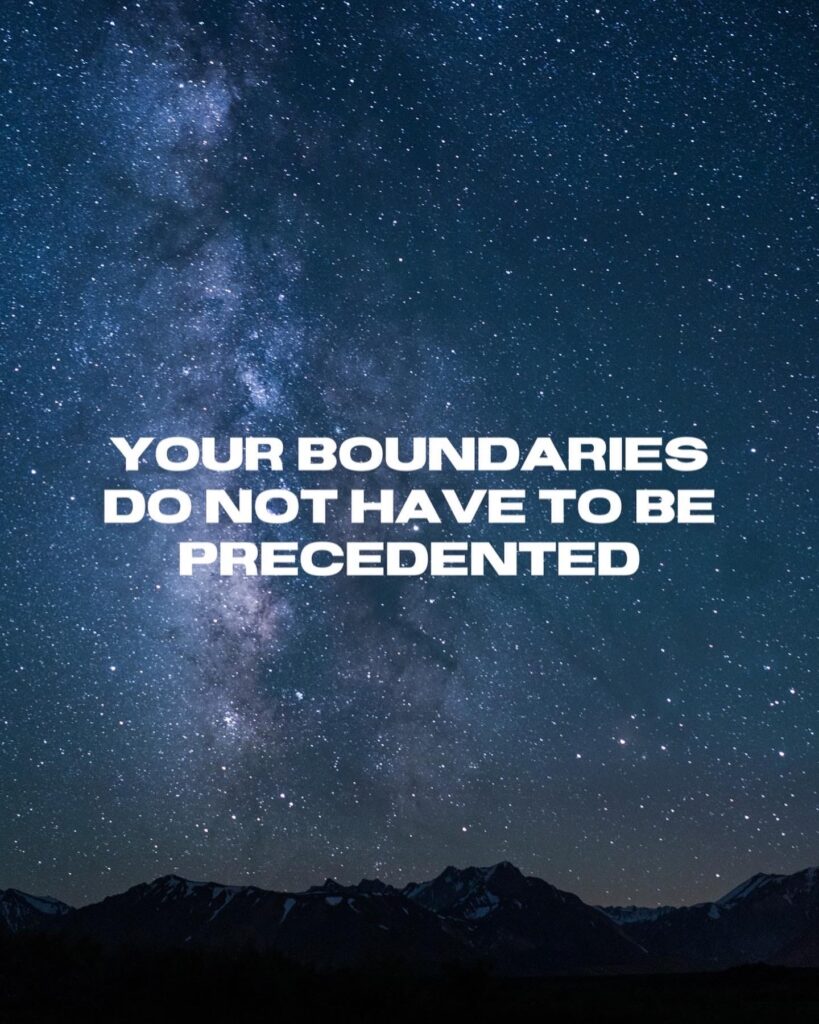
    Your boundaries do not have to be precedented. On photograph of milky way with mountain range.

    If you are also struggling to ask for what you need remember I am over here rooting for you.

    Your needs are valid.

    Sensory pain is real.

    Time to decompress is essential.

    I am new to all of this! But I’m sharing my story to help you all feel less alone.

    This isn’t a template, it’s just where I am right now in my boundary setting process.

    How I supported my neurodivergence when setting boundaries…

    1. I no longer make phone calls. When a phone call is required I say, “I have auditory processing disorder. Text based communication is best for me. Can we do this via email or text message?” (I don’t always disclose my autism diagnosis because it is easier for most people to understand a difficulty hearing. We don’t have to fully educate every person. We can choose to communicate the specific piece of our neurodivergence that is relevant to the situation. Or the piece that is most easily understood.)†
    2. I communicated what we need for holidays through a letter in the mail. The resistance I had to doing this was strong. But I wanted to set these boundaries in advance and didn’t feel able to do so over the phone. When I was packaging up the letter I thought about all the times I heard written communication described as “passive aggressive.” This is definitely from a neurotypical perspective. I wonder how many of these “passive aggressive” notes and letters are a last resort by autistic or neurodivergent folks whose needs are being misunderstood or ignored?
    3. I made a schedule. Important routines such as meals, afternoon downtime, and bedtime are fixed and in red. Places to eat that meet sensory needs have been decided in advance.
    4. I also included an informational packet. I printed some of my favorite pages from Andi Putt’s Autism Handbook(not an affiliate, just love her) and bound them in a paper folder. I put a sticky note that said, “More info. Please read the bits I highlighted.” I also printed a copy to bring with me so I can refer to it if I feel stuck in the moment.

    Does that sound brave?

    It was.

    I am still incredibly nervous about how these boundaries will be responded to.

    It has taken a lot of work to get here, but at this point I would be unable to visit extended family without these supports.

    Since becoming a mum I’ve noticed that I have less capacity to mask than I used to. And I simply cannot push past my limits without hitting a brick wall. Our last family visit ended with a panic attack and a mental health spiral that almost landed me in a mental hospital. The stakes are high.

    I’m not exaggerating when I say that I have anguished for years over how to set boundaries and what boundaries would even help.

    During pregnancy I signed up to therapy for support setting the postpartum boundaries I needed. But I was invalidated by a therapist who didn’t understand autism. If you’re looking for support try to find someone who gets it or they could do more harm than good.

    Four years later I finally worked up the courage to ask for what I need thank to support and validation from autistic therapist Steph Jones in a 1:1 coaching session earlier this year.

    Before I could set boundaries I had to internalize the fact that my needs (and my child’s needs) are valid. And I had to stop trying to make boundaries that were “reasonable” so I could ask for what we really needed.

    What boundaries did I set?

    Most of us haven’t seen this type of boundary setting modeled. So I am sharing some of the areas we asked for support. We all have different needs so your supports will be different.

    Don’t use this as a framework, but as inspiration to set the boundaries you need.

    1. Space – a private space to decompress. (We booked an Air B&B that fits our sensory and social needs rather than staying with a family member.)
    2. Overstimulation – limiting the number of auditory inputs at one time.
    3. Social overwhelm – limiting the amount of people present. (For us this means more intimate visits and not including the entire extended family.)
    4. Structure – we will be following our schedule for meals, downtime, and bedtime. Others are free to join us or not.
    5. Respect – I have asked that preferences to not be touched, photographed, talk, or make eye contact be respected.

    That’s it! Please wish us luck and send any positive vibes, prayers, energy, our way.

    Cheers,

    Sarah signed with a swoopy S

    fOOTNOTES

    * An official diagnosis would be helpful if required by your workplace, school, or insurance to offer supports and resources, but it little help in family context.

    † Because of privacy issues my insurance is one exception that refuses to speak to my husband on the phone. I have yet to find a workaround and we struggle through the calls together on speakerphone. If you have advice for this navigating supports in health care / insurance settings please share.

    Read more: Neurodivergent Boundaries
  • Intentional Inconsistency

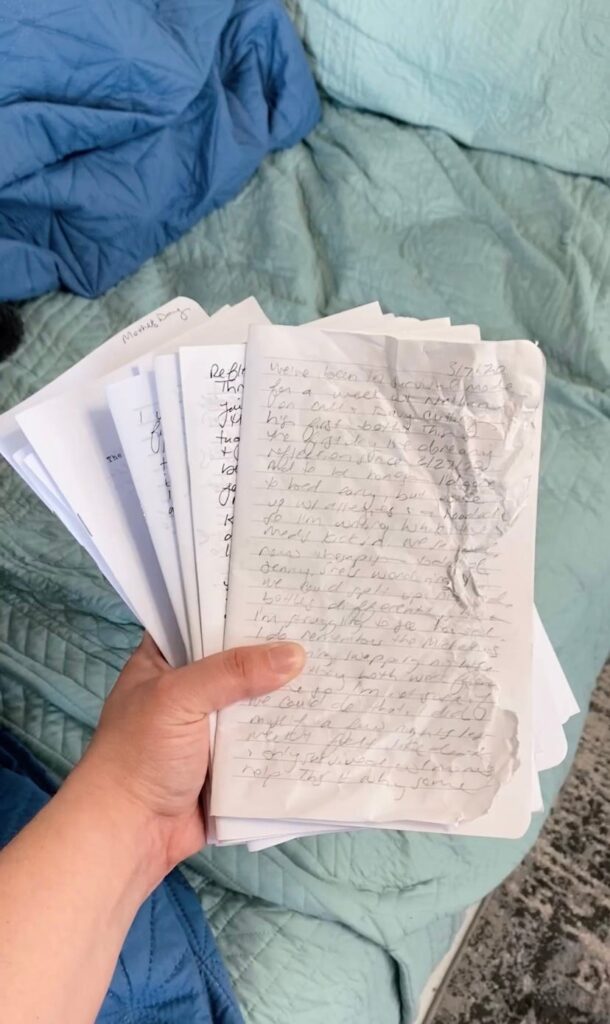
    Holding 3 years of motherhood journals.

    The very idea that inconsistency is something to practice may fly in the face of everything you’ve ever heard.

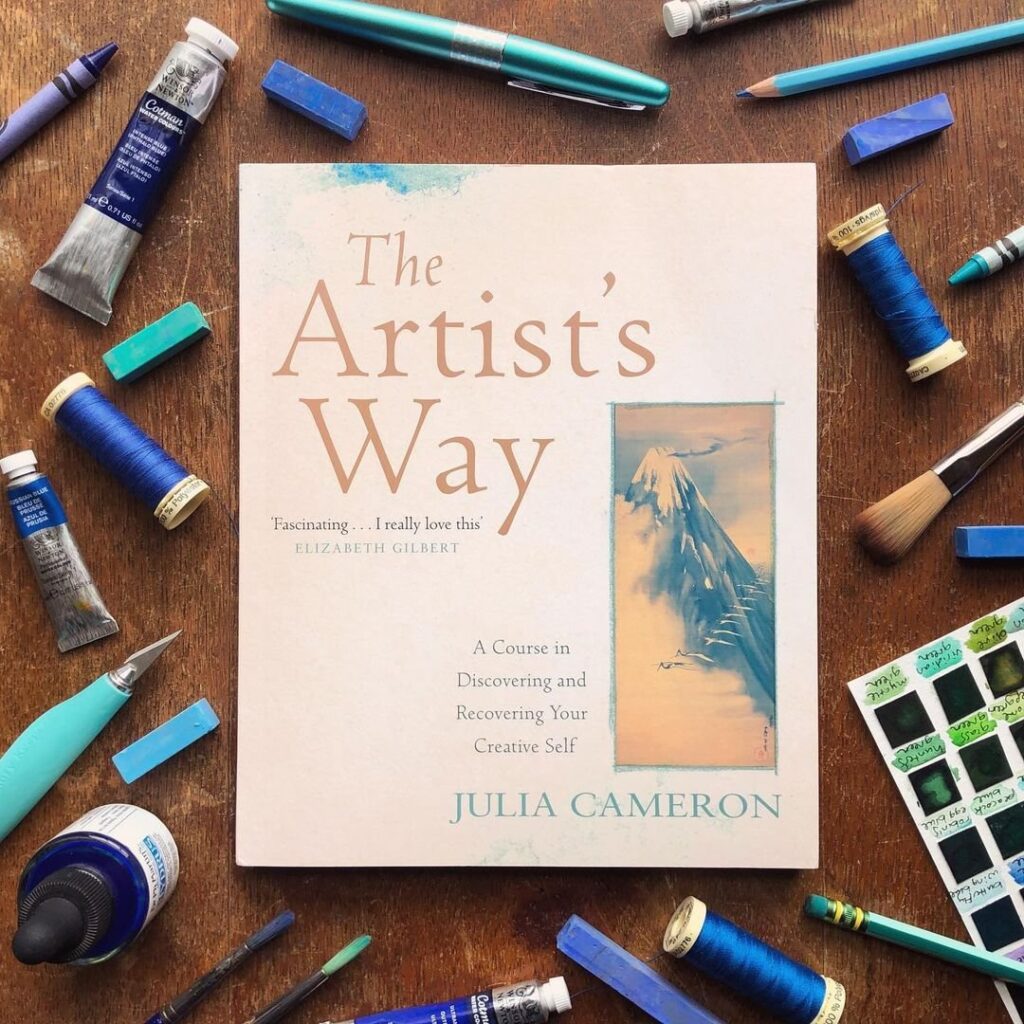
    It’s certainly the antithesis of what Julia Cameron prescribes in her book The Artist’s Way.*

    *I actually love this book, but her specific creative process hasn’t been a good fit for me since my kid was born.

    UK edition of The Artist's Way by Julia Cameron surrounded by blue art supplies: paints, pencils, pastels, thread and and brushes.

    During my autism evaluation the psychologist noted that I was an “all in” person. I was drowning in commitments and my evaluator suggested I try practicing inconsistency. I was completely blind to having that choice.

    My brain only sees “do” or “do not.” (I would be an excellent Jedi Master.)

    Yoda jedi master

    Its been a very long and slow process to begin shifting this.

    That’s why I call it a practice. I mean that in the same way someone has a yoga practice or a gratitude practice. Inconsistency is something I’m actively working to cultivate in my daily life.

    Photograph of dictionary definition of practice: actual performance or application of knowledge, repeated or customary action, usage, habit

    Because of this tendency I avoid “don’t break the chain” mindset like the plague. I’ve fallen under its spell many times and its pretty ugly. I could chain 300 days and if I miss a day its all over for me.

    That broken chain feels worse than starting from zero.

    My best defense is to embrace inconsistency. To invite it in.

    When I was journaling as a new mum I was often faced with the option to sleep or to write. And, in my maternal wisdom, I knew that Julia was wrong.

    Art is important, but sleep is number one.

    Here I am three years later.

    I’m celebrating 916 journal pages during the first three years of motherhood. (189 of those were using a simple daily check in you can download here.)

    I broke the chain many times.

    I chose sleep, and baths, and yes sometimes even Stranger Things.

    And I don’t regret it.

    Because I was intentionally inconsistent this isn’t a failure. It’s a win. It’s me taking care of myself and my creative ecosystem.

    Those 673 pages would not exist without taking this approach. (The same goes for writing my books by the way. That process was also wildly inconsistent.)

    So here I am with a fist full of journal inserts (it is pretty satisfying they all match, isn’t it?)

    Holding a handful of journal inserts over a seafoam bedspread. The top one is wrinkled and slightly chewed.

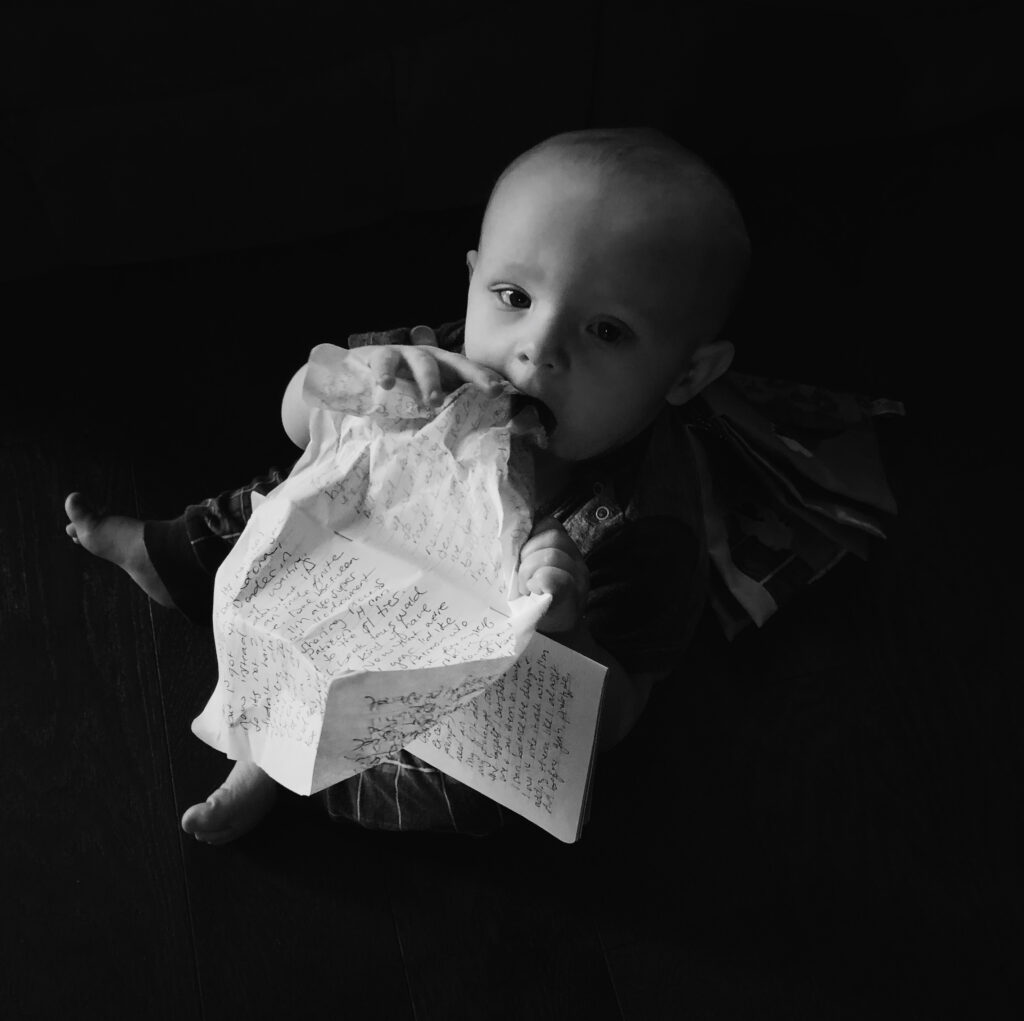
    …one of which was nibbled by my child when they were in the human goat phase. 😂

    Black and white photo of an infant chewing on my journal entry. I think this was a month or two before they started walking so almost a toddler, but not quite.

    This taste for paper is part of why I found journaling time hard to come by. I’m writing more these days, but I still want to hold this practice with a loose grip.

    How do you feel about consistency? Love it or hate it?

    Ok, it sounds like my child has waken up grumpy from their nap so my quiet time is all used up.

    Until next time,

    Sarah signed with a swoopy S

    P.S. If you resonated this blog post you may enjoy the ramble podcast I recorded on the same topic.

    Originally published to Substack on Jun 17, 2022.

    Read more: Intentional Inconsistency
  • Celebrating an Autism Diagnosis

    I’m an autistic adult and parent of an autistic child. I really recommend framing a diagnosis as a positive milestone and celebrating it as such.

    We celebrate the anniversary of our diagnosis’ each year and call this our “Neurotype Day.” *

    * Shout out to my friend Hayley Dunlop for coining this.

    Read more: Celebrating an Autism Diagnosis
  • What is a creative ecosystem?

    When I talk about creative ecosystems what I mean is expanding your concept of creativity beyond the act of making. Every part of your lived experience makes up your creative ecosystem.

    I developed this metaphor to help me build a healthier creative practice. Each element of a natural ecosystem (sun, water, air, etc.) is matched with a creative counterpart (body, mind, environment, and so on.)

    Once I began seeing creativity in this way I couldn’t unsee it.

    I also noticed a holistic view of creativity was quite counter cultural. It’s an alternative approach to these two common creative traps.

    Small flock of birds fly through a golden sunset reflected on ocean below.

    1. One Size Fits All Advice

    Too many creative leaders are trying to pass on their specific creative process as if it will work for anyone.

    Even my beloved Julia Cameron is guilty of this. The seeds of this idea were sown when I reread The Artist’s Way as a new mum. I knew creativity was an important part of my life and wanted guidance in how to maintain my creative life through new motherhood.

    But suddenly, Julia’s advice no longer served me. I was exhausted. I didn’t have the capacity for daily journaling. And it wasn’t what I needed.

    What I needed was a nap.

    Reaching the end of my rope taught me that caring for my body and my mind is an essential part of the creative process.

    I still don’t write or make something every day, and that’s okay. I’ve found a new rhythm that’s working for me. It’s fluid and adaptive and continues to develop over time.

    Landscape photo of a canyon

    2. Hustle, Hustle, Burnout

    For years I’ve been working under the hustle, hustle, burnout template. I would push myself past the edge of my capacity and then crash and burn.

    I see a lot of my fellow artists doing the same thing.

    There is a growing awareness that we need rest, but it’s often treated like one more thing to squeeze into your to-do list.

    What we really need is to rebalance our entire creative process.

    Here’s where your creative ecosystem comes in.

    Rainbow over a mountainous landscape

    Consider the Big Picture

    When you stop hyperfocusing on productivity and take a step back you can see that every bit of your life is interconnected. It all serves your creative process.

    Instead of following a template created by someone else start paying attention to your own needs. Then, make little shifts that honor your own capacity.

    Discover your unique balance of structure and freedom, input and output, solitude and community, and more. Dig into your purpose and why you’re creating. Create rituals for rest and reflection.

    When I saw there was more to art than simply making my own creative ecosystem began to thrive.

    I can’t make a fun quiz to determine if your ecosystem is a forest or a canyon.

    Only you can decide that.

    But I have spent two years writing a book to help you start the journey.

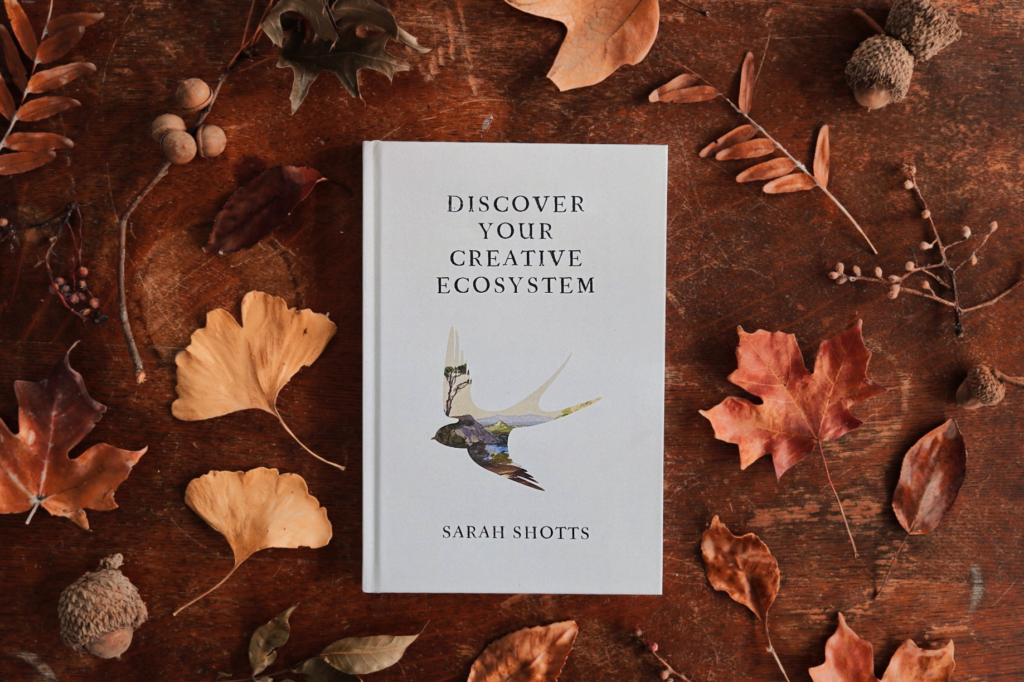
    Photo of Discover Your Creative Ecosystem book by Sarah Shotts. A silhouette of bird in flight shows a landscape beyond. Lays on a table surrounded by autumnal leaves.

    Break down your creative ecosystem and explore it one step at a time.

    Discover Your Creative Ecosystem is a short read full of inspiring images and prompts to reflect on your personal creative practice.

    Available in hardcover and paperback. As well as a free PDF edition for readers experiencing financial hardship. And there’s also a fully illustrated companion for journaling or multimedia collage.

    Read more: What is a creative ecosystem?
  • Studio Tour

    It’s finally here!

    Click below to watch a tour of my new studio.

    Read more: Studio Tour
  • My Year of Making (January Recap)

    When I started my year of making I had intentions for writing weekly updates for my blog or newsletter. Then the month unraveled, our whole family got sick, and I shifted into survival mode.

    So I’m giving myself some Brownie points for being flexible (not easy for an Autie) and picking up the pieces to write monthly check ins instead.

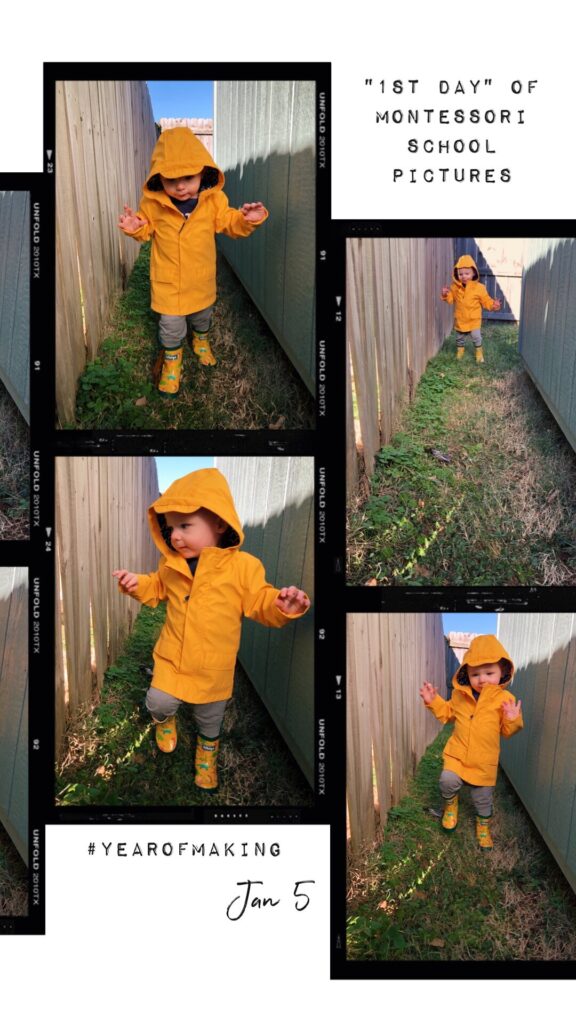
    The month started by easing in with baking and journaling and photos for Davy’s first (half) day of Montessori school.

    Digital collage of First Day of Preschool toddler in yellow raincoat

    Then I tried to calibrate my new Cricut. (It was a hate-hate relationship… in the end I returned it and used the money to buy electroforming supplies instead.)

    And the second week we came down sick. First Davy, then the whole family. It was his first time having a fever for anything besides teething. The first few days I kept track of making soup and tea and macaroni out of a box. Then my own fever went up and it was all I could do to just keep us going.

    It’s a tribute to what I’ve learned through motherhood that I was able to let that go and look back with empathy instead of self judgement. It was hard.

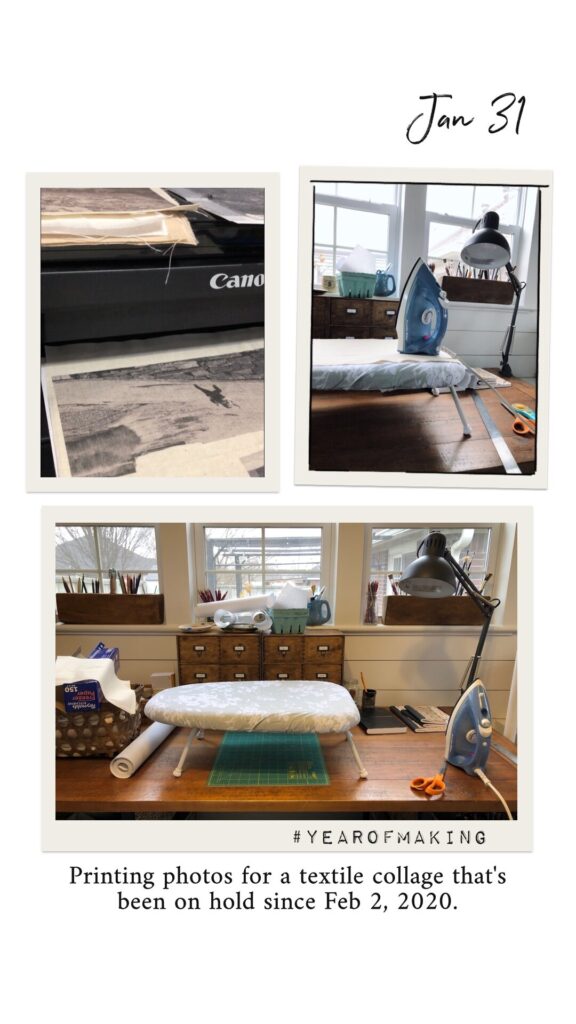
    A couple days out from February we started coming alive again and I resumed my making quest. The final day of January was my first proper day making art in my new studio. I returned to an art project I started in February 2, 2020 and had been on the shelf ever since.

    Digital collage of photographs printed on fabric and ironing set up

    My takeaways from this month?

    Sometimes you honor your inner artist by resting and healing. Sometimes making what you need for survival is enough. Other times you have the energy to pick up a long lost project and you stitch two timelines together through the metaphysical magic of time travel.

    UPDATE: September 2021

    I hid this blog post when I stopped writing monthly updates. At the time I was discouraged because we were sick every month from January – May and my year looked nothing like I had imagined. Looking back I can see how I did keep making (in small and simple ways), but I didn’t have the time or energy to document. Then in June (the first month none of us fell sick) my creative world expanded. If you’re finding it hard to create at the moment I see you. Don’t give up. Take the small moments you can. They count even if no one else is seeing them.

    Read more: My Year of Making (January Recap)
  • My Word for 2021

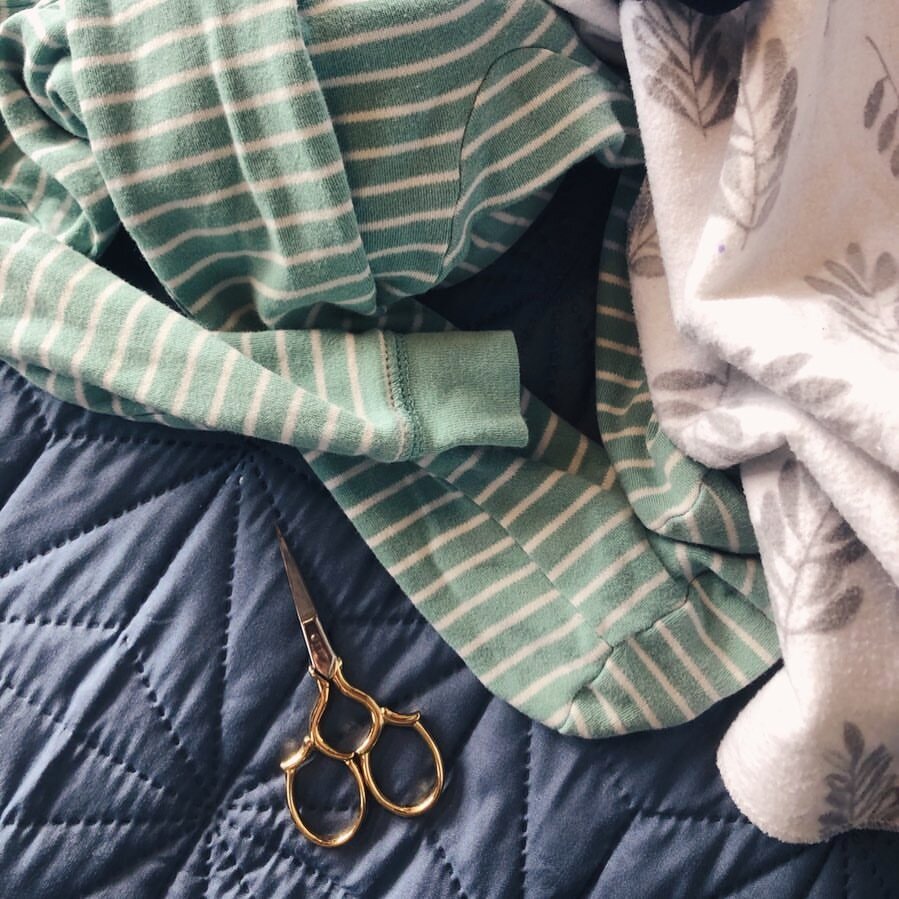
    Gold scissors and baby clothes on a blue blanket

    I didn’t choose a word last year. Or the year before that. I’ve been in a metaphorical hibernation since Davy was born. Snug and still even before 2020 locked us all down.

    These 18 months have been a time of dreaming and ideation. I have had more creative ideas during postpartum than any other time in my life.

    Yet, action came in waves.

    Small lapping pond waters.

    Occasional crashing whitecaps.

    Doodles and book drafts.

    It was inconsistent, but it kept me afloat. The ideas I didn’t have time or energy to complete I gathered up and squirreled away for another time.

    I’ve chosen the word MAKE for 2021 because I want to establish a daily creative practice. To put those ideas I’ve collected to use. 

    I want to make more art, but gently. I need flexibility to tend a sick babe or adjust my pace to avoid burnout. Some days I might paint or weave and others I might make beans on toast. Both are equally valid.

    It’s an invitation to create everyday and a curiosity to see how that unfolds.

    If you’d like to follow along I’ll be writing about my year of making in my newsletter. I’ll drop an opt in box here to make it easy.

    P.S. After drafting this post I did a search for “year of making” and rediscovered Kim Werker who I followed what feels like a lifetime ago. I must have been riding some subconscious inspiration. Kim’s year of making was in turn inspired by Miriam Felton so it’s one big beautiful swirl of inspiration. 🌀 

    If you want to join in just use their hashtag #yearofmaking.

    Read more: My Word for 2021
  • Camp Kindle

    Camp Kindle has not been archived yet. Find sessions on Substack:

    Camp Kindle: Adventure

    Camp Kindle: Wonder

    Vintage photograph of Girl Scouts refilling a water barrel at camp. They are in uniform and smiling.
    Read more: Camp Kindle