From the Compost Heap header. A pencil style illustration of a compost heap with flowers and plants growing around it. A bee buzzes by and a white rabbit hops by.
  • Self Pub 101 (Mental Health)

    There are a lot of feelings that come up with publishing a book. You’ll want to create a support system to work through them.


    I’ve heard several published authors recommend having a therapist on hand during and after your book launch.

    You can hear Cait Flander’s talk about this on Claire Venus’ podcast Sparkle on Substack. Cait also helpfully reflects on how you don’t have to say yes to every opportunity and how important it is to say “no” and protect your energies during launch.

    Listen here.

    Read more: Self Pub 101 (Mental Health)
  • Self Pub 101 (Events)

    Further Reading

    The book tour process for traditional publishing is outlined in depth in:

    Before and After the Book Deal: A Writer’s Guide to Finishing, Publishing, Promoting, and Surviving Your First Book by Courtney Maum

    Read more: Self Pub 101 (Events)
  • Self Pub 101 (ARCs, Blurbs & Reviews)

    Vocabulary

    ARC “arc” Advance Reader Copy

    Galley (historically something specific, but now often used interchangeably with ARC)

    Both ARCs & galleys are uncorrected proofs that are not in the final form factor the book will take. They are sent out to reviewers and should never be quoted or sold for profit.

    Printing physical ARCs can be a big investment. Consider going green and sending out ebooks or audiobooks when possible.


    Prepare for Reviewers

    You’ll want to make things easy for your reviewers by setting up a Goodreads and Storygraph page before sending our ARCs. This doesn’t mean you need to read reviews. But making your book’s page means potential reviewers will be able to find your book (and its cover) to review it. I have accounts on both, but I use Storygraph to track my personal reading. It’s vastly superior and also a black owned small business.

    Asking for Blurbs & Reviews

    Another reason to send out an ARC (pdf or print copy) is to ask your colleagues to write a quote or blurb. Or to leave a review on a platform like Amazon. It’s a good idea to do this before publication. You can even add blurbs to the book. Sometimes these are used on the cover and other times are included in the front of the book itself.

    Further Reading

    How to Create an ARC

    How to Get ARCs (a reader’s perspective)

    Nadia Odunayo on why she built The Storygraph

    Read more: Self Pub 101 (ARCs, Blurbs & Reviews)
  • Self Pub 101 (Expand Your Reach)

    Ways to Expand Your Reach

    • Podcasts
    • Newsletters
    • Blogs
    • Instagram Takeovers
    • YouTube Interviews
    • Book Festivals
    • Bookstore Signings
    • Zoom Events

    Start a Newsletter

    When you expand your reach you’ll want to point people somewhere. The best place is your own newsletter (even if you don’t send one out regularly you should start collecting emails.)

    The reason you want a newsletter is that you can reach people directly (versus relying on a third party app like Instagram or Twitter.) There are lots of options out there, but Substack has a lot of features, it’s free, and you’re already here.

    Newsletter Magnet or Freebie

    Something you give away to encourage people to opt in.

    • Free Chapter
    • Audiobook Sample
    • Short Story

    Additional Resources

    Author Platforms in 2024: What to Expect from Kathleen Schmidt

    Marketing for Weirdos from Bear Hebert

    Read more: Self Pub 101 (Expand Your Reach)
  • Self Pub 101 (The Long Game)

    Show up for your work and then take some time to recover. Again and again. Books are evergreen, so you don’t launch one time and it’s over.

    After the initial launch, it becomes harder to talk about the book, but it’s still worthwhile. Weave your book into your normal content. Link to your sales page. Put a photograph in the bottom of your newsletter. Share photographs of your book in different seasons.

    Keep showing up for your book, and your book will keep showing up for you.

    Resources

    My Creative Coach Amie McNee

    Read more: Self Pub 101 (The Long Game)
  • Self Pub 101 (Preorders)

    What platform will you use for preorders?

    • Your own website
    • Amazon or Barnes & Noble
    • Indiegogo or Kickstarter

    Further Reading

    Do release dates matter? by Kathleen Schmidt


    Examples of preorder perks from traditionally published authors:

    Brandon Sanderson Offers Art Print for Preorders

    Robin Sloan offers Zines for Preorders


    Crowdfunding Platforms

    Indiegogo (flexible goal)

    Kickstarter (all of nothing)

    If you want to fund your print run with crowdfunding you’ll want to check out my Crowdfunding 101 course. I decided to break the crowdfunding out as a separate process because this may be helpful to creators who are funding projects beyond books. But it is rooted in my experience with taking preorders through Indiegogo.

    Find it Crowdfunding 101 here.

    Launch Team

    The Crowdfunding 101 course includes a module about Launch Teams that is really applicable no matter how you take your preorders.

    You can skip to that here.

    Read more: Self Pub 101 (Preorders)
  • Self Pub 101 (Why)

    Journal Prompts

    Do some journaling reflection and share some of your thoughts below.

    Origin Story

    What inspired you to write the book?

    How long have you wanted to write it?

    What gave you the impetus to get started?

    Who did you have in mind when writing?

    What is the book about?

    Purpose

    Why is this book important?

    Does the book teach or inform?

    Does the book provide connection and community?

    Does the book represent a marginalized experience?

    Does the book provide inspiration or a window to imagining or understanding the world in a different way?

    Does the book create beauty and sanctuary from the struggles of daily life?

    What will readers take away from reading this book?


    Mindset Work

    It’s important that you move into self publishing with the right mindset. If you feel that self publishing is “less than” traditional publishing that is going to come through.

    I’d really recommend taking the time to read Coronate Yourself by my creative coach Amie McNee and their podcast Unpublished. Amie also has a free Journaling Compendium and offers creative coaching services that can help support mindset shifts.

    Read more: Self Pub 101 (Why)
  • Self Pub 101 (Inspiration)

    Examples I Mentioned

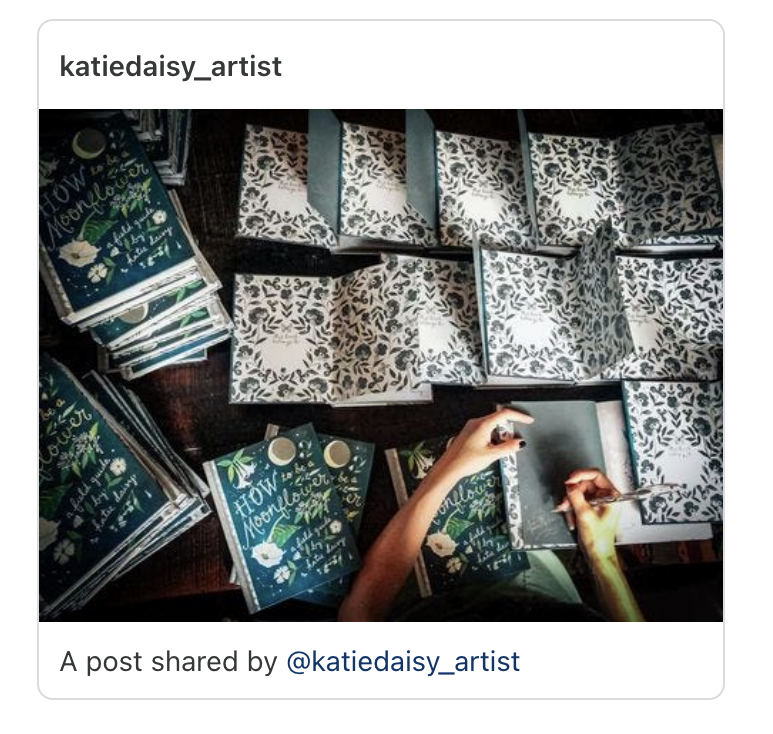
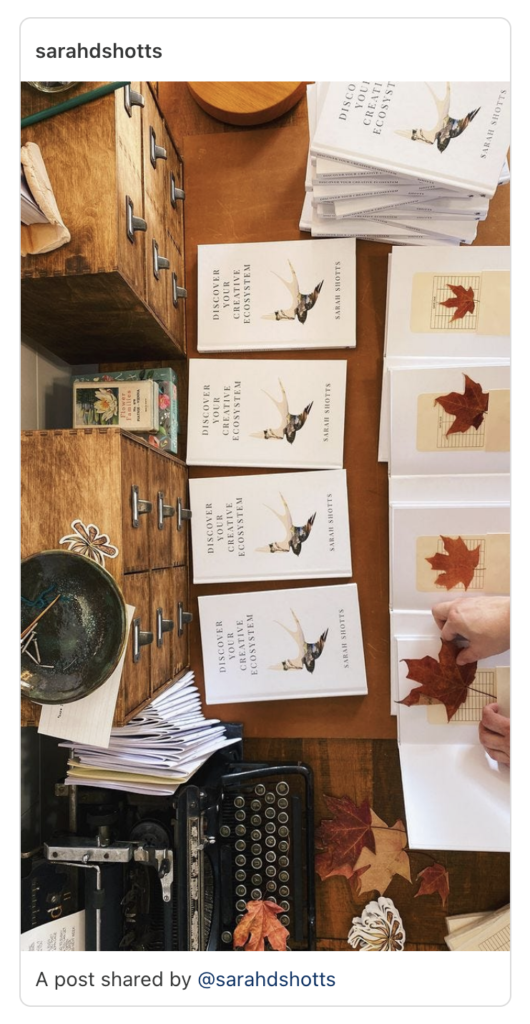
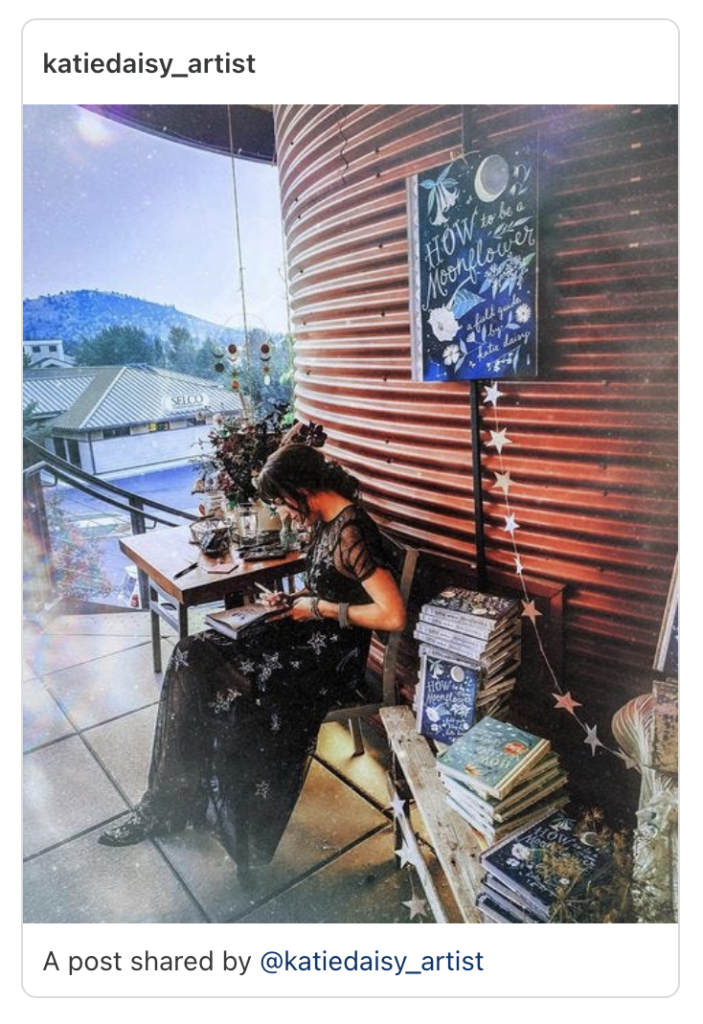
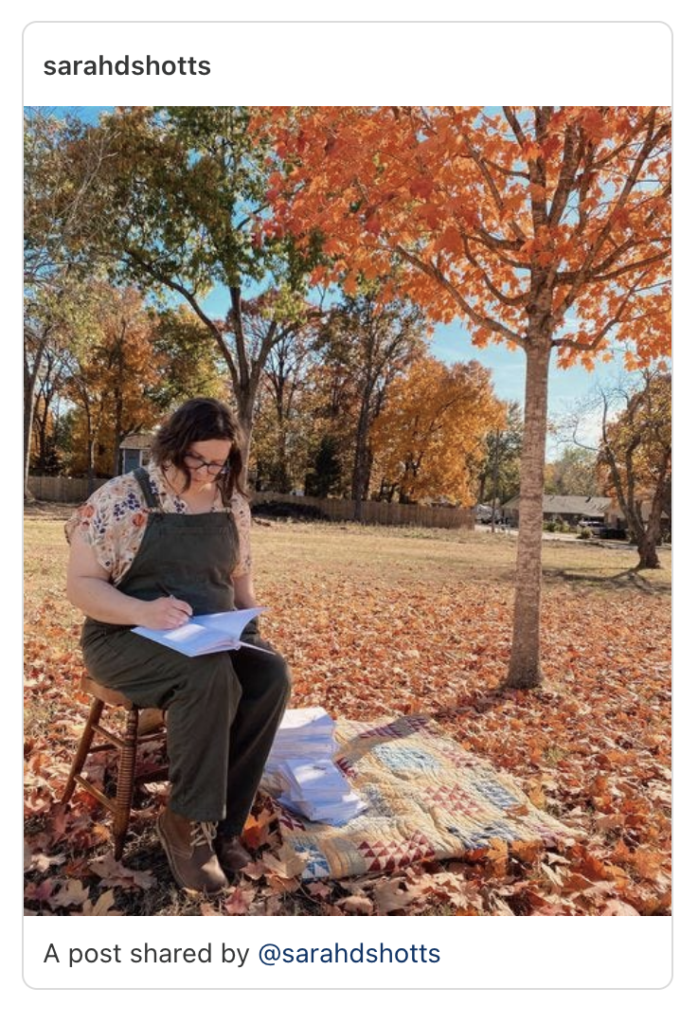
    You can see the inspiration of my book muse in these images:

    Signing Books

    Katie Daisy signing How to Be a Moonflower open books on a wooden table
    My first book signing. Discover Your Creative Ecosystem books open on desk with red maple leaves tucked into library pockets.

    Katie Daisy sitting beside a pile of book signing them
    I am sitting under an orange maple tree next to a pile of books on a quilt signing books.

    Update (March 2025)

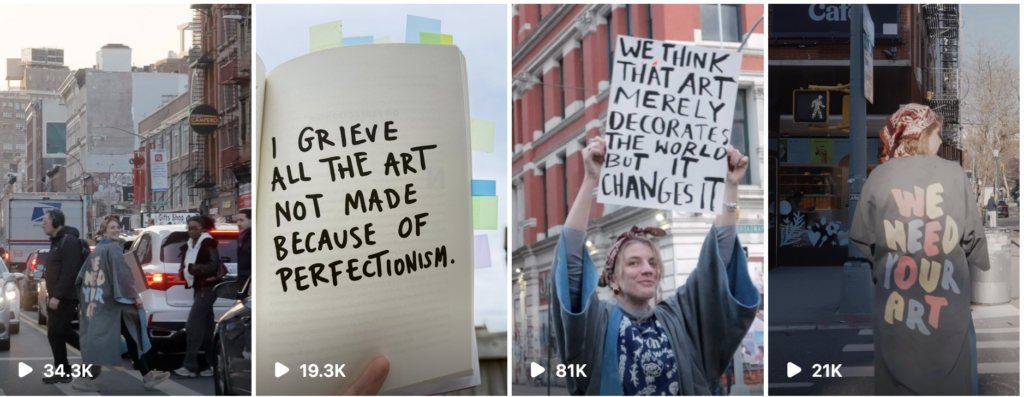
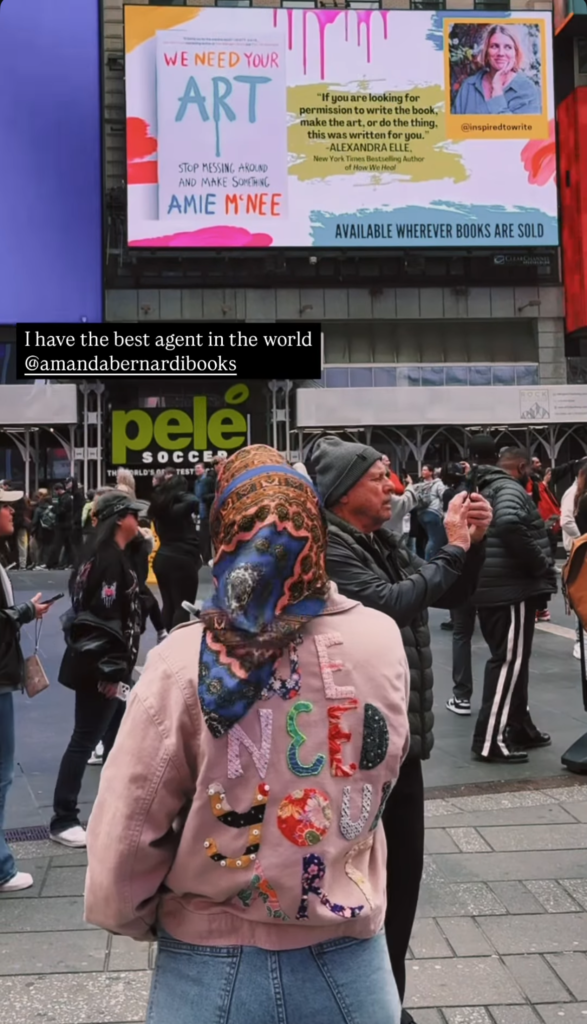
    I’ve recently been very inspired by Amie McNee’s book launch for We Need Your Art.

    Amie McNee in NYC with a custom wardrobe that says We need your art, holding up signs and showing pages of her book.

    Her wardrobe is giving me life! Photos crossing the street in NYC, holding up love letters, and posts showing pages of her book.

    10 out of 10 stars! ⭐

    Amie wears a custom jacket with We need your art quilted on the back and looks at her book on a sign in Times Square.

    Read more: Self Pub 101 (Inspiration)
  • Self Pub 101 (Intro to Marketing)

    Just a reminder as we move into this section that my focus is on heart centered marketing. Telling people bout your book so the right people will find you.

    If you want more strategic support for marketing I’d highly recommend taking a course from Leonie Dawson.

    Their course 40 Days to a Finished Book (affiliate link) includes practical tips on how to become an Amazon Bestseller. And their Marketing without Social Media workshop (affiliate link) is full of creative ideas to market your work outside the algorithm.


    References

    I made a lot of statements about book sales in this podcast. Here are my references.

    Authors as multi-hyphenates (Writing Excuses Podcast 18.26)

    42 Percent Decline in Authors Earnings in Last Decade (Authors Guild, January 2019)

    How Much Do Authors Make Per Book? (Book Riot, 2021)

    Book Advances (paid post from Anne Trubek, 2022)


    It’s really important to remember that only a fraction of a fraction of your audience will buy your book right away,

    “1.1% of her audience preordered or bought her book as soon as it hits the shelves. Read that again: ONE POINT ONE PER CENT.” via Nicola Washington


    And words of wisdom from a literary agent…

    “YOU’RE NEVER GOING TO MAKE ME ANY MONEY, SO JUST WRITE WHAT YOU WANT TO WRITE”

    Melanie Jackson, Percival Everett’s literary agent (Source: Everett’s acceptance speech for the PEN Award)

    Read more: Self Pub 101 (Intro to Marketing)
  • Self Pub 101 (Bits & Bobs)

    Which might you include in your book?

    • Epigraph
    • Dedication
    • Author’s Note
    • Introduction
    • Index
    • Appendix
    • Acknowledgements

    Call to action

    Consider including a call to action at the end of your book. A clear ask for the reader to connect with you, hire you, or sign up for your newsletter.

    You can even mention a free download, resource library, or perks specific to book readers.

    If you’re publishing print books you’ll need to take care to make these links evergreen so your book isn’t quickly outdated. If you’re publishing Ebooks you can include links directly to your newsletter opt in. Make it as easy as possible for people to keep in touch.

    Read more: Self Pub 101 (Bits & Bobs)