When people see my writing or art they often ask me “How do you have the time?”
I make because I must.
My brain is a very busy place. Making is one of the only things that turns spiraling thoughts “off.” When I get into monotropic flow everything melts away and all that exists is the art. As I create my nervous system comes back to center.
This month I’ve spent over 14 hours designing a rainbow zine. 🌈
I was intuitively drawn to this process because my brain needed the reset time to balance out the stress of book launch.
I followed my intuition because I have learned to trust it.
This work may look frivolous, but it is deeply important.
The next time you have an impulse to do something that you consider a “waste of time” notice how you feel before and after. It may be a powerful regulation tool that you’ve been made to feel guilty for.
Can anyone relate? 🐝🌼🌙🚕
This text is adapted from my September zine.
I posted behind-the-scenes last week, but since then I’ve decided that I can’t punch holes into these compositions. So I’ll save the whole punch idea for next month.
I’m running out of toner after test printing so these may not arrive until October.
Because these are so ink heavy so I’m making a limited run of 20.
If you’d like to claim one just hit reply to let me know.
Cheers,
P.S. I almost didn’t send a newsletter this week because I felt like I “didn’t have time” to write one. Then I realized I’d already written this. Sometimes I make things harder than they need to be.
While I wait for more books from the printer I am having fun with September’s zine. This month’s zine is an exploration of form and color.
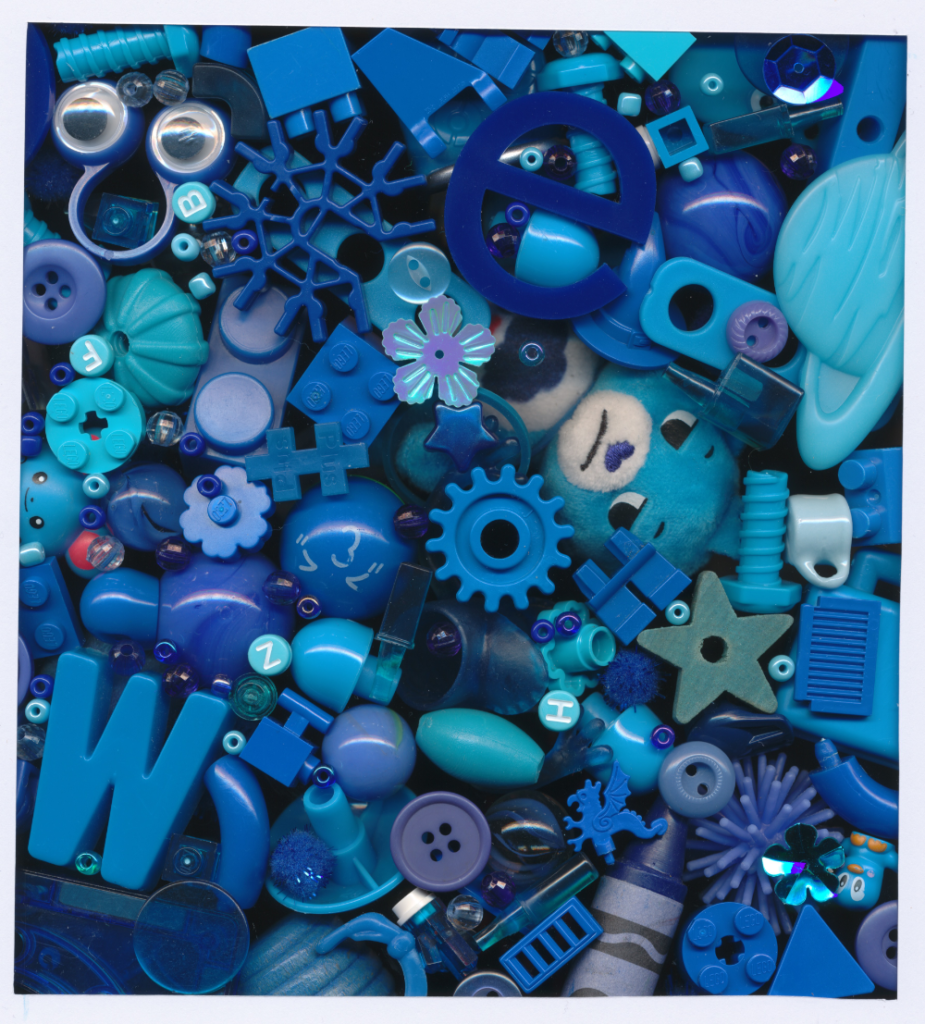
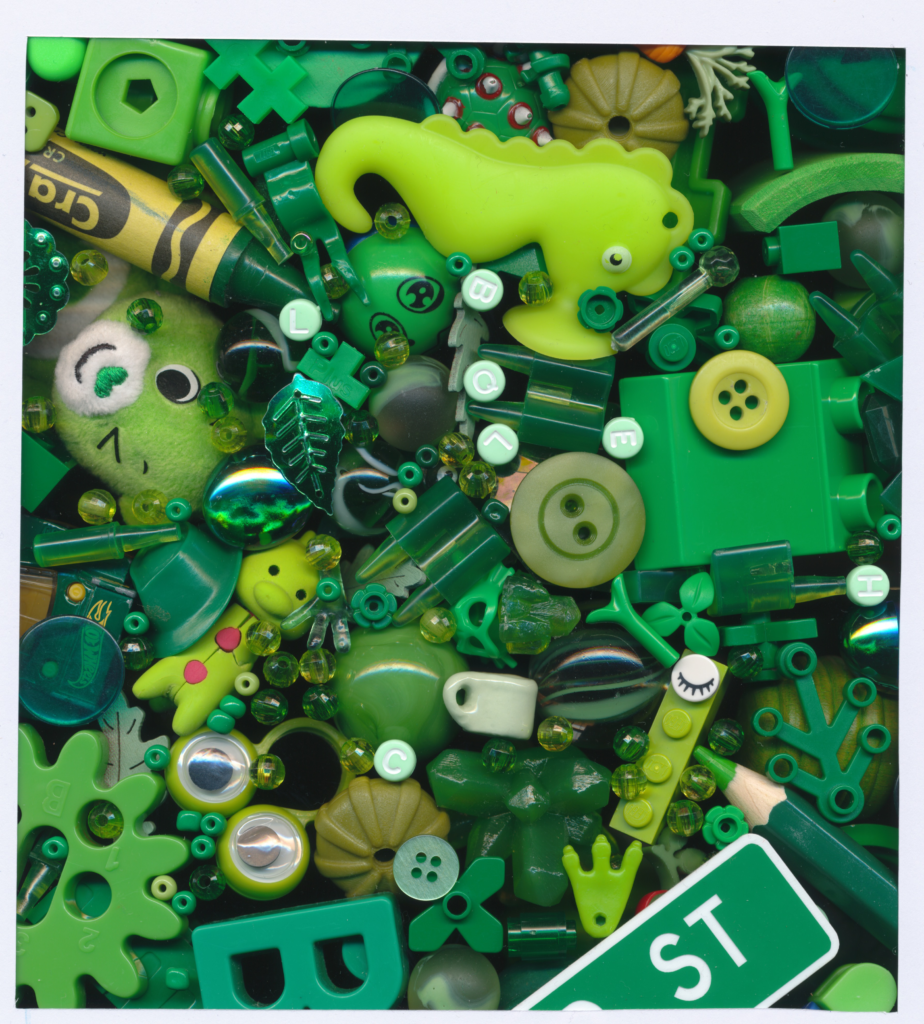
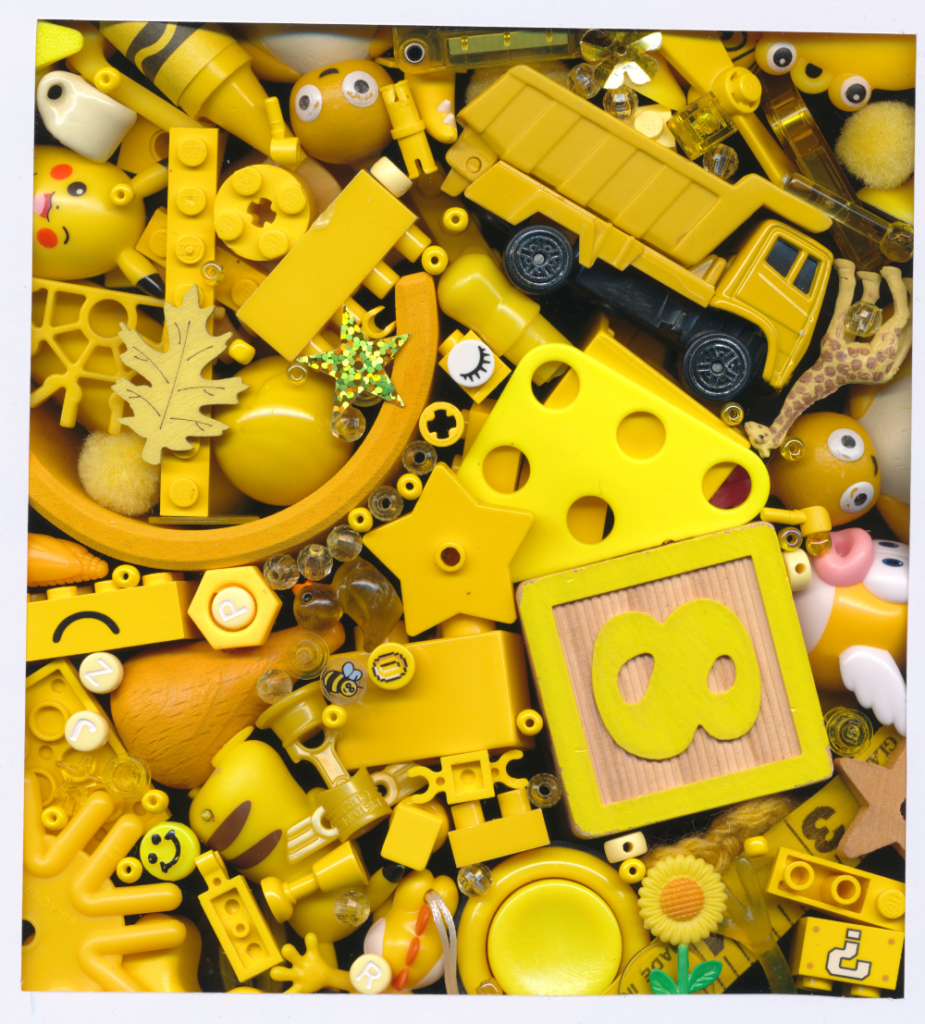
I’ve had this idea of photographing color curated objects for a few years, but my lighting has never been good enough to fulfill the vision. This scanner can do it! So I started with a bag of blue and green toys that my kid and I curated together two winters ago. (Yes, two YEARS. Sometimes you have to wait until you have the right tools.)
First, I played around with my new scanner. It is MUCH better at scanning detail from dimensional objects than my old one. (See above.)
Then, I experimented with my circle punches.
Working with a punch introduces some limitations – it will only reach so far into the paper. Because I want them to line up in a certain way I need to make mini zines. Which is fun since I usually make half sheet zines.
Once I knew the size of the zine I made a little frame of paper so I could compose a specific design for each spread. I also quickly learned that scanning as you go is much better because you can see what you’re doing and adjust the layout from below.
Arranging and scanning the blue spread took over an hour. Green and yellow were around 40 minutes each.
(Zines are definitely not “worth it” for an hour to profit ratio. But they have been an incredible tool for my creativity and my mental health.)
There are three more colors to go. Then I need to do a series of test prints to adjust the vibrancy and test assembly (extra tricky with the circle punches.)
If you’d like a copy of this zine I’ll be making a VERY limited quantity.
So let me know if you want one!
Because these zines are taking extra time to create I’ll be selling them for $15 each.
UNLESS you’re a member of Snail Mail Club who always get the best price (currently $5 a month).
The finalized files are officially uploaded to our book printers!
So the book is… done??
It doesn’t feel real to me yet.
My hands are going to be full for the next week or two while I’m in fulfillment mode. We ran into some final challenges with our hardcover printer who removed the $5 USPS shipping option. 😭
So our best option is now to bulk order 100+ books with Fed Ex delivery, pack, and ship them to you myself. This does mean I can add the signed bookplates and tuck the preorders perks in with your orders. But the downside is that it will take a bit longer for the books to reach you.*
Once the hardcover preorders are done I’ll start on the paperbacks. We’re using Amazon for paperbacks to keep costs low and make these books as accessible as possible. But if you order through my website Amazon does not get a cut.
I’m really keen for everyone to understand this.
If you haven’t ordered yet you can find both hardcover and paperback in my shop.
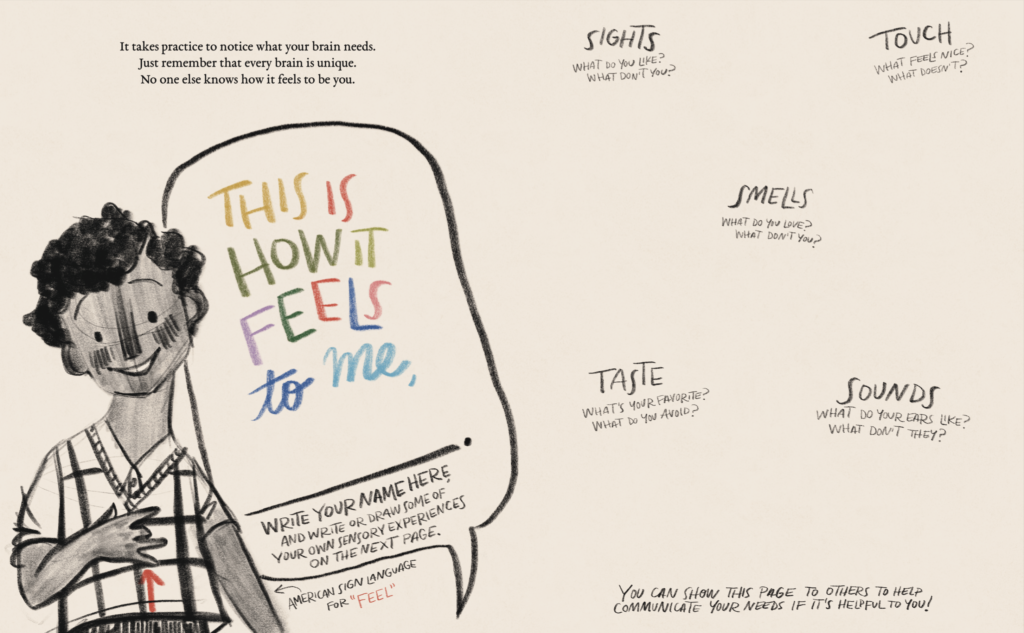
If you want a single zine I’m always happy to trade. There’s also a printable version alongside our printable worksheets for all ages. Please spread the word if you know any teachers. You don’t have to buy the book to use the worksheets (although we’d love if you did.)
Thanks to everyone who preordered and helped bring this project to life.
We’ll be sharing more about the creative process once the books are fulfilled.
I’m also considering a slow paced book tour. If you think I should travel where you live please let me know! 🐌
Cheers,
FOOTNOTES
* Since the hardcover books now have to be shipped twice. First to me, then packed, labeled, and shipped again to you.
Since then the world has become a much scarier place for me and for my friends in the queer community. I’ll share some resources at the bottom of this post for allies to lend their support this month.
But this post isn’t for the allies.
This one is for the queers.
I’m stepping out the comfort zone of educating others to revel in some queer joy.
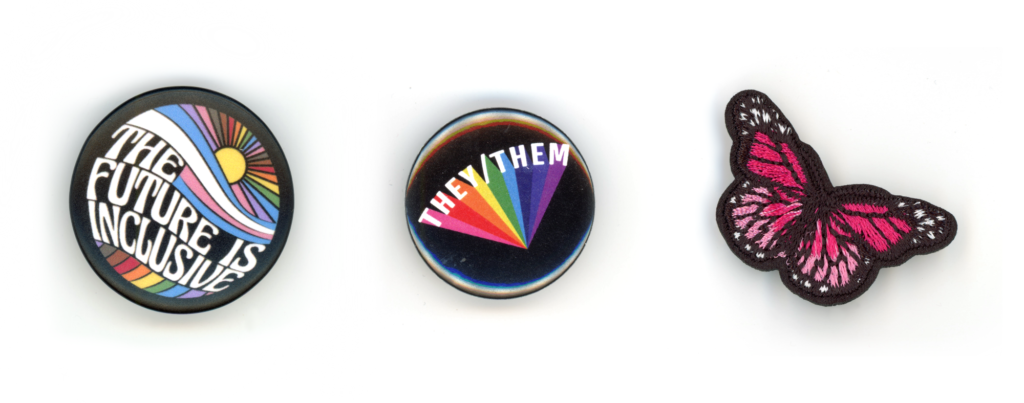
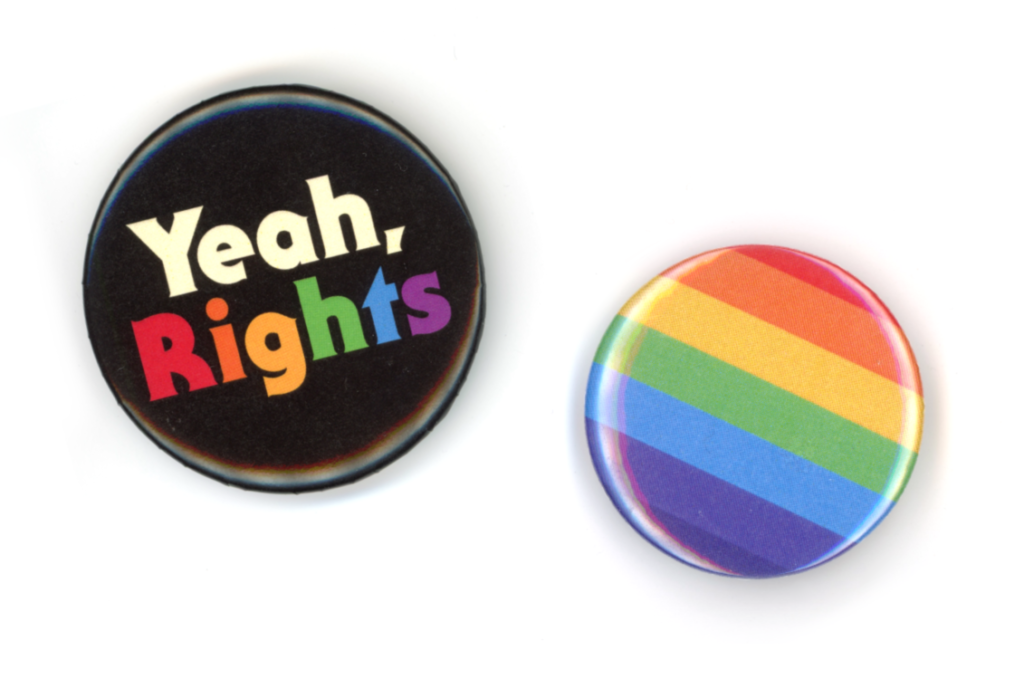
This month I made a very playful and joyous zine. It celebrates queer artists whose work has impacted me in a profound way.
Here are links to everything I mentioned inside it.
Over the last decade I have been neuroqueering my creative practice. Setting aside neurotypical, able bodied, and capitalist expectations for consistency, branding, and profit like the ill fitting shoes they are.*
Looking back, the times in my life I was rigidly consistent I was run deeply outside my own capacity, which over time took a toll on my health (both mental and physical.)
Allowing my creative projects to fluctuate with my capacity, as a chronically ill autistic caregiver means that they ebb & flow. Seasons when my time and energetic capacity expand so does my creative practice. When I am experiencing a pain flare or focusing on caregiving challenges my projects shift into dormancy or ideation.
Having many different mediums means there is always something to fit my capacity.
I NEED ART TO LIVE.
Art is how I self regulate, how I co-regulate with my child, and how I process lived experience and the world around me.
Without art I go to a dark place.
For years, I had inflexible routines and self imposed deadlines that did not serve me. But the newly discovered fluidity of my creative ecosystem has allowed me to flourish in unexpected ways.
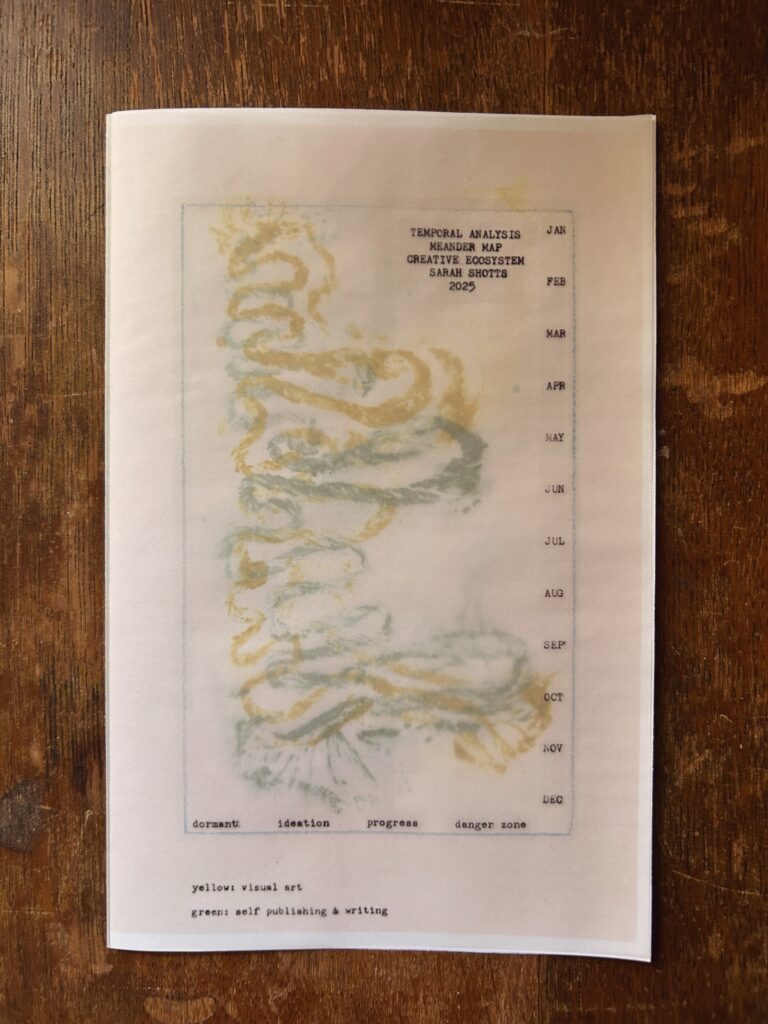
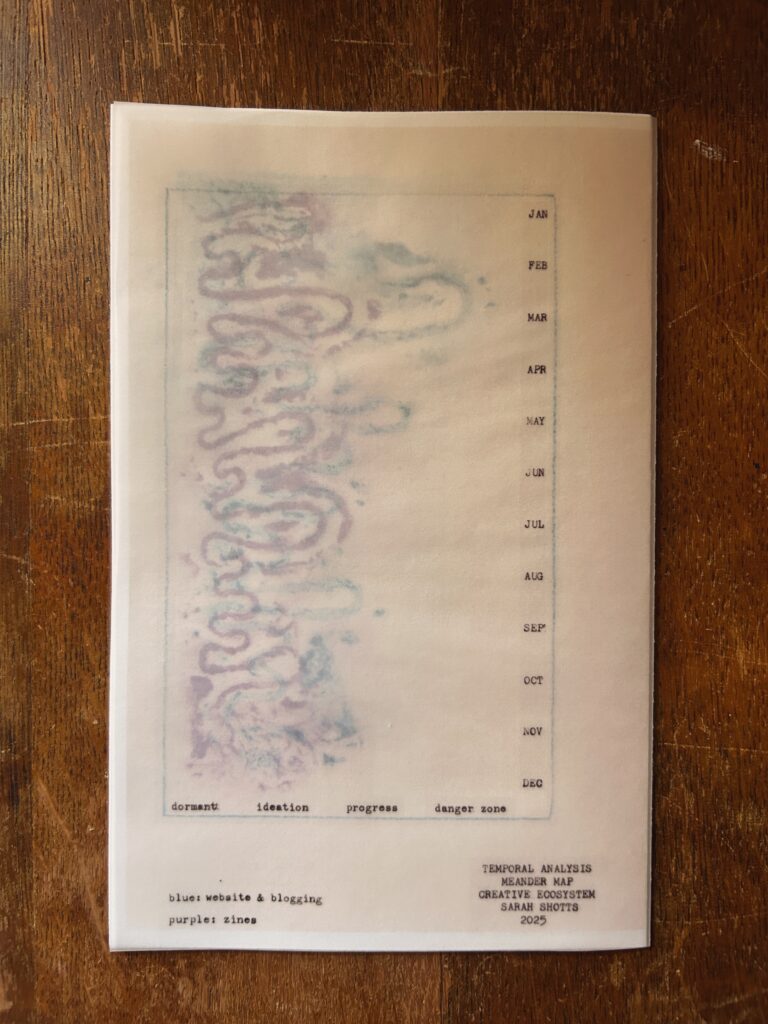
This meander map is based on my 2025 Artist’s Log which tracked the time spent on each creative project over the course of the year.
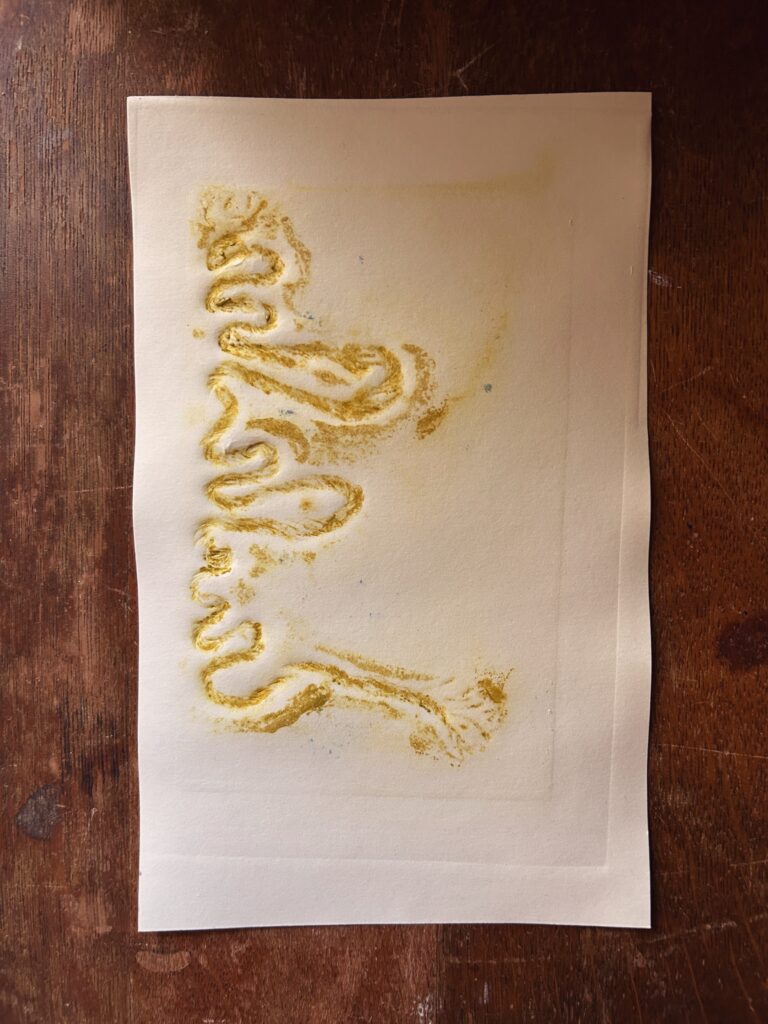
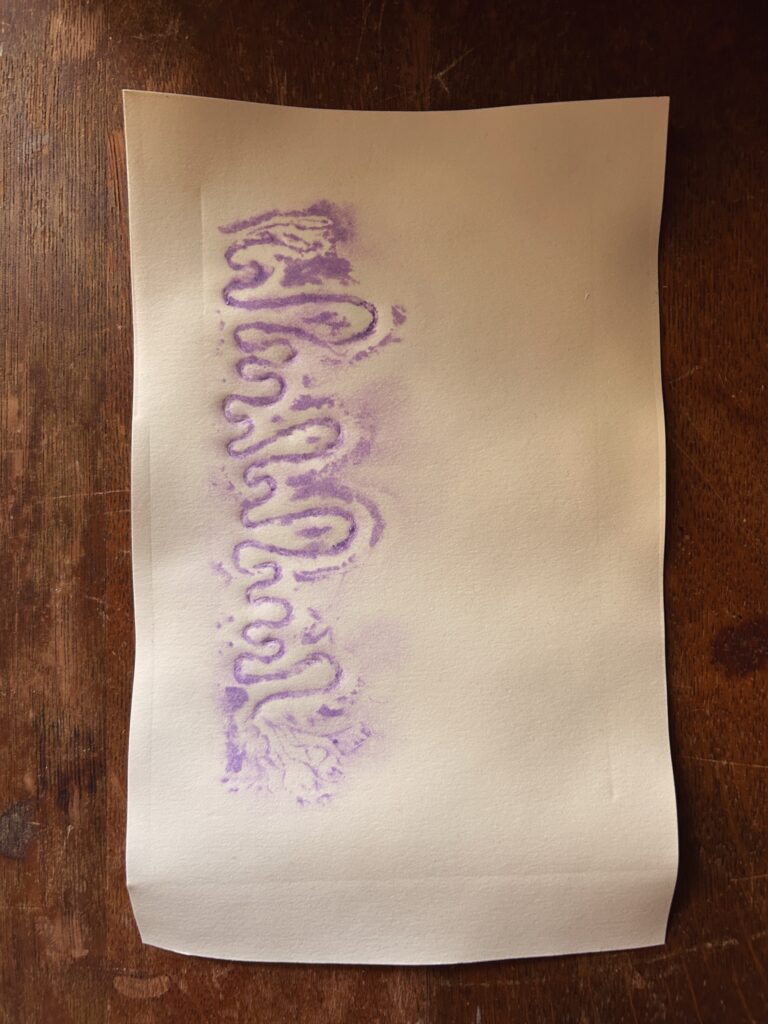
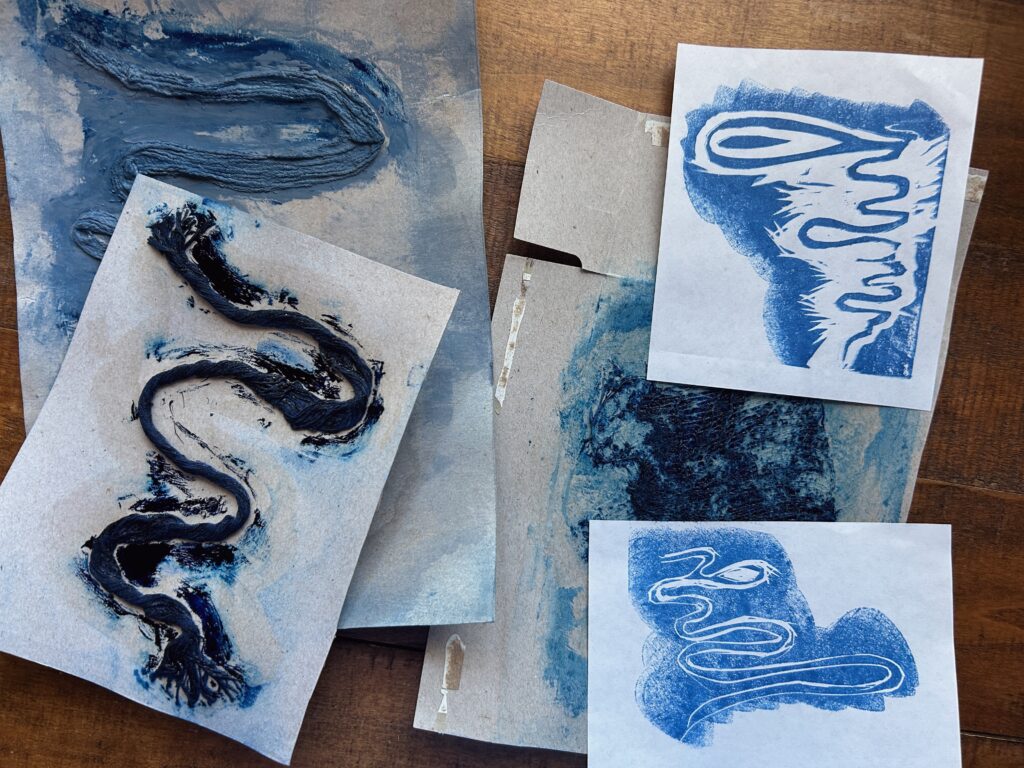
These undulating ribbons represent the four main streams of creativity I pursued in 2025.
Yellow: visual art
Green: self publishing and writing
Blue: redesigning website & blogging
Purple: zines
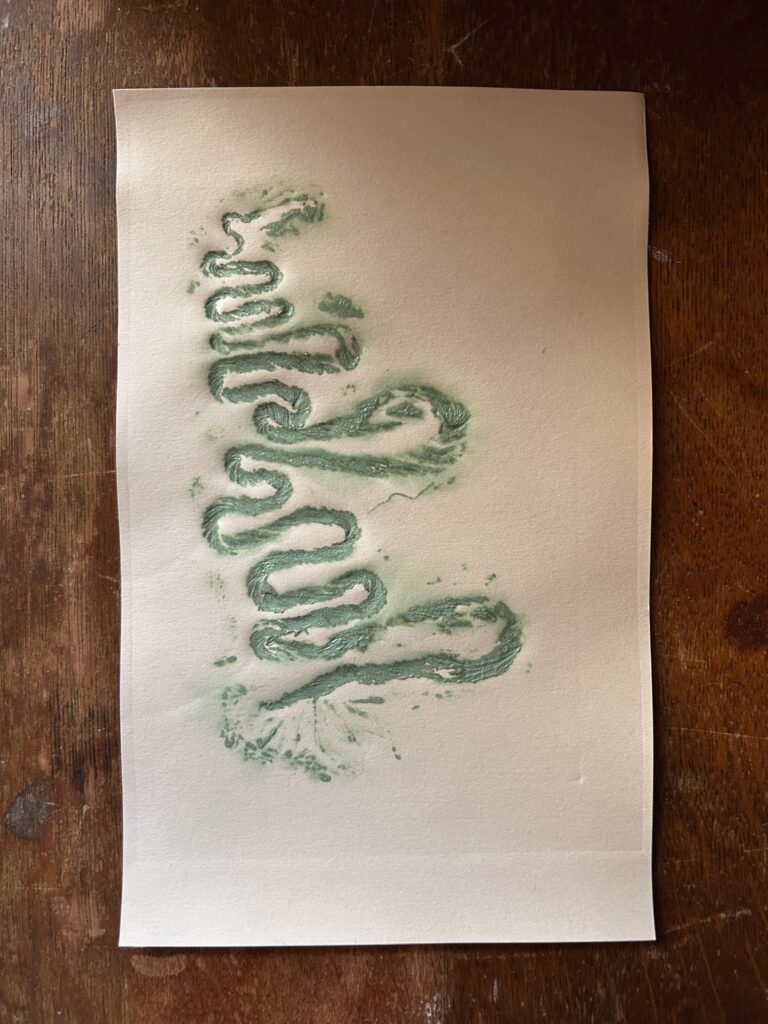
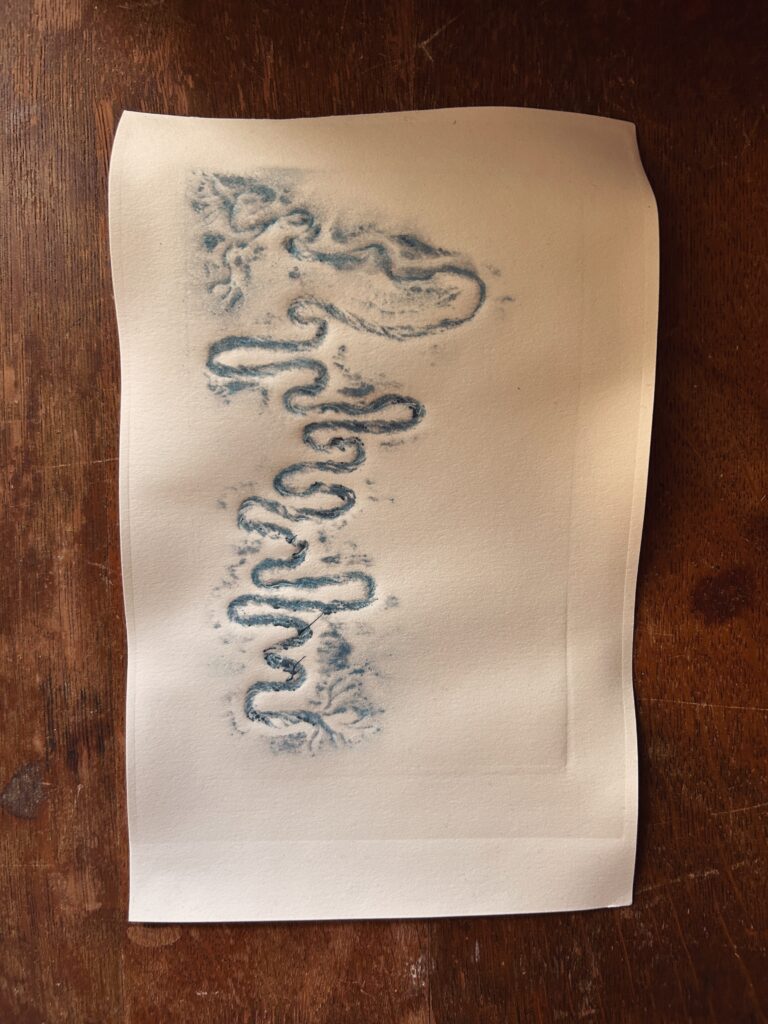
The process of crafting these prints took several months. Calculating stats, making a graph, drafting the meanders, testing printmaking techniques, paper & inks, creating collagraph plates with unraveling cotton twine, and printing each plate onto wet paper using the Provisional Press.
The prints were digitally combined for the zine cover and overlaid with a key on transparent vellum. This layer can be removed to display the zine as a diptych. The zine was hand typed on my 1950s Smith-Corona typewriter.
The concept and color palette were inspired by the meander maps of geologist and cartographer Harold Fisk.
The above text is from February’s zine. If you’d like a copy you can subscribe for $5 a month or buy a single zine in my shop.
Here’s a peek at how the layers work together with the transparency.
Here’s a peek at how the prints are coming out (ignore the buckled untrimmed paper). They will all be flattened, signed, and numbered. Each print is unique. Remaining prints will be added to my shop, and will be priced at $65.
Collagraph is a printmaking process I learned in university. It feels good to return to it after so much time. I shared more about the process (along with a few other test prints) on the blog a few weeks ago.
Thank You
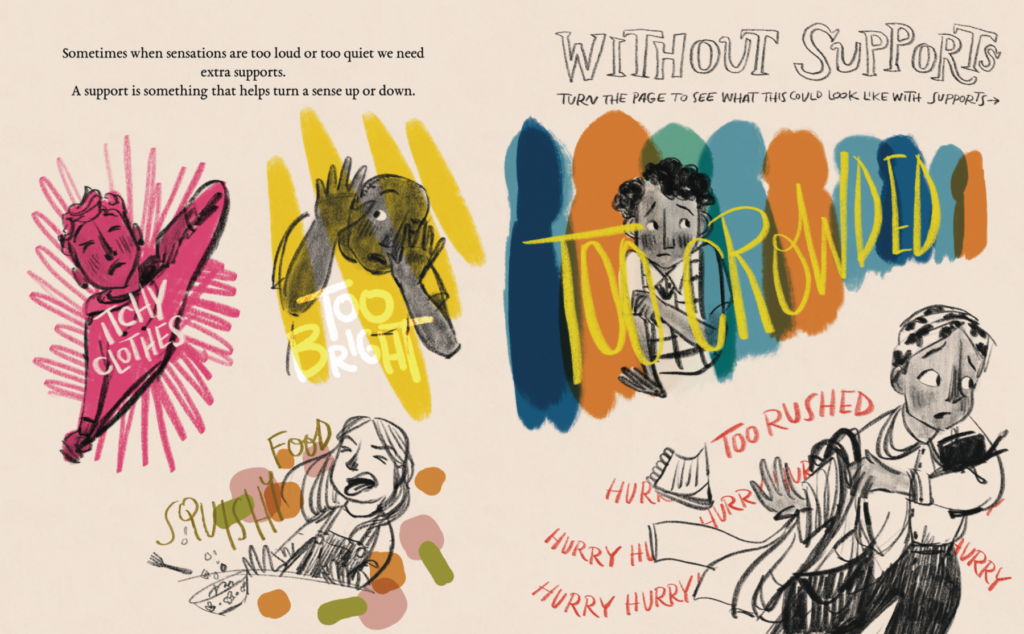
To everyone who sent kind messages and preordered books after last week’s post about illustrating neurodivergence. Gracie & I really appreciate you and very excited to get this picture book into your hands.
If you’d like to preorder a limited edition hardcover you can do so here.
(Paperbacks will be coming soon at a lower price point.)
In Case You Missed It
If you’re having a hard time with the state of the world I wrote this for you a couple weeks ago.
* Neuroqueering is used here as the verb meaning, “the practice of queering (subverting, defying, disrupting, liberating oneself from) neuronormativity and heteronormativity simultaneously” as coined by Nick Walker Ph. D.
Postcards for Rewilding the Artist Field Guide by Gaia Redgrave, “In this hands-on field guide, artist Gaia Redgrave shares her Rewilding Journey as a neurodivergent, disabled person.”
A few years ago I wrote a post about neurodivergent boundaries. I had the idea to type it up into a zine and ended up completely re-writing it. I’m making this one available as a digital download. Feel free to print copies and give them away (just don’t charge for them.)
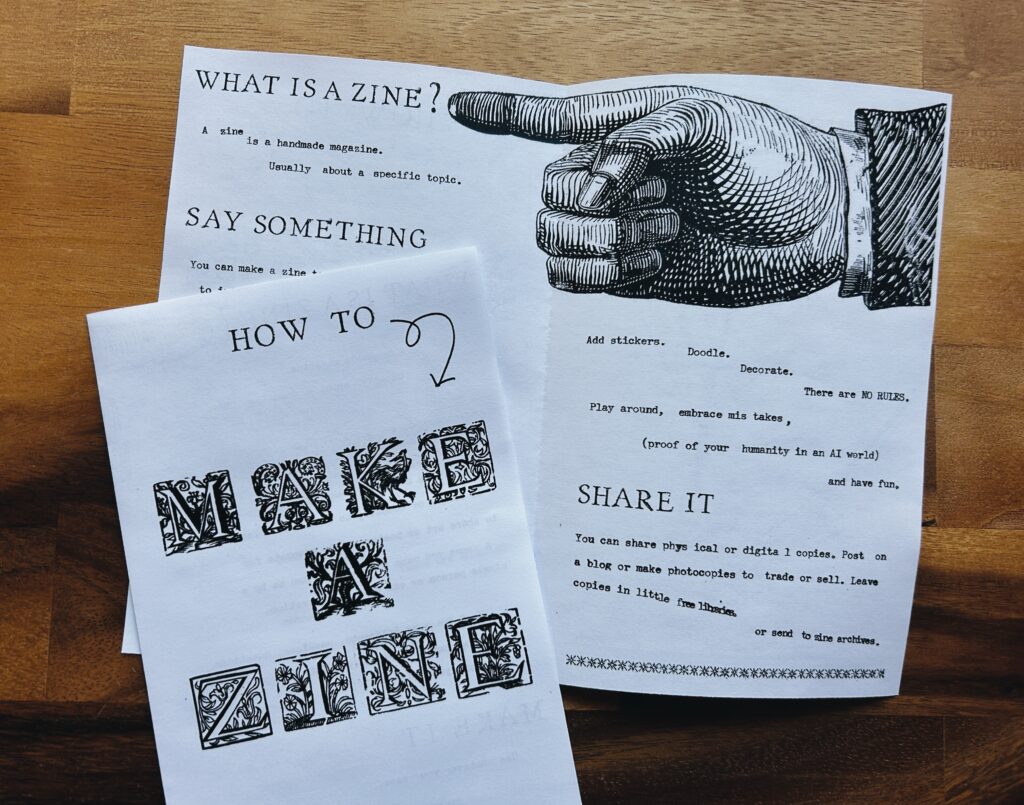
I made this zine for the NWA Maker Faire earlier this month. It’s a single sheet monochromatic zine that tells you how to get started if you’re brand new to zines.
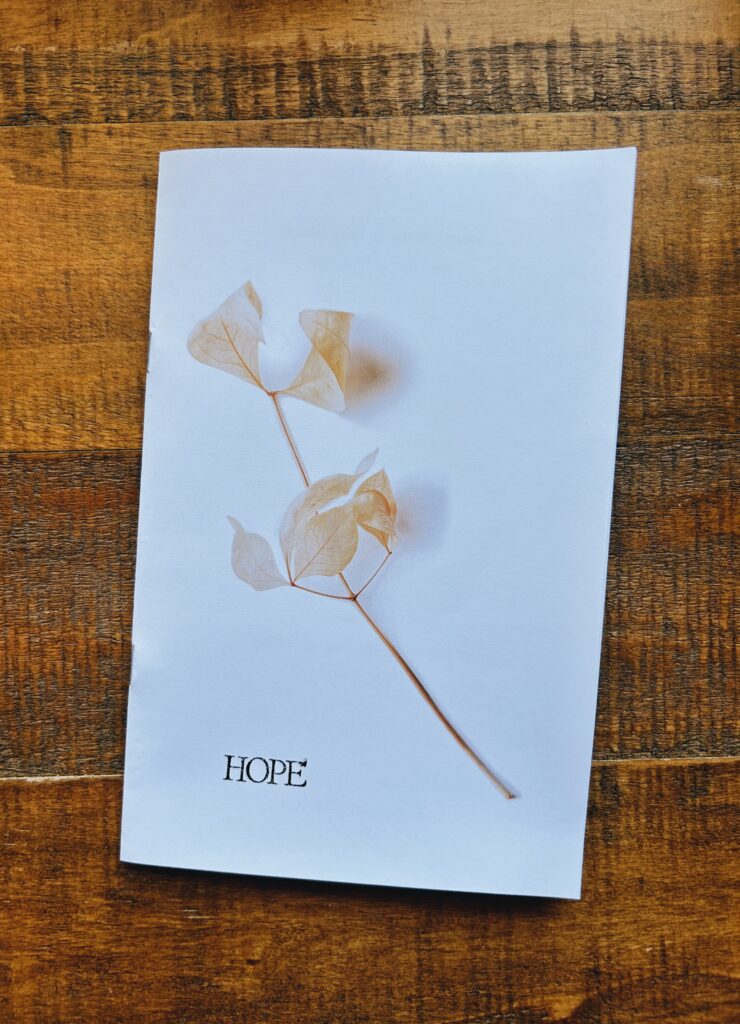
August zine subscribers will be receiving a copy of How to Make a Zine along with September’s Hope zine. Thanks for your patience while I took compassionate leave last month.
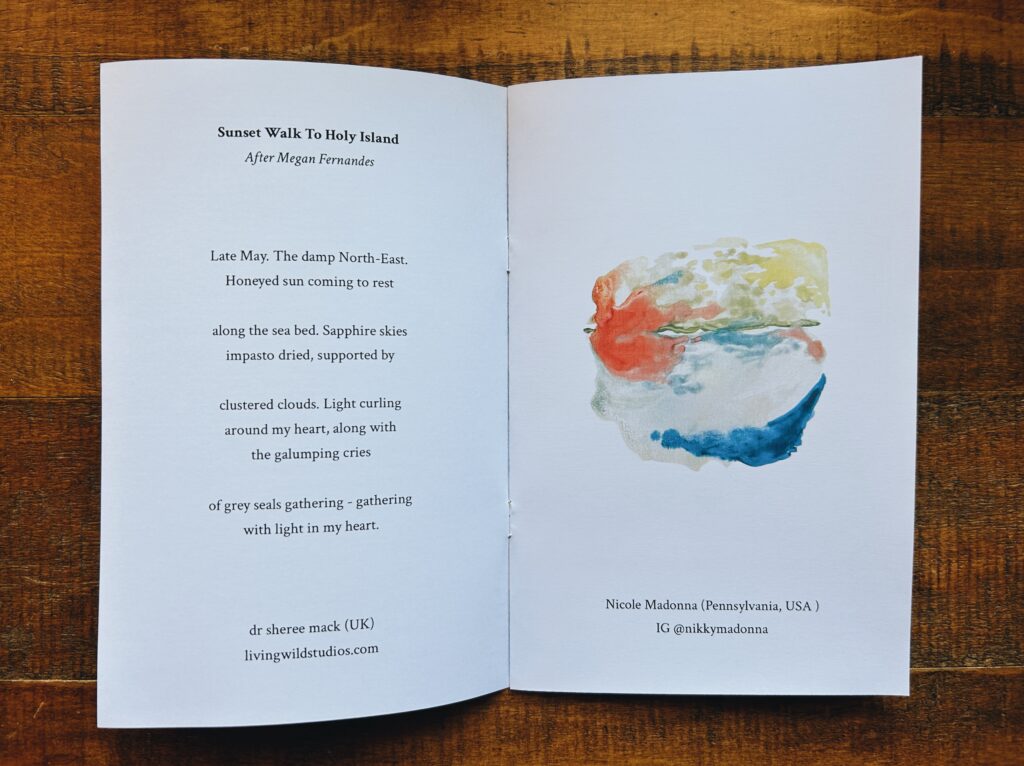
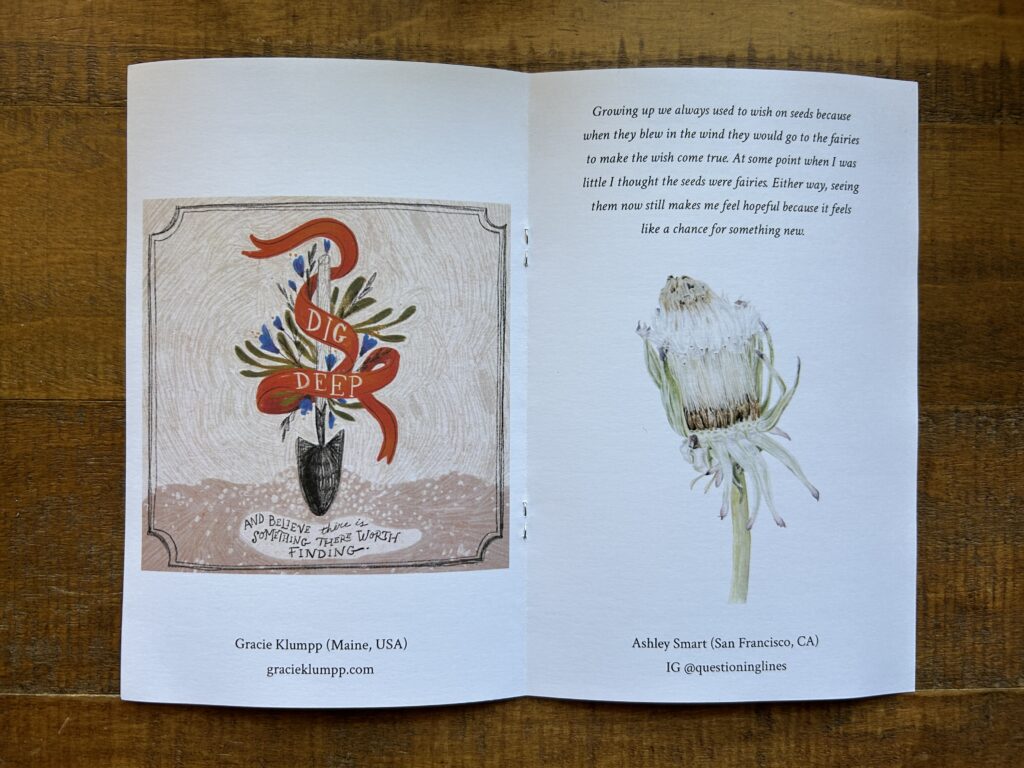
Thanks to everyone who contributed their art and words to this issue.
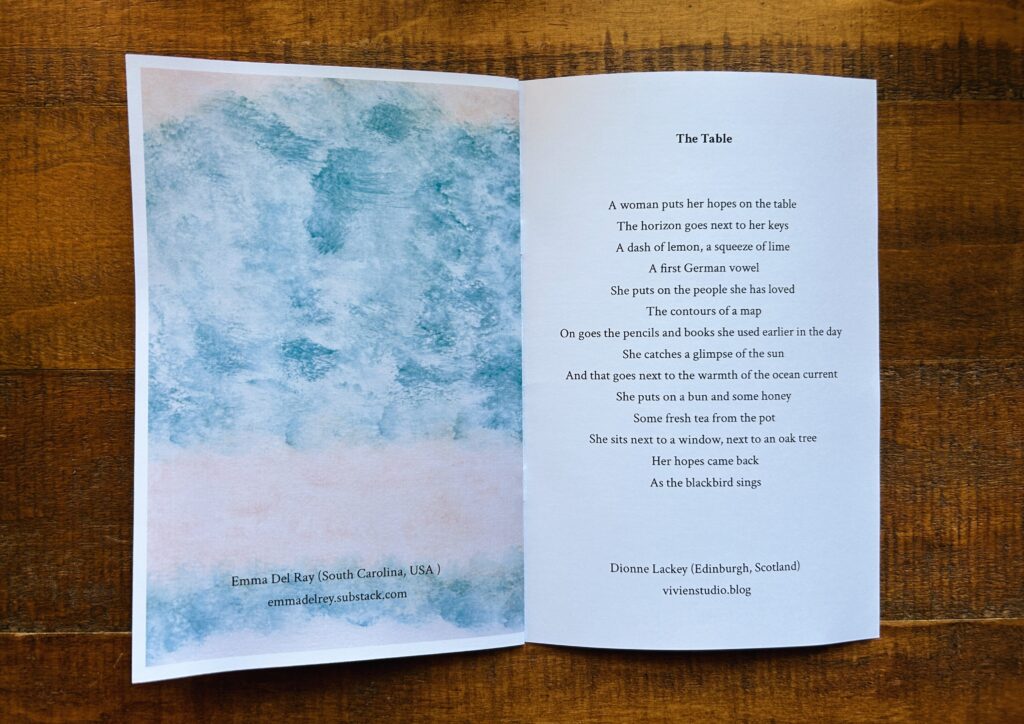
Last month we had a death in the family and I took compassionate leave. I’ve been planning to do an annual collaborative zine so I opened up submissions to my newsletter subscribers.
Artists are credited below. The cover photograph and stamped letters are my own.