

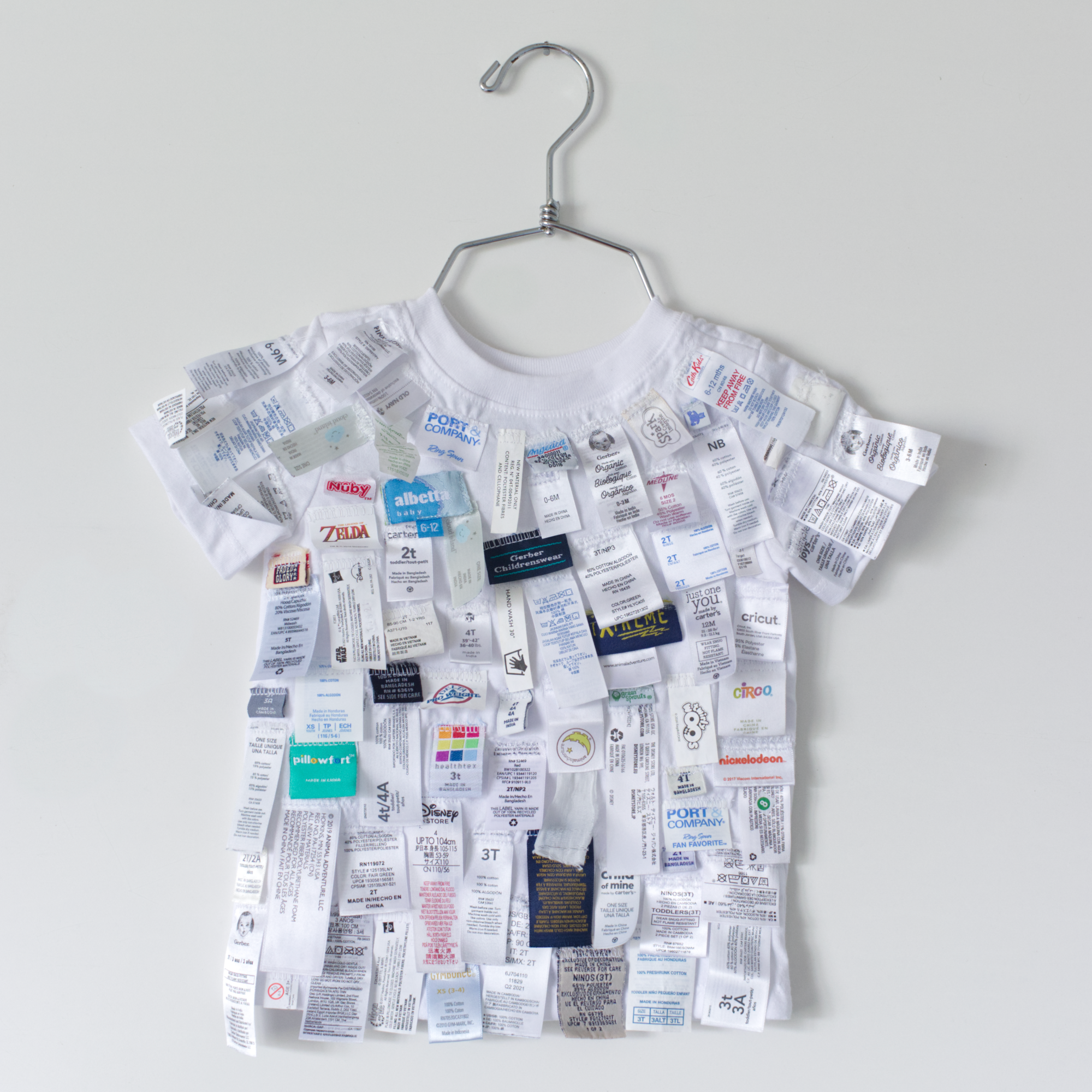
Did you know that most people don’t notice the feeling of clothing tags?
I used to think that everyone felt the same itchy irritation I did, and that I was just worse at coping.
But, when I started researching sensory processing to support my own child, I learned something life shattering.
I wasn’t worse at coping.
I was experiencing the world differently.
Sensory modulation is the brain’s way of balancing sensory input.
Consider how a pupil dilates or constricts to let in the right amount of light. Brains can change the intensity at which we experience sensations. They turn down senses evaluated as “unimportant” so you can better focus on a single input.
This isn’t a conscious choice. It is something that happens for most people with the same ease as a pupil dilating when you step into a dark room.
If you’re listening to someone, you probably don’t need to feel that clothing tag in the back of your shirt, to hear the lightbulb buzzing, or to taste the perfume of the person next to you.
Due to sensory modulation most brains wouldn’t even feel those things.
Meanwhile, neurodivergent brains may feel things so intensely that we can’t hear what the person next to us is saying. Or we may hear them, but it is a struggle that leaves us overstimulated and exhausted.
Our brains are simply processing much more information.
Check out this brain scan of an autistic brain (left) versus a non autistic brain (right).
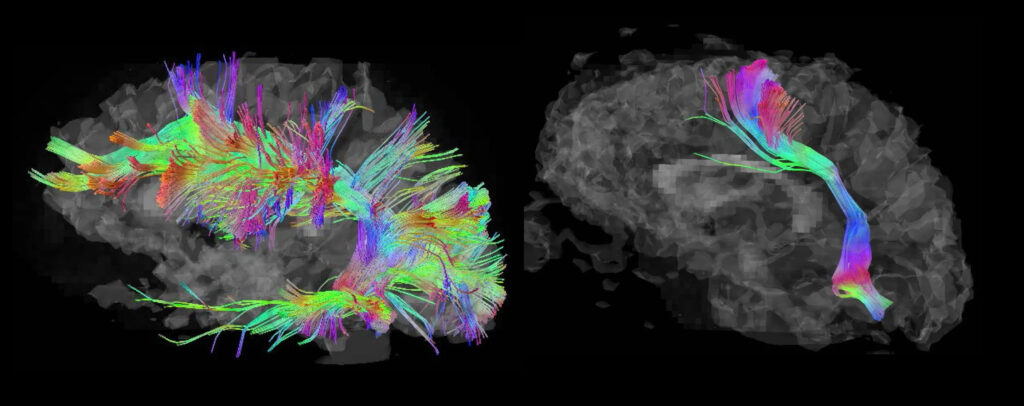
These scans were taken while the participants were processing spoken language. The non autistic brain is using sensory modulation to focus on the speaker’s voice. While the autistic brain is taking in lots of additional information.
This is why “exposure therapy” is not appropriate for neurodivergence.
Our brains are simply working differently.
Different isn’t bad.
Even if some people want us to believe so.
Brains with sensory processing differences can observe connections that others can’t. This is a unique skill set to bring to problem solving, art, science, and activism.
The world needs neurodivergent brains.
And we all need to better understand them.
That’s why I teamed up with Gracie Klumpp to co-create a picture book about neurodivergence and sensory modulation. This is the book we wish that we’d had as autistic kids.
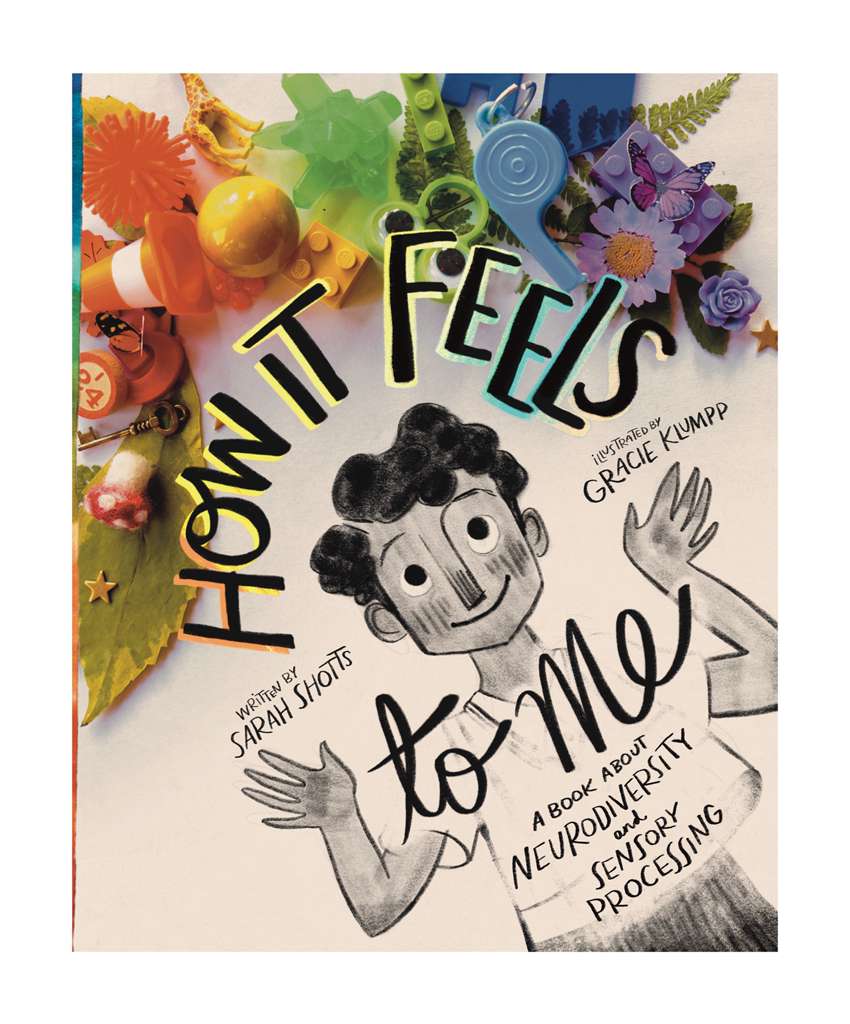
Cover Reveal!
We’re so excited to reveal the cover design and open preorders for paperbacks!
We’re in the final stages of copy editing and proofing and can’t wait to share this with you. Books will arrive this summer!
I’ve had a lot of messages tentatively asked me if this book could also help adults.
So let me say it loud and clear… YES!
We believe picture books are for everyone and welcome readers of ALL AGES.
Support needs are not something you outgrow.
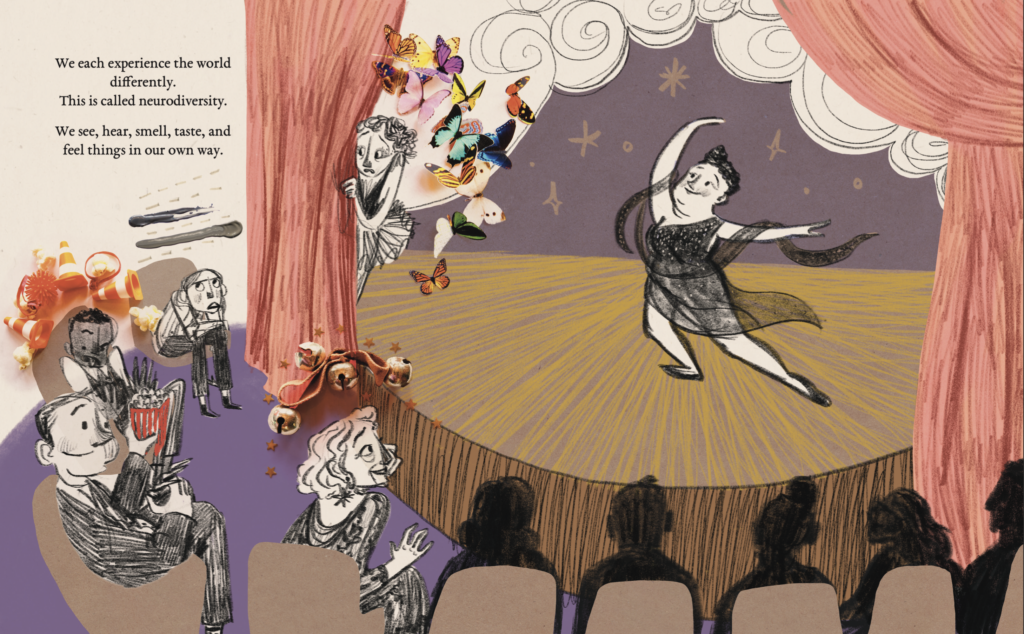
This is something Gracie indicates beautifully by including adults, teens, and children in the illustrations.
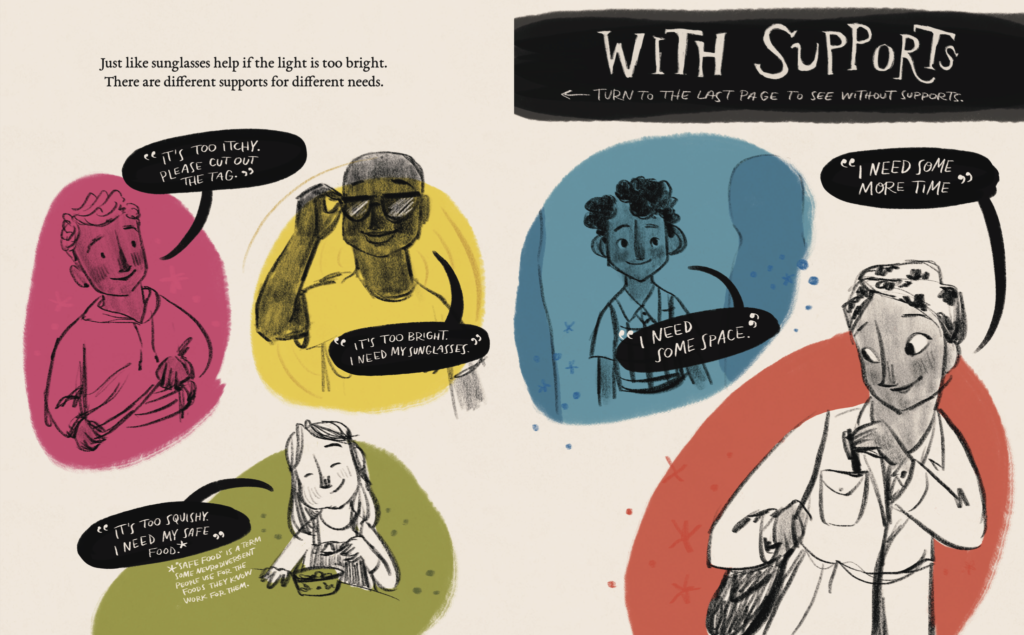
If you’d like to support the project you can also donate a copy and we’ll find your book a home (like a library, school, or with a neurodivergent family.)

Seeking blurbs.
We want to partner with educators, writers, occupational therapists, speech therapists, neurodivergent adults, and affirming mental health professionals to read the book and consider writing a blurb (a short quote) for marketing materials.
I’m also in the early stages of building a launch team to help spread the word.
If you’re interested (or know someone who might be) send me an email.
Much love to everyone who has supported the project so far.
We appreciate you.
P.S. I have a whole library of resources about autism and neurodivergence.
There are blog posts, podcasts, and visuals like this sensory overload video.
footnotes
§ Brain Scan images via Schneider Lab