
-
Please stop calling yourself an HSP. 😫
Read more: Please stop calling yourself an HSP. 😫Hyper sensitivity is real, but the term HSP dehumanizes autistic people.
…
Ok, deep breath.
…
I needed to pull you in with the title, but that may have flared up your nervous system. Let’s start over.
I’m mindful that I’m addressing sensitive humans.
You might find it hard to change your mind because it means admitting that you’re wrong. I get it.
I’ve felt that way too.
We’re all imperfect humans trying to understand the world around us. Let me be clear that I’m not saying anyone is a bad person.
But I am asking you to stop doing something that is hurting me, and I hope you’ll listen. My heart is beating like crazy while I type this, but HSP is trending and it’s only getting more popular.
I don’t think the sensitive souls using it realize how much pain it is causing autistics like myself.
I’m asking you to open yourself to the possibility that you might be using a term you do not fully understand.
Did you know the term HSP is based on the book “Highly Sensitive Person” by Elaine Aron?
I want to be clear that my issue with HSP is rooted in Aron’s writings. (She coined the term.) I have no doubt that you are highly sensitive and that your body processes sensory input in an intense way. I also remember the relief at realizing that truth for myself and reframing my sensitivity as a difference and not a character flaw.
The term “highly sensitive person” sounds universal and harmlesss. But unfortunately HSP carries a lot of baggage and pain for any autistic person familiar with this book.
Here is a direct quote from Aron concerning autistic people,
“Their problem seems to be a difficulty recognizing where to focus attention and what to ignore.
When speaking with someone, they may find the person’s face no more important to look at than the pattern on the floor or the type of lightbulbs in the room.
Naturally they can complain intensely about being overwhelmed by stimulation… but in social situations, especially they more often notice something irrelevant, whereas HSPs would be paying more attention to subtle facial expressions, at least when not overaroused.”
This passage alone expresses a deeply ill informed and outdated conception of autism. This is unsurprising because the book was first published in 1996 … long before the neurodiversity movement.
Aron’s views toward autistics are harmful and blatantly inaccurate.
- Many autistics are acutely aware of facial expressions and may even be hyper empathic. *
- It is a myth that all autistic people struggle with eye contact. †
- When autistic people do struggle with eye contact one of the main causes is sensory overload. ‡
- It is dehumanizing to judge what the autistic person is looking at or noticing as irrelevant. (Yes, we do notice small details sometimes! But it doesn’t mean we aren’t listening if we aren’t reacting the way you expect.)
This book was published in 1996. It is outdated and should go out of print.
Before we go any further it’s really important to start with this:
If you’ve met one autistic person you’ve met one autistic person.
If you know someone who is autistic you may think that you understand autism, but we are each incredibly unique.
One person may love loud music the other might cover their ears.
One kid plays elbow deep in mud the other can’t bear to touch it.
One person loves running into the ocean the other can’t shower because they hate feeling water on their face.
No single person has every autistic trait.
This is why we say autism is a spectrum.
Imagine it like a color wheel.
Each color is a different intensity of a certain autistic trait.

If you identify as HSP you may not identify fully with autism at this time.
That is okay.
You could always call yourself “highly sensitive” or “hyper sensitive” or even just “sensitive.”
But it’s not okay to call yourself an HSP when the term perpetuates harmful stereotypes against autism.
I read the HSP book long ago, when I thought I myself might be an HSP and not autistic. So I know the main premise of the book is that your sensitivity is a difference and not a disorder.
I agree!
And guess what?
It’s no longer the 90’s, and there is better language for that.
Neurodiversity
What is neurodiversity?
“‘Neurodiversity’ is a term that suggests the human race is improved by having a diversity of different kinds of brains – like biodiversity in nature, having lots of different brains in a society means we have people with different strengths who can work together.” §
If you experience more sensitivity than the average person you are… neurodivergent.
It’s that simple.
If you identify as highly sensitive you are welcome and invited to identify as neurodivergent.
No diagnosis necessary.

But… you might also be autistic.
Sensory differences are central to the autistic experience.
Many of us believe that our sensory differences are the root cause of all other differences.
Just look at these two brains.
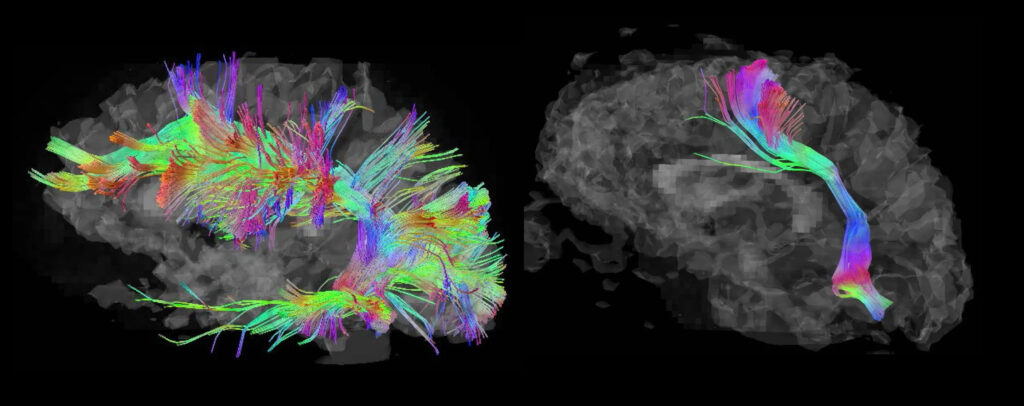
It is clear that the autistic brain (left) is processing much more sensory input than the brain on the right (neurotypical.) Differences in sensory integration may be directly related to language differences, social differences, etc.
There are also so many autistic strengths that are never mentioned! All of that extra information that our brain doesn’t filter out as “unnecessary” makes us excel at pattern recognition and problem solving. Autistic brains notice and make connections that neurotypical don’t even perceive.
But you may not realize this because even the professionals can’t all agree on what adult autism looks like.
Did you know that there isn’t a fixed diagnostic criteria for autism in adults?
They are using a test that was developed for kids and the whole process needs to be reformed. New research is slowly coming in that validates unstereotypical autistic experience.
The field of autism is in flux.
Early autism research was limited to aggressive nonspeaking white boys for a long time and only recently has the field begun to realize the variety of presentations autism can take. **
If you identify as hyper sensitive I’d really encourage you to follow some autistic adults to learn more about the autistic experience and to do some more research on “masked autism”.
Whatever you do I ask that you don’t think of autistic people as “less than” and see more of a kinship in our hypersensitive (or hyposensitive) experiences.
Not sure where to start?
Read my “What is autism?” post.
Visit my library of neurodiversity affirming resources for podcasts, videos, books & more.
Or subscribe for monthly-ish emails from me. I share my own lived experience and often write about creativity and neurodivergence.
As an autistic mum of an autistic kid this topic is close to my heart.
Right now I’m working on a picture book about sensory processing with autistic artist Gracie Klumpp. If you’d like to support the project you can preoder a copy (or donate one to a school or library) here.

FOOTNOTES
* Why so many women don’t know they’re autistic with Katherine May. Glennon Doyle’s We Can Do Hard Things Episode 220.
† Fact or fiction: people with autism never make eye contact. https://www.universiteitleiden.nl/en/news/2023/03/fact-or-fiction-people-with-autism-never-make-eye-contact
‡ How do adults and teens with self-declared Autism Spectrum Disorder experience eye contact? A qualitative analysis of first-hand accounts https://www.ncbi.nlm.nih.gov/pmc/articles/PMC5705114/
§ Autism Resource Page https://katherine-may.co.uk/autism-resource-page
** Gender Differences in Misdiagnosis and Delayed Diagnosis among Adults with Autism Spectrum Disorder
Racial/Ethnic Disparities in the Identification of Children With Autism Spectrum Disorders
Image Credits
Birds Flying: Bernard Hermant via Unsplash
Illustration by @autistic_sketches on Instagram
Brain Scan images via Schneider Lab
-
Neurodivergent Friendship
Read more: Neurodivergent FriendshipNot yet archived.
Read here: https://sarahshotts.substack.com/p/neurodivergent-friendship
-
The Value of Creative Joy
Read more: The Value of Creative JoyAnd rediscovering The Wheel of Time 🐉
Today I want to talk about creative joy.
Reconnecting to The Wheel of Time has reminded me what creativity felt like before it got all tangled up in career and profession and entrepreneurship.
For the last decade my creative energy has been focused outwards.
Everything I did became fodder for “content” on Instagram, YouTube, or (eventually) Substack.
I love documenting the process, but the frame of creative business definitely impacted the types of things I chose to make and spend my time on. This was particularly tangled up in “positioning” myself as a professional artist & author.
Certain parts of my identity got lost along the way. I’m in the process of untangling it all which I wrote about a few months ago: I’m not a brand. I’m a human. 🫀
What I didn’t share then is that rediscovering my humanity was largely tied up in a book series called The Wheel of Time.

14 Blue Wheel of Time Books (image credit: Juniper Books) During my teenage years I had basically no friends my own age. What I did have was The Wheel of Time. I logged in to a fansite called Wotmania every morning and later on a fan fiction site called Silklatern. The interactions I had with other fans was the one place that I really “fit in”.
Navigating two degrees as an undiagnosed autistic took pretty much all of my social energy. During that time I completely lost touch with fandom and reading for fun. By the time I finished my postgraduate studies I’d pretty much forgotten what it felt like to get lost in a book.
Enter 2020. I had a one year old baby. The world was chaos. And I turned to… The Wheel of Time. I pulled the Eye of the World off my shelf and fell into a world of magic that I knew and loved. The characters were old friends and the story was comforting in its familiarity, but that wasn’t all.
Rereading the books awakened something in me.
A creative spark. It is no coincidence that these are the books I was reading when I starting writing my first book, Discover Your Creative Ecosystem.
The writing of Robert Jordan just has this effect on me. I love other authors and other books, but the Wheel of Time is etched into my bones.
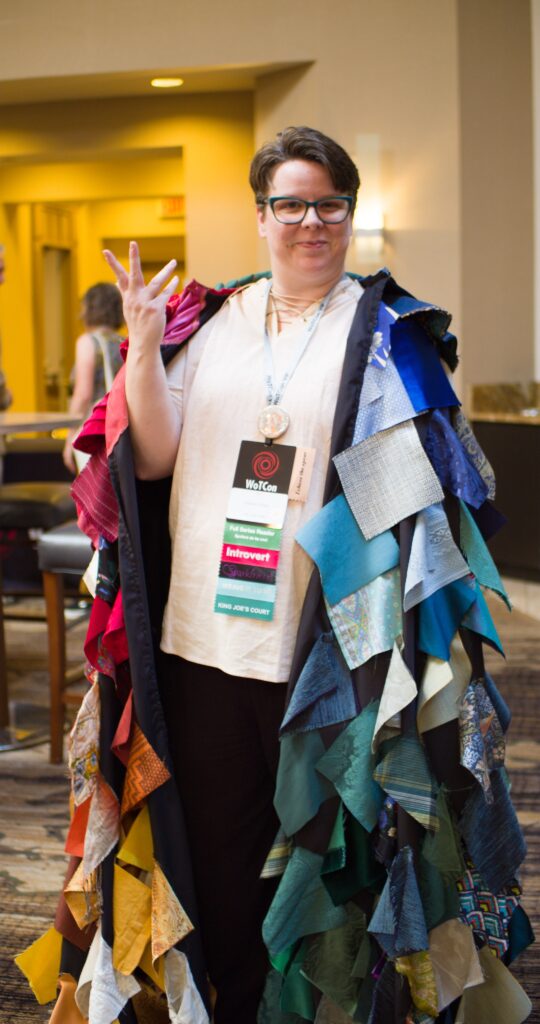
Myself in a multi colored patchwork gleeman’s cloak at WotCon 2023. Thanks to the volunteer photographers at WotCon for this shot. It’s hard to explain. It’s… ineffable.
But there must be some kind of soul connection to something in this story for me. Why do we love the stories we love? It’s something I’m really curious about. It always feels flat and superficial when I try to explain.
The Wheel of Time has always inspired me to create. I high school I filled notebooks and notebooks with world building. I made sketches of costumes and drafted stories and put myself to sleep imagining characters in worlds of my own.
I gave up writing somewhere along the way, but after self publishing my first book I’ve also started writing fiction again. I’ve been working on a fantasy story that I’d like to tell for the last two NaNoWriMo’s and I’m ready to start working on it year round.
Meanwhile I have felt the ta’veren tug (if you know you know) pulling me deeper and deeper into WoT fandom community.
It’s becoming an important part of my life so you can probably expect to hear more about it here.
It all started in March when I created a muppet style puppet for a song parody contest… an in world version of These are the People in Your Neighborhood. The first project I’ve done purely for creative joy in YEARS. 🤯
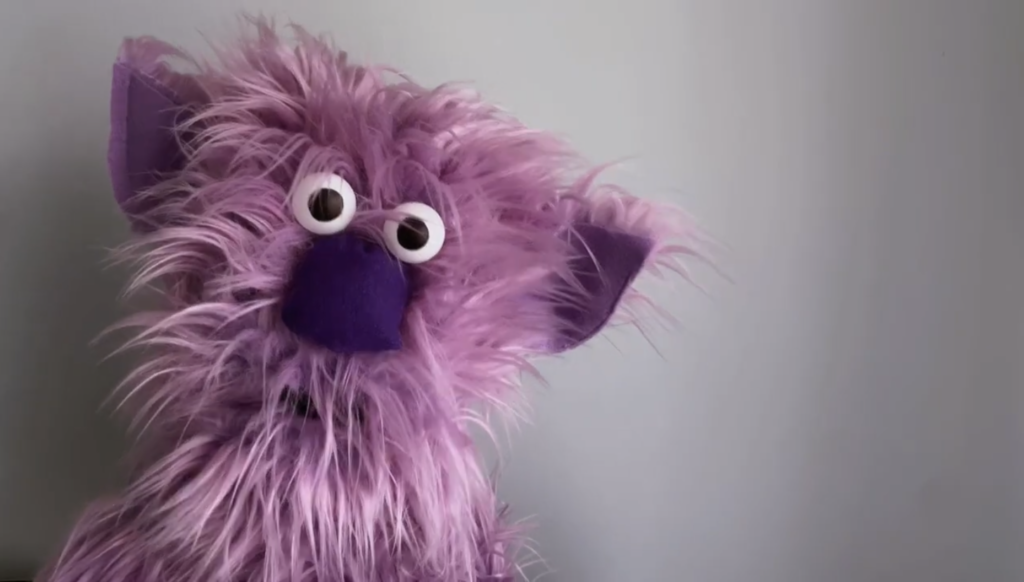
Fluffy purple Ogier puppet with large ping pong ball eyes, a wide purple nose, and tufted ears. Ogier are book loving creative souls and I feel a deep kinship with them. This was in no way for my portfolio, content marketing, or even something for my family. It was a gift for the Wheel of Time community and complete joy to make.
I really loved the challenge of creating in a brand new medium (I’d never made a puppet before) and figuring it out through trial and error. I drew on various creative skills in a way I haven’t done since working on set and props during my undergraduate degree.
Almost immediately after finishing it I jumped into another project. A gleeman’s cloak.
Something I noticed about making something for me was that I didn’t have to fuss over setting up a camera to film or creating perfect process photos.
I wasn’t making this for DIY content. I was making it for me.
Because of this I worked for many hours at the kitchen table (much less photogenic than my studio) simply because I could cut squares or I could sew while Davy role played as Link from Zelda.
I wrote a bit about that here.
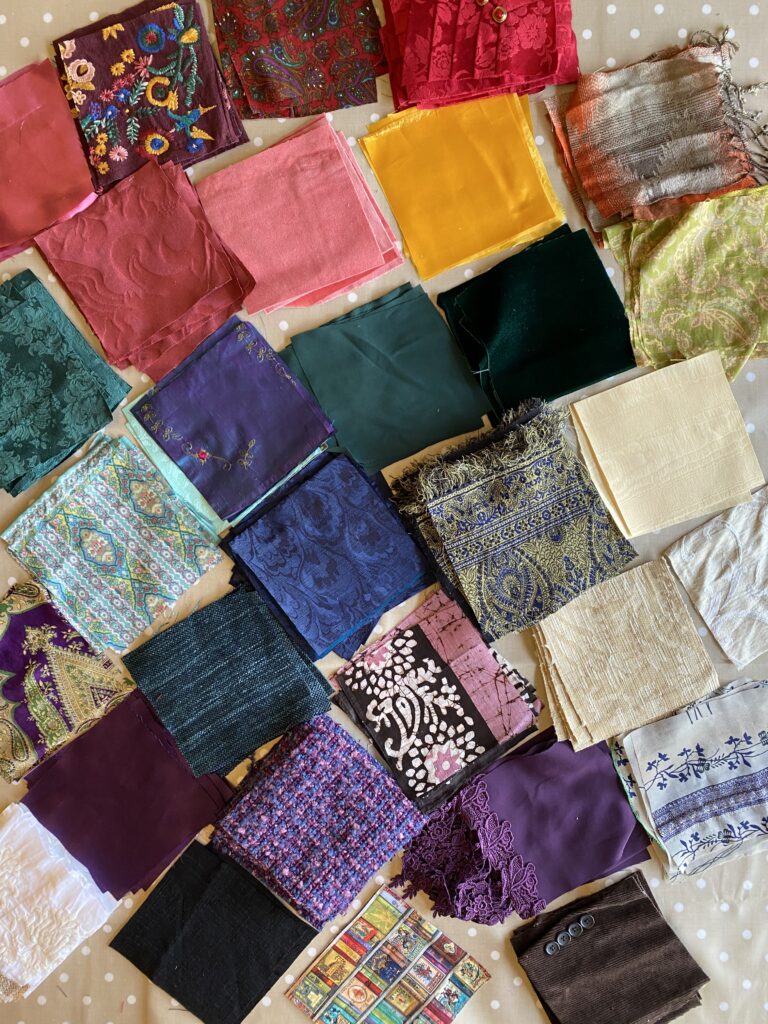
Multicolored and textured patches for my cloak. These are 209 out of 350 patches required.
I sat down to write about the cloak itself today, but instead I found myself wanting to share the story behind how it came to be.The shift that opened up “time” for something like this. News flash: I didn’t actually have more time. I just used my time differently. I spent a similar amount of time last summer making this.
And the value I’m finding in creative joy.
Let’s discuss.
What would you make if you had a dedicated period of time where you couldn’t do anything productive and had to let yourself play?
Where do you find creative joy?
Cheers,
-
I’m not a brand. I’m a human.
Read more: I’m not a brand. I’m a human.Last year I took two big marketing classes by brilliant teachers and I’ve decided to ignore some of their biggest advice.
Entering my Human Era.
I’ve decided to stop trying to be a cohesive “brand.”
Is this a bad idea? Possibly.
Would I grow faster if I followed branding advice? Assuredly.
But it is not for me.
Over the years I have taken dozens of marketing classes for my many creative pursuits: marketing for wedding photography, marketing for bloggers, marketing for artists, marketing for – – yes, this was an actual class – – weirdos. (That one was actually pretty cool and I would honestly recommend, but I’m still ignoring one of the main lessons.)
What they all have in common is a bit of homework to describe your business in 3 words (usually in the form of a Venn diagram.)
So I carve parts of my identity away like Cinderella’s sisters trying to fit into the the glass slipper.*
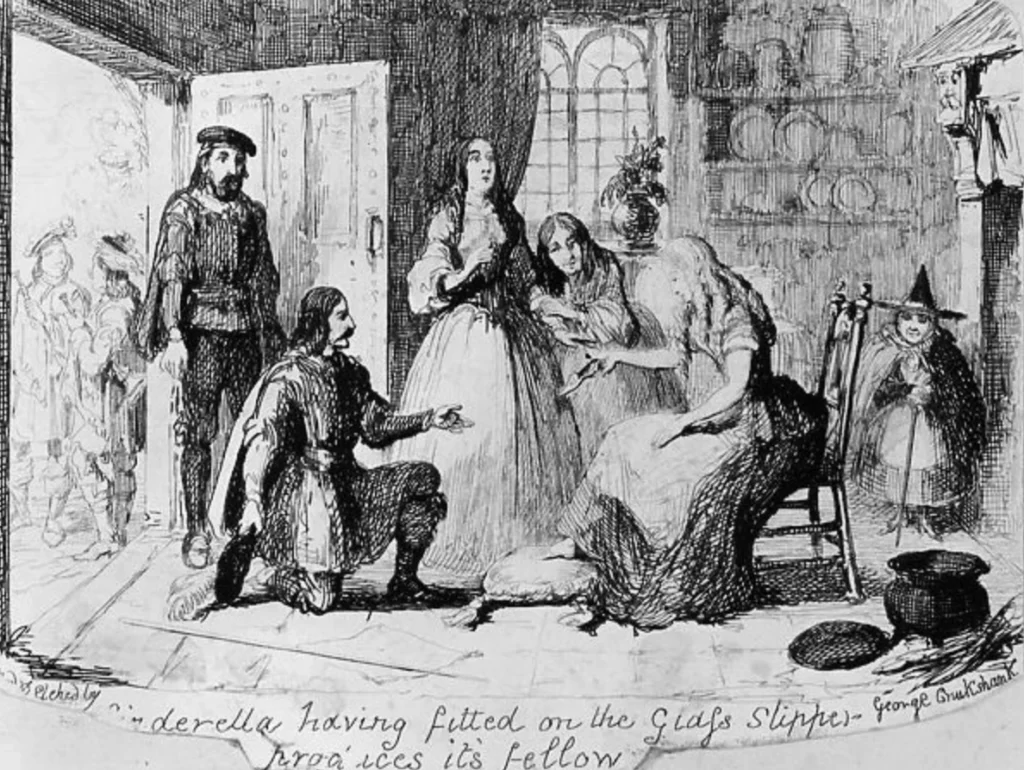
I love a bit of homework. So I go about this bit of self mutilation quite happily choosing fonts and color palettes that best fit one facet of my persona.
I think I’m a decade into online marketing classes at this point. Because I’ve been doing this for a while it has become almost second nature. I don’t even question it.
“Branding” is just… how it’s done.
After all it’s not that different than the autistic masking I’ve done all my life. Like many autistics I often find my place in social circles by adding “value.” So this concept was something I am well accustomed to. The homework assignment felt like a no brainer. Show people the stuff they want to see.
Don’t talk about Dungeons and Dragons in polite company.
I fragmented my identity into the bits that were marketable. Sometimes I might even create two completely separate “brands.” I did this for marketing reasons, but also to appear less “scattered”, “unfocused”, or “flaky”. I see now that I was trying to hide neurodivergent traits that are classically associated with ADHD.
Right after my masters degree I splintered into two people. The creative one and the geeky one.
I started a wedding photography business inspired by vintage books. Meanwhile I was making quirky YouTube videos as one half of Swot Sisters. I’ve never found a way for those parts of myself to really inhabit the same space. Even last year I started two separate Substacks.
An artsy Substack to talk about creativity. And a geeky space themed Substack to talk about neurodivergence (while weaving in lots of Star Trek and Doctor Who references.)
I finally merged them last month.
Over the years I’ve gone through a variety of rebrands. But I never found a “brand” that didn’t pinch like wearing a too small pair of shoes.
Then something extraordinary happened.
Even as I lost people who thought I was a flibbertigibbet.*
I found myself surrounded by YOU. Curious, creative souls who don’t seem to mind (or actually like it?) when I color outside the lines, show the mess, or pilot the spaceship at breakneck speeds.
Buckle your seatbelt because it’s going to be a bumpy ride.
I am done with chopping off pieces of myself to appear more “professional.” I’m ready to put on my Frizzle jumpsuit and get messy!
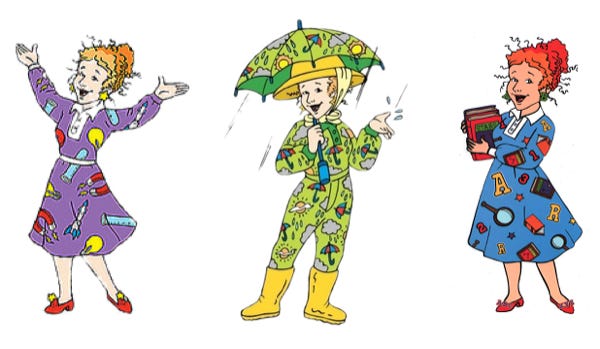
Moving forward you can expect more complexity, more mess, and more contradictory humanity here.
I’m a human who:
- makes art
- writes fiction
- self publishes books
- reads sci fi & fantasy
- teaches theatre at university
- plays video games
- home educates
- bakes sourdough bread
- tends a messy garden
Who knows what may bubble up next?
SPOILER ALERT
This post went viral and is now available in zine form.
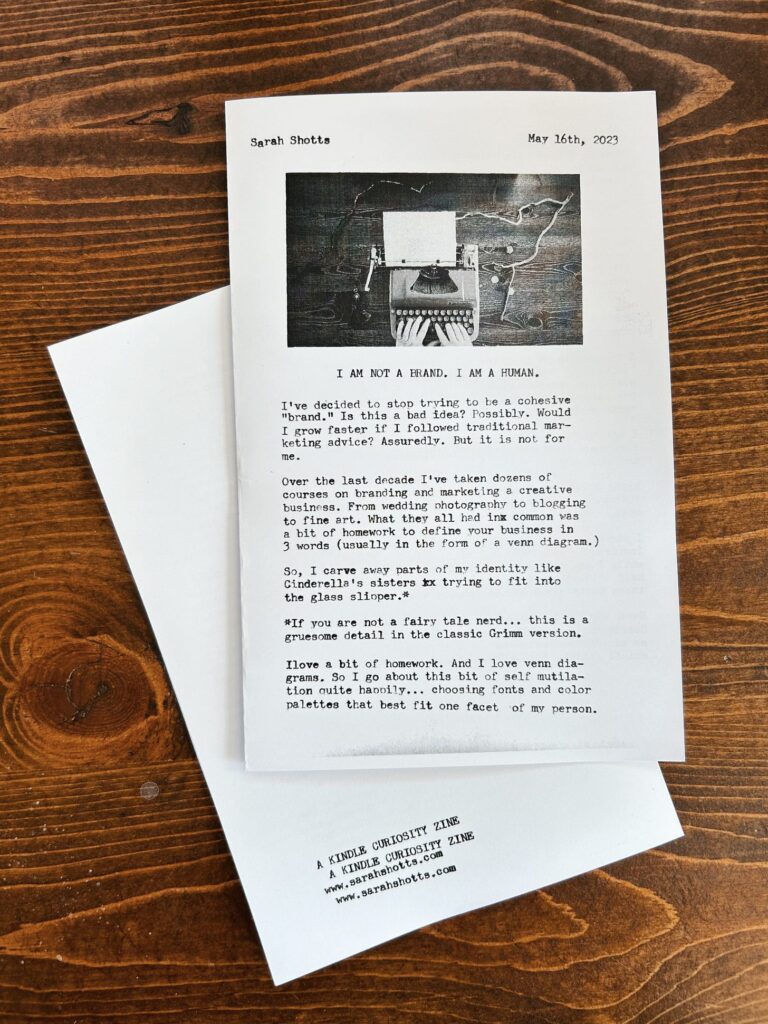
Cheers,
-
How I Survived My First Author Event
Read more: How I Survived My First Author EventLast week I attended NWA Book Fest… my first appearance as an author. Indeed my first gathering of any kind since COVID times. I wanted to take some time to share about that experience.
I’m attempting a bit of writing today while Davy “types” on his new keyboard and iPad app.
I was so busy the week before I didn’t have any time to be nervous. I practiced my reading a time or two, installed the Square Up app to take credit card payments, and put my books in a box.
There was a little bit of scheduling confusion and the event was running early so I was rushed right onto stage within minutes of showing up.
(Not ideal for an autistic. I’m not gonna lie.)
I also expected to be introduced and had only prepared for a reading. Somehow I managed to introduce myself and my book without rehearsal. I think its down to how often I have talked about my book online. Maybe it does get easier with practice. I wouldn’t say I’m captivating, but I did it.
Right after my reading I had a group of blogger friends show up to hear me. They just missed me because of the schedule kerfuffle, but we took a photo anyway.
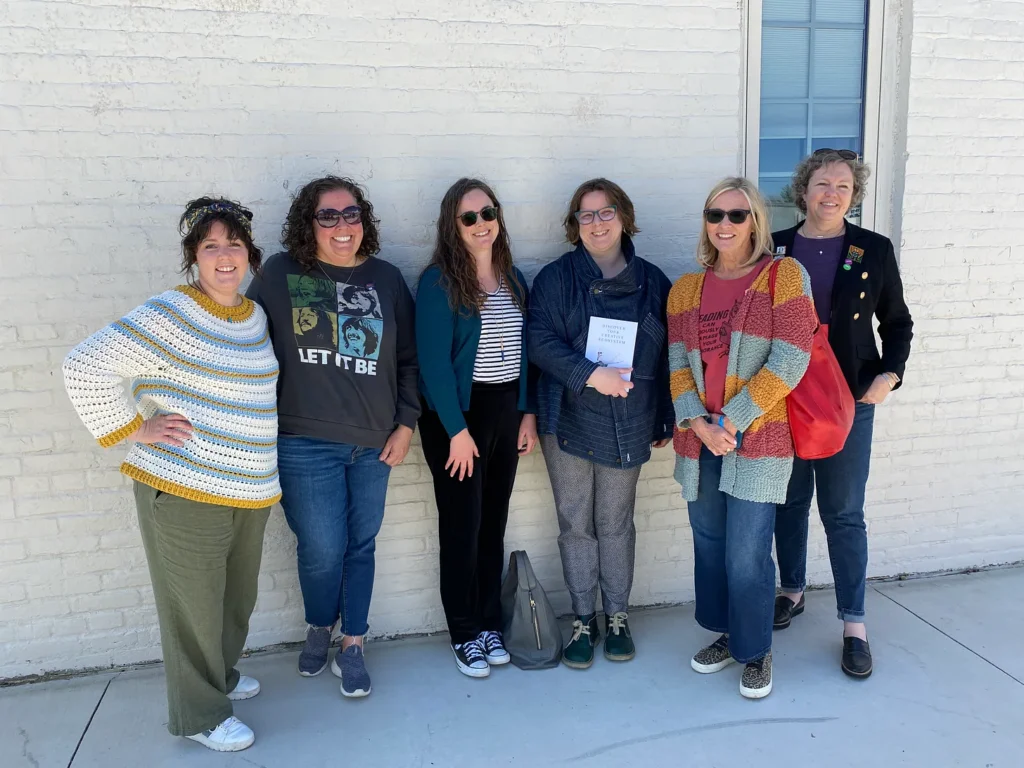
Then I did a short signing and sold 4 books. 🥳
(Shout out to my friend Lori Lynn who served as my “emotional support extrovert” and helped me make small talk at my signing table.)
It was really nice to see people respond to my book in real time. One woman immediately connected my book to The Artist’s Way which completely made my day. So thankful to everyone who dropped by to take a look.
Some lessons I learned and will be adding to my self publishing course:
- Print a QR code to purchase the ebook. (My hardcover is a deluxe edition and more people might have purchased the digital bundle at a lower price point.)
- Print my Venmo code. (Spelling it out did not seem to work.)
- Have something to hold business cards / stickers so they don’t blow away.
- Probably bring a book holder as well. The books kept tumbling off the table and one or two may be damaged.
Here is actual footage of me after the event. 😂
(That’s Odo from Star Trek Deep Space Nine.)
It took a lot out of me.
I realized that this simple brief appearance pushed me to the edge of my capacity and I definitely should NOT sign up for longer events any time soon. (After two hours I felt the way I normally do after a whole convention. )
I believe this is due to…
- More sensory overload on a daily basis from parenting.
- Diminished social capacity due to socializing with my toddler 24/7. (I’m just going to call him toddler till he turns 4, ok?)
- Not going to any events for 3-4 years during early motherhood / COVID times. I am both out of practice at masking and have no desire to return to that level of social performance.
Not only am I “re-entering” the world after COVID lockdowns, but I’m also learning how I want to show up as an autistic human. What does it mean to attend events without pressuring myself to mask (performing excitement, facial expressions, small talk, etc.)?
Even so I was pretty wiped out afterwards. Here is how I reset the next day:
- Time alone in the studio. I laid on the daybed and watched Netflix for an hour and then made a collage.
- Time with Davy in the backyard.
- A long walk with a podcast.
- Reading in the bath.
- Playing Cozy Grove with Davy. (More on that below.)
I’m still pretty tired, but I feel more or less human again. If I hadn’t been able to take that time I would have stayed in a perpetually burned out / shut down kind of state.
I still struggle with taking time for myself as a parent, but when I do I am reminded of how powerful and restorative it can be.
Of shoes & ships & sealing wax
Other bits & bobs to recommend this week.
Play
First off, I have rediscovered Cozy Grove. I played this a couple of years ago on my phone, but we just purchased it for the Nintendo Switch and I have been playing with Davy.
It’s a really cute and relaxing game.
You’re a scout marooned on an island haunted by (cute) bear ghosts. You run around the island finding things for them and helping them restore their memories. You can also fish and bake and craft and garden. The music and artistic style sets such an atmosphere. Have a peek.
I’ve heard it’s kind of like Animal Crossing, but in my opinion is cuter and more fun. (I tried Animal Crossing after finishing this game the first time and didn’t connect with it.) If you’re a casual gamer and just looking for a way to relax would really recommend Cozy Grove. 🥰
Read
The blog post of the week for me was How to Be a Good Assistant to Yourself by Austin Kleon.
Muse
This post by @worry__lines on Instagram is really good food for thought.
TOO Many Tabs
I’ve invented this section as inspiration to browse and close the tabs I keep open on Safari. I am always dangerously close to the 500 tab limit. Hopefully these creative breadcrumbs offer some inspiration.
Illustration
I absolutely love this 1970’s edition of The Sword in the Stone illustrated by Alan Lee. Merlin’s cottage has always been evocative for me and this is just how I’ve imagined it.
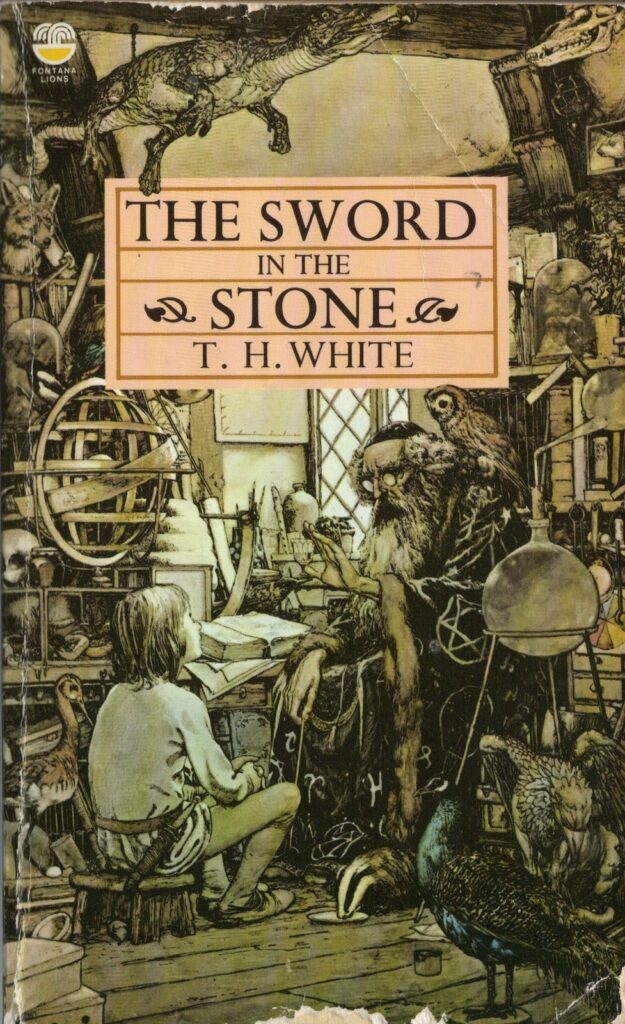
I made this discovery while looking for images of my teacher muses for home educating. A few weeks later I bought a copy from ABE Books so I really don’t need this tab open anymore.
Word Nerd
Etaoin shrdlu was used as a “red flag by typesetters to show an error in text, but sometimes it was overlooked and made it into print.” It is the approximate order of frequency of the 12 most commonly used letters in the English language.” via The Dusty Wheel
—
Wait, this is real?
This tab was open because I saw this butterfly on Instagram and didn’t believe it was real. Fact check!
It is indeed an orange oak leaf. Perfectly camouflaged on the outside with brilliant colorful wings when open.
Well that was effective! Maybe I’ll do this again. What do you think?
Thanks for reading!
I’d love to hear what you connected with and have a chat in comments.
Cheers,
-
Self Pub 101 Bonus (Personal Reflection)
Read more: Self Pub 101 Bonus (Personal Reflection)The timeline of my process self publishing Discover Your Creative Ecosystem.
2019 or “The Before Times”
When I am writing a rough draft I absolutely do not make any corrections. This includes spelling, grammar, or rewrites of any kind. As Miss Frizzle would say, “Take chances, make mistakes, GET MESSY!”
I take this approach as a person who can spend hours rewriting a single email. If I let myself start editing I’ll never finish a draft.
So in 2019 I started making notes and doing research for the book I wished I had to read. Davy was less than a year old and I was struggling to connect with Julia Cameron’s The Artist’s Way which felt absolutely inaccessible to me at the time. (I love Julia Cameron, but it did not work for me during my postpartum life.)
This was a book about creativity and motherhood and I was trying to make space for all of the varied human experiences within parenting.
I wrote a chapter about “creative ecosystems” that kept getting longer and longer.
At some point I realized this was its own “thing” but I wasn’t sure what that “thing” was. I pulled it out of my creative motherhood draft and set it to the side.
Then the pandemic happened.
2020 or “The Long Break”
When new motherhood collided with the pandemic I collapsed.
During the early adrenaline infused weeks I pushed out a single draft of the creative motherhood book. At this point we all thought the situation was somehow “temporary”, but when it didn’t let up I hit overwhelm pretty quickly.
I had almost a whole year between drafts. The time away from writing actually did more to inform the book that follows than any amount of “bum on seat hands on keyboard” ever could.
I learned that time and space between drafts is actually essential to my creative ecosystem and makes my writing better. I’ve found this to be true for both nonfiction books and novels that I am drafting.
There are two benefits to time between drafts:
1. Actual life experience you can bring to the book.
2. Time for your subconscious to unravel some of the book’s problems.
3. Distance from the material.
Coming back to a draft I found that the person I had become had new things to add to the book.
I find that the time I’ve spent thinking about my book or the themes of my book adds more depth to the writing. And that time away from my writing gives me the space I need to make ruthless edits. I feel less precious about it and also have more clarity on what I want to say.
March to June of 2021
When I came back to my draft I thought I could adapt it into a group coaching program. I asked a friend if they were interested in being a beta reader for a virtual creative retreat. I edited and emailed one chapter a week believing I was creating a group coaching program.
(Full transparency: I definitely missed several weeks in there because we were sick most of the time my son was enrolled in school. For school giveth time and school taketh time away. My beta reader was understanding and encouraging and I kept at it.)
I knew by now I wanted to write a book about creative ecosystems, but thought it should be longer and more complex than what I was working on.
September to November of 2021
I made some further edits and ran a Creative Ecosystem group coaching program in autumn of 2021. Hearing feedback from the creative kindreds in the group really helped me see the value in what I’d already written and realize that the simplicity was actually a strength.
Setting aside the idea of writing a 100,000 word thesis on creative ecosystems I decided to restructure the weekly emails as a book and self publish.
I downloaded a 6×9” book template and started formatting the book as I redrafted. I adjusted the language with a book reader in mind, but tried to keep the conversational tone I had established in the email versions. I also added additional images and prompts.
January 2022
I ordered the first proof for Discover Your Creative Ecosystem in January of 2022. This began the lengthy process of formatting and copy edits which took most of the year. There was quite a delay between ordering proofs and receiving them. And again, we were sick for much of the spring semester.
February 2022
My original plan was to create a printable workbook as a newsletter magnet that I would mention throughout the book. But I got carried away designing the workbook with full color illustrations and it turned out to be more than the average home computer could handle. So I decided to order a paperback copy and see how it turned out.
March 2022
I wasn’t happy with the paperback proof of the workbook so I added some pages and ordered a proof in hardcover. I was much happier with the quality and decided to offer it as a bundle.
April 2022
I recorded the audiobook. I did this before finalizing the final proof based on Austin Kleon’s suggestion that you always find mistakes when recording the audiobook. And I did.
When the penultimate proof came in I did a photoshoot and launched Indiegogo preorders. I wanted to complete the crowdfunding campaign before people went out of town for their summer vacations.
By this point I had a draft I was mostly happy with, but also a list of changes I wanted to make to tweak images and formatting.
October 2022
A lot happened in October. My final proof arrived and I made one last round of edits. I decided against one further proof copy (even though my heart wanted one) because I really wanted to get my books out before the holiday shipping rush.
So I ordered my books and received them just before Halloween.
November 2022
When the books arrived I scouted out an autumnal spot to photograph them and to sign all of the preorders. The ground was carpeted in red maple leaves so I tucked one into each book. I took some photos and videos for Instagram.
I took my time packaging up the books so I could personalize the library pockets and wrap them each with tissue. It took several different sessions while someone else was watching Davy to get this done.
Finally they all went out in the mail! Once the books started hitting doorsteps I sent out the PDF ebook. I wanted people who preordered physical books to have a chance to hold that in their hands first.
December 2022
Two weeks into December I finally had the two days it took to finish editing the audiobook and set up all of the meta data correctly.
I sent that out today and sat down to turn my self publishing experience into creative compost. So writing the “rough rough draft” of whatever this project will be while Davy builds DUPLO blocks at my feet. (I can’t believe he is letting me work on my laptop. This changes everything!)
So that’s it!
Around three years from start to finish with a one year pandemic gap. The self publishing part of the process itself took about one year. I’d originally hoped to get the books out sooner, but would definitely allow myself more time in the future.
This isn’t a template to follow. I’m just pulling back the curtain on what exactly I did and how long this process took for me.
-
More Reaching Than Rooting
Read more: More Reaching Than Rooting
First off, a quick update for local folks!
I’ll be attending my very first book festival as a self published author this Saturday! I’ll be doing a reading and signing at NWA Book Fest and would love to see you there! It feels surreal and I’m not sure I quite believe it’s real yet.
Find all the festival information here. (Catch me on the main stage at 2:30pm).

A peek into my creative process and current works in progress.
This week I’ve had more “reaching” energy than “rooting.”
Along with preparing for the festival I’ve also applied to two more art exhibitions at Spilt Milk Gallery and The Anthropology of Motherhood.
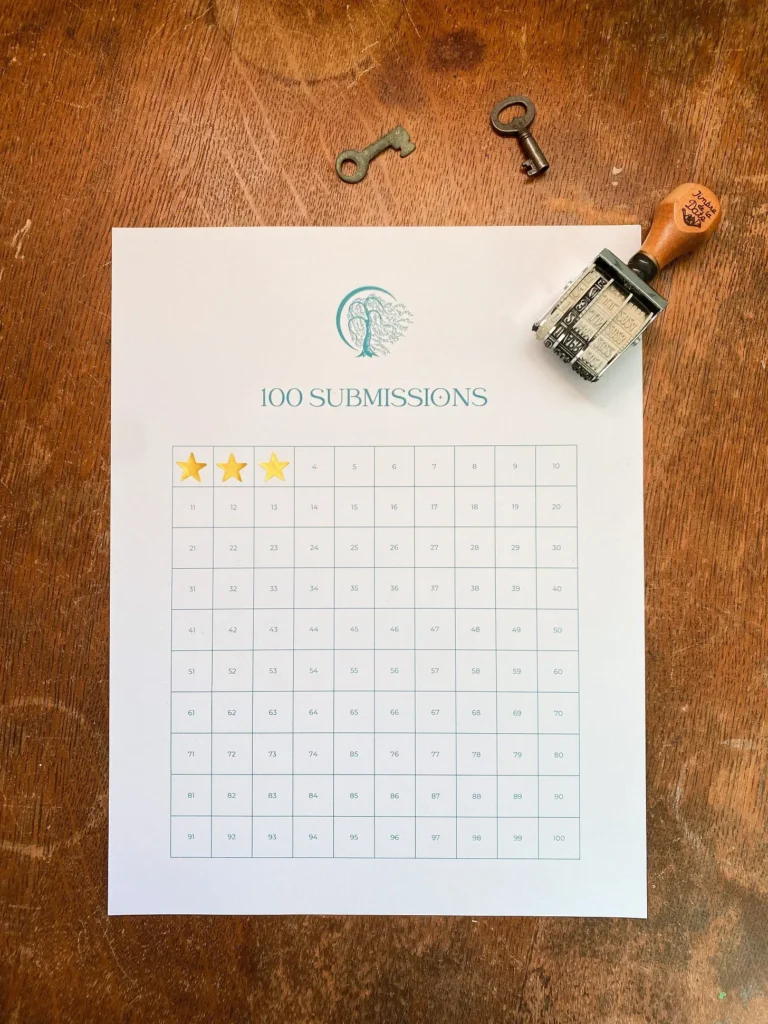
You can download either of these printables (Reach & Root or 100 Submissions) here.
I recorded a podcast episode with Kiki from Heiter Magazine. (Coming your way in April.) Podcast interviews take a lot of energy so I am experimenting with quarterly guests this year. In the past I’ve tried weekly or monthly and that has been too much. This is part of my seasonal planning approach and slowing down to find my own pace.
I’m also undertaking a just-for-fun puppet alteration project for a Wheel of Time parody contest. I haven’t done any crafting or fan art in a really long time so this has been fun.
Also Davy is fascinated.
Maybe I’ll share a peek at that next week.

Other bits and bobs I’d like to recommend…
Watch
“I used to think that art had to begreat to be worthwhile. Now, I only think it has to be to be worthwhile.” John Green. Maybe Art Only Needs to Be. Feb 21, 2023.
Me too, John, me too.
Listen
The On Being podcast is BACK and I am loving it! These two episodes were amazing.
Janine Benyus Biomimicry, an Operating Manual for Earthlings on natural organisms as mentors and peers… learning from them rather than about them.
And Rick Rubin Magic, Everyday Mystery, and Getting Creative. I have SO MANY quotes from this one because I listened while parked in the car while Davy napped:
- “The real practice of the artist is a way of being in the world.”
- “It’s hard for me to finish projects because I always see the possibilities of what else we could try and I want to try everything…”
- “What I came to realize is that there is a time for this open play. And it’s in those first two parts of the process, the seed phase… and experimenting.”
- “By working with sensitive artists, we resonate together in that we’re feeling things that not everybody else is feeling.”
- “There is no connection between the amount of time invested and how good something is.”
- “The sustainable part of the practice is: start with things that are easy to do.”
Read
Reflections on shapeshifting and reframing “scattered” by Cody Cook-Parrott
That’s all for this week, but I’d love to know what you’re up to.
Feel free to drop a link or comment below.
Cheers,