This is what I use. It requires a Paypal account. I like this because it allows me to ship books (within the US) using media mail, which is the cheapest way to mail books.
I haven’t used this myself, but it’s on my radar as a way to get discounted prices for shipping through UPS & USPS.
Packaging
Ideally you want to package up your book babies so they arrive in pristine condition. (Unlike Amazon who chucks a book in a box and hopes for the best.) This means you probably want a rigid or bubble mailer. I’ve used a few different companies, but Eco Enclose is my favorite. If you use Eco Enclose be sure to order a few free samples and make sure the book fits nicely (sometimes it’s hard to account for the thickness of the book when choosing a mailer size.)
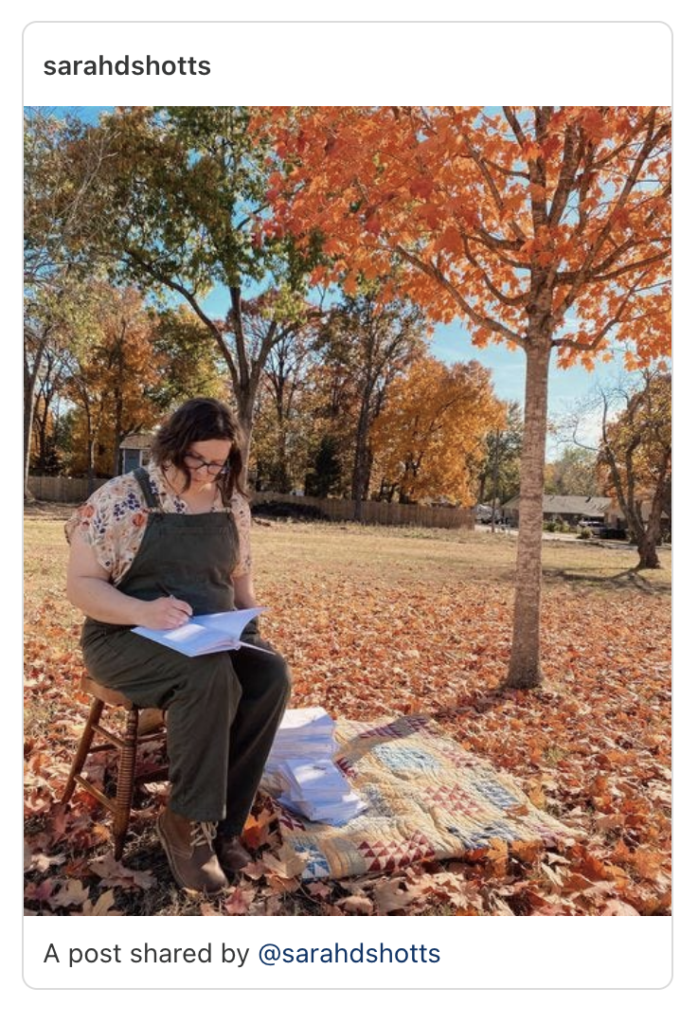
Here are some authors with great social media feeds or online platforms that showcase their work. Tap over to their feeds for some ideas on the type of content you can make to promote your books.
I’ve focused on Instagram as it’s easy to embed an image and showcase their visual style. Some of these authors have larger followings on other platforms.
Lex Croucher (they/them)
NYT Best Selling Author, Traditionally Published (UK)
At some point you’ll probably need mockups for your book. These can be used to announce your cover design, take preorders, or for a visual during your crowdfunding campaign. There are free and paid options all over the internet, but Book Mockups at Envato is a good place to start. You may also want mockups for audiobooks and ebooks. (If this is outside of your skill set this is something else you can hire a professional for.)
Book Photography
You’ll want the best photographs of your book that you can manage. Whether this means leveling up your own skills, doing a service swap with a photographer, or hiring a professional. Remember your launch muse. Whoever takes the photos you’ll need to have a clear vision of what kind of photos you want of your book (minimal, styled, with people, etc.) Take a look at the author’s above if you need some ideas.
Wherever you sell your book you’ll probably want a sales page on your own website.
You can do this even if you use an online marketplace.
This is a place to make the sales more personable. Share the why behind your book (revisit your notes from the “Why” module) and who it’s for. You can include videos, images, and reviews.
Then put a clear “Buy Now” button that links to whatever shopfront you choose.
There is a beautiful example from Katie Daisy here.
Or a simple approach from Austin Kleon (you’ll notice he links to Bookpeople and not Amazon.)1
Brick & Mortar
My first book has a tiny profit margin (due to being full color print on demand) so I have not yet explored brick and mortar for my own books. I have done a bit of research though and will share that here.
After recording this podcast I learned something important about bookshops.
Bookstores sell on consignment.
The way this works with traditional publishing is book distibutors offer the ability to return books that don’t sell. If you sell to a brick and mortar shop they might be more comfortable selling on consignment or with the option to return unsold stock.
In addition to independent bookstores consider small shops that sell gifts or wares from local artisans. Consider the topic of your book and think outside the box about shops that might be a good fit. You’ll make less profit from books sold in shops, but you will likely reach different readers who may not find you online.
If you want to consider Book Distribution to independent bookshops (versus a personal relationship and purchase order with local sellers) I’d recommend reading So You Want to Publish a Book by Anne Trubek. She sheds light on some of the opaque elements of selling to bookstores through distributors (like delayed payments and the prevalence of bookstore returns.)
My research also showed many bookshops won’t consider stocking books with free Amazon ISBNs. This is something to consider and the reason I purchased ISBNs from Bowker. It felt like a worthwhile investment to have the option to be stocked in bookstores later on.
Festivals & Conventions
Many authors sell their books at book festivals or conventions that fit the theme of the book. For this you’ll need a way to take payments during the event as people (at least here in the US) rarely carry cash. Here are some options. Both are free.
If you have a small following and want to self publish with the smallest overhead here are some options for you. These are less polished and professional, but they can do the job if you are bootstrapping your project.
Square Up (Free, but cannot fulfill digital products)
Etsy (Free, not ideal for books but good for journals or planners)
Substack (Offer your ebook or audiobook to paid tier)
My Experience
I started out selling through the Square Up free online shop. This worked well for physical books, but was not ideal for ebooks and audiobooks. At this time2 Square Up does not have the capability to automatically deliver digital products so I was having to send these myself.
Recently I upgraded my Squarespace website to include a shopfront. For me the investment was worth the peace of mind that my ebooks and audiobooks will be automatically fulfilled.
Many thanks to Jessica Allowski, my editor for How it Feels to Me, for generously recording this bonus module.
Hi! I’m Jessica Allowski, founder of Cozy Cottage Editing. I work primarily with introverted indie authors to strengthen and refine their manuscripts for self-publication. I’m here to describe the main types of editing and offer tips for finding the most suitable freelance editor for your project.
What do you want your cover to communicate about your book?
What type of imagery comes to mind?
What type of fonts?
What colors?
What textures?
Guest Speaker
Don’t miss the module recorded by Nathaniel Roy of A Book Designer’s Notebook about how to work with a cover designer. I’ve also linked up some of his blog posts with tips about designing your own cover. So this is worth a listen even if you plan to design the cover yourself.
Nathaniel Roy is a book designer, collage maker, photo taker, self-publisher, and a few other things in Ypsilanti, Michigan.
Hi, I’m Nathaniel. I’m a graphic designer who specializes in book design, but for the right cause, I’ll design just about anything. I’m keenly interested in local, independent, and non-profit projects. I am currently an in-house designer at the Ann Arbor District Library and available for freelance opportunities. I write a newsletter about books, design, and creative practice.