From the Compost Heap header. A pencil style illustration of a compost heap with flowers and plants growing around it. A bee buzzes by and a white rabbit hops by.
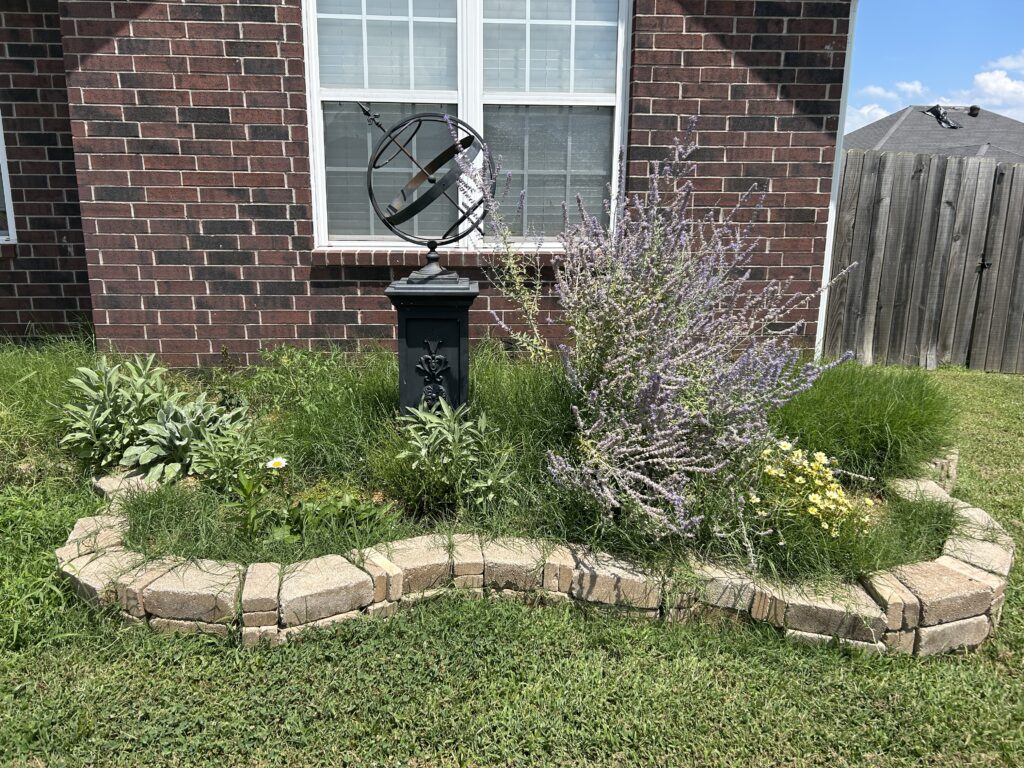
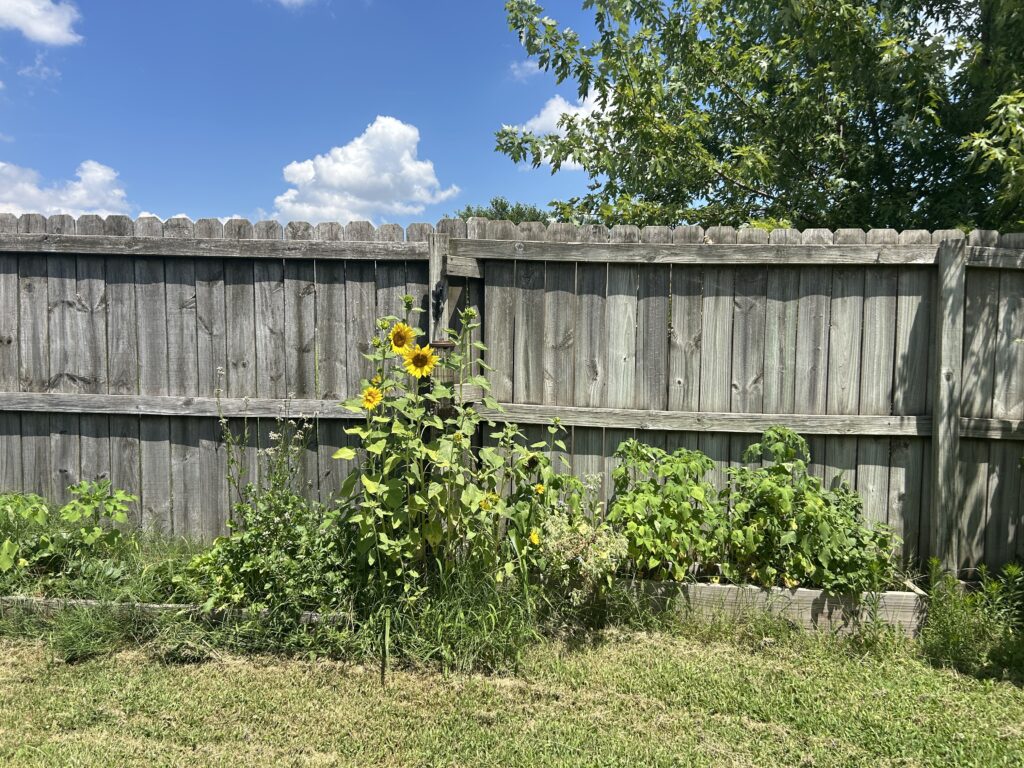
  • “Greetings from sultry, humid Indianapolis, where our garden is having its worst year ever. We replaced a bunch of soil this year, and the new dirt turned out to be inadequately acidic, so what plants have survived are struggling. In this respect, many of you may find my garden relatable—who among us has not felt that we were planted in slightly poisoned soil? But nonetheless, some of the fava beans and tomatoes are finding their way as my mom and I desperately try to fix the soil, make sure the plants get adequate water, and so on.

    This is critical work we do for our vegetables, but it is also critical work we do for each other and the world. On tiny or large scales, we try to provide each other with adequate nutrition and water, and to improve the circumstances in which we grow. Of course, we may end up with a garden of withered plants despite our best efforts this year, but it’s still worth trying.

    Hope is always justified, even if it isn’t always rewarded.”

    John Green

    Emphasis mine.

    Source


    Read more: untitled post 156079257
  • “you have an interest based attention system”

    This is how Martha Beck was told she had ADHD.

    “Do you people really pay equal amounts of attention to everything?!” she asked.

    “We pay attention to what’s optimal.”

    Source: Martha Beck and Rowan Mangan: How Creativity Trumps Anxiety on Unpublished Podcast with Amie McNee and James Winestock

    Read more: untitled post 156079253
  • “On the Spectrum”

    When we talk about autism or neurodivergence we often mention a spectrum. Sometimes this is misunderstood as a range of intensity from “more” to “less.”

    Gradient fading from pink to white

    But you cannot be “more” or “less” autistic or neurodivergent.

    The spectrum is better represented by a color wheel.*

    Digital color wheel with gradients of all colors fading into each other in a circle.

    The spectrum is a reminder that every neurodivergent person is unique. Each color represents a neurodivergent trait: differences in sensory processing, language, socializing, focus, etc.

    But even the color wheel is too static.

    This is my attempt to illustrate the complexity and nuance of the spectrum of autism and neurodivergence.

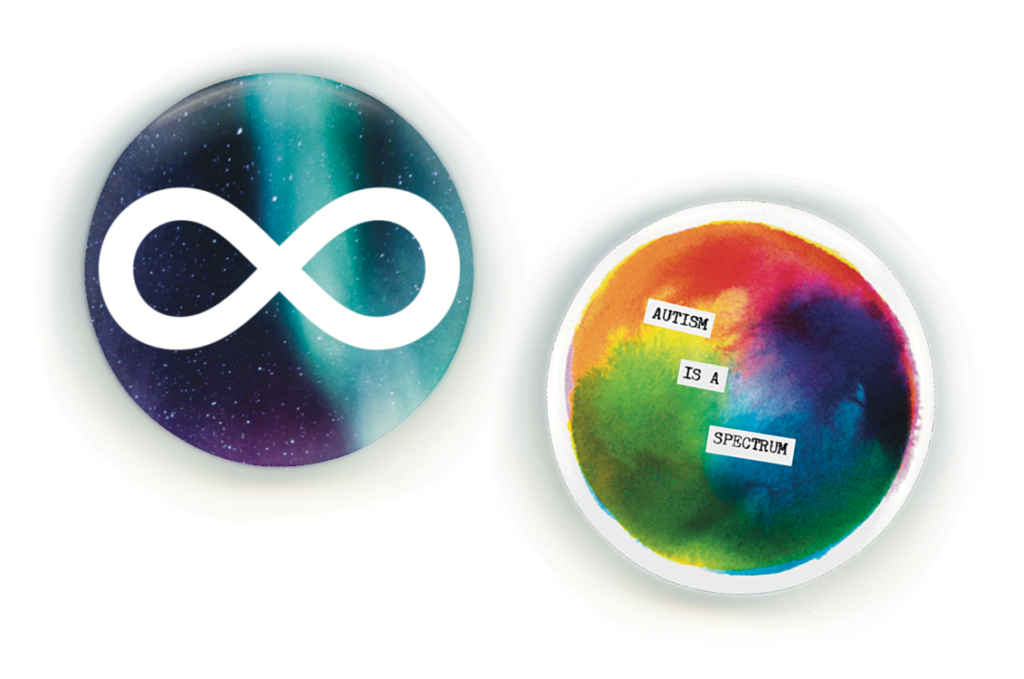
    Watercolor illustration of the autism spectrum. A rainbow of colors blending into one another like a color wheel.

    For example, sometimes a person is described as sensory seeking or sensory avoidant.

    Opposites on the color wheel.

    But most of us are both.

    Here is an example from my own spectrum. I experience water in my face as overstimulation… a sensation that, for me, is worse than physical pain. My nervous system completely floods with sensory input and enters a state of distress.

    Bright red ink wash in a red circle with a small pink area near the center where red bleeds into white. There is also a cracked area where too much ink pooled in one place.

    On the other hand, in the context of a warm bath I am “sensory seeking”. The feeling of being (almost) submerged in warm water calms my nervous system and helps me self regulate.

    Bright green ink wash in a circle darker on edges and fading to white left of center.

    This is the same element.

    Water.

    But my internal experience is vastly different depending on the context. Supporting this sensitivity includes baths over showers, no sprinklers, pool splashing, or going underwater. When I interact with water on my own terms I find it deeply regulating and soothing.

    Then we have a trait like focus. ADHD is often perceived as a deficit in the ability to focus (it’s right there in the name), but both people with autism and ADHD can experience hyperfocus.

    This circle represents my hyperfocus.

    Deep purple ink wash in the shape of a circle bleeding to white in an irregular shape toward the center.

    I often enter hyperfocus when I am in creative flow or engaged with topics I am passionate about. Yet, I cannot reach hyperfocus without the necessary environment or supports.

    This circle represents my difficulty focusing.

    Bright yellow ink wash circle with drip bleeding off bottom edge and very little white in an irregular shape toward the right middle.

    My ideal environment for focus is quiet and solitude. (For others it could be music and company… or body doubling.)

    When I don’t have that I need supports like: a swivel chair for stimming, noise cancelling headphones, and more time. Because without access to hyperfocus I have to accept that tasks take more time. I can also become dysregulated by working in an overstimulating environment.

    The spectrum becomes infinitely more complex when different traits overlap and intersect.

    Watercolor washes of blue green and pink bleed into one another creating a deep blue toward the left with feathered edges of pink and green creating an incomplete circle.

    Not only is every neurodivergent human unique, but our spectrums may present differently from day to day and moment to moment, based on a variety of internal and external factors.

    Some spectrums of neurodivergence may not fit the criteria for a diagnosis, but that does not make them any less valid.

    Watercolor wash circle of blue bleeding into green. The shades infuse into one another and create rivulets that are reminiscent of the planet earth.

    Our world is technicolor.

    Let’s stop imagining it as black and white.

    Grab some art supplies and reflect on neurodiversity as you play with color. If you are neurodivergent what colors would you assign each of your traits? If you’re neurotypical how can you use this framework to support the spectrums in your life?

    Watercolor washes of blue and purple with deep purple toward each edge and feathery blue across the center.

    My zine making area with Spectrum and Chaos Gardening zines, paper cutter, and watercolor wash circles.

    Love snail mail?

    These watercolor washes were originally created for the Spectrum zine for my monthly subscribers. If you’d like a printed copy you can:


    Want to learn more?

    Check out my posts about autism and neurodivergence.

    Keep in Touch

    Subscribe for love letters to creativity and neurodivergence.

    Open airmail envelope with blue and green stripes

    Footnotes

    * I believe this concept was first represented by autistic artist Anouk here (@autistic_sketches on Instagram.)

    † Another visual I love for the spectrum of neurodivergence is this moving spectrum by Felipe Pantone on Instagram.

    Read more: “On the Spectrum”
  • Nettle Liquid Feed

    Crush nettles to bruise and rip.
    Mix with equal weight of brown sugar.

    Cram in sterile jar to ferment.

    Cover with sugar.

    Weigh with stone. Leave air gap.

    Cover with breathable cover like sourdough.

    Leave cool and dark 5-7 days.

    Strain off liquid and that’s your plant food.

    Dilute 1 in 500 or for delicate plants 1 in 1000.

    She says it doesn’t smell bad like some liquid feeds!

    via Francis Tophill at Damson Farm

    BBC Gardeners World 2025: 14

    Read more: untitled post 156079251
  • Please enjoy this post from about a year ago; I’m sick, and my message stands.

    Great idea from Seth Werkheiser.

    Read more: untitled post 156079116
  • Note to self: Try this.

    “A polyculture is one of the easiest and most productive way of growing your own food. It is the opposite of a mono culture (which is one crop per growing space) and this diversity of plants increases biodiversity, soil health and yields, as well as reducing pest pressure and you don’t need a lot of space. 👍🌱

    To sow a polyculture simply prepare any bed or growing container by top dressing it with a layer of organic compost and then around mid-to-late April (here in zone 9a) I just broadcast (or scatter) a diverse array of seed within it at the some time that produce at different points throughout the season.

    I’m sowing: Rocket, which will produce first,
    Mixed lettuce, which will be harvested second,
    then Rainbow chard, spring onion, beetroot, parsley and carrots, and later in the season the Chicory (Radicchio) and parsnips will be ready to harvest. 🥕🧅🥬”

    via nettlesandpetals on Instagram

    Read more: untitled post 156079249
  • I’ve been considering writing weekly newsletters, but spending less time on them?

    (My usual being 5 hours.)

    Then I read this.

    Could I write four short check in emails and one longer one each month? 🤔

    Read more: untitled post 156079247
  • From A Railway Carriage
    by Robert Louis Stevenson [1885]

    Faster than fairies, faster than witches,
    Bridges and houses, hedges and ditches;
    And charging along like troops in a battle,
    All through the meadows the horses and cattle:
    All of the sights of the hill and the plain
    Fly as thick as driving rain;
    And ever again, in the wink of an eye,
    Painted stations whistle by.
    Here is a child who clambers and scrambles,
    All by himself and gathering brambles;
    Here is a tramp who stands and gazes;
    And there is the green for stringing the daisies!
    Here is a cart run away in the road
    Lumping along with man and load;
    And here is a mill and there is a river:
    Each a glimpse and gone for ever!

    via Oliver Jeffers

    Read more: untitled post 156079244
  • Papertowels with blueberry stains on a glass oven cooktop beside a bunch of bananas and a papertowel with a note that says, "Do not throw away!"

    Sometimes being an artist means preserving paper towels with blueberry stains.

    Read more: untitled post 156079119
  • Neurodiversity Affirming Resource Library

    This resource library focuses on autism, ADHD, and hypersensitivity as these are my lived experience.* This area of research has been a passion of mine for nearly a decade. I’ll do my best to organize things so you can find what is helpful to you.


    Not sure what neurodivergence is?

    Start here.


    I am wearing overalls singing books. I'm sitting under a maple tree next to a pile of books on a quilt.

    Hi, I’m Sarah Shotts. A late diagnosed autistic adult, author, artist, home educator, and erstwhile academic. Over the last several years I’ve been doing self directed research and collecting resources to better understand myself and my neurodivergent family. To learn more about me and my work click here.


    Choose your adventure.

    Drawing of brain with colorful paint splatters over the top
    resources FOR PARENTS
    Watercolor illustration of the autism spectrum. A rainbow of colors blending into one another like a color wheel.
    resources for autistic adults

    What is Overstimulation?

    I made this video to share my experience of overstimulation.

    I also find that my autistic traits are almost always rooted in sensory differences. So this a helpful place to start when discussing autism. Overstimulation can also be experienced by ADHDers.

    (There’s also a shorter 30 second version here.)

    “On the Spectrum”

    When we talk about autism or neurodivergence we often mention a spectrum. Sometimes this is misunderstood as a range of intensity from “more” to “less.” But you cannot be “more” or “less” autistic or neurodivergent.

    I made a zine to illustrate the complexity and nuance of being “on the spectrum.” You can read it here.

    Spectrum: a zine about neurodivergence. Paper zine with magazine cutout letters and a watercolor spectrum with a rainbow of colors blending into one another.

    How it Feels to Me

    You may also enjoy the picture book I’m co-creating with an autistic illustrator Gracie Klumpp. How it Feels to Me is an introduction to sensory processing for readers of all ages.

    How it Feels to Me: a book about neurodiversity and sensory processing written by Sarah Shotts and illustrated by Gracie Klumpp. Book covers shows a, illustrated child with hands raised and a rainbow collage of objects shown above.

    FOOTNOTES

    * I have been professionally diagnosed with autism, but also have traits of ADHD such as time blindness and difficulties with object constancy. Having knowledge of these traits and functional coping strategies I have no interest in pursuing an ADHD diagnosis at this time.

    Read more: Neurodiversity Affirming Resource Library