Season 3 is airing in March – just in time for my birthday.
If you love fantasy books like Lord of the Rings… I’d love for you to give this a watch next month and nerd out with me. Even if you haven’t read the books – the visual design and performances for this show are so stunning I’d really recommend watching first and then diving into the books.
This season is based on my favorite book in the series!
The Shadow Risingis when Wheel of Time steps away from Tolkien and starts being it’s own thing.
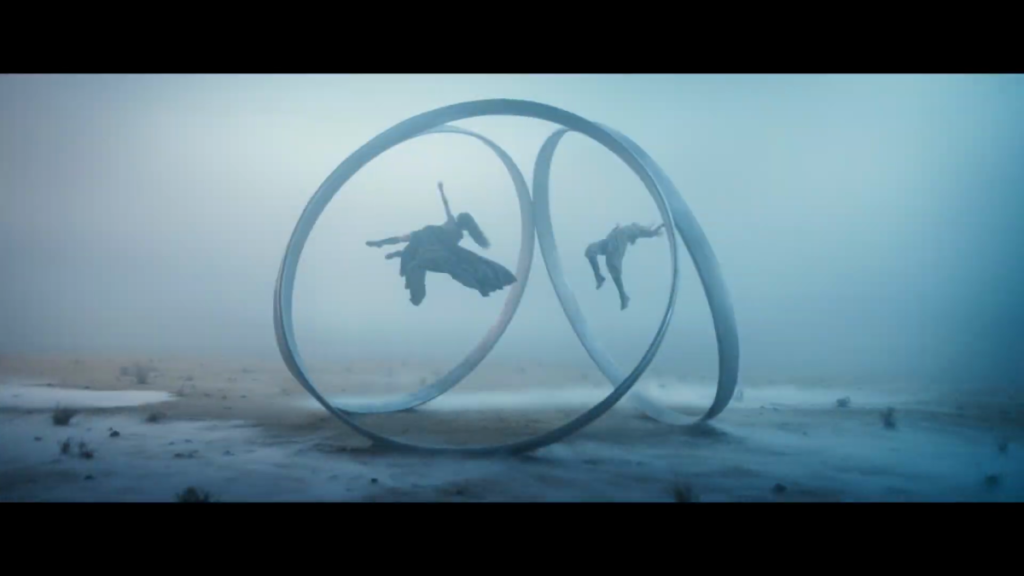
Half the characters travel to the desert and meet a complex warrior culture. The others go hunting down some very dangerous women. The layers build from there! I can’t even mention my two favorite parts because they are too spoilerific, but check this image out:
Don’t you want to know what’s happening there?
I’m dying to see this scene. It happens “off page” in the books. 👀
[This Clip Contains Spoilers]
If you’re a book reader (or just don’t care about spoilers) here is the first scene of Season 3. We are starting out with a bang!
What else happened this month?
Well… I completely redesigned my website. 😂
It’s still “under construction” so pardon my dust (and broken links) as you’re poking around. I hope to “unveil” the new site properly next month.
I wrote a few posts including this one about website design as worldmaking. My old website was a minimalist website (which lives on as a virtual art gallery.) But I’m letting the rest of my site be weirder and more me.
I hope it will sprawl and grow into a proper labyrinth.
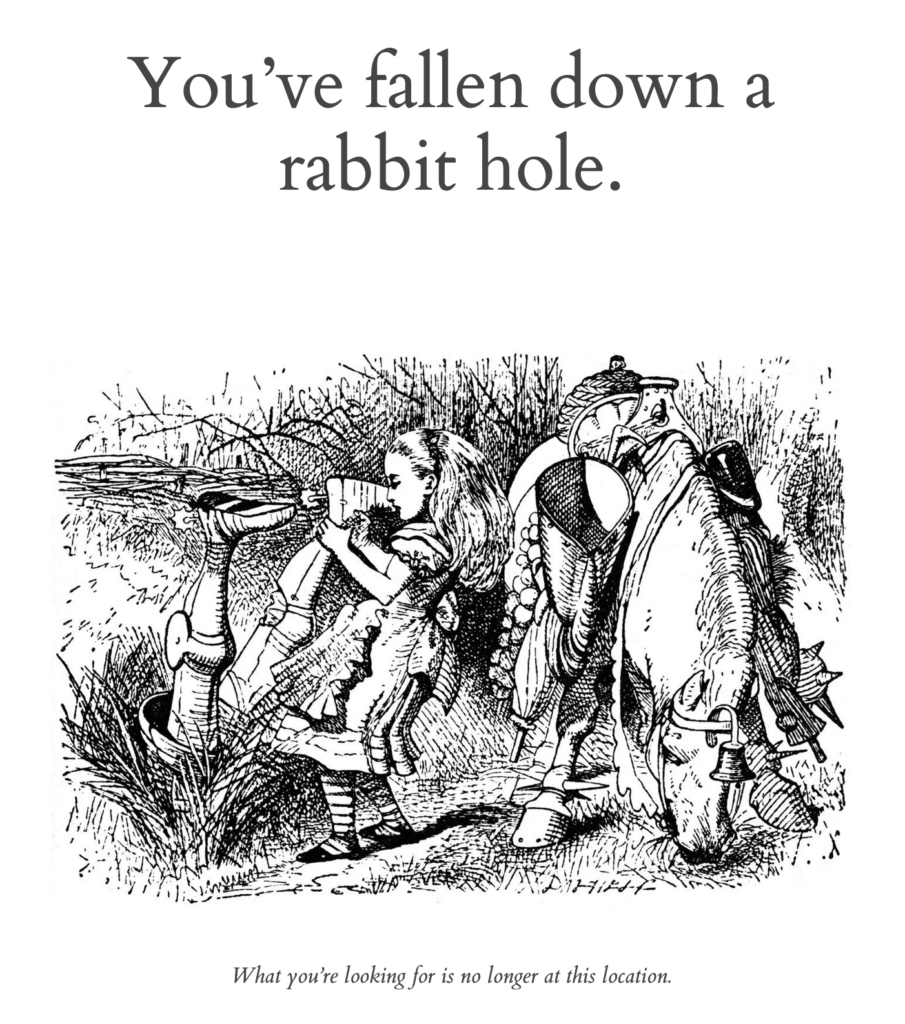
I’ve been having a lot of fun with visuals and texture. But my favorite detail so far is this “page not found” design, which feels very me.
If you want to read the boring reasons about why I’m switching web & newsletter platforms I’ve written about my online ecosystem here.
I’m leveling up my zines!
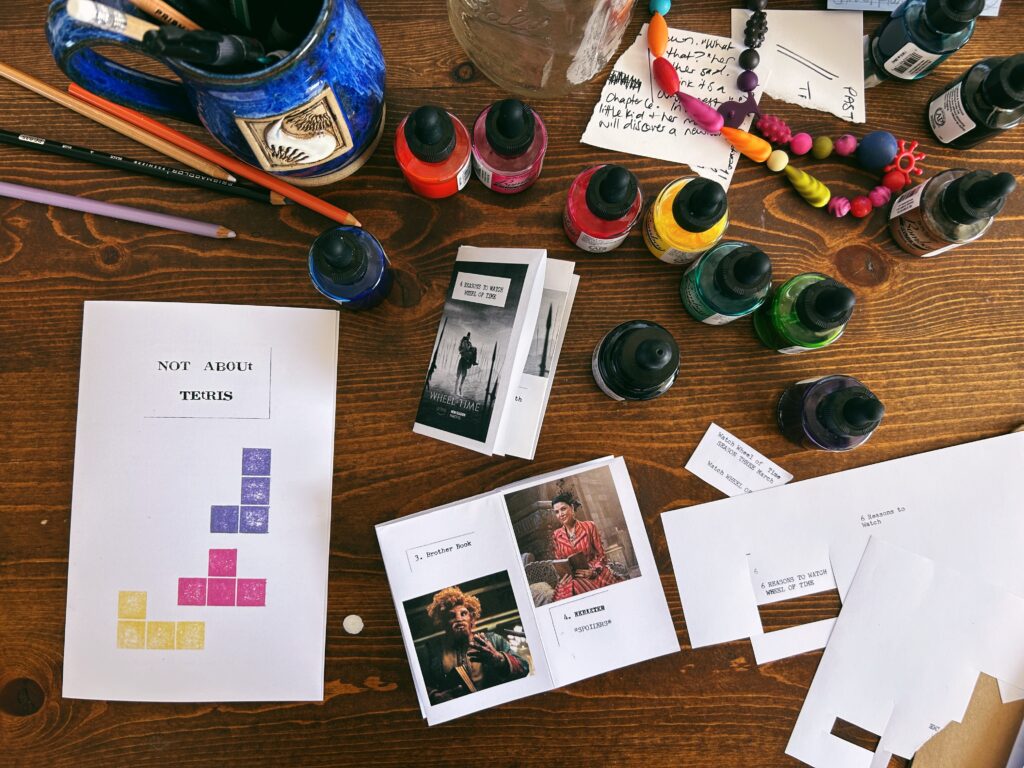
This month I used a printing press to make the February zine.
You can see the process (including a timelapse video) here. You can also see a mini Wheel of Time zine I made. I’m going to print them up and leave them around town as guerrilla fan marketing. (Let me know if you’d like to do the same and I’ll share the file.)
Now that I have a printing press I’ve added a $10 tier where you can subscribe for quarterly prints as well as zines.
I’ve also realized that the time I’m spending on these zines has been growing each month. (Especially in contrast to the simple letters I started with.) So I’m phasing out pledges below $5. This means I have more freedom to play with color and multiple page zines if I’m so inspired.
I’m also stepping away from Patreon and Substack to host subscriptions on my own website.†
Everything in one spot. (Finally!)
Works in Progress
Here’s a peek at what else I’ve been working on this month.
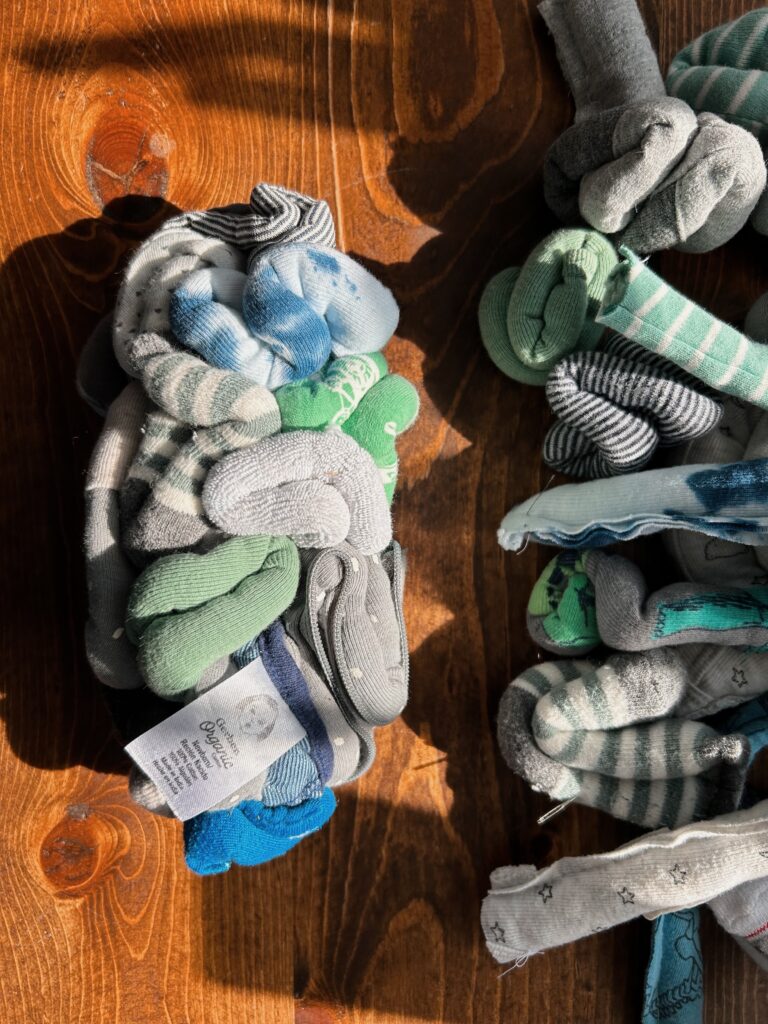
SOFT SCULPTURE BRAIN
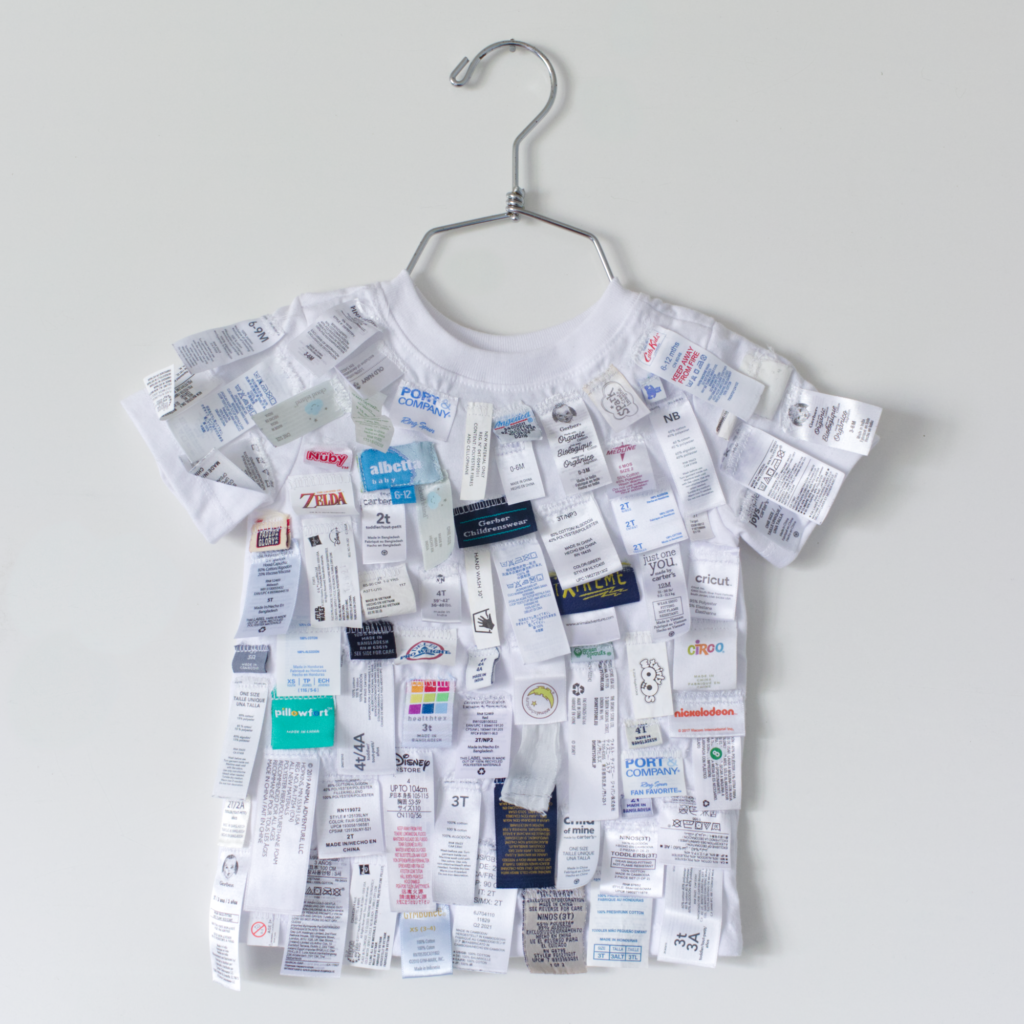
Nearly done with my soft sculpture brain sewn from baby clothes. I have two hemispheres complete and need to spend some time refining them and doing finishing work. (They’re a little unbalanced at the moment.)
home education rhythm
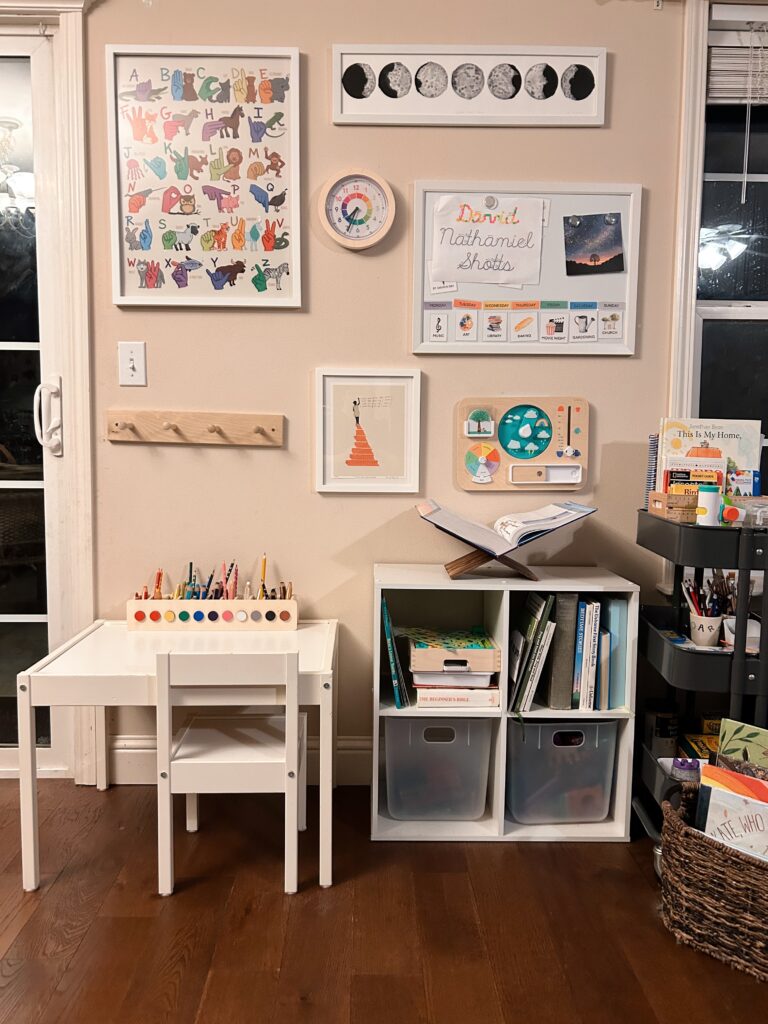
The transition from holiday chaos back to a normal routine is hard for neurodivergents. Here is how we’re finding our feet again and freedom within structure.
Now that I’m integrating my various blogs into one location my archive is much larger than I realized.
I’m planning to move the archives month by month. Motivated in part by sharing this time hop with you. Which means (if all goes to plan) I’ll be done by next February. ‡
The Compost Heap is handmade without the use of AI. 🐝
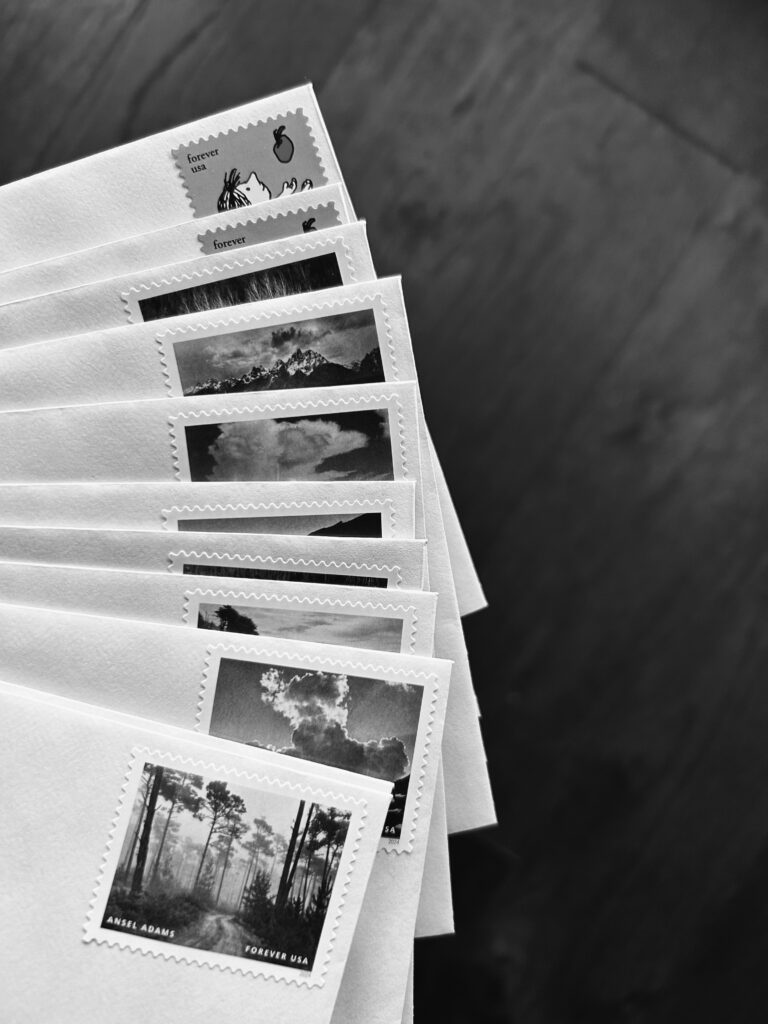
Support doing things the old fashioned way by joining my Patrons ($5) and I’ll send paper copies of my zines with the coolest postage stamps I can find.
Not into snail mail?
Here are other ways you can support.
Share with a friend. (It’s free!)
Art swap! Let me know if you’d like to swap your art for a zine.
* To share the Neuro Nest Retreat. The workshops were all recorded so you can still join in here. I’d love to have a weaving from you. (Yes, you!)
† Substack supporters will continue to be charged through Stripe. Patreon has been shut down so anyone supporting there will need to resubscribe. (You should already have emails from those platforms, but if you have any questions at all just ask.)
‡ Something I’ve learned by moving blogging platforms a couple of times is that something always goes funky. Formatting is strange. Photos are hotlinked. Multimedia elements (audio, video, embeds) are missing or broken. And hardly anything has alt text. I’m using this chance to dust all the cobwebs before making posts public.
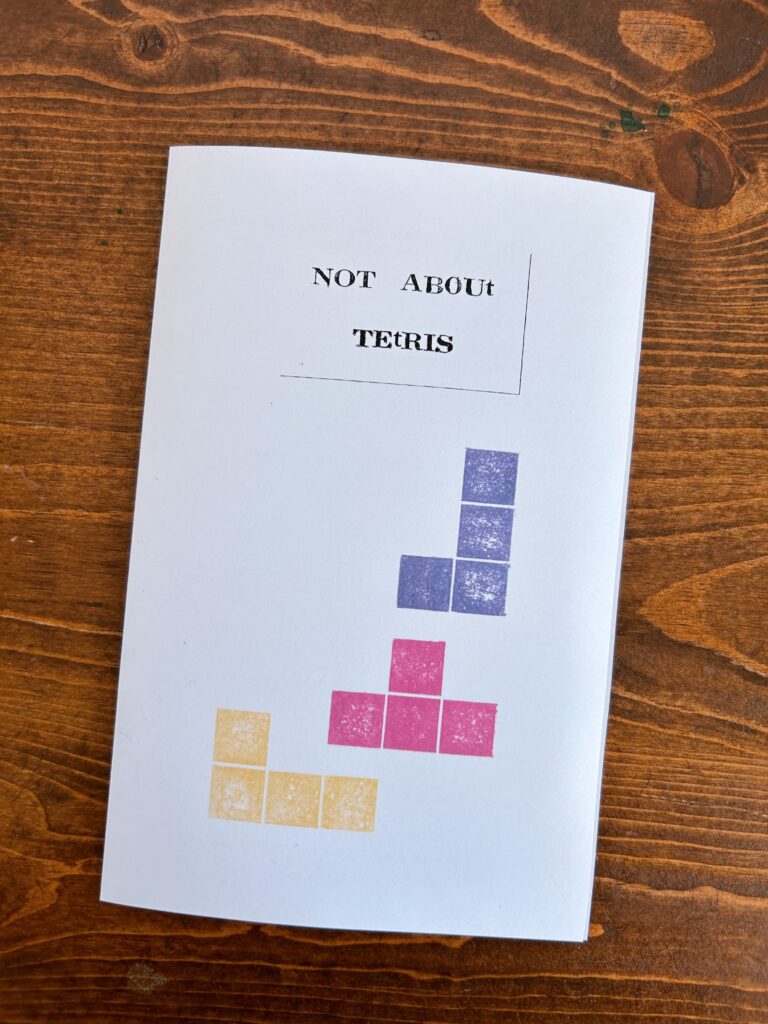
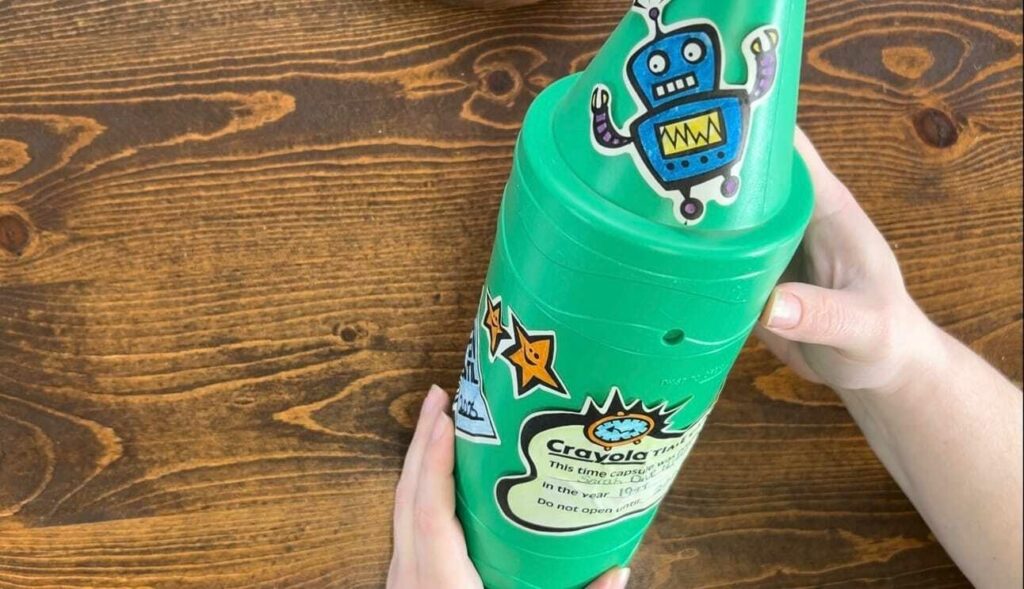
This month’s zine is a collaboration between 38 year old me and 13 year old me. I made it with stickers and journal entries from my millennial time capsule – created in 1999.
To celebrate waiting 26 years to open this time capsule I’ve made a full color zine this month! To go with the Crayola vibes I used rubber stamps instead of my typewriter this month. Sometimes it’s nice to get your hands dirty.
Patrons watch your mailboxes. The rest of you can buy a copy from my shop.
I was SO sure there was a Tamogotchi inside! But the only “artifacts” were a dried out gel pen (I’m 90% sure it was dried out before I put it in) and a McDonalds Beanie Babies Happy Meal bag. I remember being really confused about what to include that I wouldn’t somehow miss in the next 26 years. 😂
What would you have put in a time capsule to represent the year 1999?
In the Studio ✂️
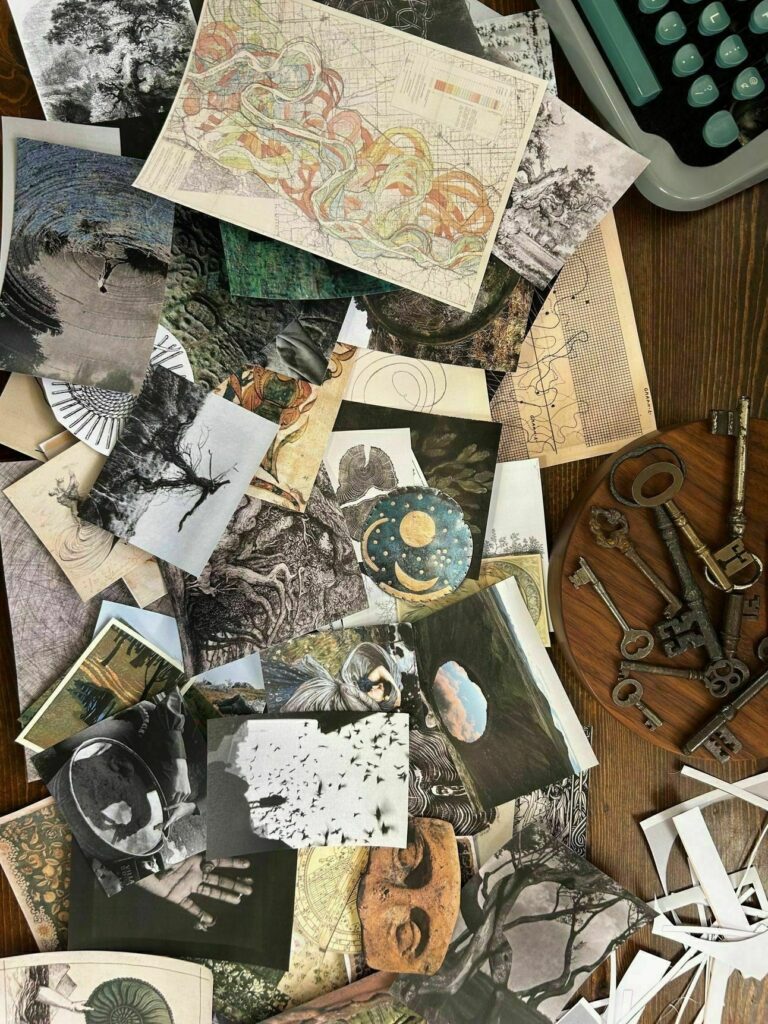
Something I realized during NaNoWriMo is that I want to make my noveling process more interdisciplinary. My first step was printing out images from my novel’s mood board. Holding these in my hands and moving them around was incredibly regulating after an overstimulating holiday season.
10/10 would recommend paper mood boards.
I’m planning to pin these on a cork board so I can continue to move them around rather than gluing them down. I may even use string. (I have a long standing thing for conspiracy corkboards.)
The added benefit will be keeping my story visible to my conscious and unconcious mind throughout the year. Here’s a time lapse since I’m not on Instagram anymore.
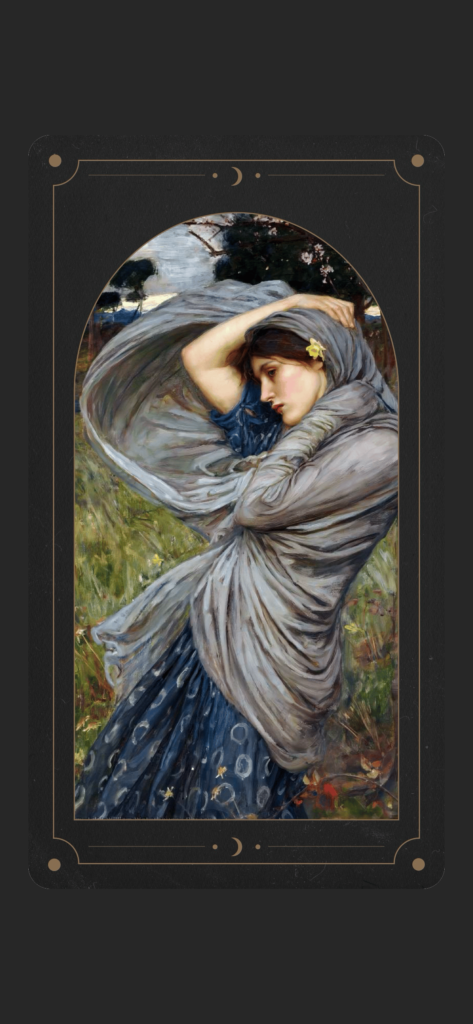
Over the last month I’ve realized (reading Ray Bradbury & Dorothea Brande) that my creative ecosystem needs more time for dreaming and ideation. So my word of the year is Reverie and I made this phone wallpaper as a visual reminder. The painting by John William Waterhouse is titled Boreas.
I’m also starting a “writing from life” practice – separate from my self reflective journaling – to keep up my prose writing throughout the year. I both need space to think about my novel and space to write. I’m using this gorgeous spreadsheet to track my progress. Something I love about it is that you track time as well as words. Time researching, writing, prepping all counts. There’s tons of flexibility in setting goals and the spreadsheet even encourages you to allow for missing days.
My kid is 5 1/2 years old and this feels like the first time I’ve had the energy and capacity to stay up late writing most nights. (Brain fog in the morning means waking up early never worked for me.) I’m so grateful to home education for giving us the flexibility to set our own hours.
Reading these together really formed a constellation of creative process. Observing what overlapped and what differed. I learned years ago I can’t use another creative process wholecloth, but reading about other people’s experience can help demystify the process. Studying early drafts of Tolkien and Sanderson’s work is really doing that for me as well.
Apparently a Rat Rod “is a custom car with a deliberately worn-down, unfinished appearance, typically lacking paint, showing rust, and made from cheap or cast-off parts.” Pretty cool.
Wicked’s ‘Dancing Through Life’ Full Scene Breakdown (I love the stage production and never expected to like the film version, but with Stephen Schwartz and Winnie Holzman at the helm this is a stunning adaptation so far.)
This time last year…
Hello from a Human Jungle Gym is a reflection on time and energetic capacity. I had similar goals last year, but continued to sink too much time into Substack. I’m hoping that making the big jump to Beehiiv will help me realize some of these intentions.
We’ll see what happens long term, but I had twice the open rate on my last email as I have on Substack recently. People are starting to treat Substack like a social media and posts get lost in the feed.
The Compost Heap is handmade without the use of AI. 🐝
Support doing things the old fashioned way by joining my Patrons ($5) and I’ll send paper copies of my zines with the coolest postage stamps I can find.
Not into snail mail?
Here are other ways you can support.
Share with a friend. (It’s free!)
Art swap! Let me know if you’d like to swap your art for a zine.
Because The Medium is the Message I’ve given up weekly blogging and I’m making monthly zines instead.
Here’s how it works.
First, I noodle around with an idea. I type up a few notes on my phone and mull it over.
I might browse are.na to find some images or I might use a photograph.
Next, I do 2-3 rounds of edits. This process is powered by my kid’s hyperfocus when playing Zelda Breath of the Wild.
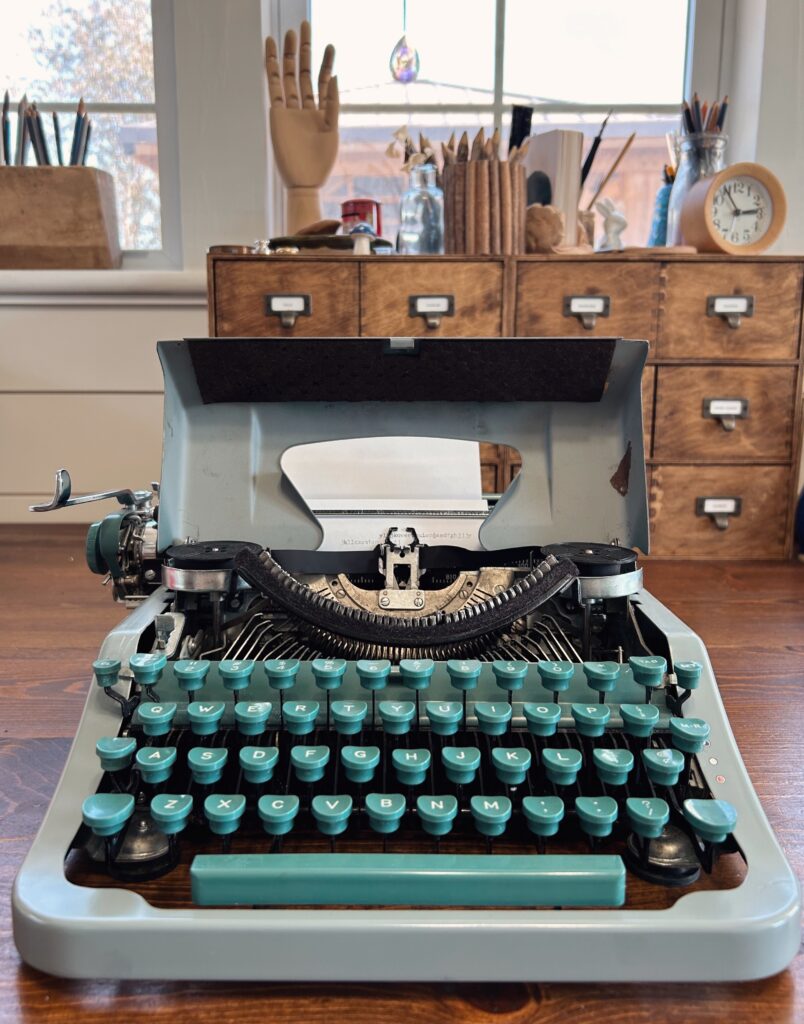
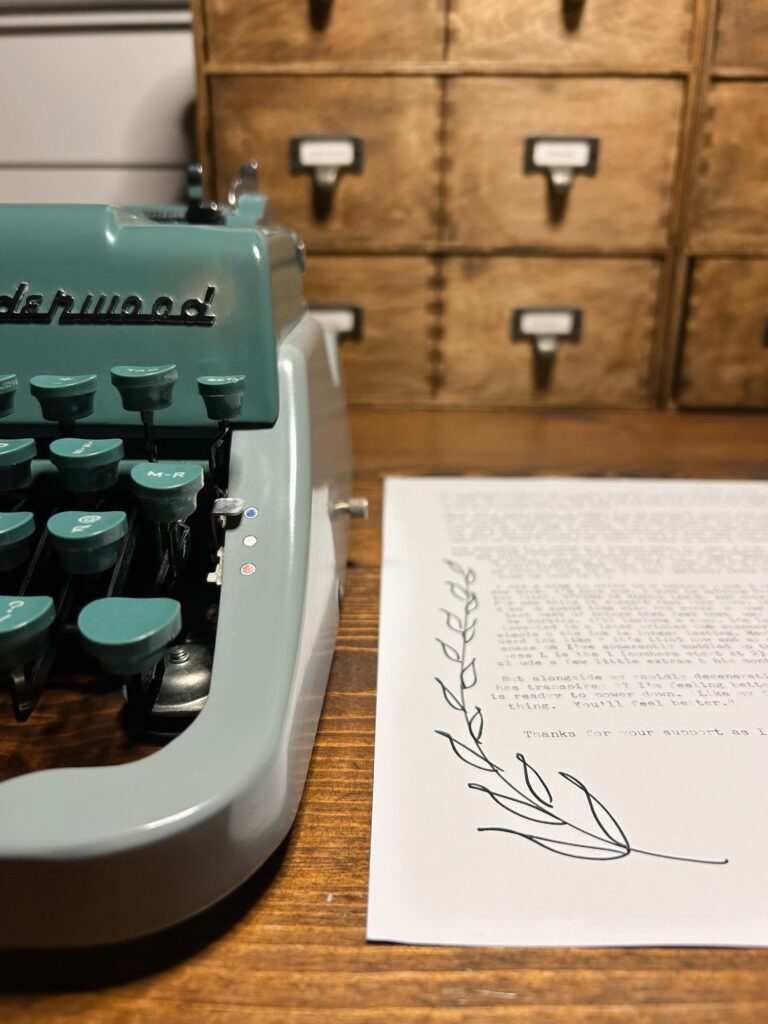
Then, I go out to my studio and load up my 1950’s Underwood typewriter.
Unless there’s a big problem (like above: when I loaded my typewriter ribbon backwards) I do my best to type the zine in one go. The mistakes and typos are part of the zine aesthetic and show it was made by hand.
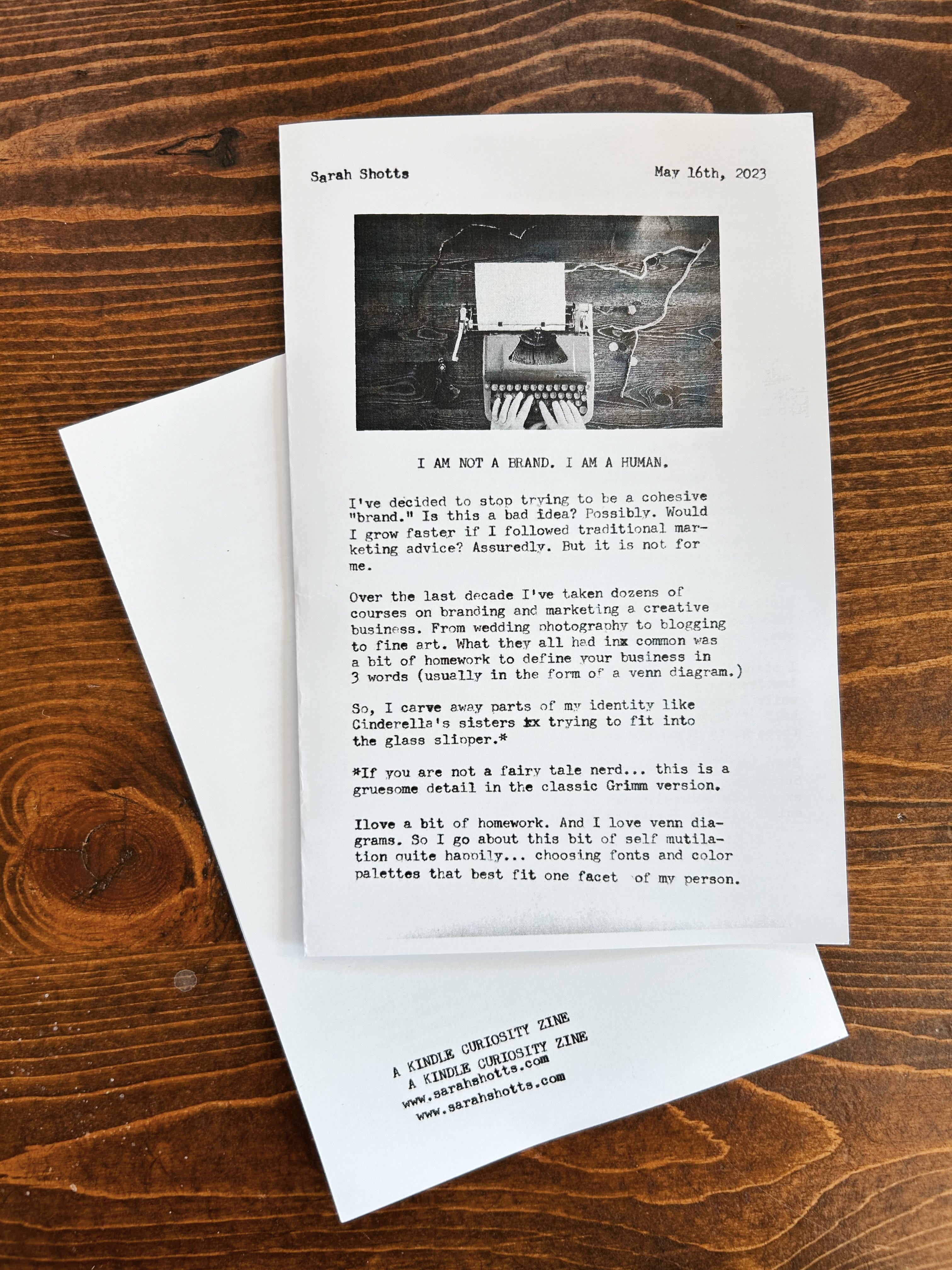
I actually love when the letters print twice or a little crooked. It feels punk rock in a world with AI.
Then I add any images with double stick tape. I’ve decided to go full analogue and not do any digital touch ups.
I Xerox the final product on my laser printer and send physical copies to my patrons (pledges starting at $3 on Patreon.)
But you don’t have to pay to read. I’ll be sending a virtual zine every month to YOU.
If this works.
I’m not sure how well the zine will read on phone screens so this is a bit of an experiment. You may have to pinch and zoom.
Or read on a computer. You can click here to read on archive.org. It’s pretty cool over there because you can flip the pages and see the spreads as they were designed.
Websites cost money. If we don’t pay directly they are making their money by selling our attention (ads) or mining our data (for advertisers or to train AI.)
Here are some algorithm free websites I have been enjoying. I am happy to chip in my support for the services they are providing.
A simple microblogging platform. This is the passion project of Manton Reece, author of Indie Microblogging. He created micro.blog as a simple solution to own your own microblogging content. I could write a whole post about how great this is (for $5 a month), but I’ll try to keep it short. You can use it to build a website, make a blog, or microblog (like a Twitter or Instagram alternative.)
I am playing around with a photo blog which automatically publishes to Bluesky. You can also subscribe to it via RSS.
micro.blog is the way the web should work. It can be integrated with so many different things. I’ve even set up Beehiiv to automatically archive itself at sarahshotts.blog
Bluesky is a public benefit corporation with the mission to “to develop and drive large-scale adoption of technologies for open and decentralized public conversation.” (Source)
This is a radical experiment in prioritizing the open web over commercial success.
You have so much control over your experience there and you can even follow Bluesky feeds through RSS or on other platforms (like the micro.blog app).
Come on over to blue skies. Claim your name at least!
My biggest frustration the last time I tested Beehiiv was the friction in the comment system. But I overlooked the simplest solution.
I’ve turned comments off.
Just hit reply to message me directly (or text me if you know me.)
So much cozier.
P.S. I should probably port over my “ways to support” banner, but it’s nearly midnight and we are drowning in sales emails this month anyway. I’ll put it back in January.
A few years ago I started making artwork with a gallery setting in mind (rather than Instagram.) That completely changed the kinds of things I was making.
I started the series My Brain on Motherhood and have been in over 10 fine art exhibitions. That never would have happened if I kept making art “for” the Internet.
The medium is the message.
The platform that we create for work for informs the work.
Earlier this year, I stopped writing paywalled posts for paying supporters and started sending letters in the mail.
Changing the medium of the message has made that work feel more personal and also more like human connection and less like work. So I’ve been wondering how to bring that energy to what I’m making here.
I’m contemplating the ways in which I might go analogue with my newsletter in the new year.
This will be going out to my paid supporters this month as an experiment. (You can sub for as little as $3 a month via Patreon.) I’ll might alternate letters and zines depending on what I have to say.
What’s interesting to me is how much this is about intention.
Once made the work with an art gallery in mind – I can then share it on Instagram. (My “I’m Fine” cross stitch actually went low key viral.)
But the frame in which I formulate ideas changes what I make.
So when I say I’m going “analogue” I’m thinking of creating physical zines on my typewriter. That’s the medium. I’ll send paper copies to paying supporters (a sliding scale starting at $3 a month.)
Once I’ve made that I can then archive digital versions of that zine on my website or Internet Archive (like this). I’ll send fewer emails (monthly or quarterly) that point directly to my website and / or compost heap. So the email newsletter becomes a channel to share my work and not the medium of the work itself.
I’m less and less comfortable having the work that I make live on someone else’s platform and this is an experiment I am excited to try.
I’ve been circling around this idea for months now and I finally discovered Mail Blog and it inspired me to give it a go.
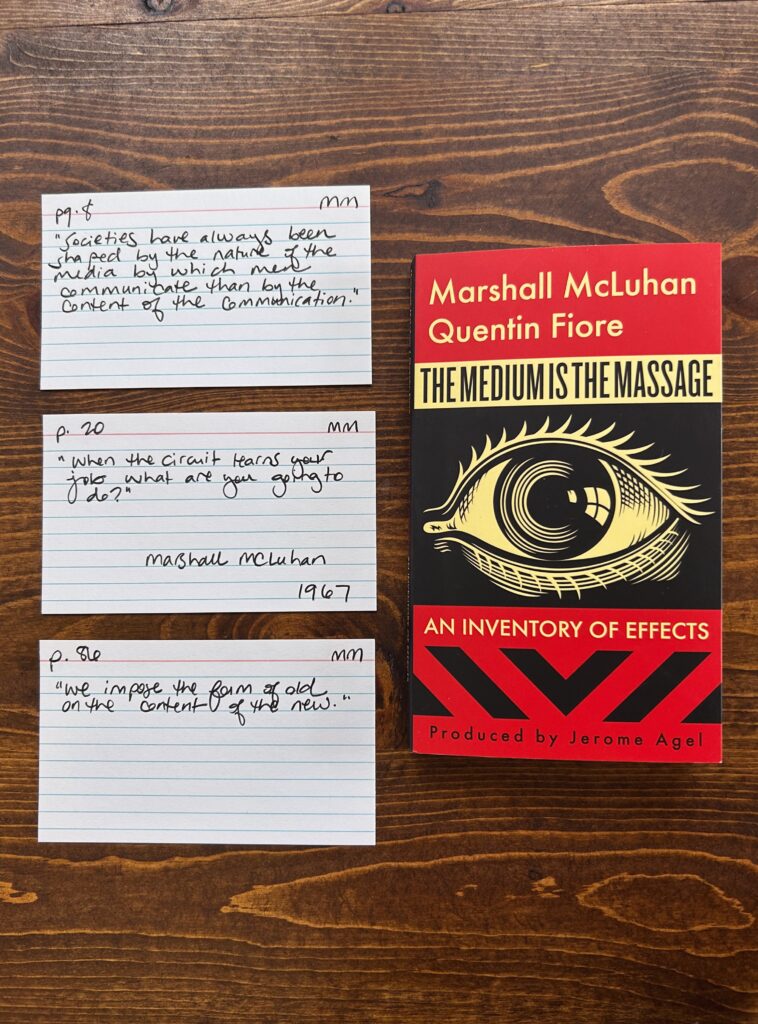
If you’re considering how creating for the Internet in general is informing your work I’d really recommend the book The Medium is the Message by Marshall McLuhan.
In the Studio ✂️
Meanwhile here are a few updates from my creative ecosystem.
I’m also taking a course on sensory regulation with my partner. David and I are painting these sensory regulation cards and I’m very excited about them. (I don’t have it handy, but let me know if you’d like an affiliate link.)
A lot of creative energy is also going into creating spaces for learning.
And I’m also using our new laser printer to design our own handwriting sheets. (We’re saving the paper for a recycled paper bookmark project I’ve been ideating for about 5 years.)
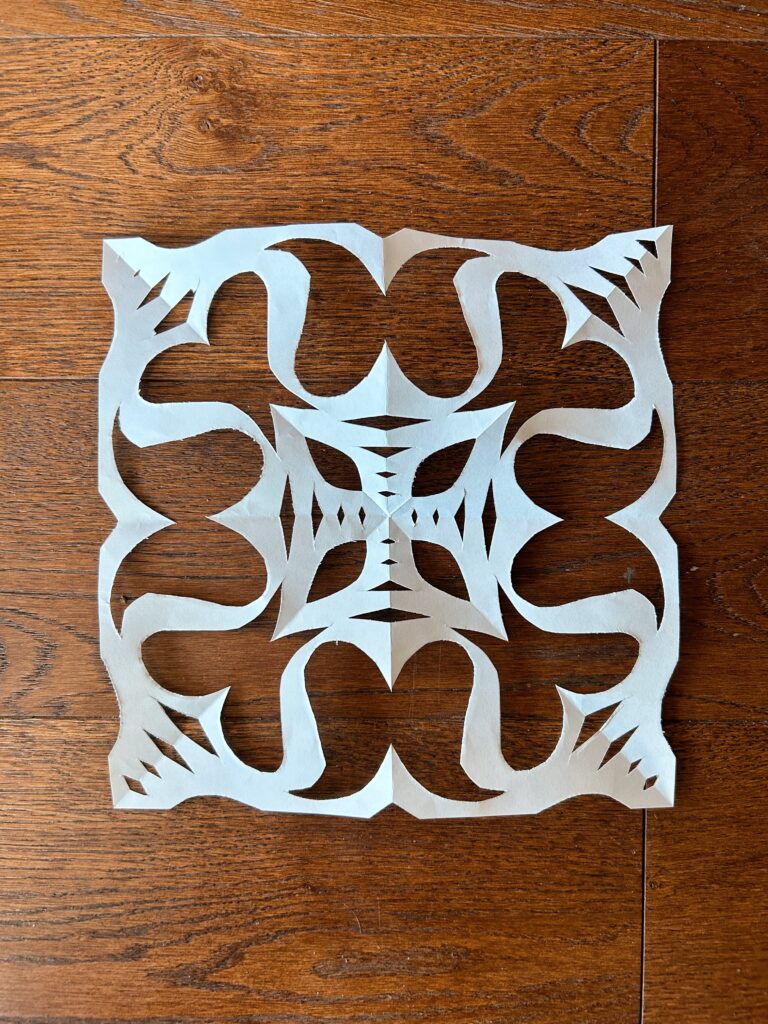
I also made this Wheel of Time inspired snowflake for WoTtober
In the Garden 🌱
Our garden is completely feral.
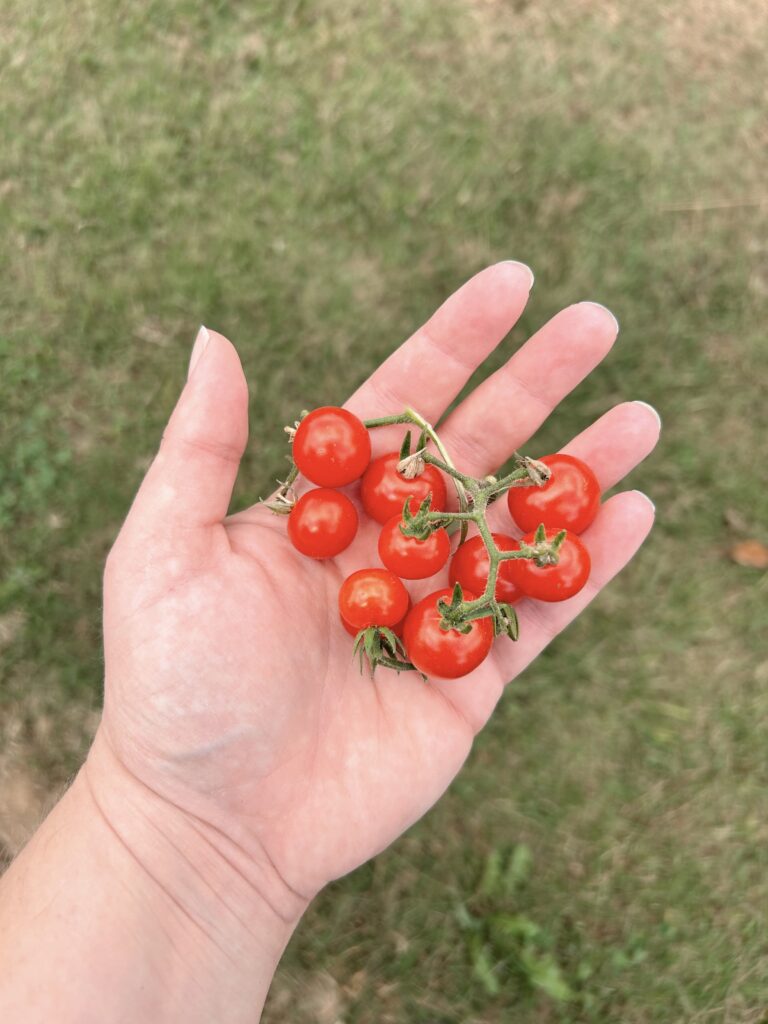
But these volunteer tomatoes are VERY happy.
Reading 📖
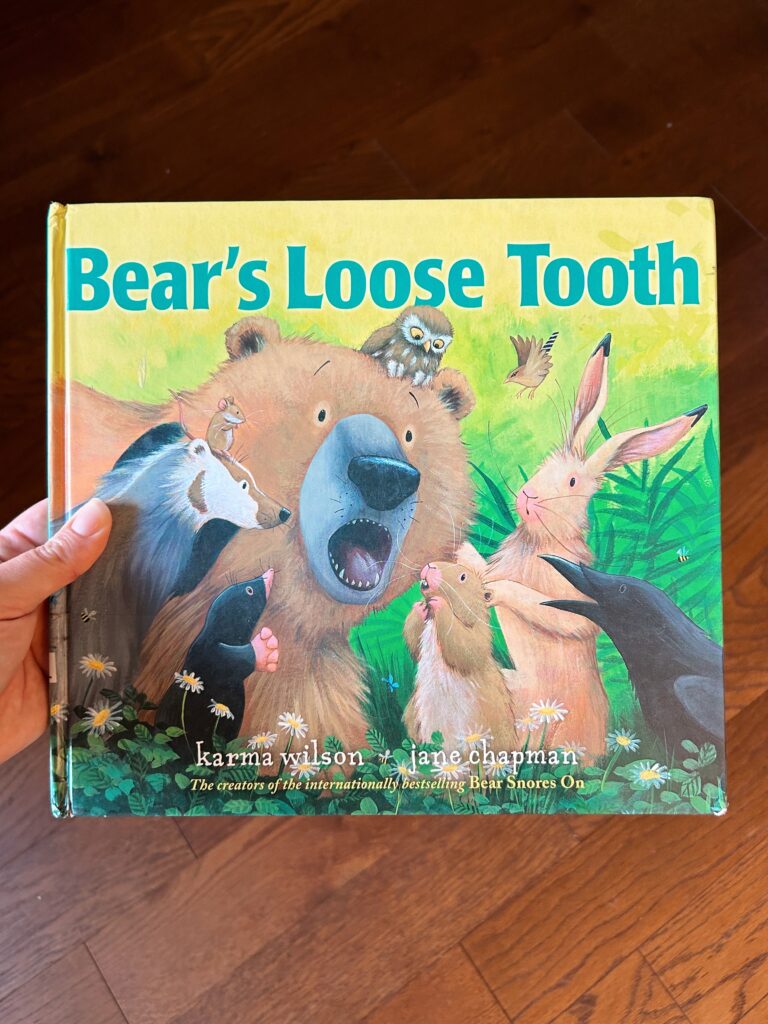
Inspired by Hayley Dunlop I thought I might share more of the picture books we’re reading. This one has been a big hit. (No loose teeth yet, but we’re preparing to understand when it does happen.)
You can see another example of The Medium is the Message by these flashbacks to the time I was a “YouTuber.” I’m exhausted just thinking about trying to mask as much as I did in 2016.
Two of my favorite authors and educators (John & Hank Green) founded good.store which donates 100% of profits to charity.
Over the past year they have donated 9 million dollars to support maternal mortality and tuberculosis treatment in impoverished countries.
If you’d like to gift loose leaf tea, coffee, soap, or quirky socks, swing by good.store and use my affiliate code SARAHDSHOTTS for 25% off.
I don’t do much affiliate marketing, but I really love good.store’s mission. And the Keats & Co. Breakfast Tea is my new favorite. ☕️
The Compost Heap is free to all. Thanks for exchanging your time and energy. If you’re feeling particularly generous here are other ways you can lend your support.
Join during November to get this zine in your mailbox!
If you missed my last post I’m planning to shapeshift this newsletter into a zine in 2025. This month was an experiment and I really loved making this. I’m definitely leaning into analogue in the new year.
Meanwhile you are welcome to reach out, but I am unlikely to respond in a timely fashion. November is for noveling.
A few years ago I started making artwork with a gallery setting in mind (rather than Instagram.) That completely changed the kinds of things I was making.
This will be going out to my paid supporters this month as an experiment. (You can also order one from my shop.)
I might alternate letters and zines depending on what I have to say.
What’s interesting to me is how much this is about intention.
Once I made the work with an art gallery in mind – I can then share it on Instagram. (My “I’m Fine” cross stitch actually went low key viral.)
But the frame in which I formulate ideas changes what I make.
So when I say I’m going “analogue” I’m thinking of creating physical zines on my typewriter. That’s the medium. I’ll send paper copies to paying supporters.
Once I’ve made that I can then archive digital versions of that zine on my website or Internet Archive (like this). I’ll send fewer emails (monthly or quarterly) that point directly to my website and / or compost heap. So the email newsletter becomes a channel to share my work and not the medium of the work itself.
I’m less and less comfortable having the work that I make live on someone else’s platform and this is an experiment I am excited to try.
I’ve been circling around this idea for months now and I finally discovered Mail Blogvia Independent Creative and it inspired me to give analogue a go.
If you’re considering how creating for the Internet in general is informing your work I’d really recommend the book The Medium is the Message by Marshall McLuhan.
In the Studio ✂️
Meanwhile here are a few updates from my creative ecosystem.
I’m also taking a course on sensory regulation with my partner. David and I are painting these sensory regulation cards and I’m very excited about them. (I don’t have it handy, but let me know if you’d like an affiliate link.)
A lot of creative energy is also going into creating spaces for learning.
And I’m also using our new laser printer to design our own handwriting sheets. (We’re saving the paper for a recycled paper bookmark project I’ve been ideating for about 5 years.)
I also made this Wheel of Time inspired snowflake for WoTtober
In the Garden 🌱
Our garden is completely feral.
But these volunteer tomatoes are VERY happy.
Books 📖
Inspired by Hayley Dunlop I thought I might share more of the picture books we’re reading. This one has been a big hit. (No loose teeth yet, but we’re preparing to understand when it does happen.)
You can see another example of The Medium is the Message by these flashbacks to the time I was a “YouTuber.” I’m exhausted just thinking about trying to mask as much as I did in 2016.
The Compost Heap is free to all. Thanks for exchanging your time and energy. If you’re feeling particularly generous here are other ways you can lend your support.
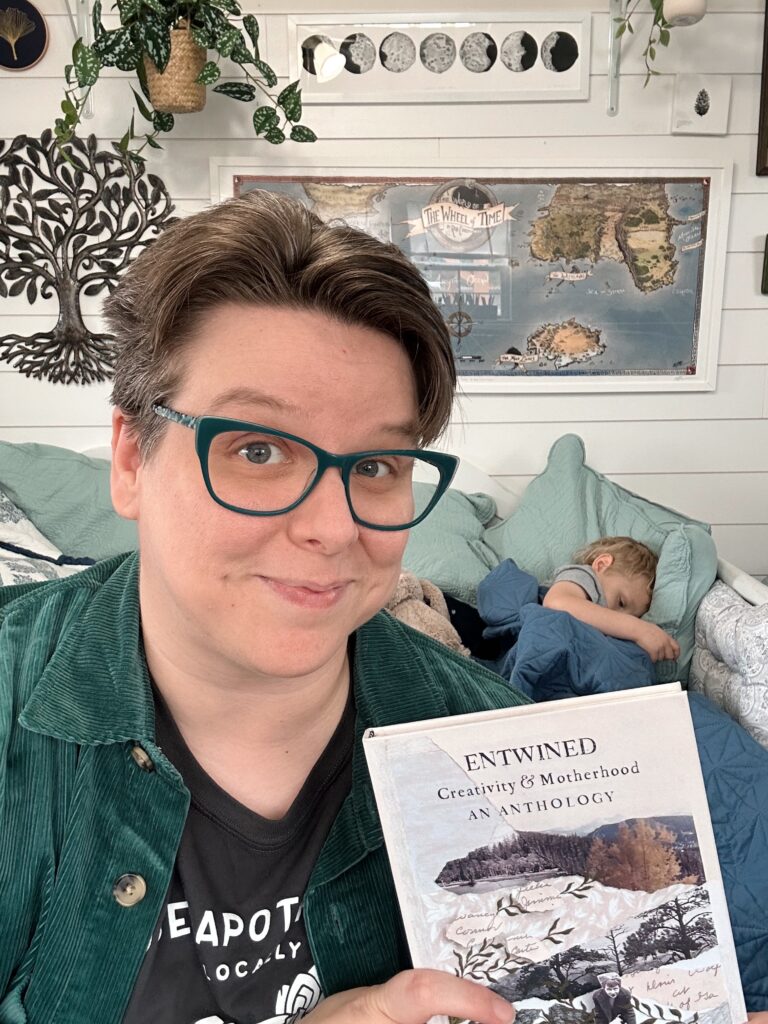
Entwined weaves together stories of creativity and motherhood from mothers on the west coast of America, to Canada, Mexico, and the UK. Contributors include painters, writers, potters, visual artists, musicians, poets, and multipassionates.
Every mother has their own creative ecosystem. By sharing our stories we hope to inspire you to entwine creativity and motherhood in your own way.
New around here? Subscribe for updates from Sarah Shotts about pursuing creativity as a neurodivergent parent. 💌
Shoutout to all of the contributors! 🥰
I’m so honored to have such a brilliant constellation of mothers involved in this project. There are over 55 mothers involved from the writers and cover artists to our editor.
I’ll be turning into goo next week to recover my energy. (Like a caterpillar in a cocoon.) Even gentle book launches are a lot.
Thanks for your patience with the extra emails. We’ll go back to our normal creative compost heaps next month. I just want this book to reach as many mums as possible.
Cheers,
Originally Published to Kindle Curiosity on September 29, 2024
I’m so excited to (finally) open up preorders for Entwined & Ember an anthology and art journal for mums. This passion project has taken a lot of my energy this year along with 55 other mothers who submitted stories, prompts, and art.
I’ve been working at on this book for almost five years.
Here’s the origin story as documented on Instagram.
If you’d rather read more details about the books you can find those here.
It started when I was seven months postpartum.
“Last week when I was journaling I accidentally started writing a book. It’s a creative handbook for new mums. Not a one size fits all method, but a series of reflections and prompts to help other mothers nurture their inner artist.”
I read SO MANY books about motherhood as research.
Books that affirmed creativity is good for mental health. Books that explained the myth of equal parenting. I read about burnout and overwhelm and “the art of doing nothing.”1 I read The Artist’s Way and immediately put it down because I needed sleep more than I needed morning pages.
I took notes on my iPhone. I journaled. I cobbled together the bones of the book I thought I needed. Starting in January of 2020 I went to the library each week to turn these notes into a book while my mom watched David.
Then COVID quarantine hit.
I started navigating a deep depression. I wrote my way through it.2
By June of 2020 I had a rough draft,
“It turns out the three months I took away from this work were actually very helpful. I’ve had enough distance it’s much easier to make cuts and changes. I’ve also spent that time doing more visual art like pottery and weaving and this is informing my book in a good way… This pandemic is teaching me to honor my creative rhythms and that’s no bad thing.”
I made it through one round of edits before I crashed into burn out. Whatever resilience and hyperfocus had propelled me through the early months of the pandemic vanished. My world shifted into survival mode and my manuscript got set to the side.
When I picked it up again it was like a different person had written it. But that space let me see that my manuscript was actually 2-3 books crammed together.
I took the first chapter and expanded that into my first book Discover Your Creative Ecosystem. I launched that book in autumn of 2022 and met my goal to break even with self publishing costs.
I still wanted the book that I needed as a new mum.
I just wasn’t sure I had written it.
Over the next year I considered a lot of avenues for reviving my “creative mama” book. Meanwhile, I was cautious of centering my own narrative because every mama needs different things. Early on in the process I knew I wanted alternate voices in the book, but I wasn’t sure how to weave them in.
Then I considered an anthology.
It was the perfect solution! I completely scrapped 30,000 words of my own and started reaching out to mothers I’d like to collaborate with. When Twiggy Boyer agreed to be our cover artist my vision snapped into place.
The visual team expanded to include Annie King as cover artist for the workbook, Emily Jalinsky for interior illustrated elements, and Jocelyn Mathewes for cyanotype textures.
Truly a dream team!
It was my honor to curate the stories and prompts that came rolling in for Entwined & Ember.
The last year I have been hard at work creating this book, designing the layout, printing proofs, preparing for the crowdfunding campaign, and sending sooooooo many emails to my collaborators.
This book baby has been gestating for almost 5 years and the last year has been one big “push” process.
I am so excited (and exhausted) to reach this phase.
Your preorder signals “social proof” that this is a trustworthy project. The first 30% of preorders almost always come from people who know you directly. Then pledges tip into friends of friends. So it’s more important to pledge now and share later.
If you don’t need a copy you can donate a book to your chosen library or nonprofit. This was a huge hit for our picture book project last year so I’m offering it again. You can also donate a copy to be made available to a mum in financial hardship.
After reading the the best way to help books reach new readers is to post a review on Amazon (even if you didn’t buy it there). Once a book has 100 Amazon reviews it gets an algorithmic bump which will help new people discover it. If you don’t have an Amazon account you can tell a friend, write a blog post, or ask for a local bookshop to carry it.
I’m so honored to have such a brilliant constellation of mothers involved in this project. There are over 55 mothers involved from the writers and cover artists to our editor.
We need your help to bring this project to life!
Here are the best ways to lend your support: preorder, donate a copy, or share!
Brownie points for interacting with posts on social media. Every comment, heart, emoji, or save helps signal to the algorithm that this is worth reaching more people. If you don’t have capacity to write a thoughtful comment I welcome a string of celebratory emojis! 🥳🌿🥰💫
I’m really excited to bring this to life! If you’d like to chat with one of the mother artists on your podcast, Instagram Live, or blog please reach out. I’d love for this project to reach as many mamas as possible.
Cheers,
P.S. If you haven’t watched the crowdfunding video yet do it now! It took 7 hours to edit and was a hyperfocus delight. There are dozens of short clips of everyday life woven together with a peek at our newest proof.
1 Are you interested in a creative parent reading list? I have all the titles saved here.
2 Shoutout to my fellow hyperfocus buds Alexander Hamilton and Lin Manuel Miranda. (Also, why do GIFS only move half the time Substack?!)
A record of the books and resources we are using for home education.
We didn’t buy everything at once, but have been collecting resources gradually.
A Note on Affiliate Links
All of the links you’ll find here point to Bookshop.org. This is a cool bookshop where online orders can support your local bookstore. (Yes, yours!)
My intention is to give you all the information you need to buy the book wherever you wish. (Including secondhand! We often buy books secondhand. Our favorite used bookshops and tips for finding books on a budget are at Free and Secondhand Books.
You can see all our home education books in one place click here.
Aside from Bookshop.org none of the links on this page are affiliate.
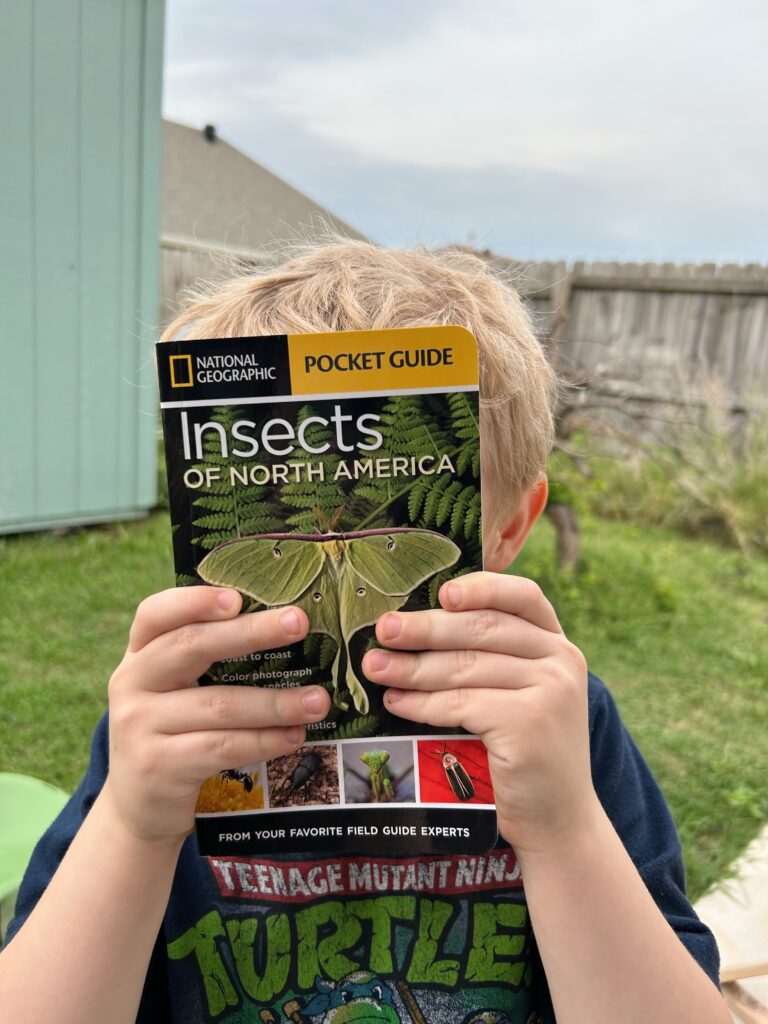
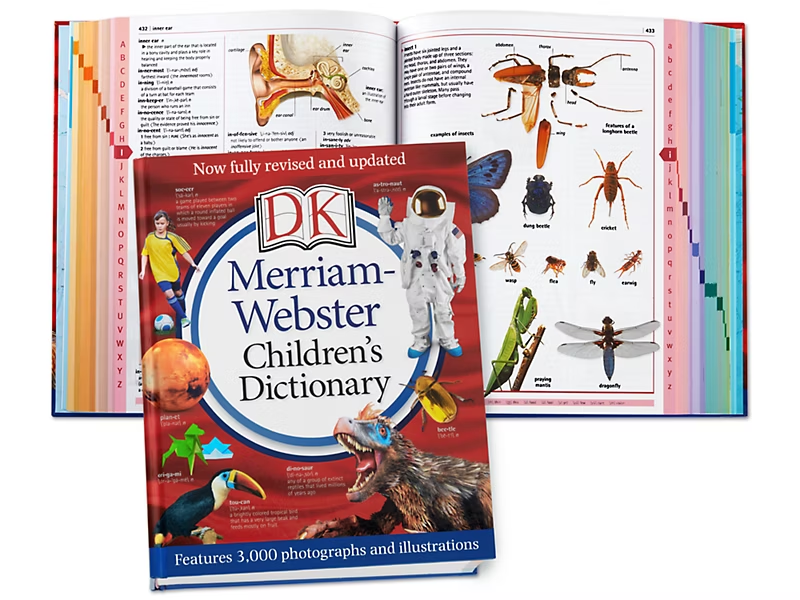
Gorgeous photos. Easy navigation. It holds a LOT considering it’s size.
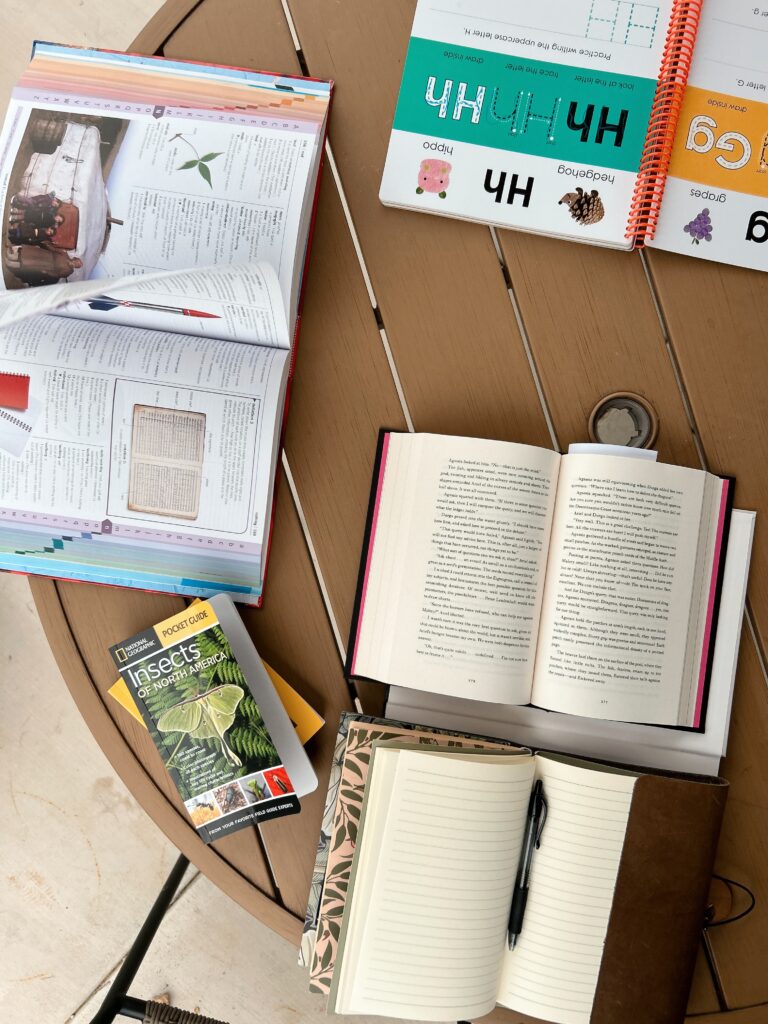
So far we’ve found 2 bugs that weren’t included. Yellow Jacket we found in the dictionary. Milkweed Beetle we identified with iPhone’s visual look up feature.
Even if it doesn’t have every insect, it’s nice to have a physical book to flip through. I keep our field guides on the table each morning while we have breakfast outside.
No word of a lie – while I was typing this up David spotted a butterfly out the window I asked him what kind it was and he said – correctly, “Western Tiger Swallowtail.”
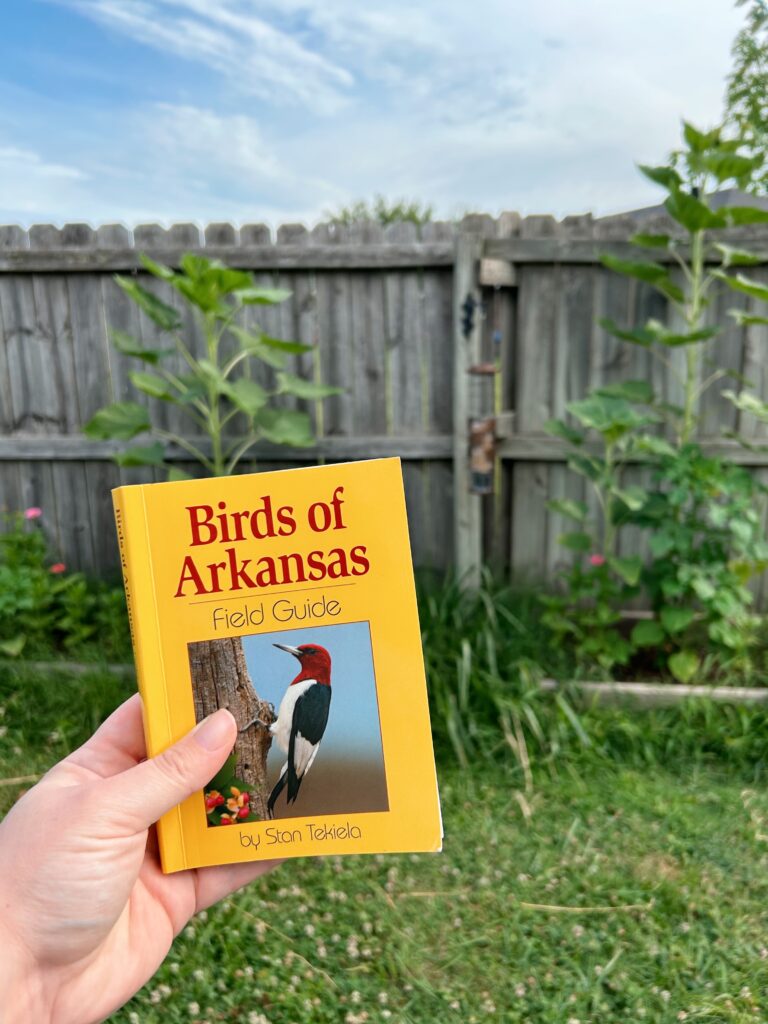
Again, beautiful photos. Color coded by the predominant color of the bird. I loved having an option that only included birds local to us. There is whole series of these.
Gorgeous full color photographs. Lovely to peruse and easy to look up definitions. Letters are color coded in rainbow order.
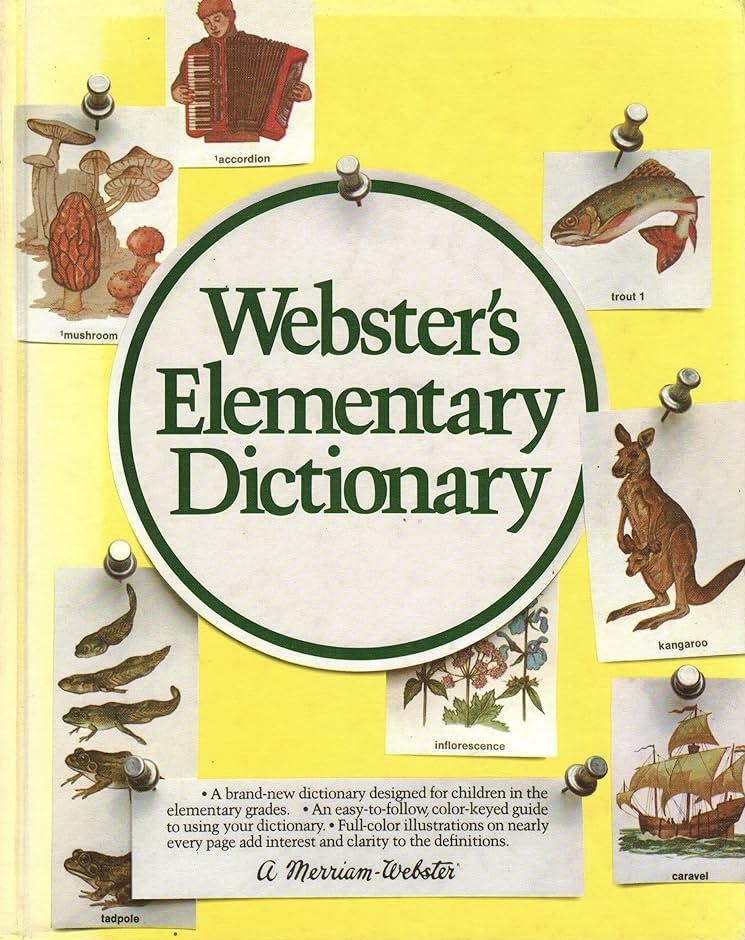
This also inspired me to buy my childhood dictionary, because it’s so nostalgic. This 80’s dictionary has fewer images, and they are all illustrations, but I love it. This book represents the beginning of my love affair with learning new words.
Language Games are really big for us as David has an asymmetrical experience with spoken language and reading.
Handwriting
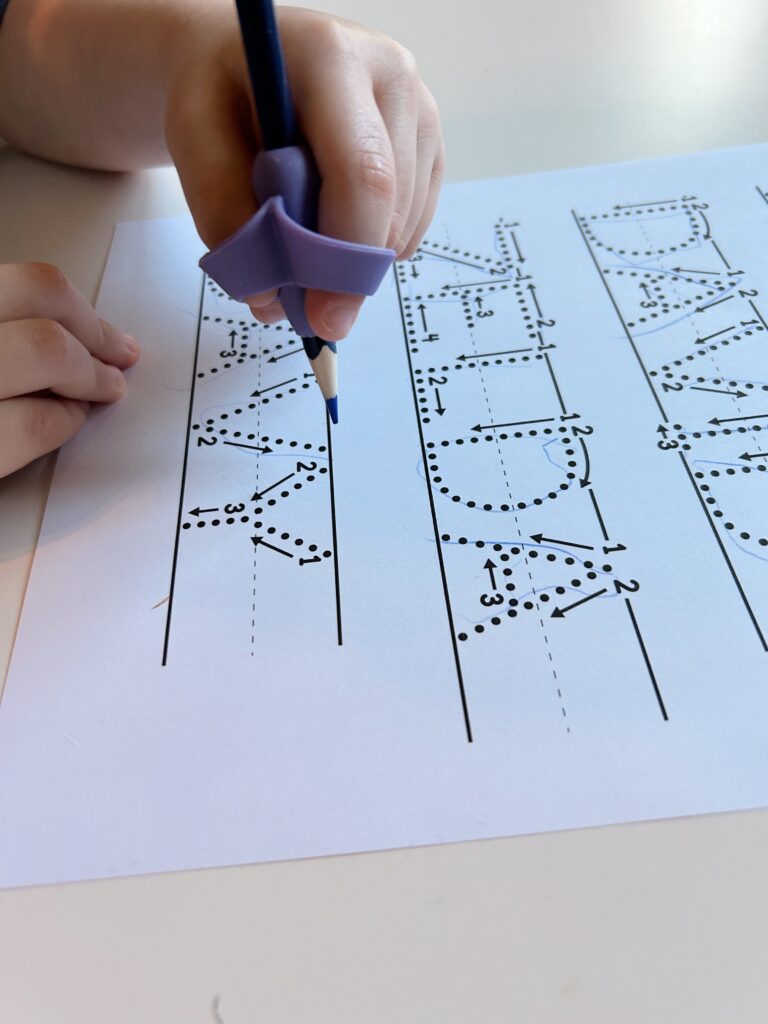
We love these handwriting fonts to make our own printables with David’s name and the names of characters he loves. These are designed by a Canadian teacher. I love that these include right and left handed! Don’t miss the free printables.
We have two different pencil grips. This one really tells all your fingers what to do. And this one is more of a gentle suggestion to open your web space.
I’m also making notes ar Holistic Handwriting to document creative approaches to handwriting that overlap with art.
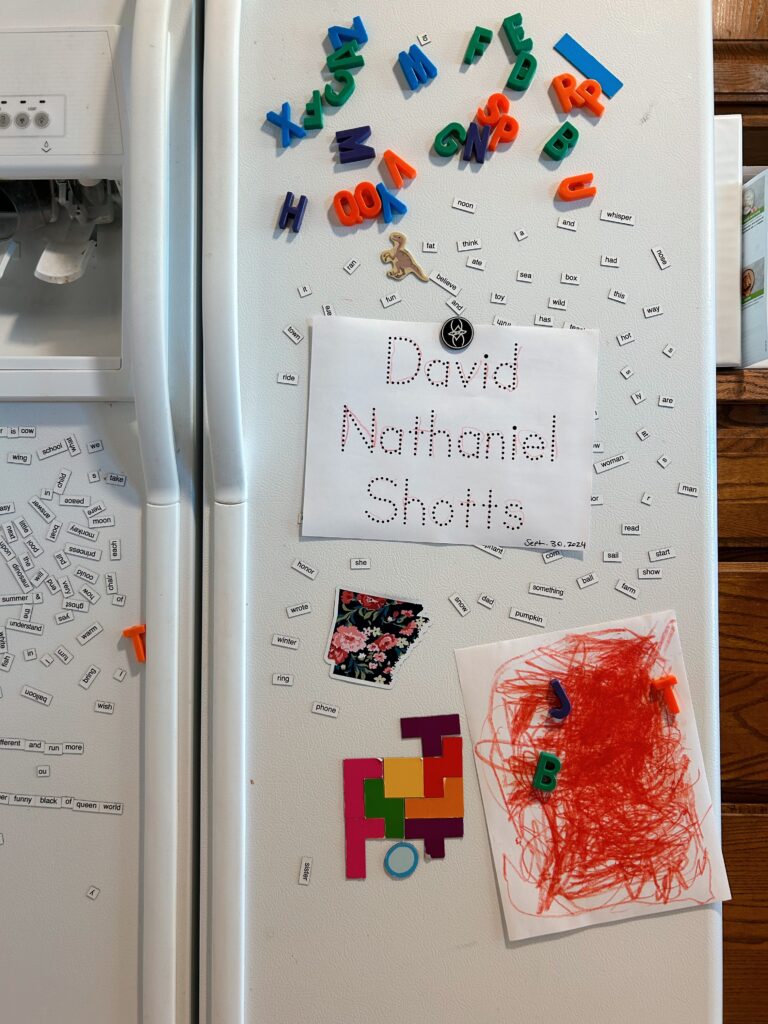
We’ve also added a magnetic poetry set recently for sentence building.
Not to mention tons and tons of picture books and early chapter books. We love reading together. Maybe I’ll write about those another time.
Social & Cultural
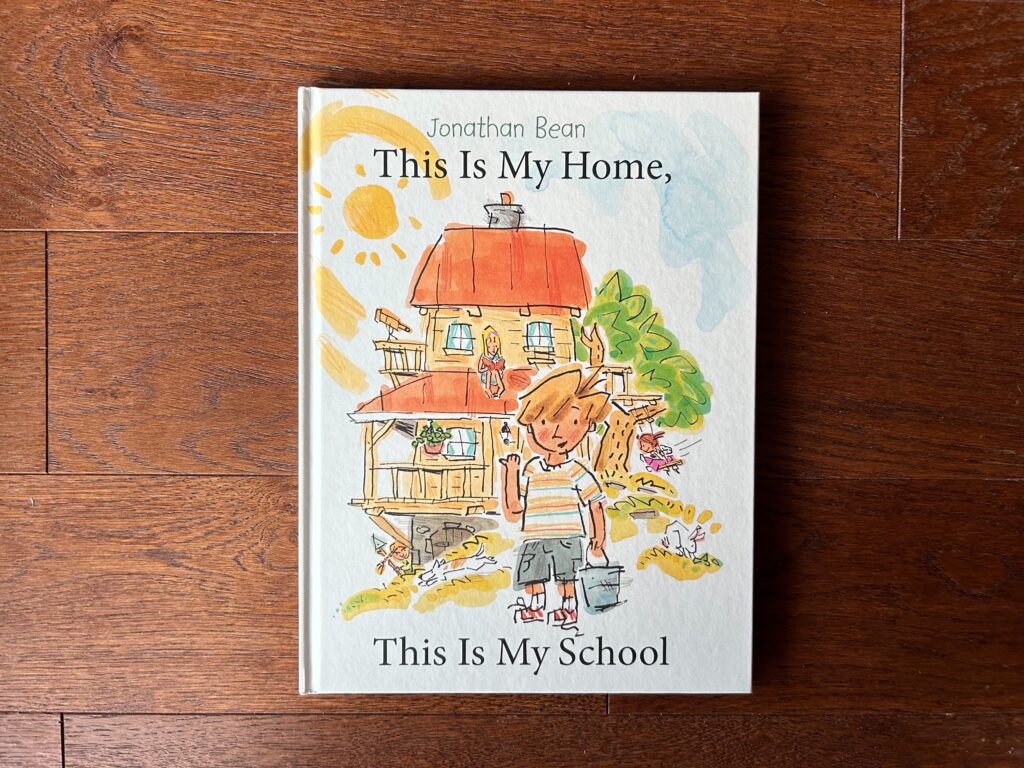
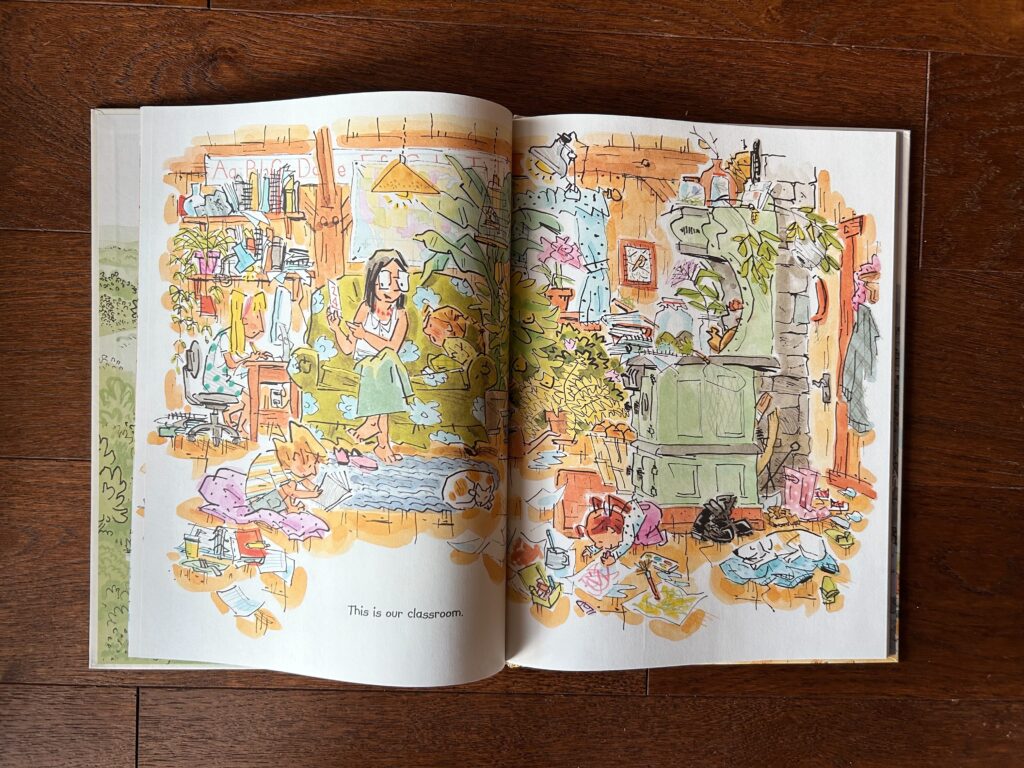
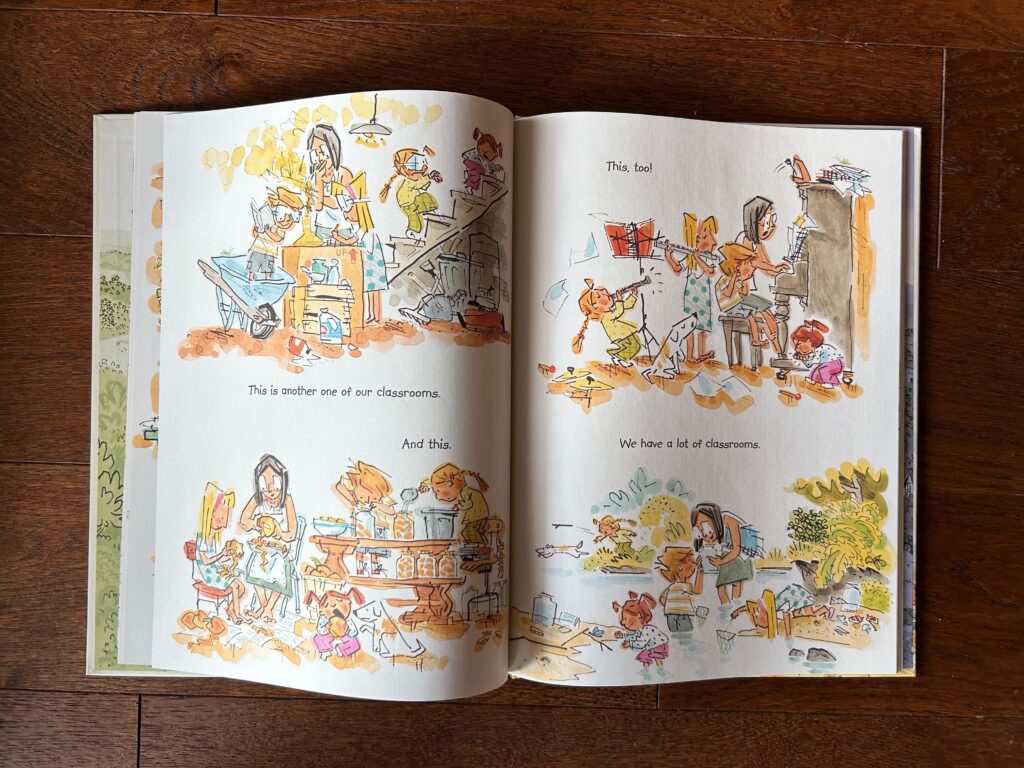
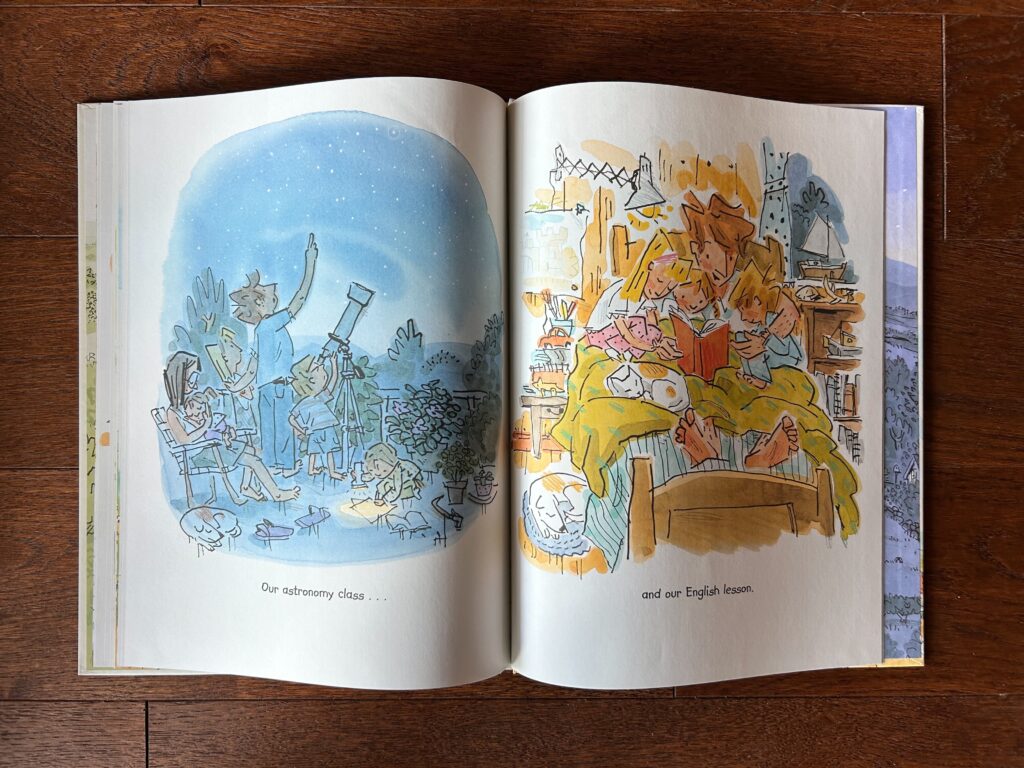
I wanted a book to introduce the concept of homeschool and was so pleased to find this one written from the perspective of a picture book author & artist who was home educated.
I’m including a few spreads just to give an idea of the style.
History ⏳
Davy’s reading above his grade level and he is loving Magic Tree House books. We read them together and he also listens to the audiobooks (with his Yoto Player) to fall asleep. These would be great to inspire unit studies and there are companion books (called Fact Trackers) about the historic setting of each adventure.
These books combine magic and history so if that’s not your thing this series is not for you.
Art 🖍️
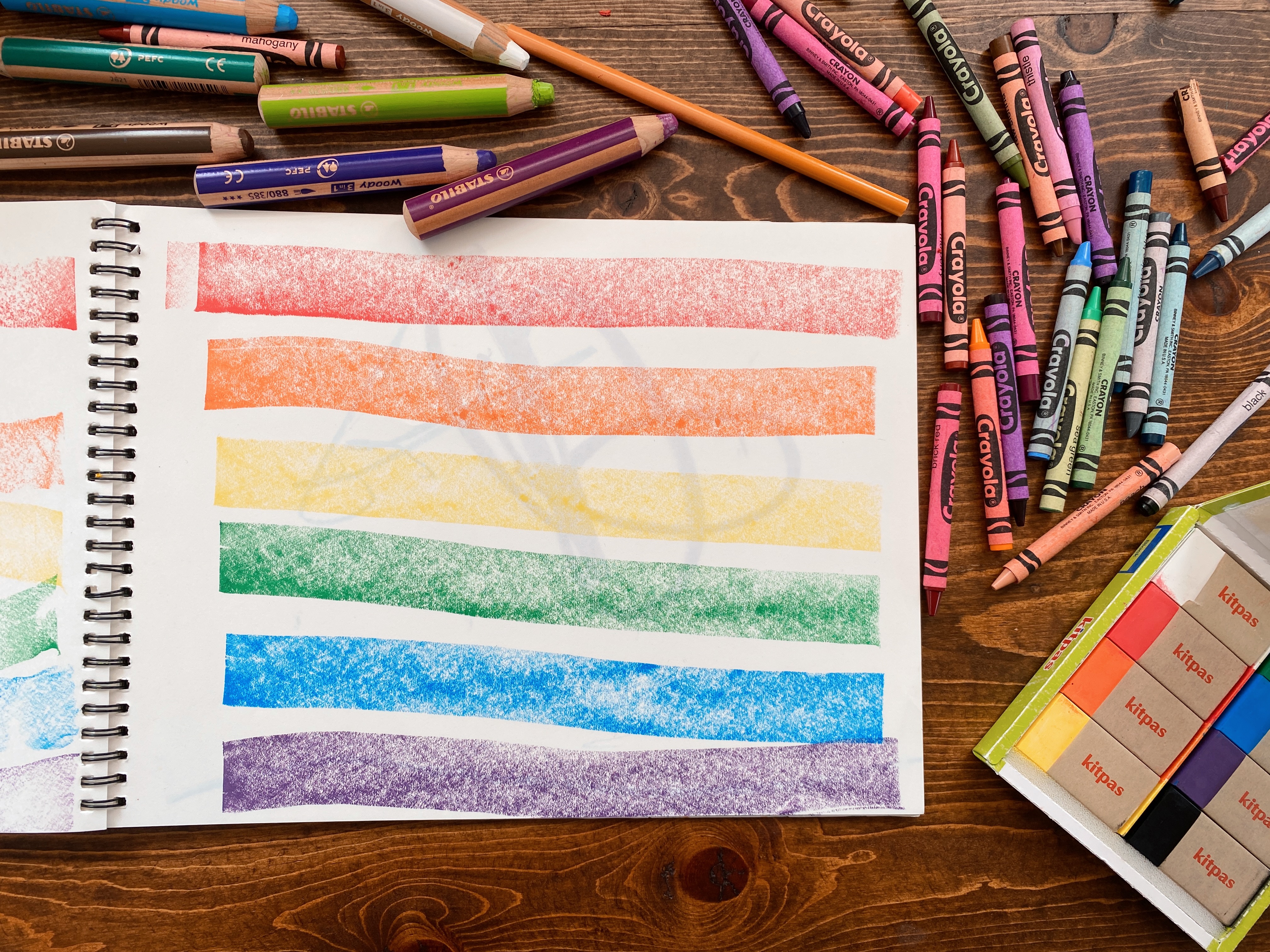
I’ve taught art on and off since 2004. So I thought I’d share my favorite art supplies for kids. None of these are affiliate links.
Crayola Crayons are worth paying extra for (for the same reason – there is nothing worse than a crayon that barely colors.)
Crayola Slick Sticks glide almost like oil pastels. I learned about them from Austin Kleon.
Stabilo Woody Pencils are similar with no plastic. I find they hold up better and are less apt to break. They’re expensive, but long lasting. I like drawing with them myself. You can also add water and use them like watercolor pencils. Or use them on wipe off booklets or windows.
Kitpas Block Crayons are also creamy and delightful. I got lost of questions about them when I made my post coming out as nonbinary and queer.
Canson Watercolor Paper is a great quality for the price and you can even find it at Walmart. Their mixed media paper is also good. The thickness really does matter for watercolor painting – thin paper will wrinkle up.
For day to day drawing we use Melissa & Doug’s sketchpad or a roll of IKEA paper. But for pencil and crayon pretty much anything you have on hand will work fine – recycling cardboard and cereal boxes can be great for crayon and markers.
Cooking & Baking 🥄
Food Play board book of very simple food prep and activities by Amy Palanjian (she also shares tons of recipes for free on her blog and IG and has a flexible meal plan that we subscribe to.)
Everything Grows another lovely book with lyrics to this song by Raffi. This has diverse representation in the illustrations. The lyrics are structured around a gender binary (boys & girls, brothers & sisters). I still love it.
This whole series is great. We also love Baby Beluga.
Considering gestalt language processing I’m looking into the audio lingual method. I want to prioritize learning phrases and songs (versus vocabulary and grammar conjugation.)
We tried minimal screentime for a long time, but when I started including more videos & apps Davy’s spoken language exploded. (We are both autistic and he was late to speak.) I am very selective with the apps we use. Here are some of our favorites.
I often prefer to pay for apps because they don’t have ads. I’m not including any apps that constantly ask for upgrades or unlocking new content.
Prodigies Bells (Free! There’s a very cool game called Pitch Quiz that would be great for all ages.)

Sesame Street defies category, but one of the reasons we love it is clips from classic Sesame Street including the songs Nathan & I grew up with. There are also games and clips from new shows. But no full episodes.
Science
Little Mouse’s Encyclopedia (Free & paid versions. A little mouse explores ecosystems. Lovely illustrations. Gentle music.)
Geography
Barefoot Books Atlas App David loves the flag matching game. He knows African countries better than I do now. (There’s also a book version I just found and ordered used for $5.)
Math
Numberblocks (Based on the UK show. A paid app and worth every penny. David has used this app to teach himself multiplication and other advanced math concepts in self directed play. There are games as well as clips from the show.)
We made Numberblock counting beads with pony beads and pipecleaners that we are now using to learn about currency.
Khan Kids (Free! This one is new to us and includes math and reading. You choose the grade level Pre K – 2nd grade.)
Puzzles
Monument Valley This is a beautifully designed puzzle game designed for adults, but David loves it. It has an M.C. Escher inspired style and could tie in well with an art history lesson.
Polygrams Tangrams & a slow paced TETRIS style puzzle game. Muted color palette. No timer.
Preschool
David is outgrowing these, but at 3-4 he loved…
Colorblocks (Similar to the Numberblocks app, but for colors.)
There are lots of reasons TV is a great educational resource for autistic kids. It’s multi media (visual, auditory). You can turn on the captions. Professional actors are dynamic and engaging (this is especially helpful for late talkers with gestalt language processing.) Kids can watch the same thing over and OVER to absorb the material.
That said, I’m pretty discerning about what we watch. Mostly so I don’t end up overstimulated myself. And also because David is likely to echo or mimic nearly everything he sees (it’s a neurodivergent way of learning.)
Our favorite shows are:
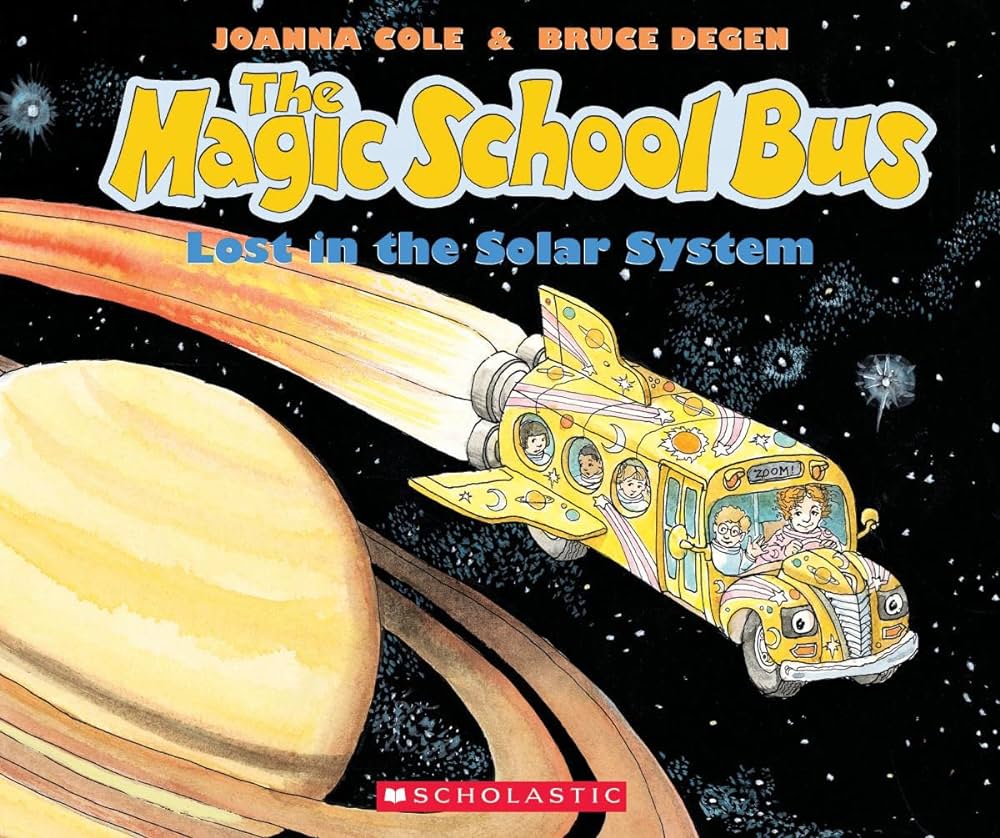

Magic School Bus (Netflix)
Old and new versions – we love them all.

Puffin Rock (Netflix)
A very gentle show that teaches both social skills and nature. It’s by the BBC so it has a gentle musical score and narration.
Numberblocks & Colourblocks
We love almost everything by the BBC better than American TV. 🤷
In the US these shows are on Netflix (although they don’t have all the episodes.)
There’s also Alpha Blocks, but Davy was an early reader so he never took to it.
Sesame Street
Davy watches this mostly on the Sesame Street App because even when we did subscribe to HBO it doesn’t have all the archives.
Reading Rainbow
It’s hard to find these episodes, but Nathan tracked some down on Internet Archive (and there are a few on Amazon and YouTube.) Sure, the live action is dated, but narrating picture books is timeless. Also, Levar Burton is a national treasure.
Daniel Tiger
Before Davy could talk he would hum songs from Daniel Tiger as communication. I also find they are very useful to play before we do something new (go to the doctor, gymnastics class, etc.) For those who haven’t heard of Daniel Tiger – it’s an animated series inspired by Mr. Roger’s Neighborhood.

My Neighbor Totoro
This is the first film Davy watched all the way through so it has a special place in my heart. Sometimes we watch in Japanese with English subtitles turned on. Watching favorite shows (the ones you’ve seen a million times and have memorized) can be a great tool for language immersion.
Traditional Curriculum 🍎
I’m mostly using a home brew approach (meaning I’m making my own curriculum from books and various resources), but we may weave in more traditional home ed materials for certain subjects.
For preschool we used Oak Meadow’s Seasons of Wonder – which is full of poems, songs, and crafts for each season. There’s still plenty here for us to weave in throughout elementary years.
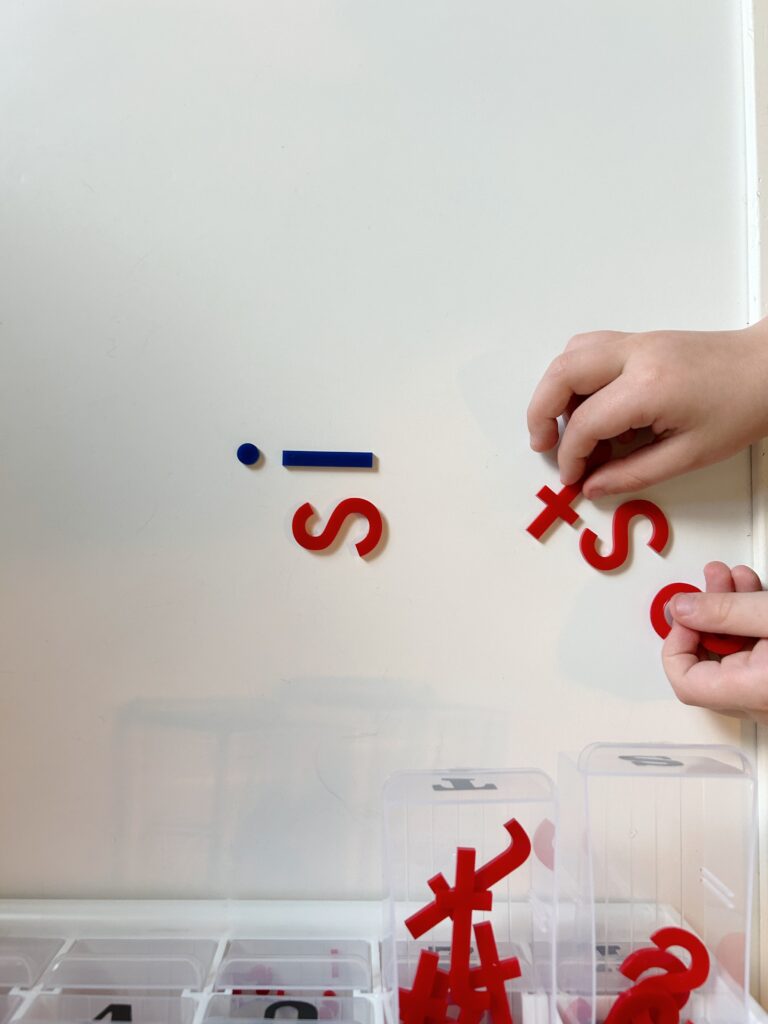
Likewise we invested in a Montessori moveable alphabet when we were all in on Montessori. We’ve diversified our approach, but are still using that material for spelling, writing, and punctuation.
We are also trying out the free Language Arts curriculum from The Good & the Beautiful. It’s made up of illustrated workbook pages and they offer PDF versions for free.*
Heads up – this is a Christian curriculum, but from what I’ve seen so far it hasn’t proven to be overly religious. Your mileage may vary. You can also pay for printed materials if you prefer that to digital.
Prodigies Music Curriculum is the biggest financial investment we’ve made in home ed so far. We signed up for this before David was talking and singing “Do Do Do” and “Re Re Re” were some of his first voiced sounds. It’s an investment, but the quality is excellent and I believe is a great fit for neurodivergent brains.
You can start out with their free resources to try it out. If you don’t want the video lessons you could also buy a songbook and a set of bells from Amazon (that’s where we got ours – we painted them to match.) Or try their free app!
And I engage with an Internet that is much different than our own. Rather than being served up content from various data mining corporate entities I am very intentional with how I spend my time.
Log into Wotmania and check the message boards. (Every single day.)
Check my email – hosted through the local phone company. There were so few messages each one was actually exciting.
Visit other websites by “surfing the web” either from website to website through hyperlinks or typing very specific and intentional search terms into search engines. When I found something I loved I would bookmark it to come back to.
Join a virtual scavenger hunt called Cyber Surfari where search engine Lycos partnered with various collaborators to hide clues across websites for participants to find. It was sponsored by Discovery Channel, Hewlet Packard, and National Education Association. The time I spent participating in Cyber Surfari had an outsized impact on my ability to find what I’m looking for online.
4. When I did find what I wanted I often printed it out. One printout I still have in the attic is Lewis Carrol’s Eight or Nine Wise Words About Letter Writing. I also printed quotes and images (rarely because ink was expensive) for my actual cork board.
6. Log into NaNoWriMo message boards every day of October and November.
6. Save drafts of my novel on 3 1/2 floppy disks.*
The smallest of these 3 and the only floppy disk which wasn’t actually floppy. We used the larger kind when I was a kid. Source.
The Internet wasn’t “better” but it was more intentional.
Furthermore, what we’ve gained in image resolution and loading times we’ve lost in connection. Those early days of the Internet it felt like a playground of possibility. Websites weren’t easy to monetize yet.
Everything on the Internet was a labor of love.
Writing, images, even software was given freely.
No one was using click bait because the structures that favored clicks weren’t yet created. Websites were shared and linked to because users found them interesting or funny.
Over the last 6 months I’ve done a deep dive into the “early” Internet.
I took over 10,000 words of notes from various articles and books (which you can trawl here). I have more than enough to write a scholarly article. But now that I’m here I don’t really care to use them.
It’s not about pointing with forensic clarity at the moment the Internet “changed.”
(But I am wondering… when did we stop capitalizing it?)
There was no single moment of corruption. Over time capitalism did capitalism. Spaces became monetizable and websites with a lot of traffic began to monetize.
There are definitely benefits. Artists & makers & authors can find new audiences and patrons can support creators to keep doing what they love.
But there’s also * waves hands * the rest of the garbage that came with monetization. The algorithms, the data collection, the noise, the click bait, the paywalls, the walled gardens, the misinformation, and the rise of reactionary content.
Because there wasn’t a robust system of monetization the incentive you had to create online was to contribute to a growing gift economy.
There was a culture of creating to share with others – from flashing GIFs, to “seamless” tiled backgrounds, to fan message boards. Artists and coders made free wallpapers and screensavers and even free software called “freeware.” I was part of a “sig tag” group where members used fonts and clip art to make signatures you could attach to “sign” your email. We’d type in each member’s name (around 15-20) and email the image files for the group.
You gave your time and energy and others were generous in return. It wasn’t barter or trade. No one was keeping a tally of how much each person contributed. But there was an overwhelming spirit of generosity and reciprocity.
Over the last year I’ve reconnected to the Wheel of Time fandom.
Coming from the “creative entrepreneur” corner of the Internet it has been a complete culture shock (of the best kind.) And it reminds me of my early days online. It’s no coincidence that this fandom has been around since the early days of the Internet on forums like Theoryland and Dragonmount.
14 Blue Wheel of Time Books (image credit: Juniper Books)
The Wheel of Time fandom still functions in a gift economy.
For most of us it is not a job. It’s our passion. Among this fandom I have seen a depth of generosity that seems unfathomable.
A gift economy functions because when you feel the warmth of generosity you want to contribute. When you walk into a new space and are welcomed you turn and welcome the next person. When you see someone create a cool fanwork you want to join in.
I cannot continue to pivot between these paradigms anymore.
It’s dizzying.
I want to engage in the Internet as a gift economy.
I have no interest in selling art, content, memberships, or courses. Every time I have charged for this kind of content it has felt like I am pulled off course. I’ll continue writing and selling books, but I have no intention to leave my day job and become a “full time” writer. That allows me to make what I want without focusing on creating content that “converts to sales.”
I don’t begrudge anyone who chooses a different path.
If you’re a full time artist be a full time artist. I love that for you. I support lots of creatives online and will continue to do so.
But if the capitalist framework isn’t sitting well for you there is another way.
Your art isn’t any less valuable if you gift it.
Is a handsewn quilt less valuable than a bedspread from Pottery Barn?
Of course not.
We need to stop letting the dominant culture brainwash us into undervaluing the gift exchange.
What if we treated the Internet as a communally tended garden?
To be fair, this is early 90’s, but I had to shoutout my show Ghostwriter.
Let’s Internet like it’s 1999
Create from your passion. Forget everything you’ve been told about offering value, funneling customers, and capturing eyeballs. Be authentically you and I guarantee that will resonate with someone.
Give freely. I’m not going to begrudge you a shop or a paywall, but if you want to Internet like it’s 1999 most of what you offer is going to be for free. When you give freely people will want to support you when they have the opportunity to do so. A lot of the people harping on about funnels actually built their careers over decades of working for free. But they can’t sell you a $$$ marketing course for that.
Spend your time and energy engaging with, appreciating, and sharingwork that other people make. You are not the main character of this story. It is about us all.
Time to walk the walk
I’m in the process of removing the paywall here on Substack.
This month I’ve unlocked another session of Camp Kindle. (Last month I unlocked the Wonder session.) I created both of these for adults, but I’ve heard families really love doing the activities together.
Vintage Photograph of Girl Scouts filling water bucket at camp. To my memory this was scanned from my personal collection and is archived here.
To everyone: How can we create spaces of reciprocity and connection in an online world that wants us to see each other as a “target audience”? How do we reframe the value of our work outside of capitalism?
To creative business owners: How can we make our businesses less extractive? How might we contribute to a gift economy alongside work that we do charge for?
Cheers,
P.S. If you missed last month I’ve decided to remove the paywall and send snail mail to my paying supporters instead. You can read that here.
** Personally I experienced the crush of change online between 2013 and 2016 (which incidentally is the time we stopped capitalizing the Internet… maybe there is something there.)
*** To bring more intentionality into my own Internet experience I’m spending more time on RSS and less time on apps, using Ecosia instead of Google (the AI snippets are killing me), and burrowing into my cozy Discord groups.