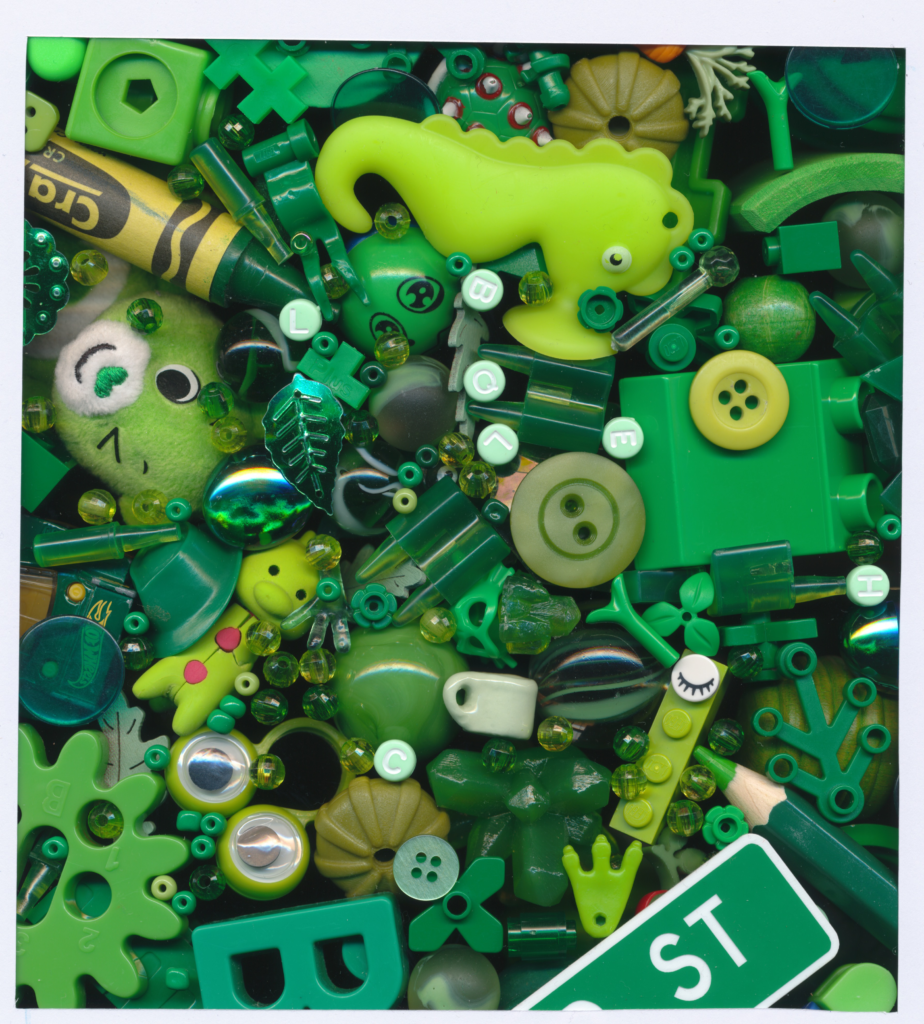
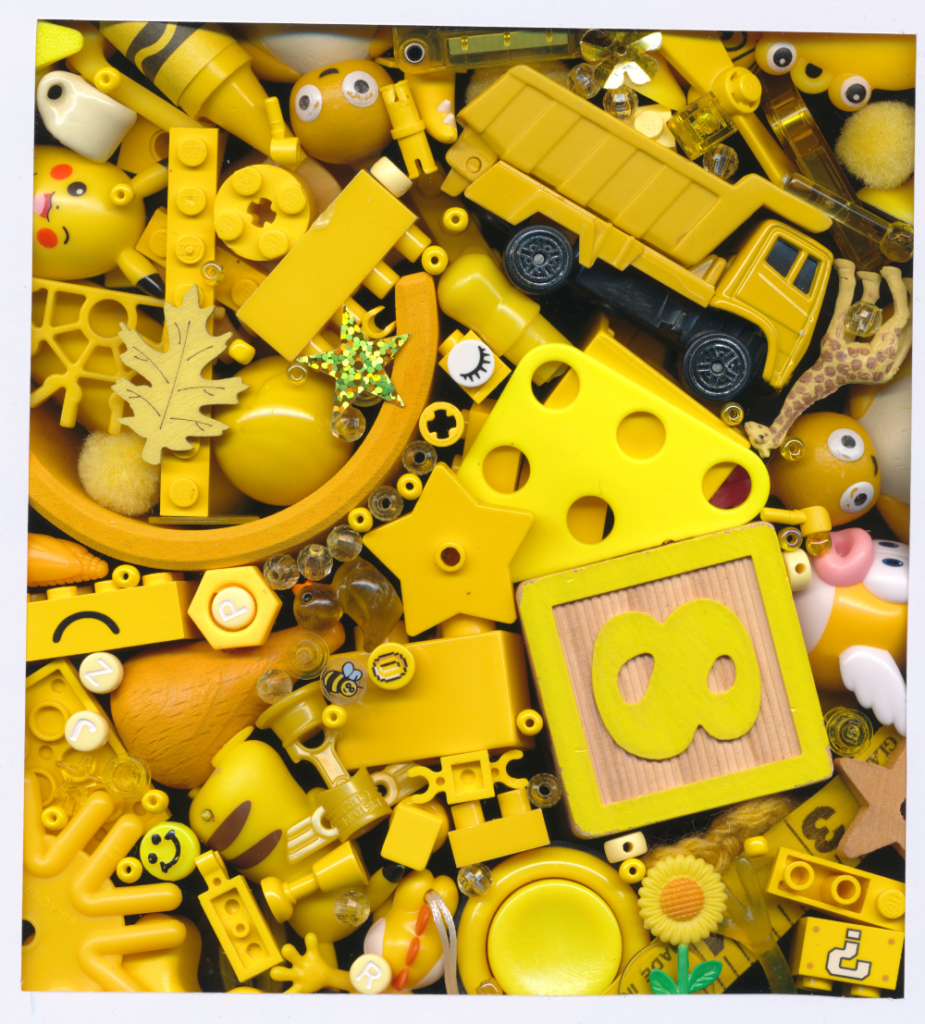
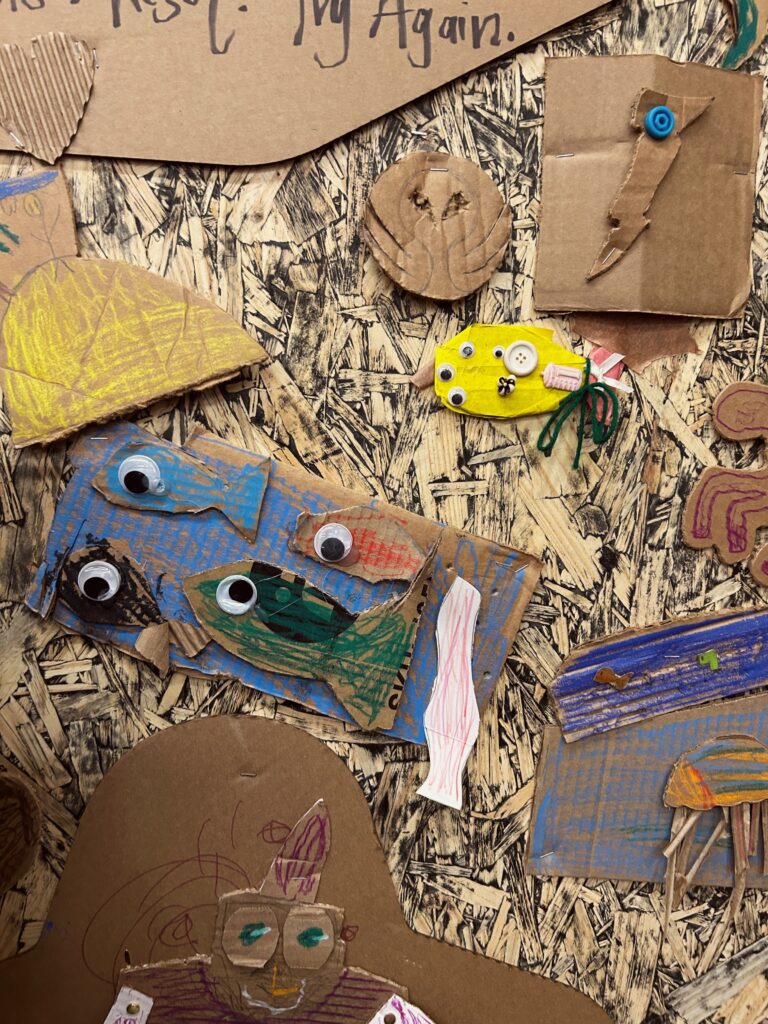
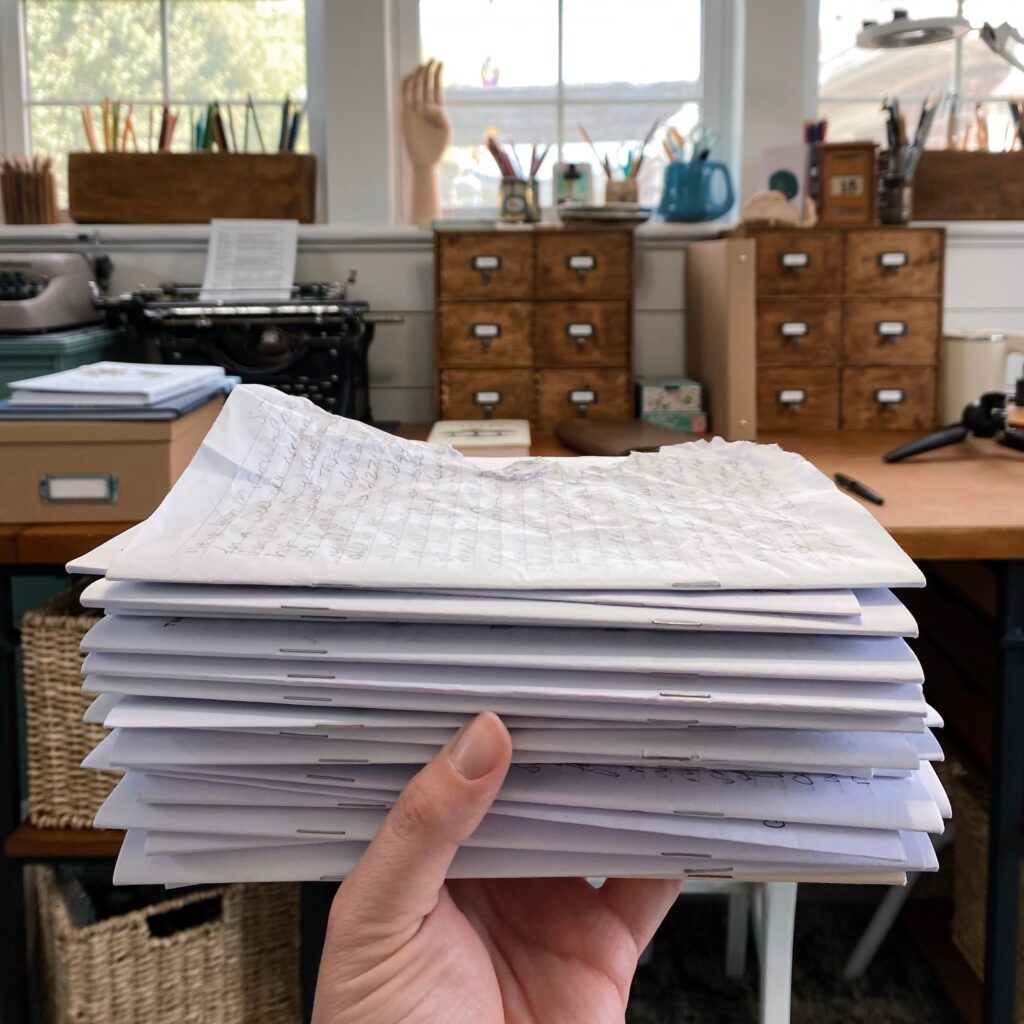
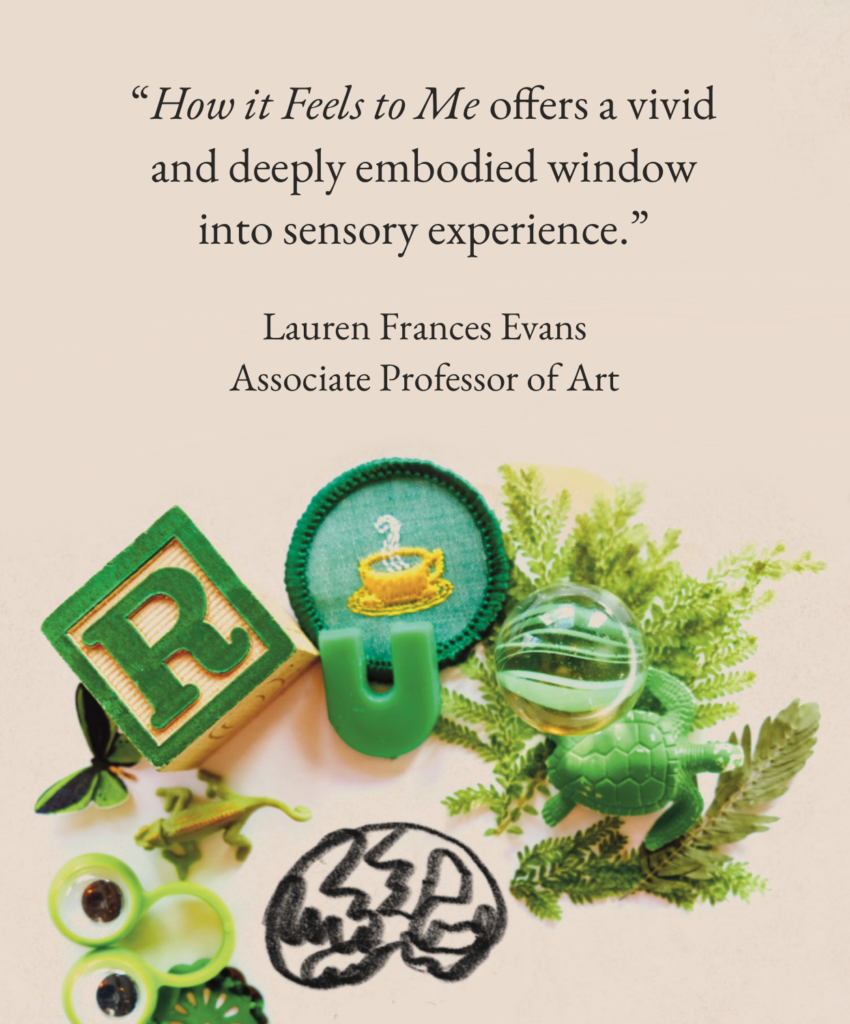
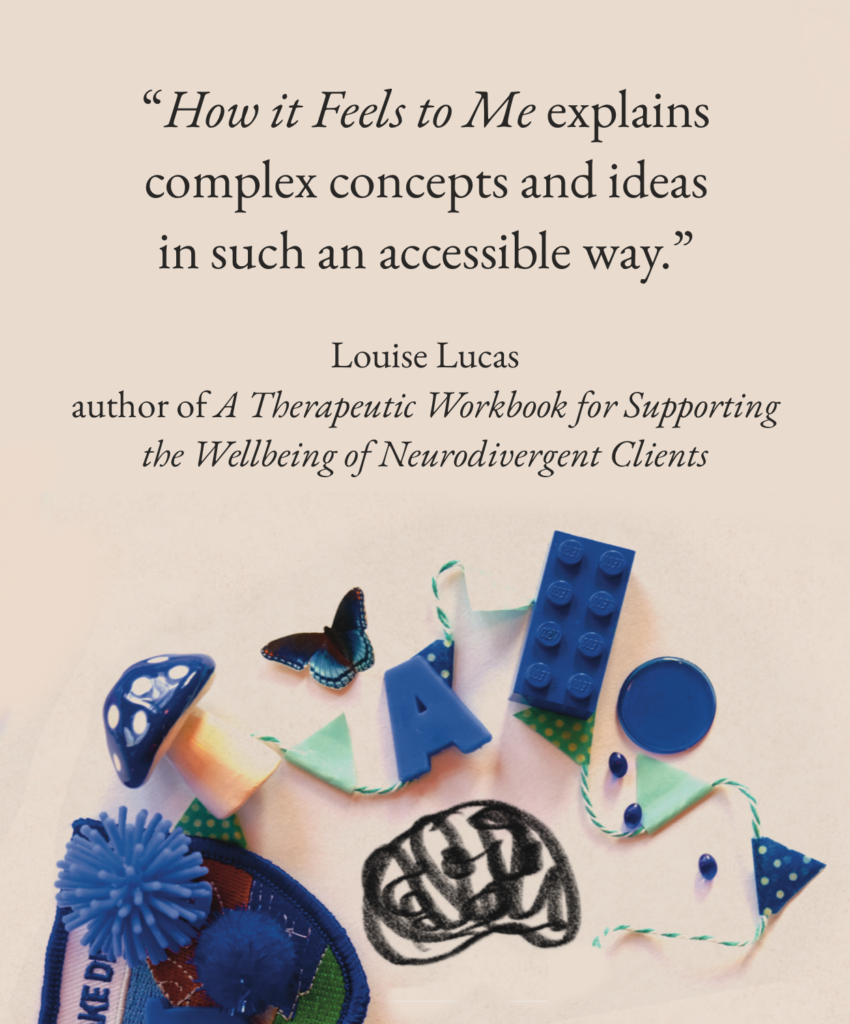
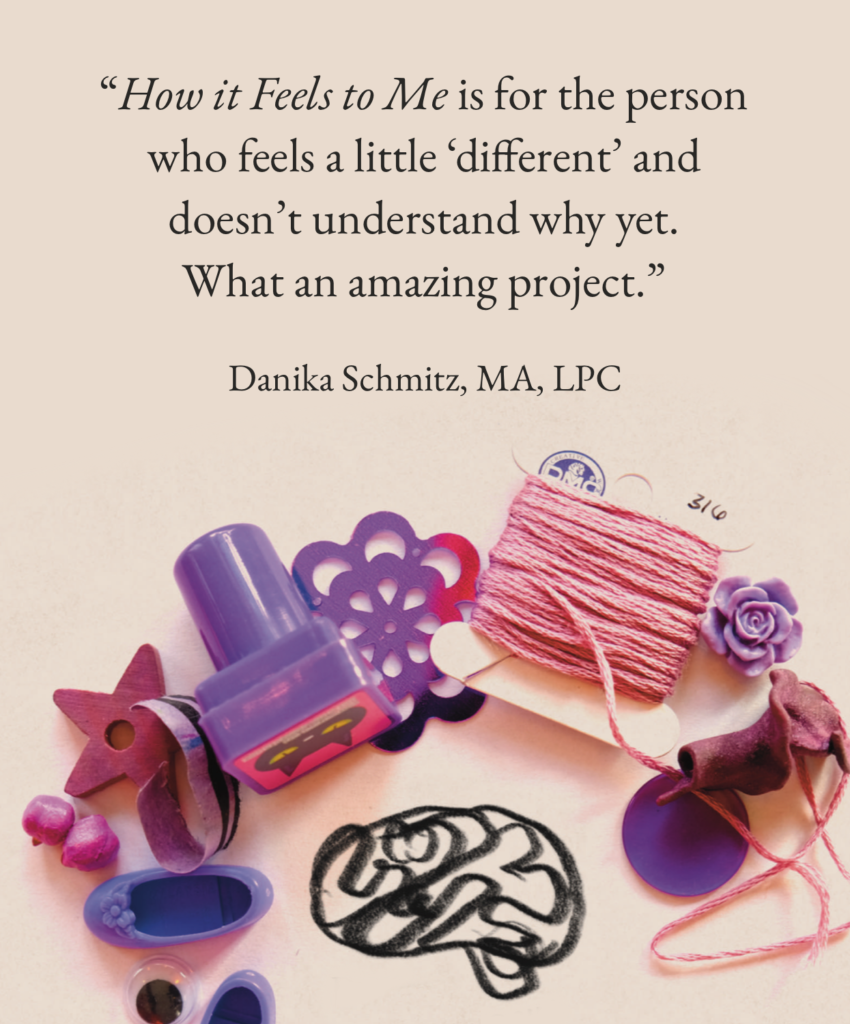
While I wait for more books from the printer I am having fun with September’s zine. This month’s zine is an exploration of form and color.
I’ve had this idea of photographing color curated objects for a few years, but my lighting has never been good enough to fulfill the vision. This scanner can do it! So I started with a bag of blue and green toys that my kid and I curated together two winters ago. (Yes, two YEARS. Sometimes you have to wait until you have the right tools.)
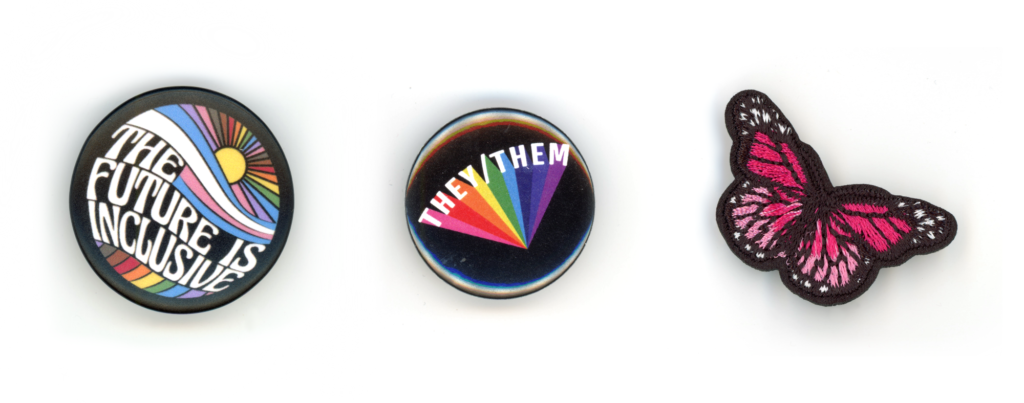
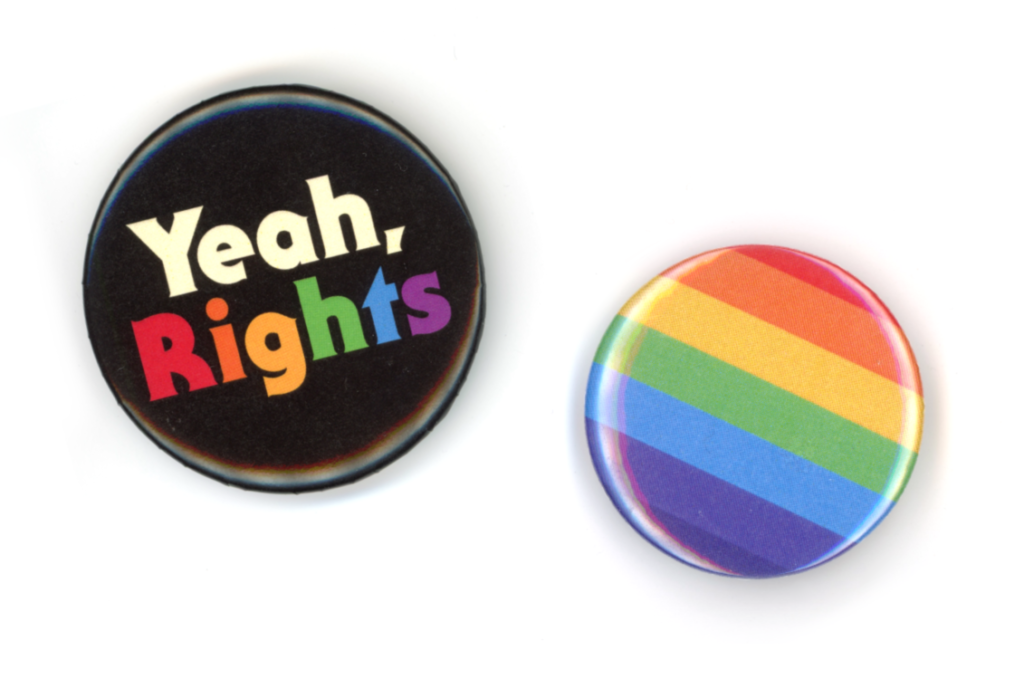
First, I played around with my new scanner. It is MUCH better at scanning detail from dimensional objects than my old one. (See above.)
Then, I experimented with my circle punches.
Working with a punch introduces some limitations – it will only reach so far into the paper. Because I want them to line up in a certain way I need to make mini zines. Which is fun since I usually make half sheet zines.
Once I knew the size of the zine I made a little frame of paper so I could compose a specific design for each spread. I also quickly learned that scanning as you go is much better because you can see what you’re doing and adjust the layout from below.
Arranging and scanning the blue spread took over an hour. Green and yellow were around 40 minutes each.
(Zines are definitely not “worth it” for an hour to profit ratio. But they have been an incredible tool for my creativity and my mental health.)
There are three more colors to go. Then I need to do a series of test prints to adjust the vibrancy and test assembly (extra tricky with the circle punches.)
If you’d like a copy of this zine I’ll be making a VERY limited quantity.
So let me know if you want one!
Because these zines are taking extra time to create I’ll be selling them for $15 each.
UNLESS you’re a member of Snail Mail Club who always get the best price (currently $5 a month).
The finalized files are officially uploaded to our book printers!
So the book is… done??
It doesn’t feel real to me yet.
My hands are going to be full for the next week or two while I’m in fulfillment mode. We ran into some final challenges with our hardcover printer who removed the $5 USPS shipping option. 😭
So our best option is now to bulk order 100+ books with Fed Ex delivery, pack, and ship them to you myself. This does mean I can add the signed bookplates and tuck the preorders perks in with your orders. But the downside is that it will take a bit longer for the books to reach you.*
Once the hardcover preorders are done I’ll start on the paperbacks. We’re using Amazon for paperbacks to keep costs low and make these books as accessible as possible. But if you order through my website Amazon does not get a cut.
I’m really keen for everyone to understand this.
If you haven’t ordered yet you can find both hardcover and paperback in my shop.
If you want a single zine I’m always happy to trade. There’s also a printable version alongside our printable worksheets for all ages. Please spread the word if you know any teachers. You don’t have to buy the book to use the worksheets (although we’d love if you did.)
Thanks to everyone who preordered and helped bring this project to life.
We’ll be sharing more about the creative process once the books are fulfilled.
I’m also considering a slow paced book tour. If you think I should travel where you live please let me know! 🐌
Cheers,
FOOTNOTES
* Since the hardcover books now have to be shipped twice. First to me, then packed, labeled, and shipped again to you.
Not long ago, I got tunnel vision on admin for my creative work and wasn’t allowing myself time for joy.
I’m not sure how it is for neurotypicals, but for autistic people (and neurodivergent humans more broadly), our interests are a very powerful tool for regulation. Times when I made didn’t make time for autistic joy were dangerous for my mental health and I went to a very dark place.
Allowing myself to do things that are “just” for pure joy has been very hard to do in my adult life. Mainstream culture is always pressing us to be productive, to monetize our interests, and to start side hustles.
Creative work often comes with a large helping of screen based admin that is more draining than life giving. I try to keep things in balance, but it has been a LOT of computer time during book launch.
So WoT Con could not have come at a better time.
Leaving behind my responsibilities to be a hard core fan freak for a week is so life giving. I hung out with my WoT friends, we sang together, we ate together, we paraded around in costumes, and we stayed up talking til 2 or 3 in the morning.*
(I’m seriously questioning at this point if I am even introverted, or just drained by normies. I am seriously hyped!!)
While I was at WoT Con, I also had the chance to show the How it Feels to Me proof to nearly 100 people, many of whom read it cover to cover. There’s nothing like placing your art in someone’s hands and seeing their face light up.
It was low key the best launch party an author could ask for. 😭
I’m more excited than ever to get these books out to you and to schedule some book tour events. (I’m taking launch VERY slowly due to my chronic illnesses, but it is proving very difficult to pace myself when I am so excited.)
Meanwhile Gracie has been hard at work formatting each edition (we have FIVE!) and we will start fulfilling orders next week. We have fewer than 10 signed bookplates left so if you want one of those be sure to order a hardcover ASAP.
If you preordered and have not confirmed your address now is the time to do so. I need you to use the official form so I have everything in one place, but if you can’t find the form please let me know.
There was a time I thought that being “professional” meant niching myself down and cutting away all the weird parts of me.
But it turns out those are my best bits.
Allowing myself to be louder about my interests has helped me make deeper friendships and be more authentic in my life.
Whatever you love, it deserves to take up space.
If you’re reading this by email hit reply and let me know what gives you neurodivergent joy. 💫
Cheers,
P.S. I’ve hidden a great serpent ring somewhere on my website as part of my cabinet of curiosities. It is a photograph of a silver ring and it is on one of my main website pages – not a blog post. If you find it send me an email and I’ll send you a surprise via snail mail. Once I finish book launch maybe I’ll finish hiding the rest of the curiosities.
FOOTNOTES
* Yes, we are still going strong even after the show was cancelled. This fandom has been around since before the show and it will continue long after. I’ve written about Wheel of Time fandom before. If you want to hear more about it you can read my posts tagged #wheeloftime.
** Which is a measure against self publishing bias.
Since then the world has become a much scarier place for me and for my friends in the queer community. I’ll share some resources at the bottom of this post for allies to lend their support this month.
But this post isn’t for the allies.
This one is for the queers.
I’m stepping out the comfort zone of educating others to revel in some queer joy.
This month I made a very playful and joyous zine. It celebrates queer artists whose work has impacted me in a profound way.
Here are links to everything I mentioned inside it.
I have a love hate relationship with the children’s museum. The exhibits are so cool and interactive. But the acoustics are difficult and when there are large groups of children it can quickly become very overstimulating.
This week we noticed a lot people seemed to be out of town on vacation. So we tried the science museum – only to find a large group of summer campers.
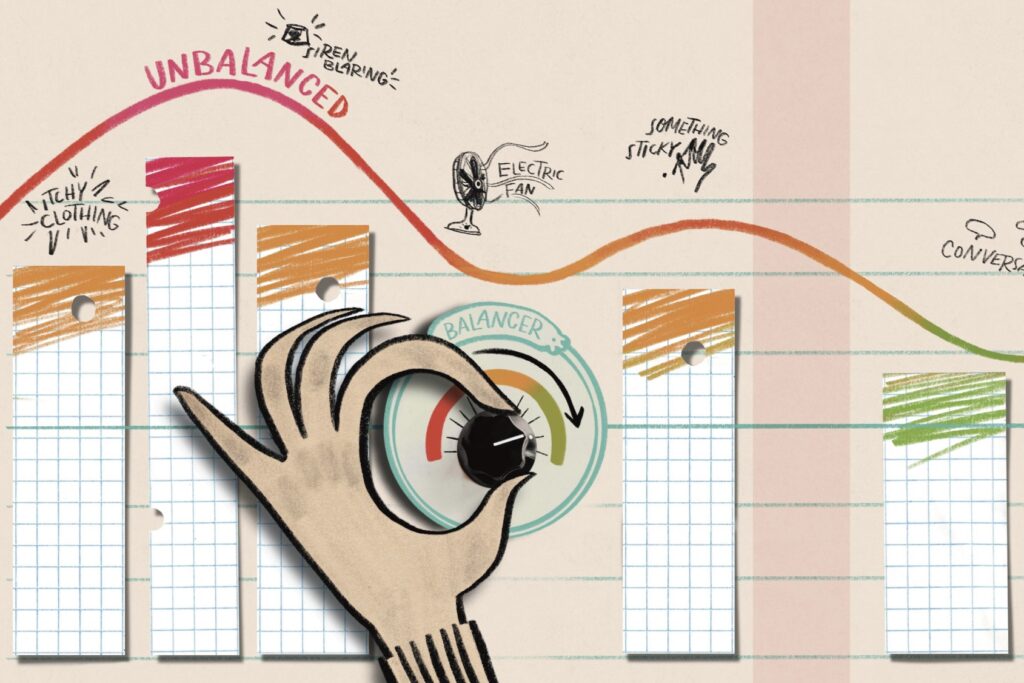
This creates a lot of sensory input.
Visually tracking darting children in bright matching t shirts
Auditory overload with overlapping screams and noises
Tactile overload from being brushed against and overheated
Social overwhelm from taking in the complex social dynamics in a large group
Because the overstimulation is whole body experience noise cancelling headphones alone don’t usually seem to help.
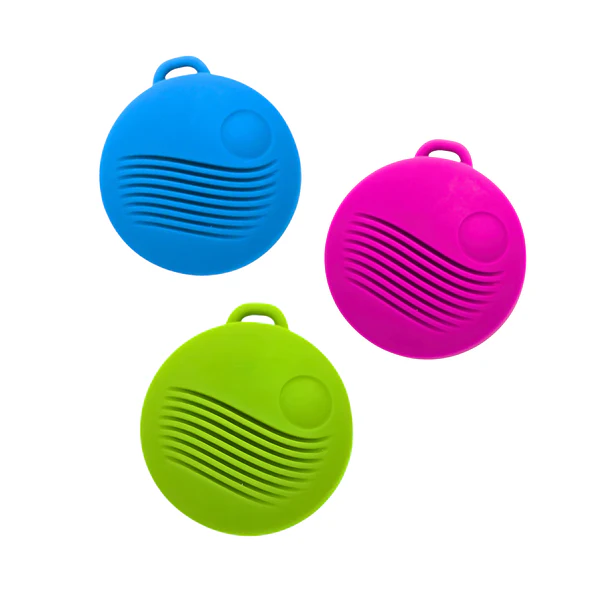
But last week a friend in Australia mailed me a Vibrant Hummingbird Sensory pendant created by a neurodivergent family to help regulate overstimulated nervous systems.
When I pressed the button I noticed an immediate calming effect on my nervous system.
But I also knew I was lucky to be holding it.
I spent weeks looking for a similar product in the US and couldn’t find one.
When I got home from the museum I emailed Vibrant Hummingbird asking if it would be possible to stock the sensory pendants for US customers on my author website. And they said yes! So…
I’m taking preorders on my website!
I don’t usually sell other people’s products, but I wanted more people to have access to this support tool. We hope this collaboration helps more people access Vibrant Hummingbird Pendants at an affordable cost.
We’re still under the weather so a gentle update today. The title comes from a small work I collected from neurodivergent artist Meg Fatharly. It’s a nice reminder when live starts life-ing and I have to slow down the pace.
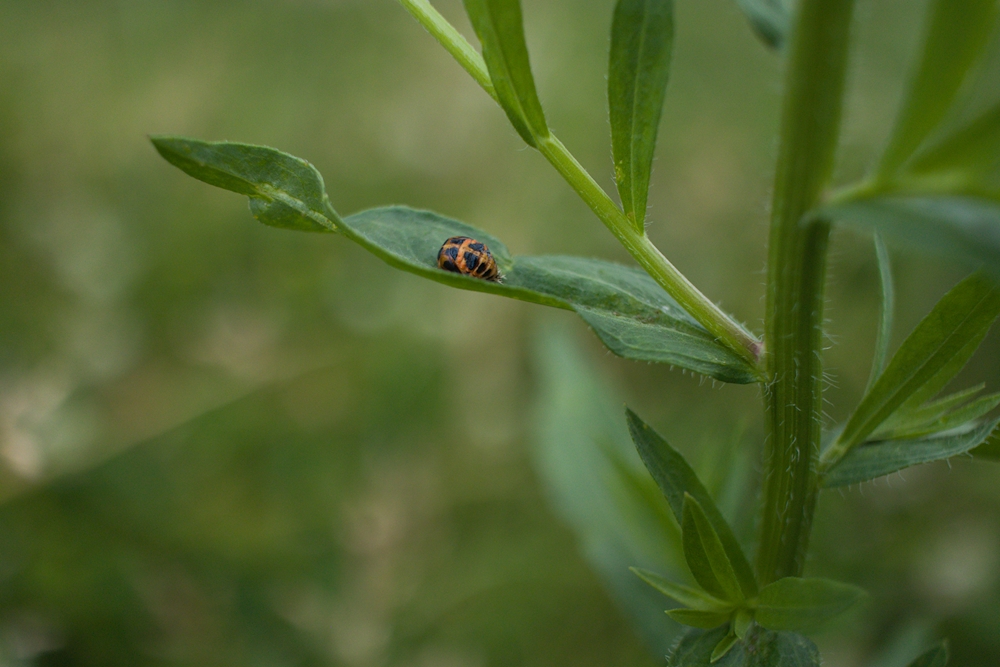
Lately I’ve been photographing some of the residents of our backyard (including the snail up above.) My kid is really into animals and I’ve learned to identify ladybug eggs, larva, and pupa.
This is a pupa! I didn’t even realize ladybugs pupate (or ladybirds for my UK friends).
If you’ve never read this one I wrote it for fellow recovering perfectionists. There’s also a ramble podcast if you’d prefer to listen.
That’s all for this week. When my voice comes back I’m planning to record a new solo podcast. Are there any topics about neurodivergence you’d like me to podcast about?
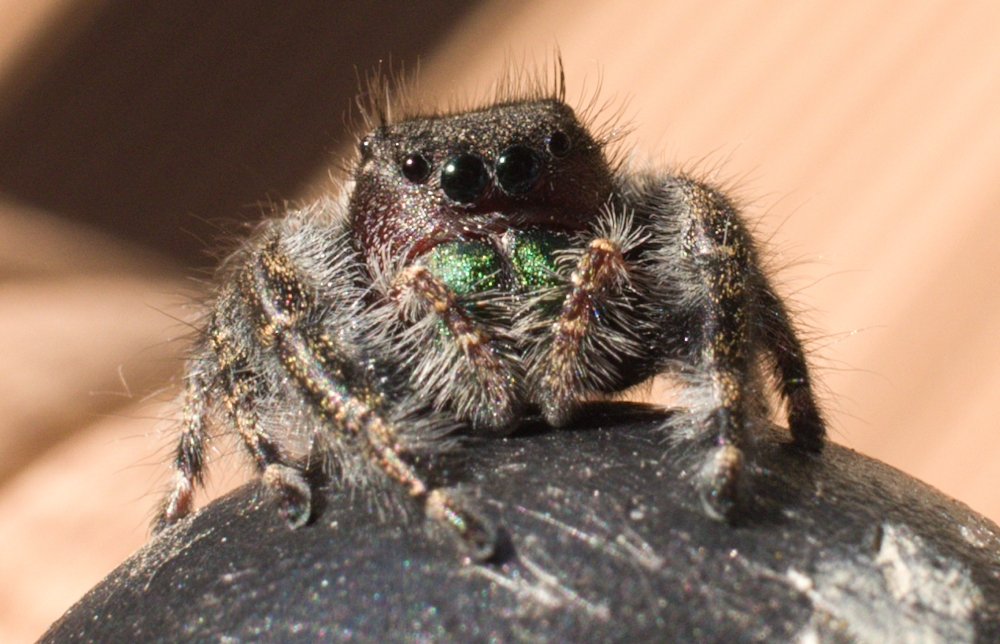
P.S. I’ve also taken some adorable photos of a friendly jumping spider. I’ll put it after a space for anyone who has a spider phobia. For the rest of you… How cute is this little guy?
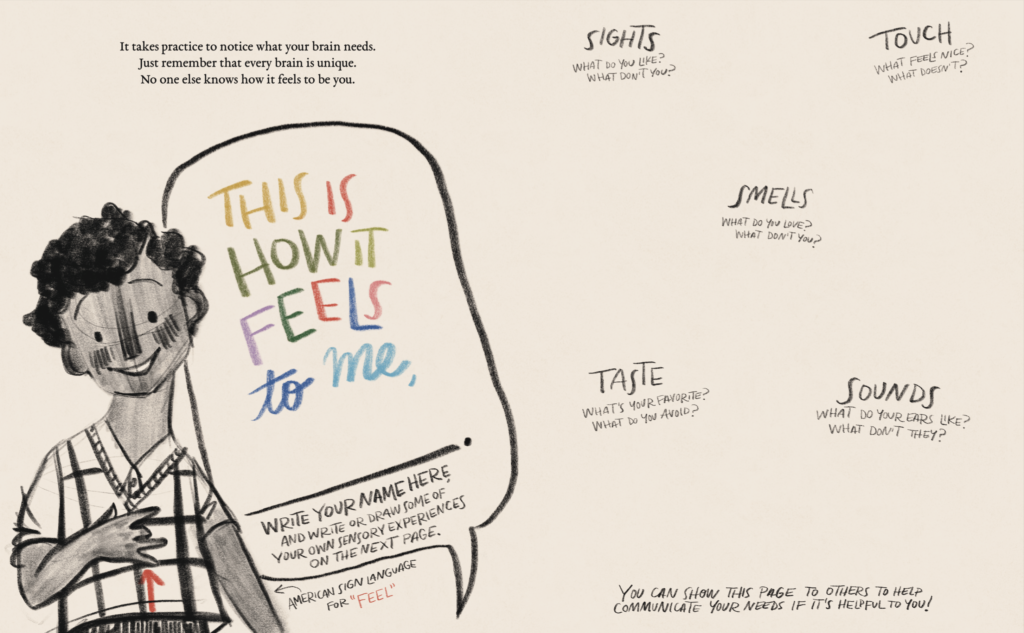
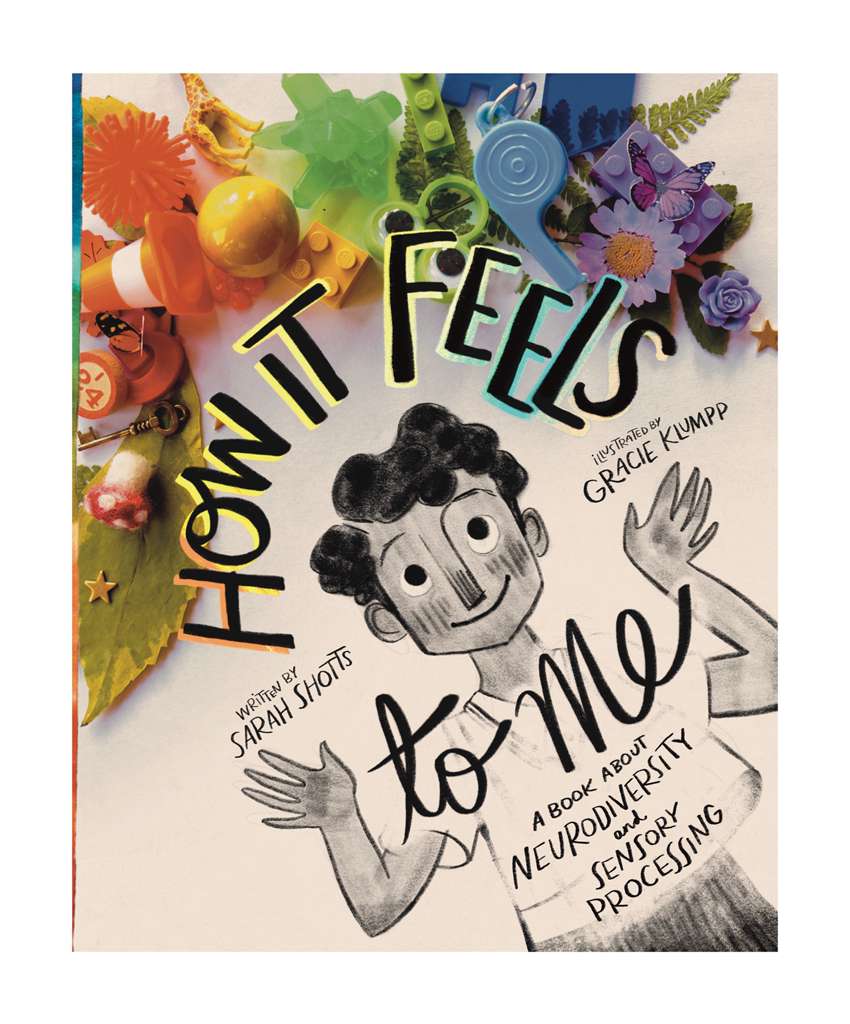
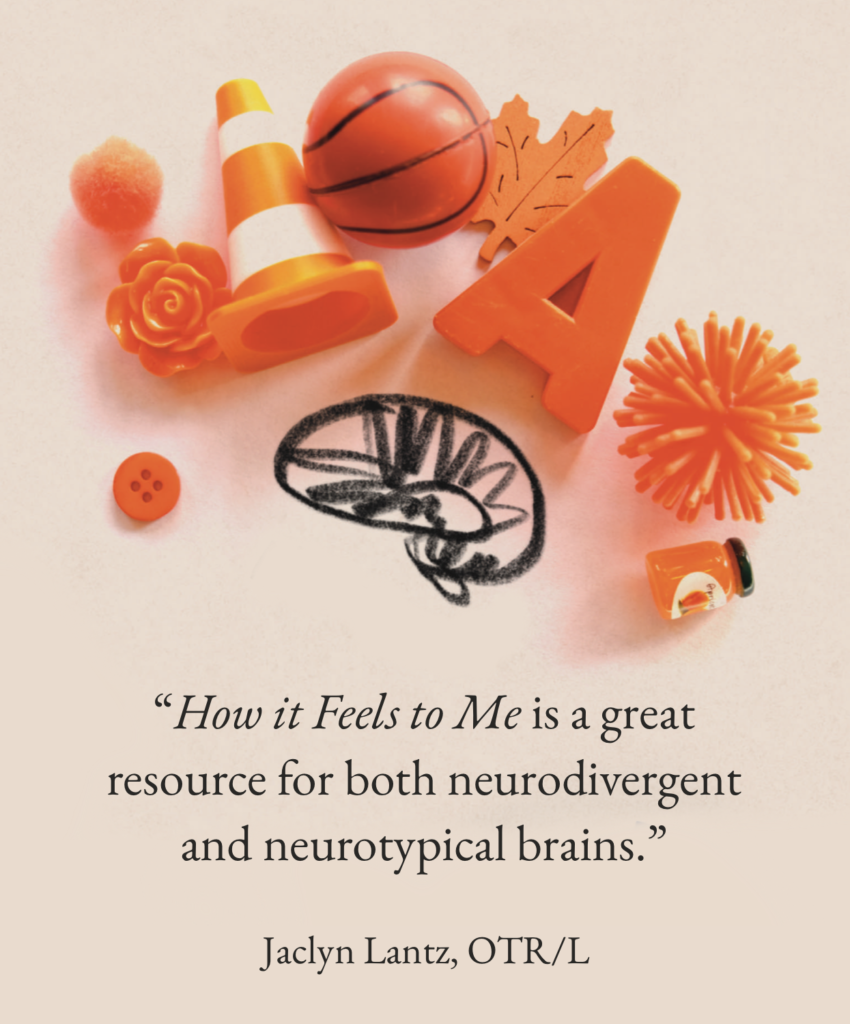
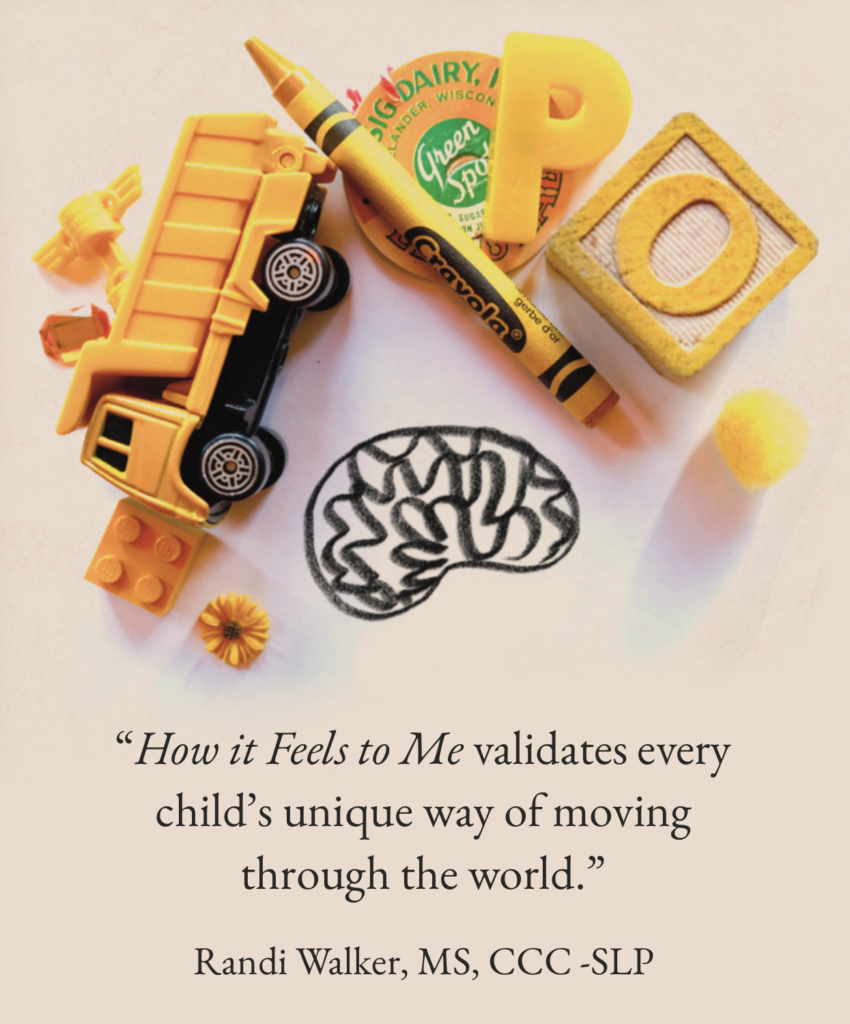
Both neurodivergent folks and professionals alike have told us how much this book resonated with them.
Here are some of the highlights!
Are you a teacher?
We are seeking additional reviews from K-12 educators. If you’d like to read the book and potentially write a blurb please reach out. Thanks to the art teachers who already have!
That’s all for today! Gracie & I are busy at work on the next proof integrating beta reader feedback and copy edits. We’re on track to finish the book by late summer.
If you haven’t preordered yet you still can.
You can also donate a book to a library or school.
I’m an autistic adult with hypermobillity (recently diagnosed with hEDS) and home educating parent of an autistic child. I’ve experienced pain with handwriting my whole life and thought it was normal or my fault for holding the pen “wrong” when my joints are actually genetically different and need more support.
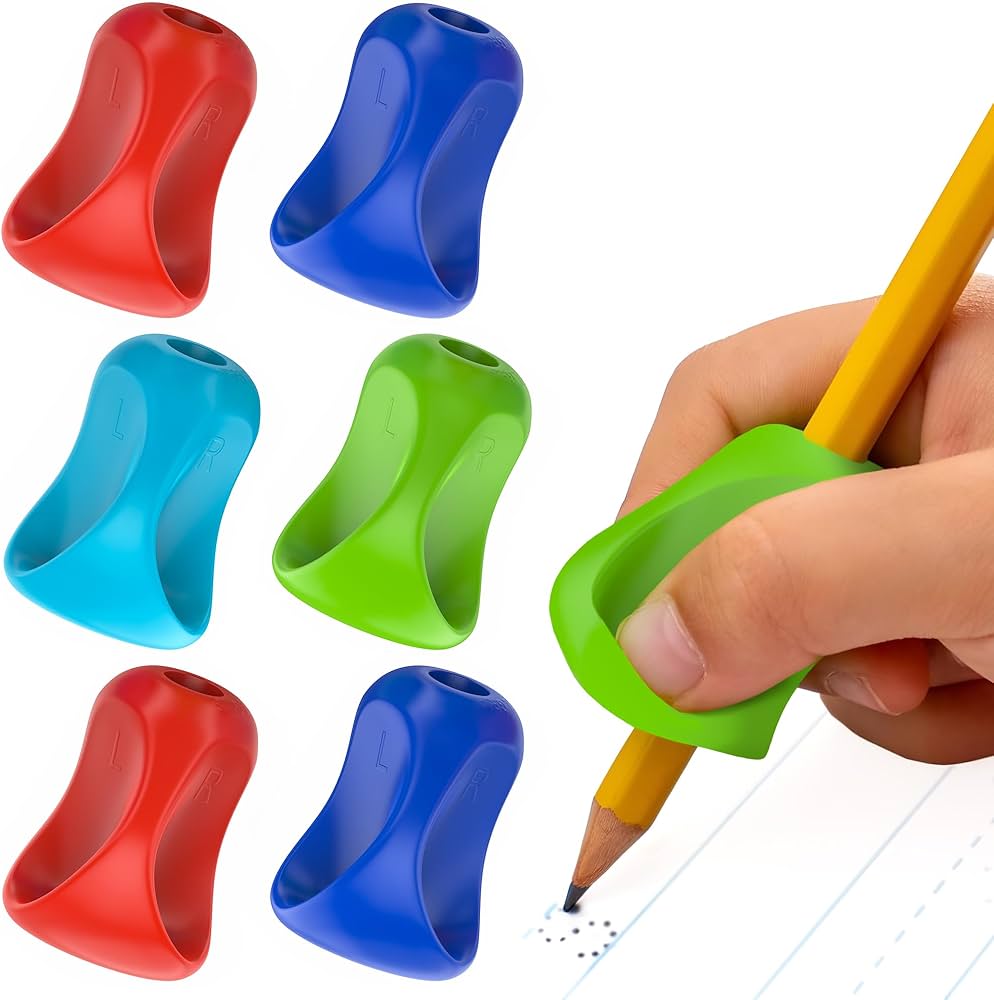
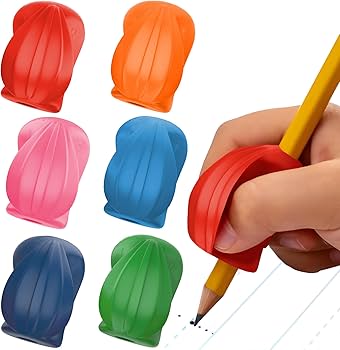
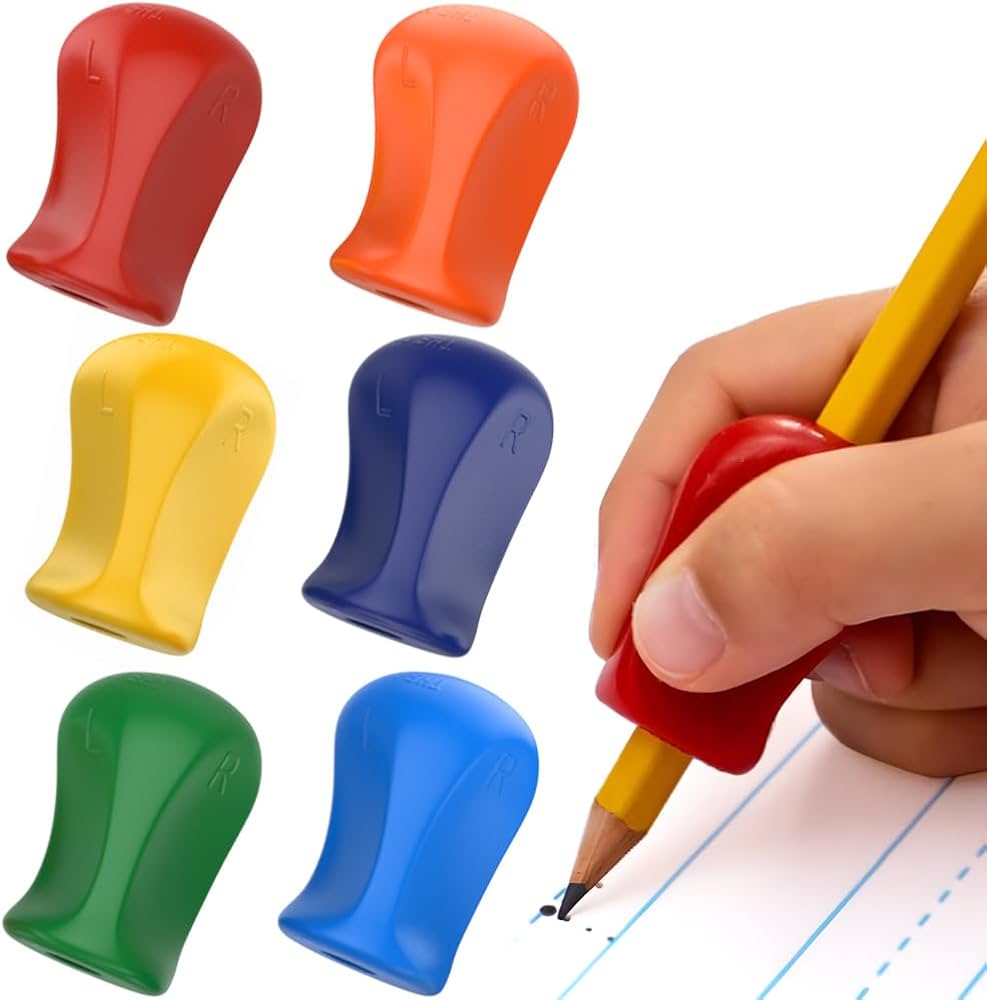
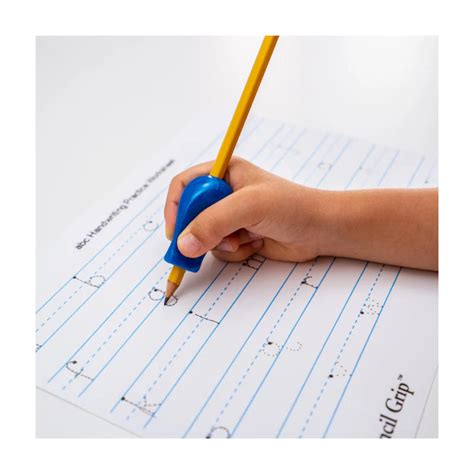
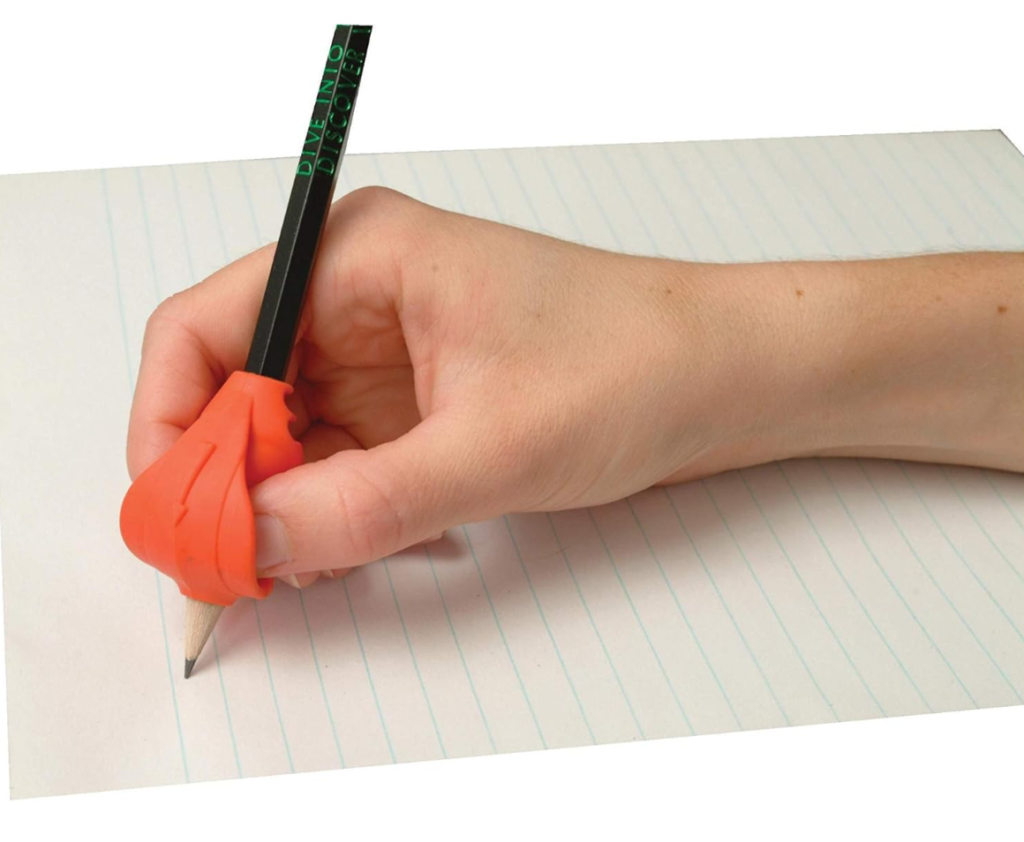
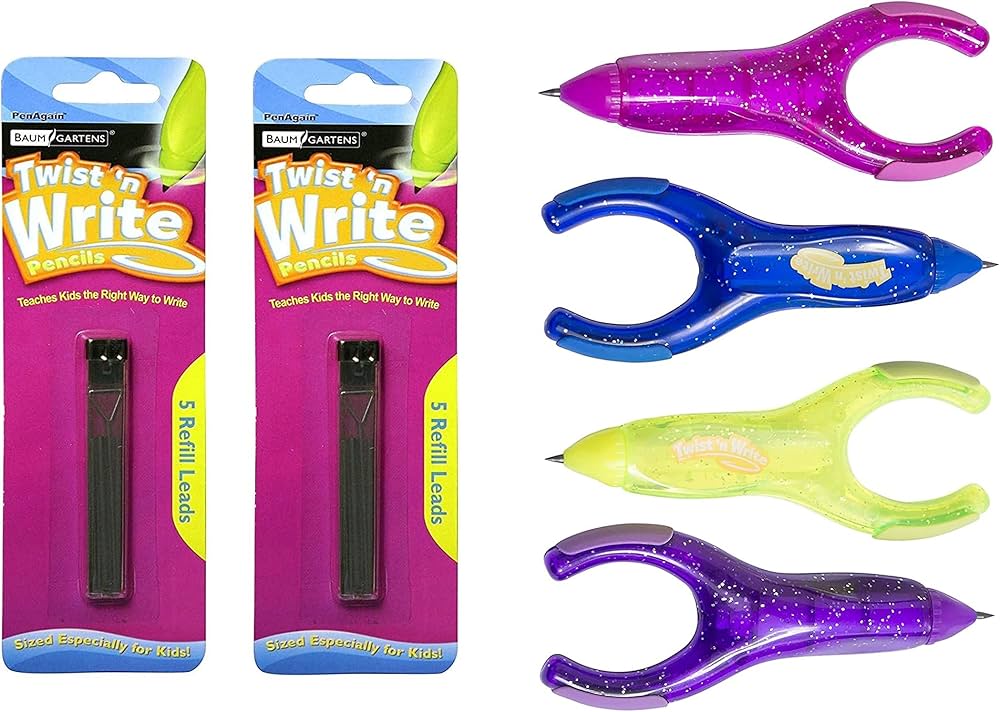
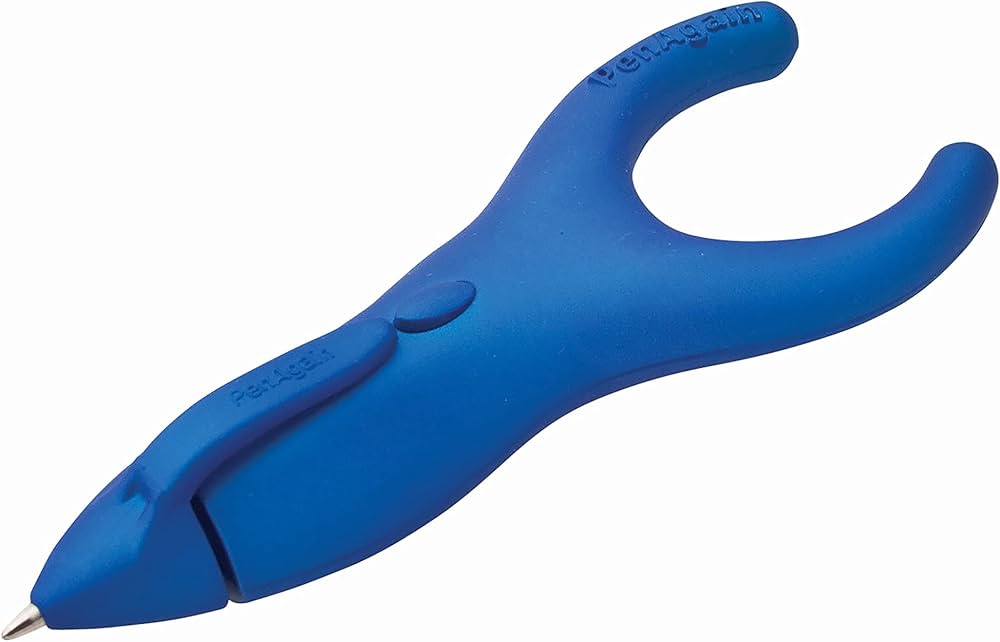
I’ve spent the last year testing out pencil grips and handwriting supports for myself and my neurodivergent child. I started with those egg shaped grips above and found they weren’t helpful at all.
Here are my favorites and the pros and cons of each choice.
The following are affiliate links. I bought these at Amazon so I was able to test and return the grips that didn’t work for me. I wrote more about why Amazon can be essential for some disabled, chronically ill, and neurodivergent people here.
P.S. After writing this post YouTube showed me this video of Taylor Swift using an alternative tripod grip because of hypermobile hands. Maybe I’ll try it out!
Are you new here?
You can see more of my posts about neurodivergence here. I’m newly diagnosed with hEDS, MCAS & POTS and will be sharing resources as I find them. The best way to keep in touch is my email newsletter or subscribing to my blog via RSS.
FOOTNOTES
* I found this after the video and ordered it for further testing. I’m looking for a supportive pen that takes normal size pen refills. If you have a favorite let me know!
That was Amazon Web Services being down. Shop elsewhere if you can, but our household budgets are a drop in the bucket for Amazon. They are raking in money selling cloud computing services to corporate businesses.
If you truly wanted to boycott Amazon you’d have to abstain from a huge swathe of the Internet.
Shopping online is accessible.
I’ve talked to so many chronically ill, disabled, and neurodivergent people who feel guilty about using Amazon.
Here are some of the reasons they may need to shop online.
They experience sensory overload in busy shops.
They experience chronic pain.
They have limited capacity and shopping is too draining.
They have compromised immune systems.
They have children who meltdown after shopping.
They need specific supports that are not available locally.
In cases like these, shopping online can be a necessary support tool.
Why Amazon?
Just because I link to Amazon doesn’t mean you have to shop there.
If you have the capacity and financial privilege to shop elsewhere you can easily take the time to find other places to source the products mentioned.
When I link to Amazon I’m just sharing where I bought the product. (I may also link to Bookshop.org or Libro.fm.) I also know that many disabled, chronically ill, and neurodivergent people are under or unemployed. And Amazon almost always offers the best savings for a price conscious shopper.
Especially for those with access to Prime shipping.
Free returns & exchanges
Buying a fidget, or a pencil grip, or a sleeping compression pod isn’t like buying a book. You sometimes need to feel the texture, to hold it, or to try it on for size before you know if it will meet your need.
Most sellers on Amazon have very flexible return policies.
When I tested the pencil grips for the video I’m making I was able to return the grips that won’t work for me—even though the packages have been used. Amazon will then sell these grips to someone at a discounted rate.
The Pencil Grip website not only charges the customer for return shipping, but will not accept any packs of grips that have been opened & tested.
As a small business owner, I understand. But as someone trying to find the right support tool without spending over $100 on pencil grips I’m thankful for the option to make easy returns. ***
It’s not all or nothing.
For certain purchases I may choose not to shop at Amazon. Here are reasons I may choose to shop elsewhere.
To shop secondhand.
To buy directly from an artist.
To support a small business.
To buy from good.store which donates 100% of profits to charity.
To support local bookstores—in person or online through Bookshop.org (for books or ebooks) or Libro.fm (for audiobooks).
There are many ways to resist.
I may not be able to quit Amazon. But, there are other ways I resist.
All of my books have free versions available to those experiencing financial hardship. (This will continue with How it Feels to Me. We are working on creating a professionally narrated video version free to all.)
Books sold through my web shop are author copies and Amazon does not get a cut of the profits! (Additionally, How it Feels to Me hardcovers are printed by Mixam and not sold through Amazon at all!)
We should stop expecting everyone to be perfect.
It’s easy to get fixated on where to shop and forget other important ways you can advocate for causes you care about. Instead of judging folks for shopping at Amazon, ask what positive action you can take.
Let’s stop wasting energy bickering with each other.
/ rant
Thanks for listening. I appreciate you.
If you’re also a begrudging Amazon shopper I hope you feel less alone. Guilt and shame are toxic and help no one. We’re all doing our best out here.
Cheers,
FOOTNOTES
* This is hyperbole. AWS is not the WHOLE internet, but is a huge portion of it.
** I left my own position as a university instructor last year for health reasons. I do write & sell books, but currently my creative projects are breaking even and not making a profit.
*** I recognize that making returns can be difficult and is not accessible for everyone. I’m really lucky to have a partner who takes care of most of the returns for our family.
**** Yes. I used an em dash in this post. I never use AI, but I have been picking up some tips from my books’ (incredibly patient) copy editor.