I’m back this week with an update on the picture book How it Feels to Me. This is a book about neurodivergence and sensory processing I’m co-creating with illustrator Gracie Klumpp.
It’s fully crowdfunded and coming out later this year!
Last year we ran into some challenges due to substandard quality of our first proof. Ultimately we had to explore alternatives and change printers. Every printer offered slightly different “trim” sizes which meant this process delayed finalizing the illustrations.
Now that we’ve chosen a printer we’re back on track and the illustrations are nearly complete. Later this month we’ll order the next proof and send the text to our copy editor and beta readers!
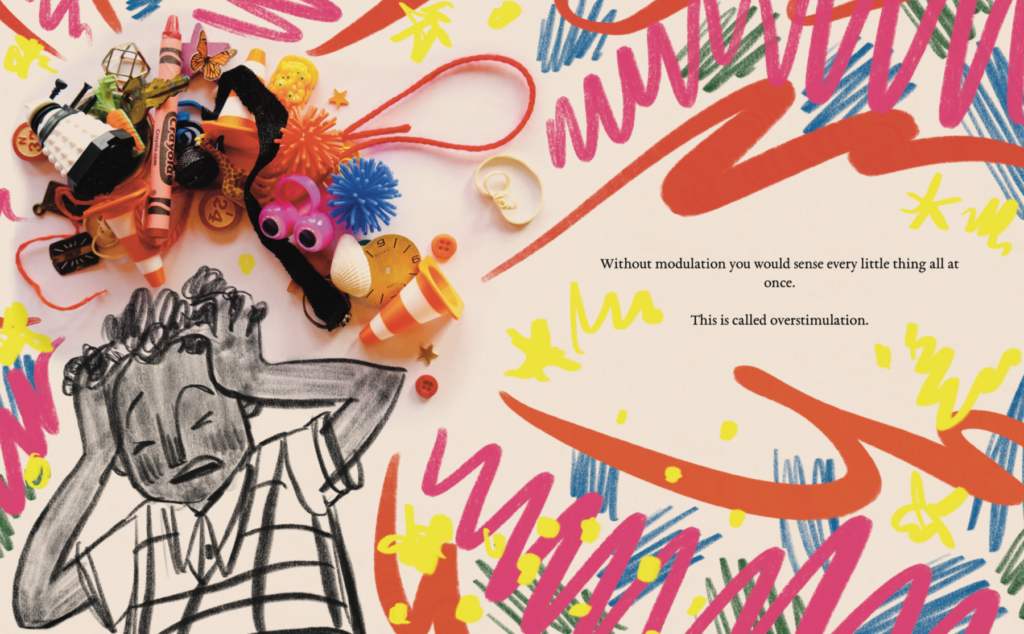
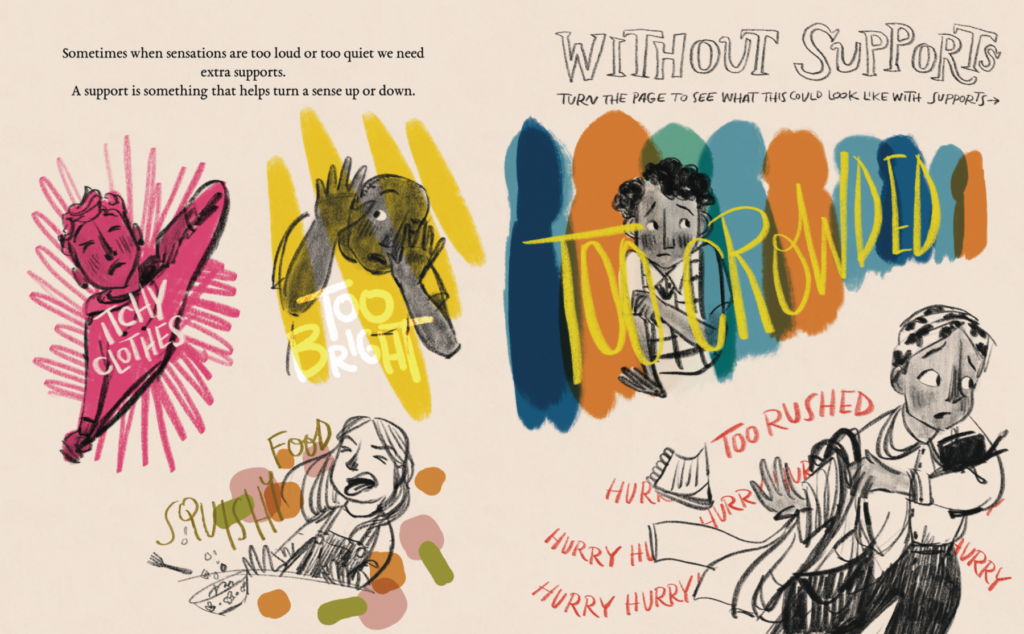
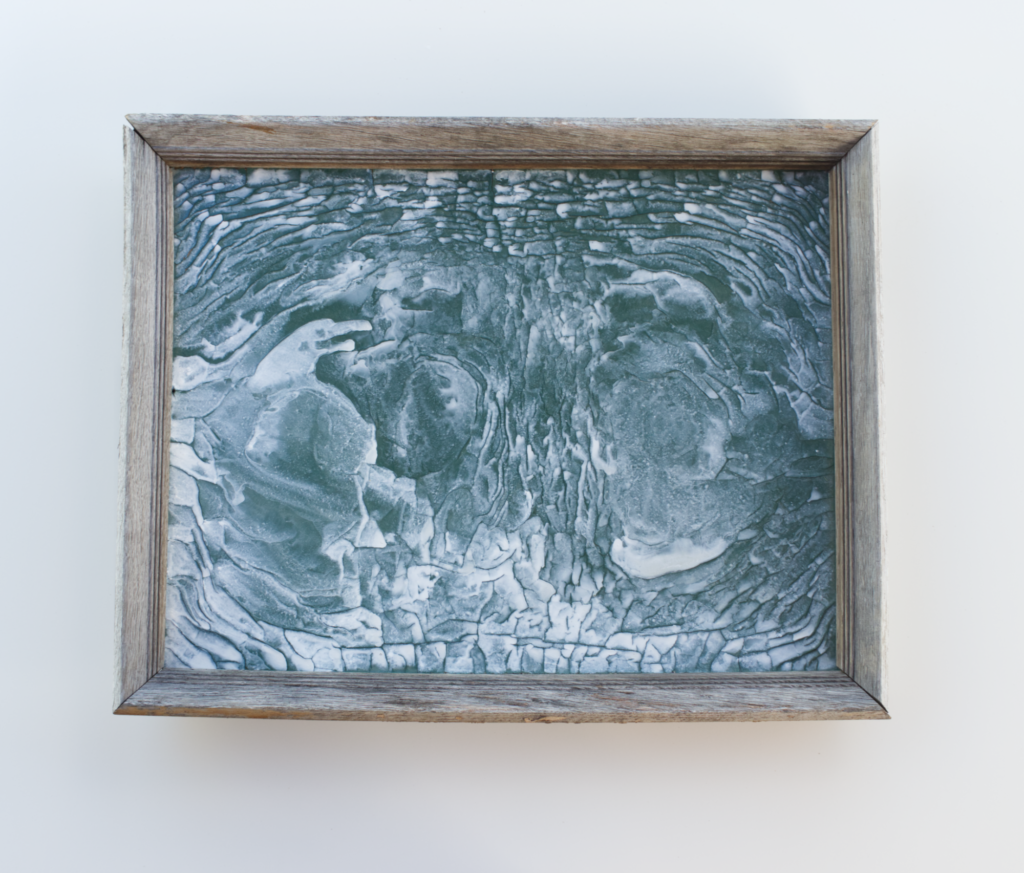
Here’s a peek to share how it’s coming along…
It’s completely magical to see my words come to life in this way!
Gracie’s using a cool combination of illustrated and photographed elements to visualize the concepts in this book.
We both see this as the book we wish we’d had as kids and hope it will help autistic and neurodivergent folks of all ages!
We’re running a little over budget (because of rising costs and changing printers).
If you’d like to help us bridge the financial deficit you can do so here.
My neurodivergent experience includes time blindness, which is magnified when working on a creative project and reaching flow state. This has some benefits, but one downside is that I have no idea how much time I’m sinking into individual projects.
UPDATE: After writing this one of you kindly sent me the EARLY time tracker app which does almost the same thing with much less friction. I’ve been playing with it for January and honestly it will save a ton of time that I spent tinkering with spreadsheets. (Thanks Katie!)
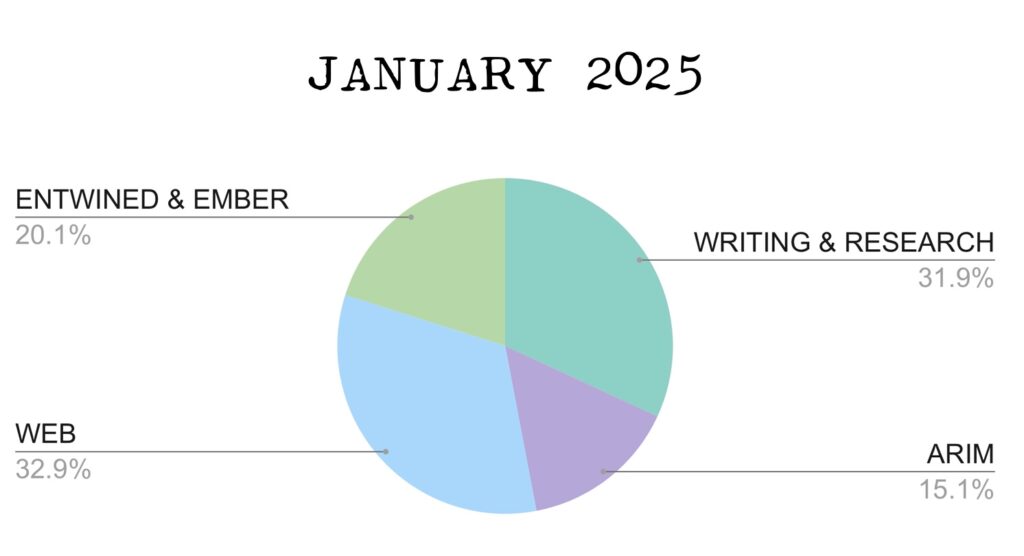
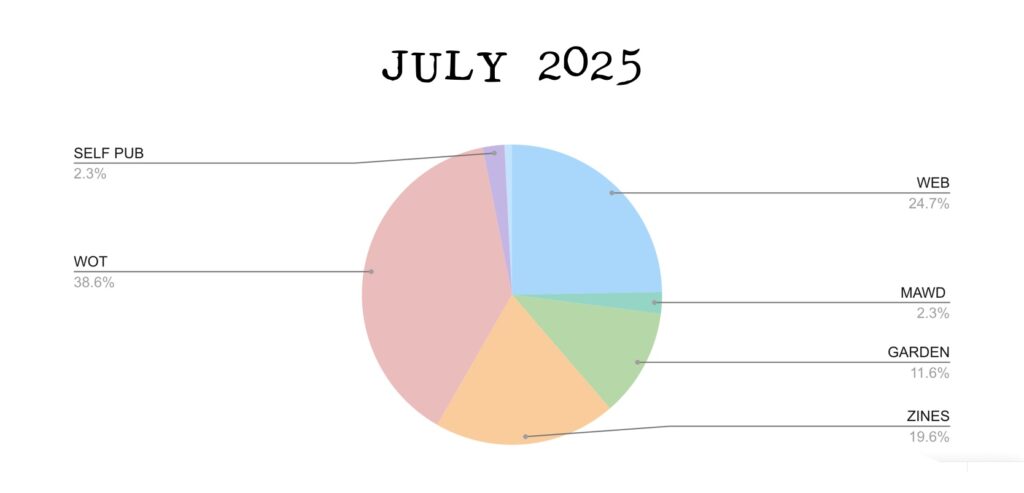
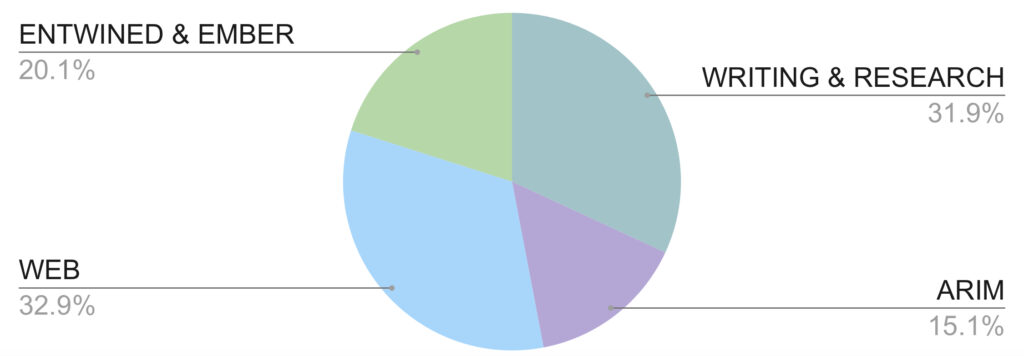
Spoiler alert, my pie chart has become a north star for my creative process.
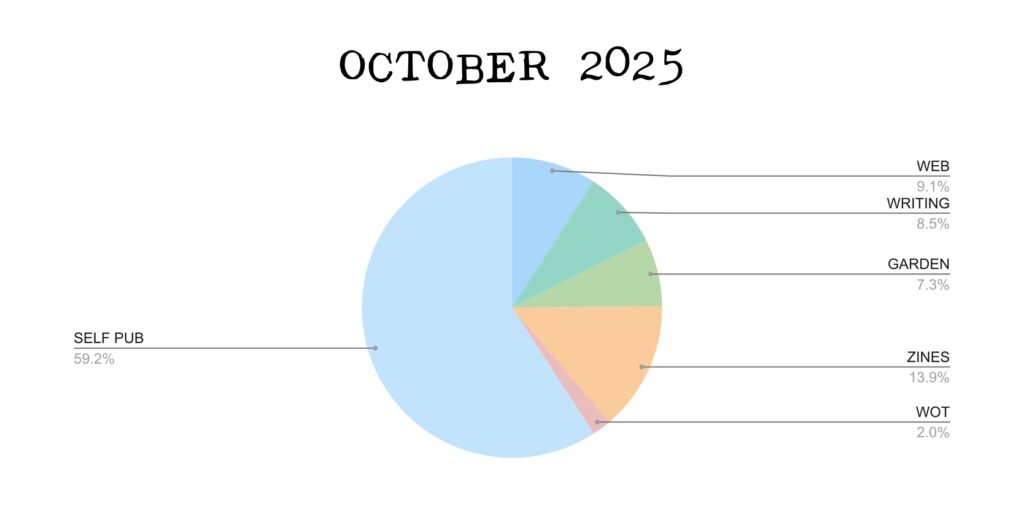
My January spreadsheet started out by tracking writing and self publishing time like I do during NaNoWriMo. (Which is why zines don’t show up below.) When I reached days that I didn’t write because I was making visual art I added more columns.
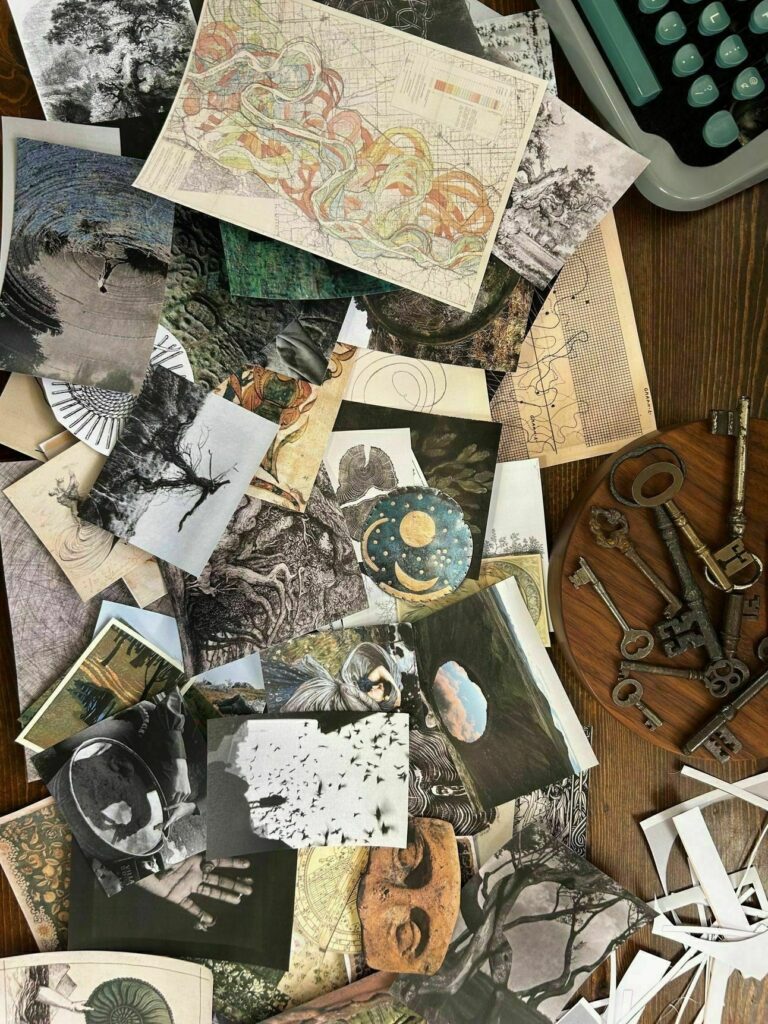
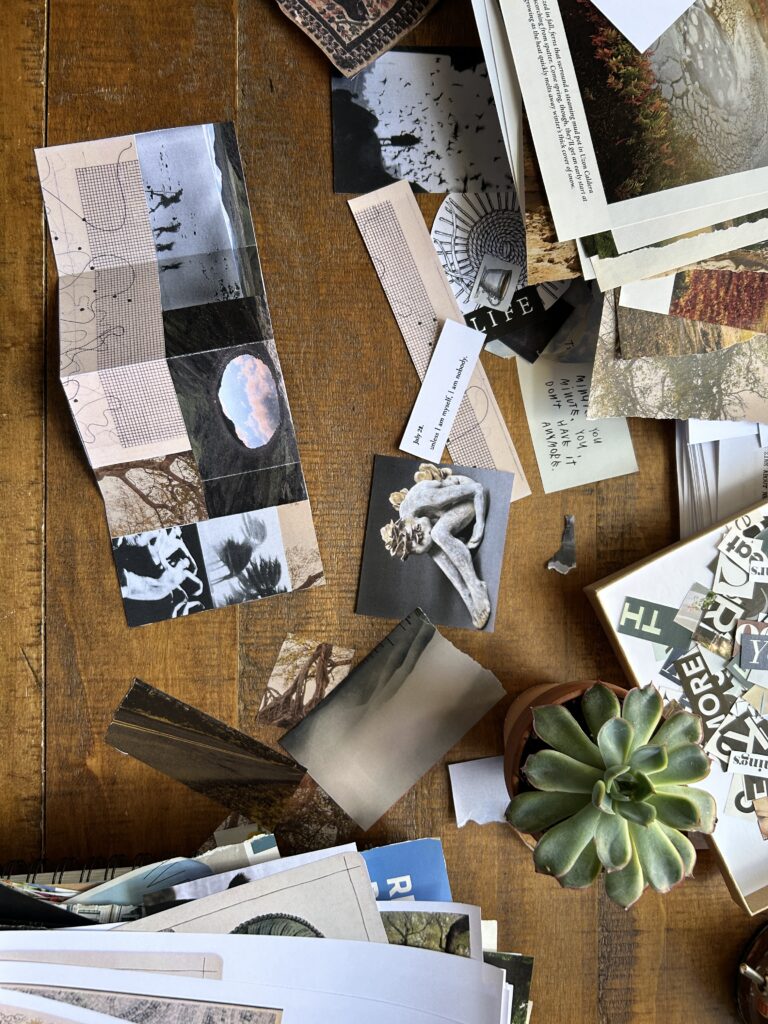
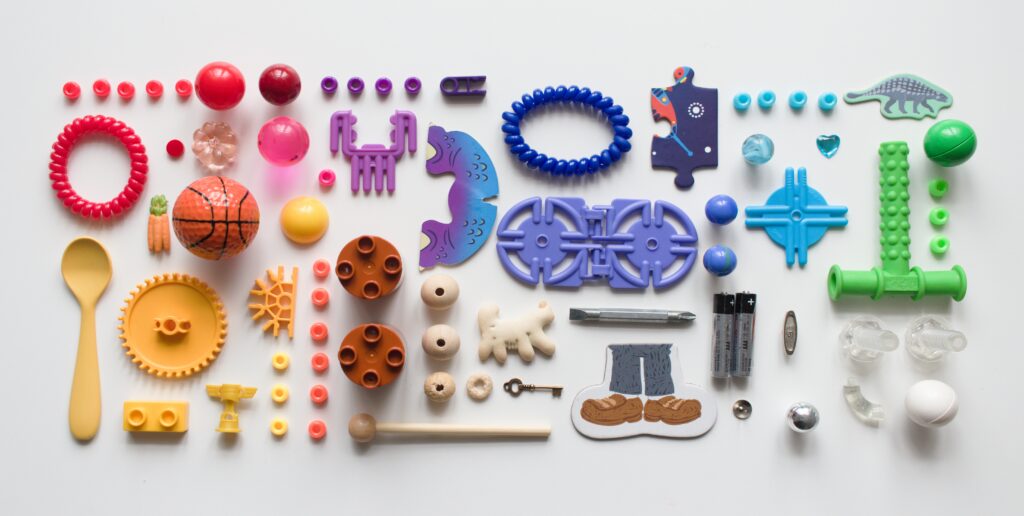
I can guarantee this pie would be almost all admin if I had not seen how big those wedges were and made the choice to dedicate more time to personal projects. Like my Artist’s Residency in Motherhood (ARIM) and my fantasy novel which I made a mood board for.
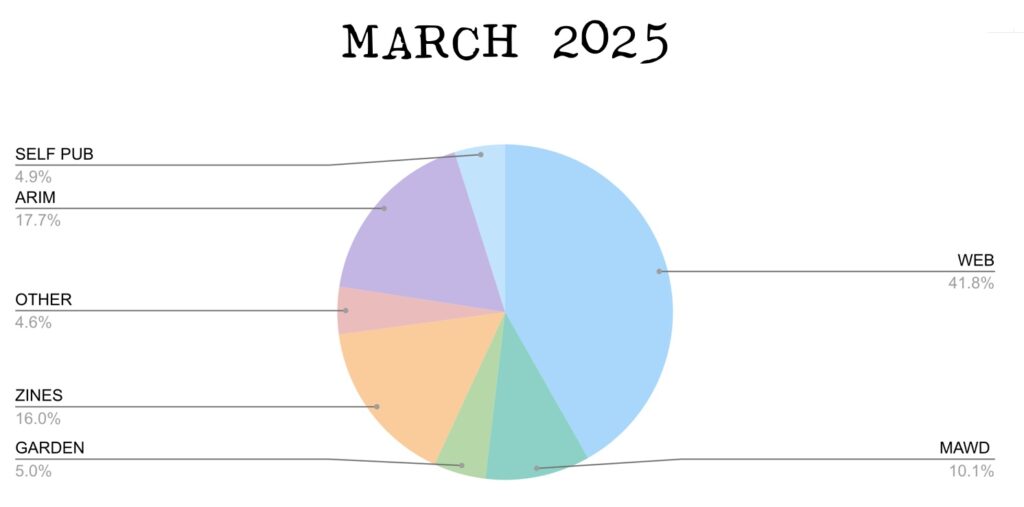
When I saw how powerful this was I realized I wanted to track all of my creative projects this way. So you’ll see more categories moving forward including Mawd which is a working title for my novel.
At the same I time I decided to migrate and completely redesign my website. Needless to say these were not the most balanced months, but I feel strongly about using this data to course correct and not to judge myself.
With that in mind, I fully believe this awareness did keep the web design wedge from completely taking over the circle. And I managed to carve out nearly a quarter of my time to zine making.
I was still deep in the weeds of web design during March, but I knew I couldn’t continue the pace. I was noticing screen induced migraines and trying to spent more time on other projects. I also added a column for gardening.
By April I realized my dream of republishing all of my blog posts within a single year was not healthy. I’ve archived everything, but I use so many images and videos that simply importing them didn’t work and everything has to be reformatted by hand. I’m not sure when or if I’ll ever move everything. So I decided to focus on any blog posts I wanted to link to and have been moving those.
This freed up a lot of time for various projects. The big pink wedge is work on my gleeman’s cloak to prepare for meeting Sharon Gilham, the costume designer for the Wheel of Time.
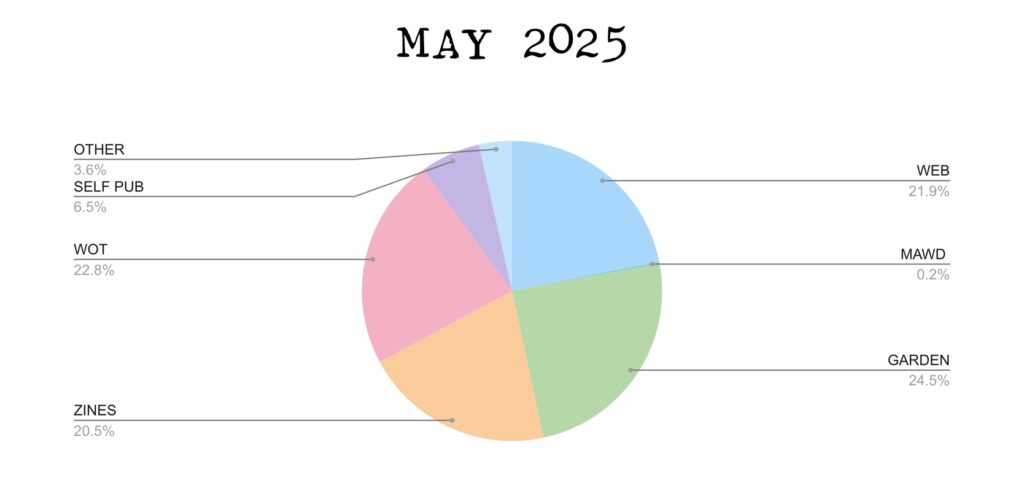
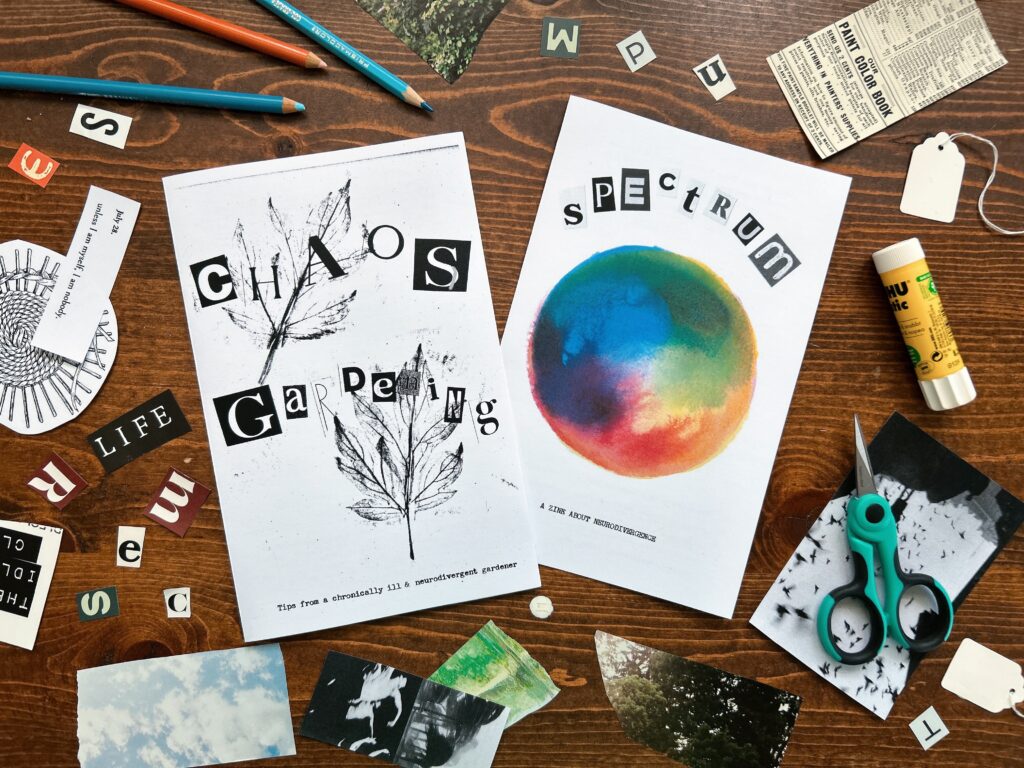
May was incredibly balanced looking back. The weather was nice so we spent plenty of time outside. I made a zine about Chaos Gardening. Chipped away at my website. And kept working on my cloak.
You can see the wedge for self publishing where I was ordering proofs from various printers (the very definition of “hurry up and wait.”)
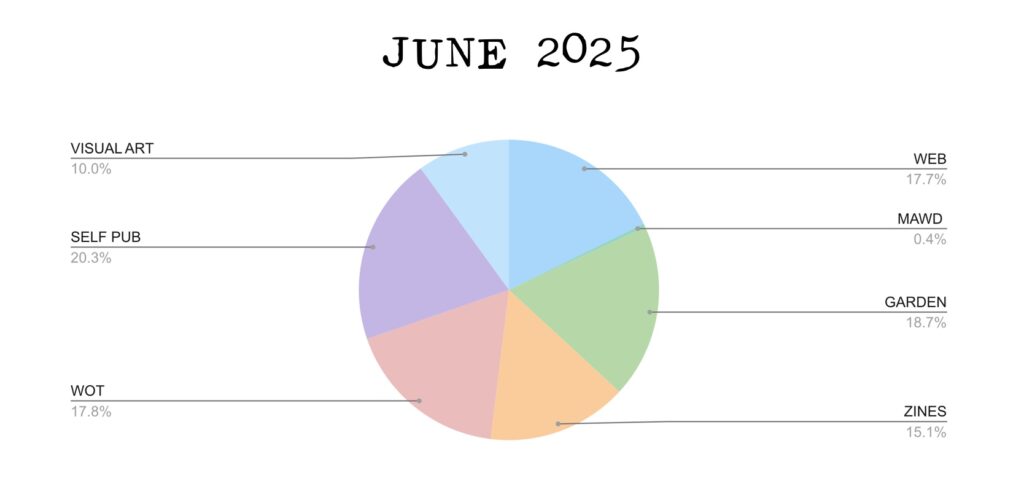
This wedge is even more well balanced than May!
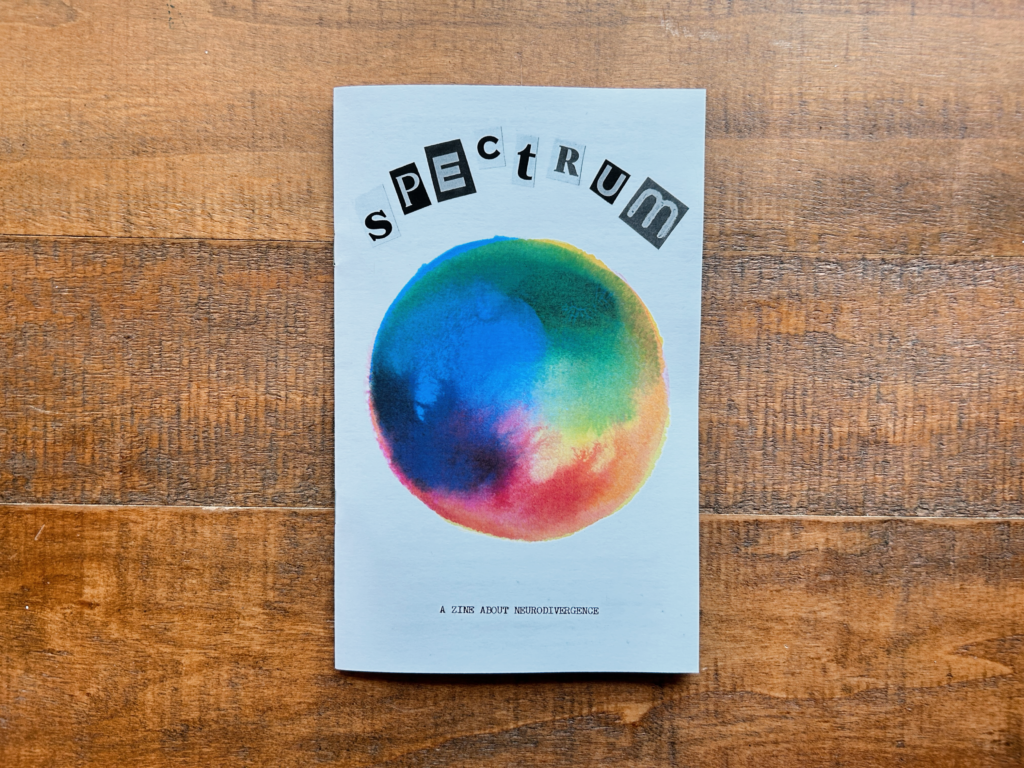
Almost a full color wheel which is funny considering June’s zine was Spectrum.
I’m now in a place where I see these kind of projects as essential to both my creative process and my mental health.
This reset over the summer (when my energy is the lowest) was key to being able to self publish Entwined & Ember without burning out.
Moving into August I was designing a lot of visual schedules and modular calendar elements for home education. I also started sinking some serious time into Entwined & Ember working alongside our copy editor. But I still reserved over 25% of the pie for other projects including zine making and gardening.
I spent a huge amount of time making zines I did not sell at NWA Maker’s Faire (which I blogged about here.) It was mostly a great experience, but also exhausting. I pretty much crashed directly after even though it was only half a day.
I keep wanting to attend more events, but when I do I’m reminded how hard they are on my autistic nervous system and chronically ill body. I don’t think I could manage a full day event – much less a whole weekend.
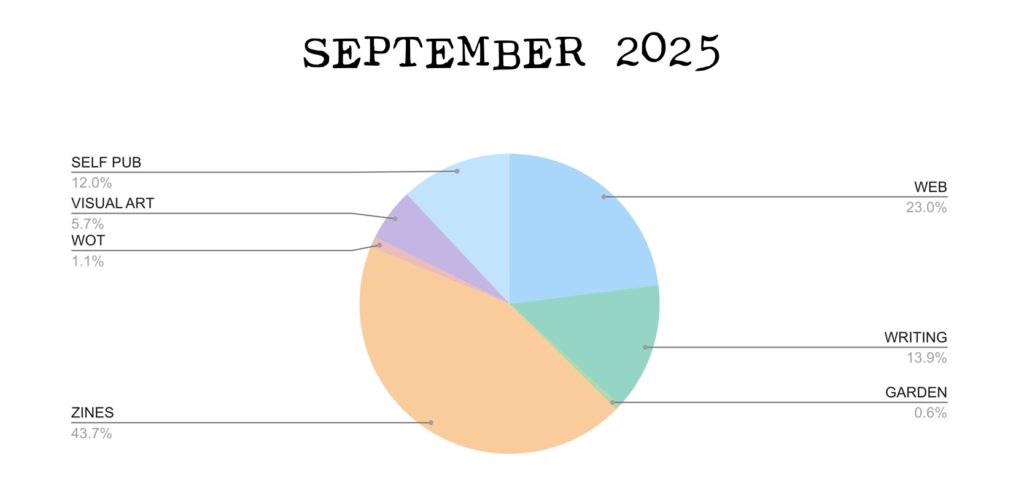
Suddenly Entwined & Ember were in final edits. Past years this would have been all encompassing, but you can still see 40% of my time put into other things: zines, gardening, blogging, even a bit of ideation for my novel (which was definitely a back burner project this year.)
Launch month! Some of this was final proofing and the rest was fulfilling orders. I balanced the admin with zine making and two Wheel of Time related projects.
When I started this anthology and art journal I had no idea how much energy they would take. I truly wish I’d tracked my hours since the beginning.
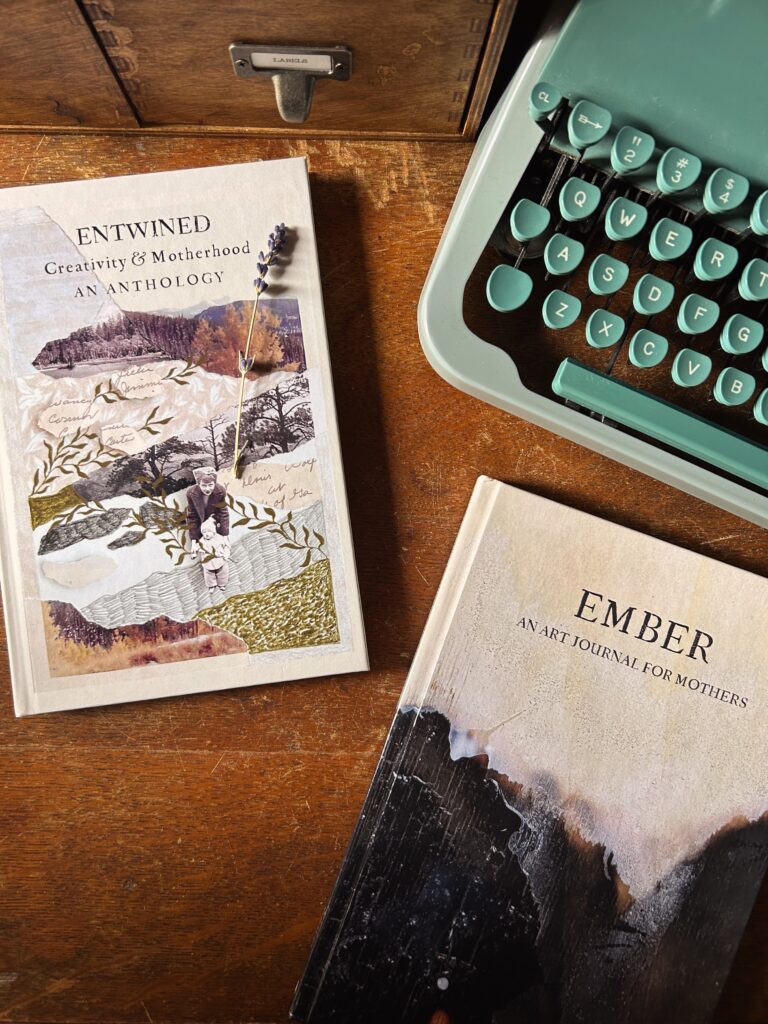
If you somehow missed book launch Entwined & Ember are now available worldwide in hardcover and paperback. As well as free community copies to anyone experiencing financial hardship.
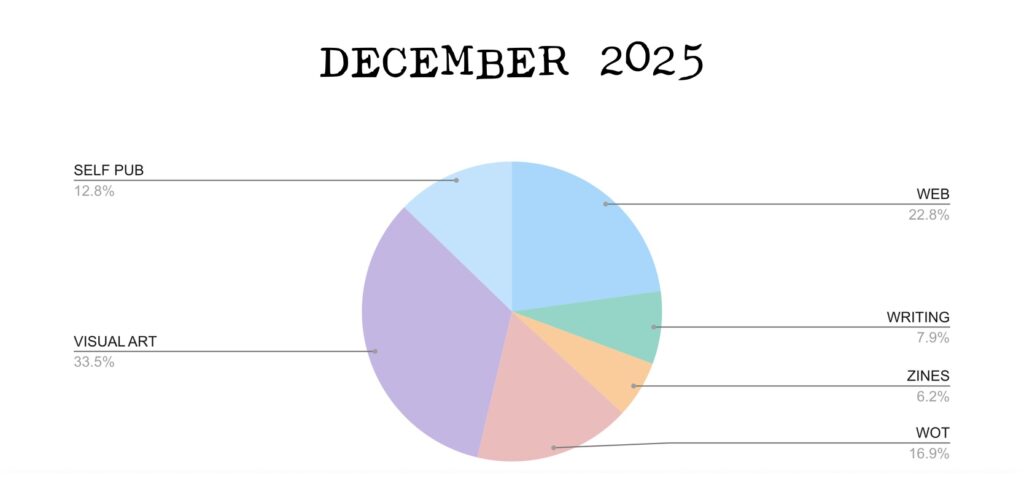
I’m typing this on December 29, but I’ve estimated the time I’ll put in the next couple of days. (I’m getting much better at realizing how long things take.) The biggest wedge this month is actually visual art! Which is something I haven’t had much capacity for this year.
I’m actually working on diagram of my creative process based on this data for ILSSA’s open call. It’s inspired by a meander map showing the ebb and flow of various projects through the year. I’m still in the experimental phases, but if all goes well this will be the next art print for subscribers.
What’s next?
We recently decided on a printer for the limited edition hardcovers of How it Feels to Me – a picture book about neurodivergence and sensory processing I’m creating with illustrator Gracie Klumpp.
We’re a little behind schedule (due to the print quality issues), but are aiming to release the book next Spring!
Here’s a peek.
I’m not a spreadsheet wizard, but if you’d like to take a look at my Artist Log template and copy it for yourself you can see it here. If you’re fiddling around with it I recommend typing in numbers to make sure everything is adding up correctly. I changed mine every month so this isn’t really a template as much as a working model you can make your own.
If your creative process was a pie chart (or another shape) what would it be?
Cheers,
P.S. I “should” proofread this, but it’s nearly 1 am and I’m nearing migraine trigger territory. I may come back or I may not. Honestly, there are more important ways to spend my time this week. 💫
A few years ago I wrote a post about neurodivergent boundaries. I had the idea to type it up into a zine and ended up completely re-writing it. I’m making this one available as a digital download. Feel free to print copies and give them away (just don’t charge for them.)
When we talk about autism or neurodivergence we often mention a spectrum. Sometimes this is misunderstood as a range of intensity from “more” to “less.”
But you cannot be “more” or “less” autistic or neurodivergent.
The spectrum is better represented by a color wheel.*
The spectrum is a reminder that every neurodivergent person is unique. Each color represents a neurodivergent trait: differences in sensory processing, language, socializing, focus, etc.
But even the color wheel is too static.
This is my attempt to illustrate the complexity and nuance of the spectrum of autism and neurodivergence.
For example, sometimes a person is described as sensory seeking or sensory avoidant.
Opposites on the color wheel.
But most of us are both.
Here is an example from my own spectrum. I experience water in my face as overstimulation… a sensation that, for me, is worse than physical pain. My nervous system completely floods with sensory input and enters a state of distress.
On the other hand, in the context of a warm bath I am “sensory seeking”. The feeling of being (almost) submerged in warm water calms my nervous system and helps me self regulate.
This is the same element.
Water.
But my internal experience is vastly different depending on the context. Supporting this sensitivity includes baths over showers, no sprinklers, pool splashing, or going underwater. When I interact with water on my own terms I find it deeply regulating and soothing.
Then we have a trait like focus. ADHD is often perceived as a deficit in the ability to focus (it’s right there in the name), but both people with autism and ADHD can experience hyperfocus.
This circle represents my hyperfocus.
I often enter hyperfocus when I am in creative flow or engaged with topics I am passionate about. Yet, I cannot reach hyperfocus without the necessary environment or supports.
This circle represents my difficulty focusing.
My ideal environment for focus is quiet and solitude. (For others it could be music and company… or body doubling.)
When I don’t have that I need supports like: a swivel chair for stimming, noise cancelling headphones, and more time. Because without access to hyperfocus I have to accept that tasks take more time. I can also become dysregulated by working in an overstimulating environment.
The spectrum becomes infinitely more complex when different traits overlap and intersect.
Not only is every neurodivergent human unique, but our spectrums may present differently from day to day and moment to moment, based on a variety of internal and external factors.
Some spectrums of neurodivergence may not fit the criteria for a diagnosis, but that does not make them any less valid.
Our world is technicolor.
Let’s stop imagining it as black and white.
Grab some art supplies and reflect on neurodiversity as you play with color. If you are neurodivergent what colors would you assign each of your traits? If you’re neurotypical how can you use this framework to support the spectrums in your life?
Love snail mail?
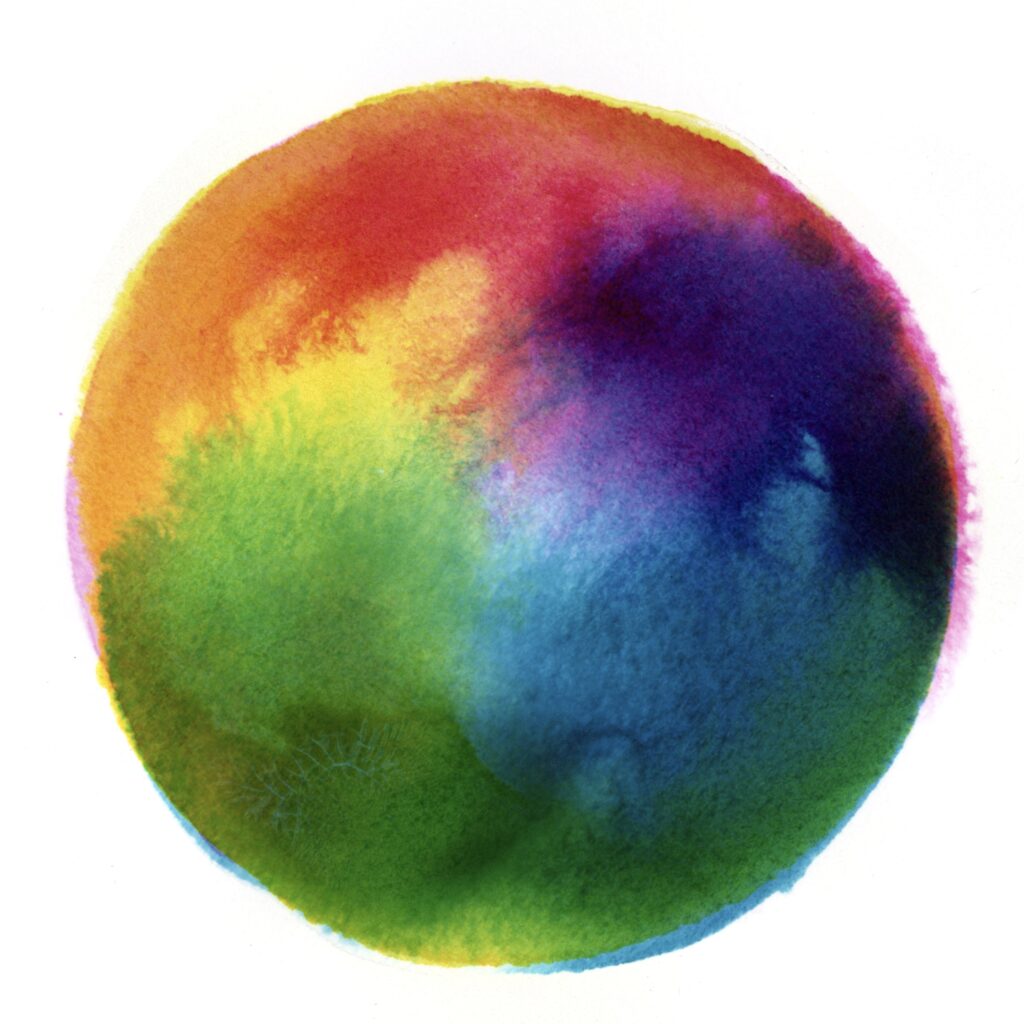
These watercolor washes were originally created for the Spectrum zine for my monthly subscribers. If you’d like a printed copy you can:
This resource library focuses on autism, ADHD, and hypersensitivity as these are my lived experience.* This area of research has been a passion of mine for nearly a decade. I’ll do my best to organize things so you can find what is helpful to you.
Hi, I’m Sarah Shotts. A late diagnosed autistic adult, author, artist, home educator, and erstwhile academic. Over the last several years I’ve been doing self directed research and collecting resources to better understand myself and my neurodivergent family. To learn more about me and my work click here.
Choose your adventure.
resources FOR PARENTSresources for autistic adults
What is Overstimulation?
I made this video to share my experience of overstimulation.
I also find that my autistic traits are almost always rooted in sensory differences. So this a helpful place to start when discussing autism. Overstimulation can also be experienced by ADHDers.
When we talk about autism or neurodivergence we often mention a spectrum. Sometimes this is misunderstood as a range of intensity from “more” to “less.” But you cannot be “more” or “less” autistic or neurodivergent.
I made a zine to illustrate the complexity and nuance of being “on the spectrum.” You can read it here.
How it Feels to Me
You may also enjoy the picture book I’m co-creating with an autistic illustrator Gracie Klumpp. How it Feels to Me is an introduction to sensory processing for readers of all ages.
FOOTNOTES
* I have been professionally diagnosed with autism, but also have traits of ADHD such as time blindness and difficulties with object constancy. Having knowledge of these traits and functional coping strategies I have no interest in pursuing an ADHD diagnosis at this time.
Unfortunately, this book is needed more than ever.
Harmful information is being spread by the US government categorizing autism and ADHD as epidemics. Neurodiversity is not a broken brain! It is a brain that experiences the world differently and this picture book shows how.
If you’d like to support the project you can preorder or donate a copy to a school, library, or a neurodivergent family in financial hardship.**
If you missed my last email I wrote a post called What is Autism? that breaks down sensory processing and autistic differences.
The brain on the left is autistic. we process a lot more information in any given moment.
I end the post with this footnote,
“Being neurotypical just means that your brain is processing the world like most others. This means the dominant culture has been made to support the way your brain processes the world around you. You are surrounded by supports for your neurotype every single day.”
This is a concept I’d like to explore further. It really turns the idea of supports on it’s head.
I’ve come to the conclusion I need to free up some mental capacity to really delve into this world in the way that’s needed. Turns out proofing three separate books for self publishing is kind of a lot. I’m being patient with myself. There’s no rush on this.
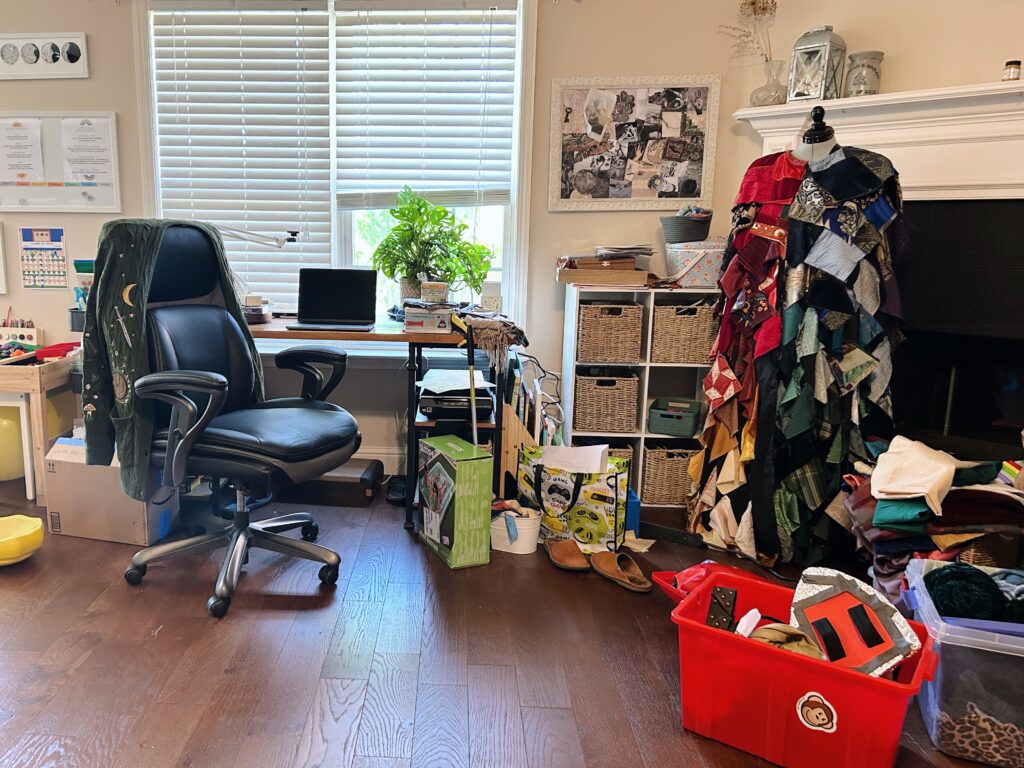
Here’s a peek at my writing workspace.
I set this up in the living room when it was too cold to be in the studio (and soon it will be too hot.) It turns out that extreme heat and cold trigger migraines so I’m afraid I am a fair weather studio artist. Accepting that my body needs what it needs means making spaces that work for me.
If you’re reading this in your email inbox you can just hit reply to message me directly. I’d love to hear what you think. It makes it worth the time I put in.
Thanks for being here.
I appreciate you.
FOOTNOTES
* I’m no longer digitizing zines. Due to chronic migraines I’m attempting to cut down on screentime. I wrote a bit about that here.
† What is a microblog? Basically a social media style blog feed that I archive on my own site. I’m working on setting this up to autopost to Bluesky. I call my microblog scraps – evoking both a scrapbook or commonplace book and also the bits of kitchen scrap that end up in the compost heap.
** If you donate a book we are happy to find the book a home or to send it to the school or library of your choice.
Here’s an update, on How it Feels to Me, the picture book about neurodiversity I’m co-creating with illustrator Gracie Klumpp.
We’ve reached the proofing stage!
I couldn’t be more excited to share a peek our progress!
Before finalizing color palettes and fonts we decided to order an early proof to see how everything looks on paper. Something I’ve learned about self publishing is that early proofs can really help save time by identifying problems early on before they multiply.
Gracie put together a few spreads to test colors, fonts, and print quality. (Pinch & zoom to really get a good look on mobile.)
Lucky we did because we’ve completely changed our printer! (But more about that later.)
Here’s a really fun spread we’re experimenting with.
This is a visualization of sensory modulation that invites the reader to turn the book upside down to see how the levels change.
The next spread continues on from the first page, “All brains are different.”
“Just like all bodies are different.
We can see some differences, like if someone is tall or has curly hair, but we can’t see people’s brains.”
Here’s one more peek at some of the character work Gracie has been doing. I love seeing the concepts I’ve written about come to life!
These aren’t even finalized illustrations, but I’m already in love.
Two days before my birthday I opened a box to find this beauty inside…
Holding the proof in my hands was absolutely magical. It’s real. We are making this book.
And (unfortunately) it’s more needed than ever.*
Imagine my surprise when I opened the cover found someone else’s book inside.
The first 2/3 of the proof were pages from a completely different picture book. 🤯
I immediately texted Gracie to check the second proof. It had a completely different (but equally egregious) error. That edition had a huge white bar down the center.
The way this printer works these books were considered “final” and not “proofs.” †
Needless to say we are investigating different printers.
The quality will be excellent. We’re very happy with the sample book they provided.
But, the books are going to cost more than we budgeted. We haven’t finalized how much this will be yet. 48 Hour Books just invested in new printers and updated prices aren’t out yet. But the difference is considerable.
We’ll also be required to purchase a full print run (with a minimum of 100 books) rather than print on demand. This is the only way for the price of each book to come even close to our original budget.
There’s also the small matter that each proof will now be $40 instead of the budgeted $20. But this price difference ensures books (and proofs) are made with care.
I’m prepared (and able) to cover the difference in cost, but if you’d like to pitch in you can send donations via Venmo. I’ll share more concrete information about the pricing differences once we have that.
Is this the first time you’ve heard about How it Feels to Me?
Here’s a video from our crowdfunding campaign sharing the inspiration behind the book and our goals for self publishing.
If you haven’t preordered a copy yet you can preorder here.
Changing printers will definitely extend our timeline.
But we’re confident it will be worth the wait.
While we wait for 48 Hour Books to update their printers Gracie will continue refining the illustrations. Allowing me bandwidth to focus on proofs for Entwined & Ember (this is a big year for me!)
THANK YOU SO MUCH, each and every one of you, for all the ways you’ve supported this project!
We appreciate you.
P.S. If you’d like to support the project and don’t need a copy of the book you can also choose to donate a copy which will go to a school, library, or a neurodivergent family in financial hardship.**
* The US Government has recently categorized autism and ADHD as “epidemics” and is spreading harmful misinformation. I addressed it briefly in my new post titled, What is Autism?
† The printer was Ingram Spark, for the curious. We’d already dismissed Amazon for the hardcover edition. (Although we plan to release a paperback through Amazon later on to make the book as easy to find and accessible as possible.)
** If you donate a book we are happy to find the book a home or to send it to the school or library of your choice.
Hi! I’m Sarah. A late diagnosed autistic adult. I’m an author, artist, home educator, and former academic. You can learn more about me and my work here. This post is my introduction to autism and neurodivergence. It is based on self directed research and my own lived experience.
What is neurodivergence?
The word neurodivergence is made of two parts. Neuro meaning brain. And divergence meaning to differ. Neurodivergence means that your brain processes the world differently.
Every human is unique, but most brains have certain things in common.
Neurodivergent folks experience the world differently. Our brains are processing information in different ways. There are lots of types of neurodivergence including dyslexia, dyscalculia, synesthesia, OCD, dyspraxia, etc. Each with specific ways the brain differs from most people.
My lived experience is centered on autism and sensory processing differences so I’m going to focus on these. But there is overlap with other types of neurodivergence (particularly ADHD.)*
Autism is a spectrum.
The most important thing to understand about autism (and more broadly neurodivergence) is that every person is unique.
There isn’t one way to be autistic. There is a spectrum of experience.
This isn’t a rainbow from “less autistic” to “more autistic”.
via autism_sketches on instagram †
In my experience it is more like a color wheel that’s constantly in motion.
via felipe Pantone on INSTAGRAM ‡
The reason I describe the autism spectrum as in motion or flux is that my experience varies wildly based on external and internal factors (environment, clothing, health, access to supports, hunger, anxiety, etc.) This means my capacity varies from day to day and moment to moment.
I also find that my autistic traits are almost always rooted in sensory differences. So this a helpful place to start. I made this video to share my experience of overstimulation. (There’s also a shorter 30 second version here.)
That’s how it feels (for me) to experience sensory overload or overstimulation. The internal sensation can range from something like overwhelm and numbness to physical pain depending on the trigger. Remember this varies from person to person.
Why do I feel things so intensely?
Why might an autistic person experience “normal” sensory input as pain or sensory overload? Because our brains process information differently.
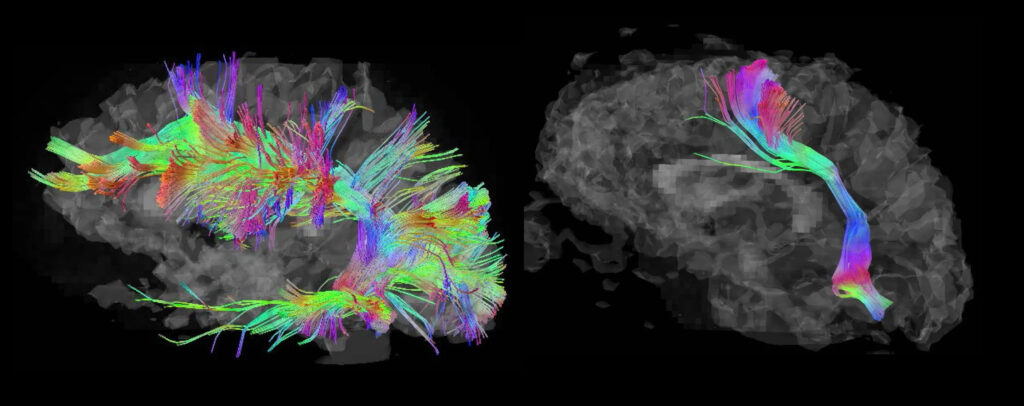
Take a look at this brain scan.
Image Credit: schneider lab §
The scan on the left is an autistic brain processing language.
The scan on the right is someone without autism.
I love this image because you can see how much more information an autistic person is processing at any given moment. The non autistic brain is using a process called sensory modulation to focus on the speaker’s voice. The autistic brain continues taking in lots of other information simultaneously.
I believe understanding sensory modulation is essential for properly empathizing with and supporting autistic individuals of all ages.
I’m working with an autistic illustrator to create a children’s picture book about this. You can support the project by preordering or donating a copy here.
What this means about autistic traits.
You’ll notice I don’t call these symptoms. Being autistic is NOT a disease or an epidemic. It is simply a different way of processing the world. There are strengths and challenges that come with being autistic. Just as there are strengths and challenges that come with any neurotype.**
Autistic traits are rooted in experiencing the world differently. They are not deficits. They can be strengths.
Let’s start with autistic strengths because so often we do the opposite. We rarely seek diagnosis because of our strengths. Therefore many autistic people who have the proper support structures in their lives do not even realize they are autistic.
When looking at any list, remember the spectrum, no autistic individual has all autistic traits. Some are even contradictory. How many traits you need for a diagnosis is not the point here, but if you see yourself reflected in these lists you may consider identifying as neurodivergent.
Having a hyper connected brain means we are often great at recognizing patterns and making connections that others do not. This gives us a unique perspective and can enable us to make art, solve problems, and contribute in meaningful ways.
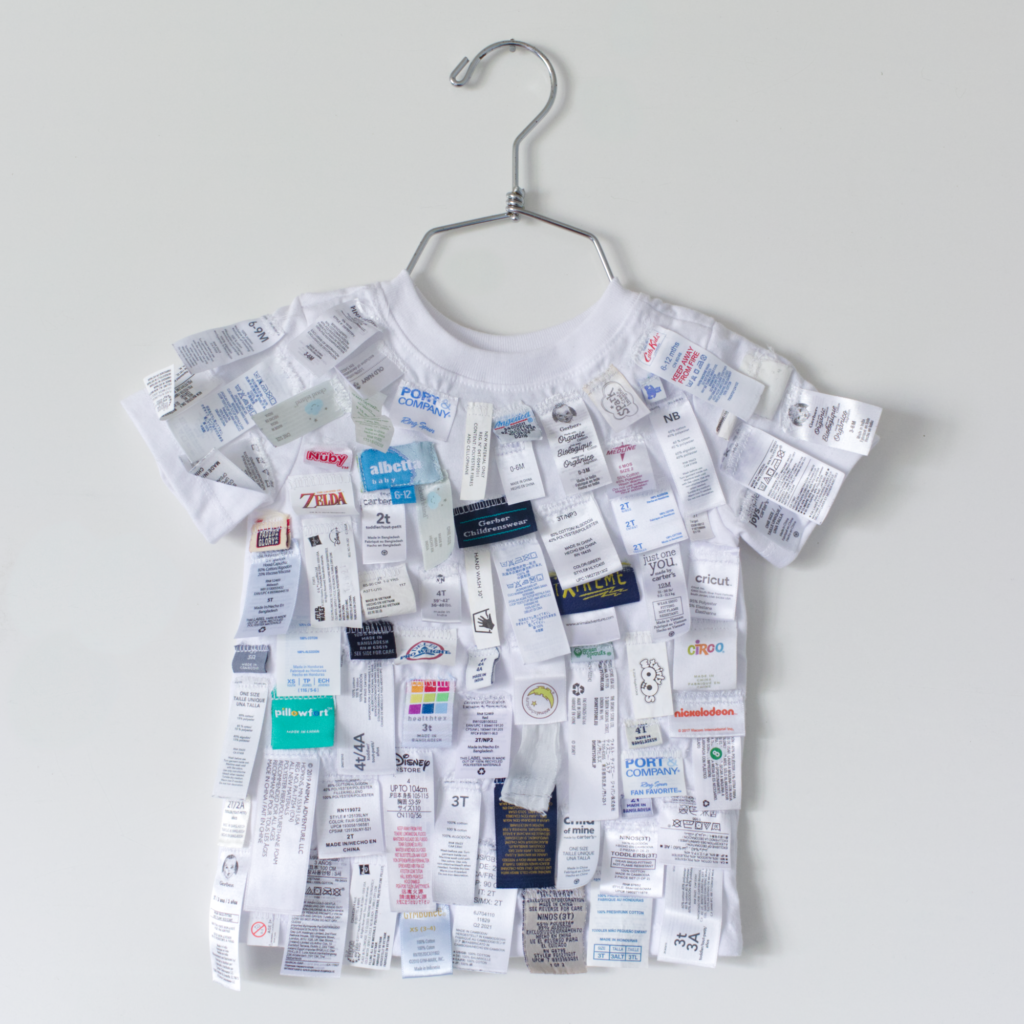
My autism is central to my creative practice making art and writing books. I made the work below to express the overstimulation caused by a single clothing tag. It’s been in multiple exhibits across the country including a gallery in New York City.
Metldown – Tap the photo to read more about this work
Autistic Challenges
Having strengths does not negate our challenges or our need for supports.
Here are some of the ways autism can present (keeping in mind every person is unique and no one person has all of these traits.) Most of these come down to sensory modulation, but can externalize in different ways.
Processing Language
Remember the rainbow brain? That scan is happening when an autistic person is listening to spoken language. Most brains modulate or mute sensations it deems necessary to help you focus.
This means if you’re in a noisy restaurant non autistic brains “turn down” the volume on other conversations, cutlery being sorted, appliances in the kitchen, chewing noises, and music playing. This happens automatically, but autistic brains do not always have the ability to “tune it out” and focus on a single sound.
This can make listening, conversation, and learning spoken language challenging. We also process language itself in a completely different way – learning to speak in chunks rather than words. I’ve written a bit about that here in the context of learning a second language.
supports
Some autistic people are nonspeaking and use devices like an AAC tablet to speak for them. This is not a sign of lack of intelligence, but a difference in processing language. Others may use sign language, communication cards, or gestures. We need to respect all forms of communication equally and not favor spoken language.
Supports for language also include closed captions on video content, more time to process spoken language, or text based communication (email or text versus phone calls.)
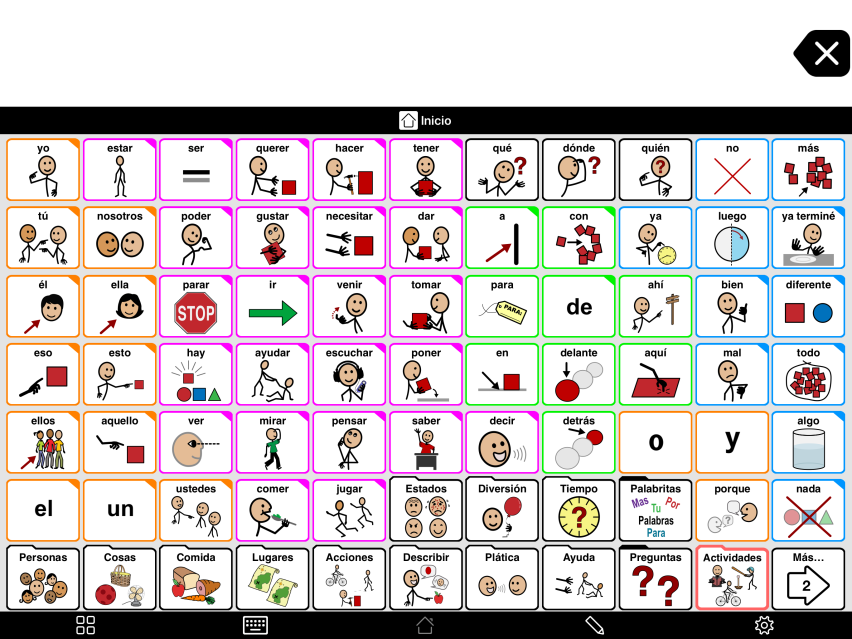
Screenshot from proloquo2go an aac app
Processing Social Norms
Autistic people often have social differences. We usually communicate quite well with each other, but can struggle to socialize with neurotypicals. This too, may come down to sensory modulation. Being assaulted with sensory input we have to work hard to consciously process social situations that non autistics navigate intuitively. This is not a flaw, but a difference.
The problem comes when we are judged against a neurotypical standard.
For example, an autistic person may struggle to make eye contact because they are trying to read your lips to understand what you are saying. Or they may find eye contact physically painful because it is so intimate and emotionally intense. This is not a flaw, but is often perceived as a “lack of confidence” in a culture that values eye contact. Other autistics may have not trouble with eye contact at all. Or only when dysregualted.
Autistic people also tend to be direct and honest. We can struggle with layers of subtext and take people at their word while missing the hidden meaning.
SUPPORTS
Never forcing eye contact.
Understanding autistic culture has different social norms. For example “infodumping” or sharing deeply about your passions, is a way that autistic people connect, but is often seen as a social flaw by neurotypicals.
Clear, direct language.
Breaking down social expectations in a transparent way.
Academic battlescars – a visual artwork about navigating schools without needed supports
Processing Transitions or Changes
This is a complex issue, but speaking for myself, I often manage hypersensitivity and social differences by careful planning and mental preparation.
Small changes in plans can result in big instances of dysregulation (intense emotions that can present as meltdowns or shutdowns). A meltdown is an intense outburst of emotions (crying, yelling, shaking) and a shutdown is the opposite (internalizing and struggling to communicate.) Both are signs that your nervous system has been asked to take on more than it can safely process.
With children this can be misunderstood as willful disobedience when they are struggling to process changes in plan or transitioning between activities.
Having tools for self regulation if dysregulation occurs (fidgets, heavy blanket, etc.)
DOMESTIC ARCHAEOLOGY – making art is a tool i use for self regulation
More Autistic Traits
Autism is complex and it’s impossible to cover all of the possible differences in a single blog post. Here are more traits that some autistic people have.
Enthusiasms (deep interests commonly referred to as “special interests”)
Time blind
Motor planning challenges
Food aversions
Executive function difficulty (struggling to break down and prioritize tasks)
Echolalia (repeating words, quotes or phrases)
Literal thinking
Struggling in large groups
Preferring solitude
Hyper-empathetic OR struggles to understand emotions
Joy in atypical play (like lining up toys)
Rejection sensitivity
Auto-didactic (learn best by self directed learning processes)
Perfectionism
Scripting social situations (planning conversations in advance)
Sensory seeking OR sensory avoidant (or both depending on the sensory input)
Difficulty processing body cues like hunger
Trouble sleeping
Printable cards from harkla sensory workbook † †
We also have various ways to self regulate our hypersensitive nervous systems.
Stimming (repeated movements like flapping hands, rocking, tapping, or bouncing)
Whole body movement (sports, walking, weight training, swimming, etc.)
Deep pressure to self regulate (weighted blankets, sitting on hands, pretzel sitting)
Fidgets (stress balls, spinners, rings, etc.)
Familiar foods or chewy sensory supports
Engaging deeply with interests
Safe, quiet place (alone or with trusted people)
If you’d like to learn more about sensory processing I created a whole presentation about neurodivergence that digs into the 8 senses (that’s not a typo!) here.
Masking
Something that can complicate a full understanding of autism is masking. An autistic person who is able to mask can sometimes push through situations that cause them pain or dysregulation. People who mask often experience a delayed reaction and may meltdown or shutdown when they are next in a safe place.
High masking autistics often study and imitate expected social behaviors, but this takes a toll and uses a lot of focus and energy that could be used for other things. The ability to mask varies from person to person, but is a serious danger to all autistic people. Masking can pushing your brain and body further than it has capacity to handle. Over time repeated masking without adequate support and recovery can cause serious consequences to mental and physical health.
Before becoming a parent I was able to mask in most situations. I could push through sensory pain and dysregulation because I had adequate time and space to reset afterwards. Now that I have less time I have to be careful to honor my autistic limits and use necessary supports to prevent a serious mental health collapse.
Maternal mental health
To Assess or Not to Assess
I believe the assessment process as it stands is incomplete because it is focused on external behaviors and not the internal experience of the person being assessed. This is because the autism evaluation was created by neurotypicals based on autistic traits they consider undesirable.
I went through an autism diagnosis as an adult, but I’m not sure I’d do the same if presented with the option today. Identifying as autistic and neurodivergent was life changing. But I had to learn to self advocate for my needs. The diagnosis paper itself did nothing for me.
For kids the issue is more complex as an official diagnosis is often needed to access certain supports (educational accommodations, etc.)
Whether or not you choose to seek a formal diagnosis, remember that your needs are valid. It’s okay to share how you feel and ask for the supports you need. The real power comes in reframing neurodivergent traits as differences and not flaws. And learning to self advocate.
How to be an ally.
If you have an autistic or neurodivergent person in your life the best support you can give is to listen and believe them. The reaction that you see is based on their real internal experience and is not disproportionate or oversized for what they are feeling inside.
Parents or partners of autistic people should always ask how best to offer support because everyone is different.
Look for ways to minimize sensory pain and overstimulation.
Protect space needed to reset and self regulate (as listed above.)
Keep listening. And consider whether you may be a highly masking neurodivergent person. We can sometimes be the hardest on each other. Just because you can endure or mask through something does not mean every neurodivergent person can. not everyone has the same capacity to mask.
What next?
Check out my digital zine about the autism spectrum.
Or visit my Neurodiversity Affirming Library here for my favorite educational resources including: podcasts, videos, books, blogs, and more.
* I have been professionally diagnosed with autism, but also have traits of ADHD such as time blindness and difficulties with object constancy. Having knowledge of these traits and functional coping strategies I have no interest in pursuing an ADHD diagnosis at this time.
** Neurotype is a term used to describe your brain’s processing style: autistic, ADHD, OCD, etc. If you are not neurodivergent your neurotype is neurotypical. Being neurotypical just means that your brain is processing the world like most others. This means the dominant culture has been made to support the way your brain processes the world around you. You are surrounded by supports for your neurotype every single day.
† † Printable Cards from Sensory Diet Workbook by Harkla (Affiliate Link)
As someone with time blindness I can very easily sink time into something without realizing.
This year I’m experimenting with spreadsheets and time charts as tools to visualize time. Here is how 2025 has been looking (as of March 24.)
January
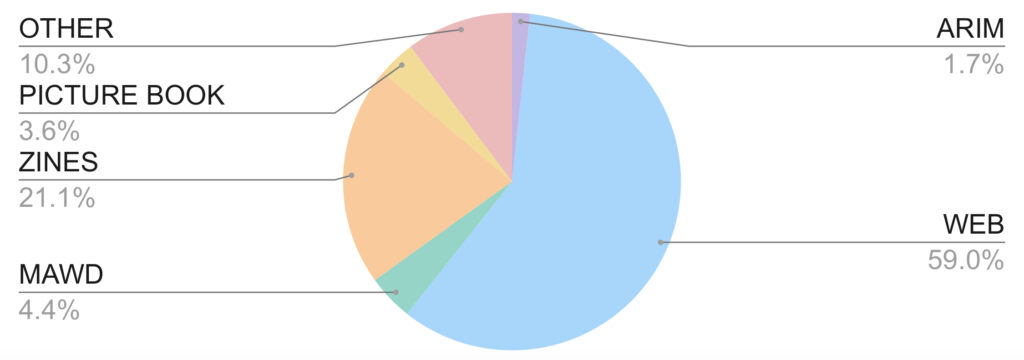
I had a lot of loops to close in January and it felt like a ton of admin. This was my first month tracking my time. The pie chart was a game changer. I started it mid month and the wedges for web & self publishing dominated the chart. It took conscious effort to put more time into personal projects to balance the chart out.
This chart visualizes how much time I spent on each creative project.
This month my biggest wedge was redesigning my website. But seeing how big the blue wedge was motivated me to make time for other things.
Web (59.0%)
Redesigning my website and migrating my newsletter to Buttondown.
Zines (21.1%)
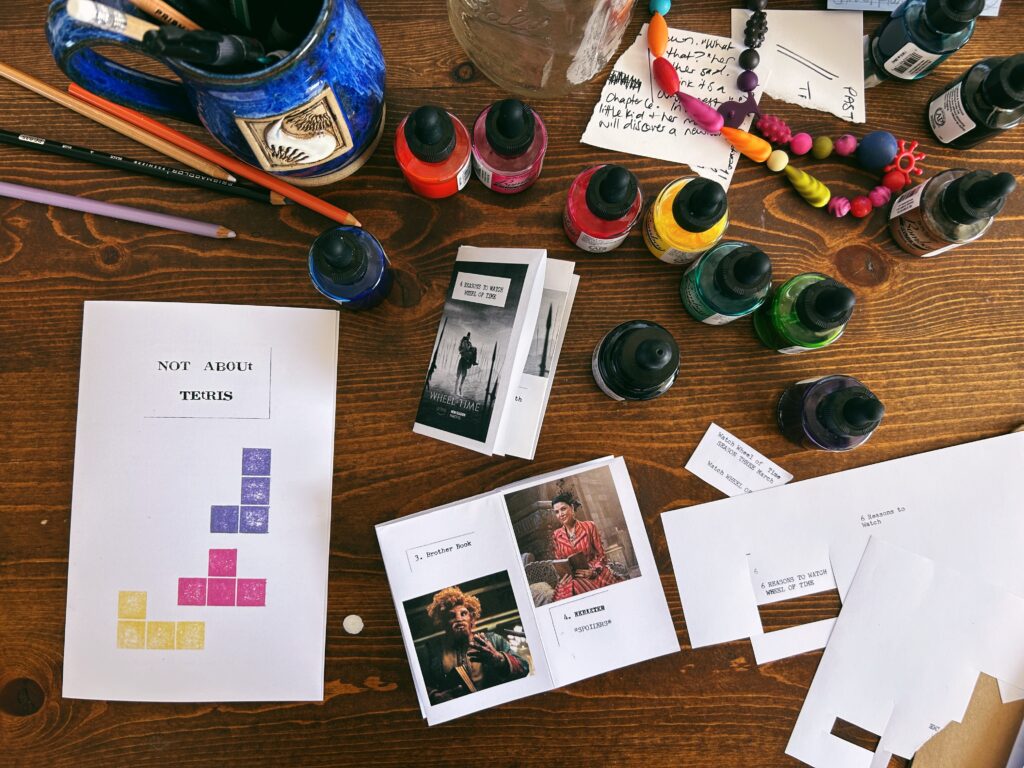
Making Not About TETRIS and working on illustrations for a zine about the spectrum of neurodivergence. My scanner died this month and created a lot of headaches.
Other (10.3%)
Designed two self inking stamps (folks with zine subs will see these soon) and sewing patches on a denim jacket.
Mawd (4.4%)
Work on my fiction novel. I’m in an ideation phase.
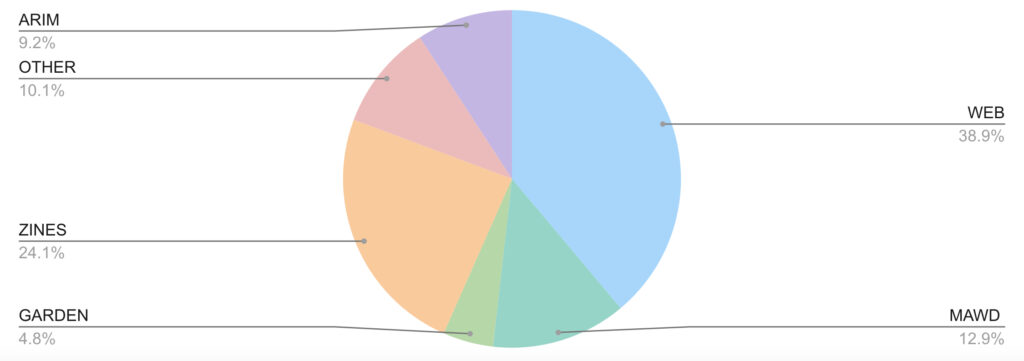
My website wedge is still the largest (although I have a few days to go) based on shop and subscription migration headaches. I hope to continue making this wedge smaller over time.
Web (38.9.0%)
Moving zine subs from Big Cartel to Stripe, redoing various opt ins, migrating Neurokind to Beehiiv, archiving March blog posts, and writing for blog & newsletter.
I debated over logging this, but it is important self regulating work and part of my creative ecosystem.
Reducing Admin Time
I also did a bar chart showing the different parts of the process to see that balance.
Here you see Admin & Prep decreasing and time to Create growing from January to March.
I’m 90% sure this shift would not have happened without this visual tool. It’s too easy to get pulled into neverending admin and website tweaks. This makes me more aware.
Top Tip
I found tracking the time itself really hard until I started using the Tap When app. (Not a sponsor.) I tap when I start and tap when I finish. No math!
P.S. My spreadsheets are in no condition to officially share as a resource, but if you’d like to see the imperfect version I’m working with I’m happy to share the template for you to make your own. Just drop me a line or respond to a newsletter.
Image Credit: Prague Astronomical Clock via Wiki Commons
If you’re autistic or ADHD and you’ve struggled with learning a foreign language you are not alone! The typical class structures are not made for our brains.
Growing up I had no idea I was autistic.
I was an early talker, a self taught reader, and my social differences were percieved as “shy.”
Flash forward thirty years and I am learning so much about myself alongside my autistic child. For one thing, our brains process language completely differently than neurotypicals.
If you want to do a deep dive into language development I suggest starting with Alexandria Zachos of Meaningful Speech. She has a lot of free resources on her blog and Instagram.
While I was learning to support my child’s speech development I had some big epiphanies about my own use of language and specifically why I struggled with Spanish classes in university.
Neurotypical humans learn speech word by word.
This is why most babies point at objects to learn their names. They learn a bunch of single words and eventually use them like building blocks to make sentences.
This is the way foreign language classes are structured because this is the way most brains process language.
I’m thinking of the times in class we would recite conjugations – as if that was at all useful outside the context of a sentence. 🫠
Autistic humans (and some ADHDers) learn speech in chunks. 🤯
Our natural language progression is to pick up phrases or sentences like shiny objects.
Bonus points for musicality, expression, or relating to our interests.
Once we have enough chunks we naturally start to mix and match.
How can we use this to teach (or learn) a second language?
Now we know why traditional curriculum aren’t going to work for us.
So what do we do instead?
1. If you do use a curriculum look for something that introduces phrases. Not words. 💬
Learning individual words is not helpful for gestalt language processors.
We need to see them in action.
Even if you find a curriculum that does this, you’re still going to need to supplement it to really engage a neurodivergent student.
2. We need hear a human native speaker. 🧑
Because we’re picking up on the whole language gestalt – including intonation.
Google AI is not the way forward here.
This doesn’t mean you need a private tutor, but whatever you are watching or listening to should be a real human who is a native speaker of the language you are learning.
3. Find expressive & interesting material. 📺
We’re incredibly lucky to live in a time where our favorite TV shows are probably dubbed over in multiple languages. Here’s the secret sauce where you engage with your student about whatever they are most passionate about.
We are currently loving the Spanish dubs of Numberblocks on Netflix. (My kid literally falls asleep listening to the soundtrack – which is also available in Spanish!)
I find that it’s easier to pick up on language if you’re watching shows that are made for emerging speakers (toddlers). Vocabulary is simpler and the speed of speech is (usually) slower.

But we also love watching Totoro in Japanese.
There’s something to be said for the immersion of watching something you love. Before my child was fluent in English he was singing the theme song to Totoro in Japanese.
Sometimes it’s about what speaks to your heart.
4. Sing! 🎶
Our brains engage with music on a different level than spoken language. Sometimes neurodivergent folks even sing before speaking.
99% of what I do remember from Spanish class was from songs.
Just search for children’s songs in whatever language you want to learn.
Or jump in the deep end and try translating a pop song. I did this for Kudai’s Quiero after studying abroad in Mexico. It’s twenty years later and I still know it by heart.
5. Consider auditory processing supports. 🎧
Not all neurodivergent folks struggle with auditory processing, but plenty of us do. Sometimes I can’t “hear” sounds unless I see them.
If you’re watching a show or YouTube channel look at your options for captions. Captions in the native language are really helpful. But sometimes they do differ from the recorded audio so you have to watch out for that. (This is always the case even with English.) Or English captions can help with understanding the context.
Another great tool for students who need to see to hear is AAC.
David already had the Proloquo2Go app as a support for communicating in English. He hasn’t used his AAC in months so I set up a second user in Spanish. (I’m sure there’s a way to set up a bilingual user too.)
It looks like this. When you tap the word the tablet speaks it.
I wish this app were not so expensive.
But language curriculum is also quite an investment. I wanted to mention this because it is such a powerful tool. Since we already have it – using it for a second language is an exciting way to put that investment to good use.
I started with a template for an emerging speaker and then customized folders with phrases from Numberblocks.
It’s really important to put in phrases for our neurodivergent kids in addition to the single words that come preloaded.
I’ll probably write a second post specifically about how we use this.
The caveat is that AAC tablets are not very expressive. This is like a speaking dictionary, but it will not teach you the natural musicality of a language. You still need a native speaker (in real life, recordings, TV, or YouTube) to model language. This is a tool for making that material accessible.
6. Read books together! 📖
I love bilingual books with two languages printed side by side.
But I learned the hard way to look for books that are for “early readers” versus classic favorites.
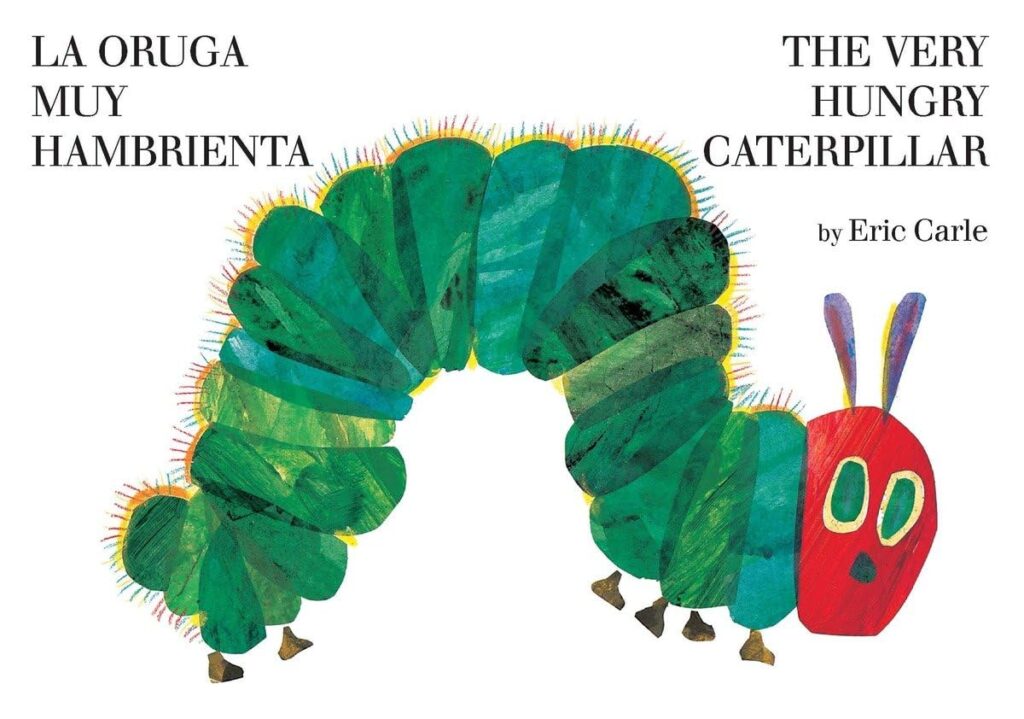
La oruga muy hambrienta is a mouthful.
While I didn’t learn much conversational Spanish during my time studying abroad, I am fairly confident at sight reading words. (It helps that the sounds in Spanish are very consistent versus what we’re used to in English.)
If you’re not comfortable reading aloud yourself (yet) try audiobooks!
But it’s also okay to be imperfect and make mistakes while you are learning. It’s all part of the process. If you’re a parent reading with a kid – seeing you make mistakes and correct yourself can be a good life lesson.
7. Practice with friends. 👭
Once you have phrases use them in your daily life.
Weave in what you’ve learned with your family or a friend group. My little extrovert is already having short conversations with native Spanish speakers in our area.
Follow his lead and look for opportunities to practice and learn in community.
8. Play! 🕹️
Try simple games in another language. Learn the phrases needed for a card game. Play “I spy” or charades. Put the words you’ve learned to good use.
You may even find video games or apps with multiple languages. Toddler apps are designed for emergent speakers (we love Eric Carle’s), but they do tend to focus on words versus phrases. If you’re picking up individual words (numbers, colors, nouns) try to learn phrases too so the words don’t get “stuck.”
Toolbox for ND Language Learners 🧰
Learn phrases and sentences. Not words.
Learn from a human native speaker. Not AI.
Find expressive & interesting material.
Learn songs!
Try captions and AAC.
Read books for “early readers.”
Speak the language in daily life.
Play!
If you found this useful I’d love to hear from you. I’m always open to chat or share resources, but simply hearing that you enjoyed this will make my day.