I’ll be alternating solo episodes and inviting guests on to talk about their creative projects. I hope this podcast will be valuable for neurotypicals to learn about neurodivergent experience and for ND folks to feel less alone.
The first episode is a bit of a re-introduction so new listeners know who I am. I also share some of my struggles as a chronically ill neurodivergent podcaster.
I’m attempting to find an accessible way into podcasting without burnout. Weeks that I podcast that will take the place of a blog update for the week.
You can copy and paste the RSS feed into any podcasting app to subscribe.
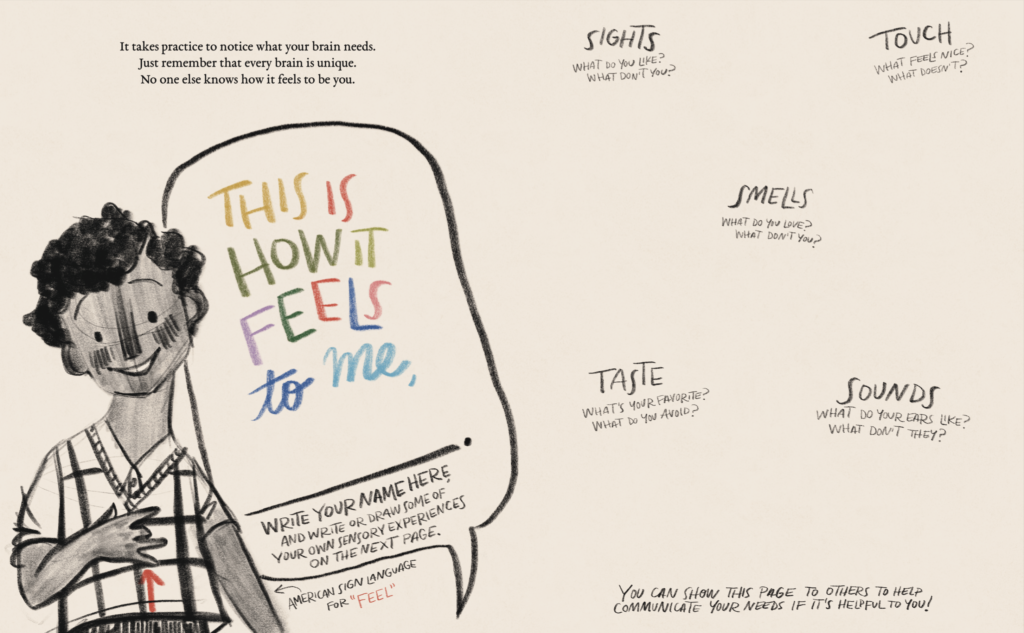
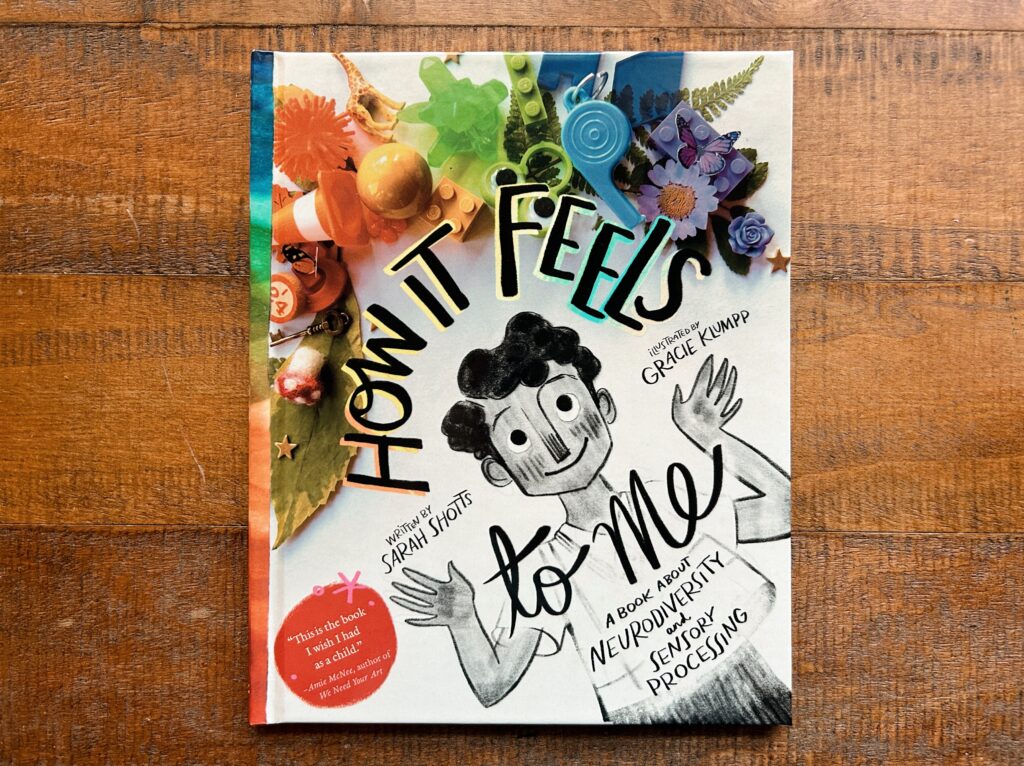
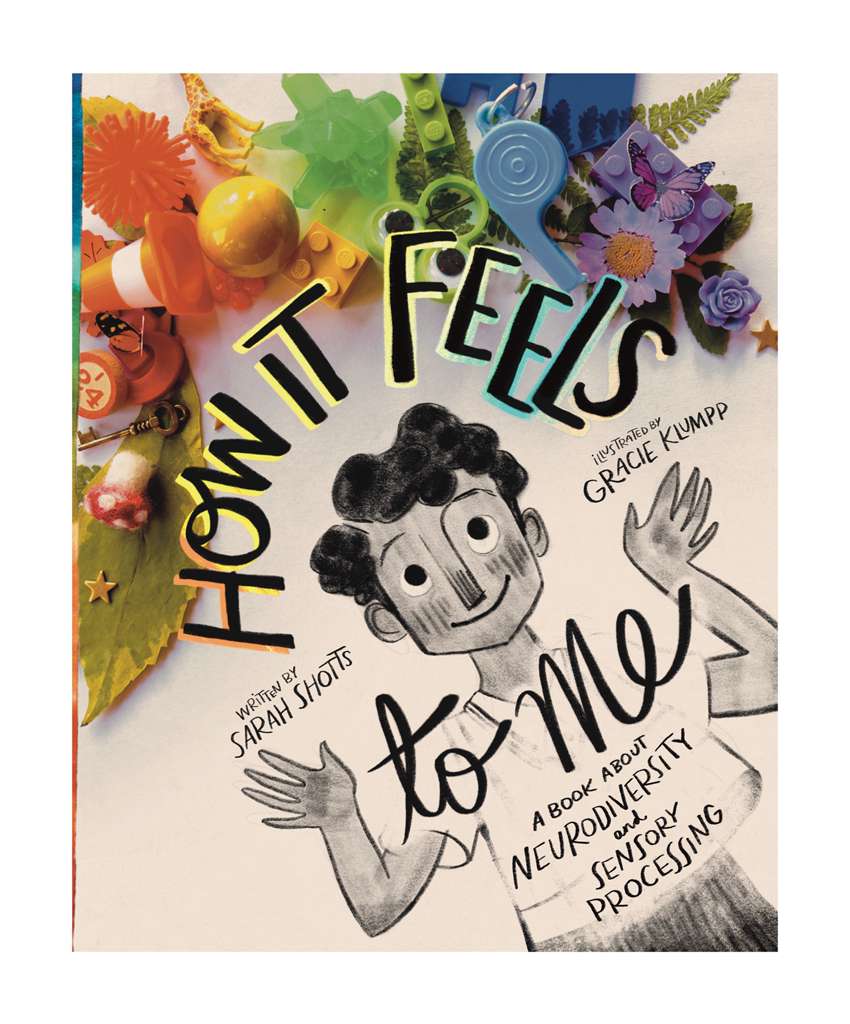
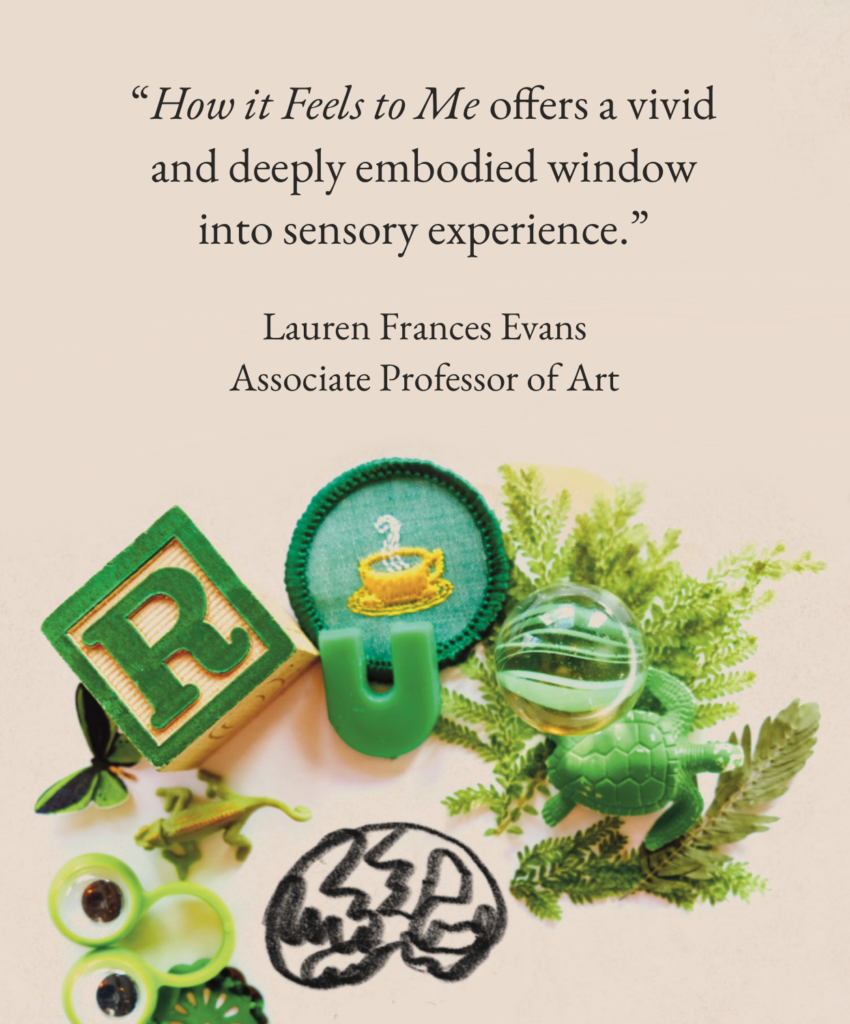
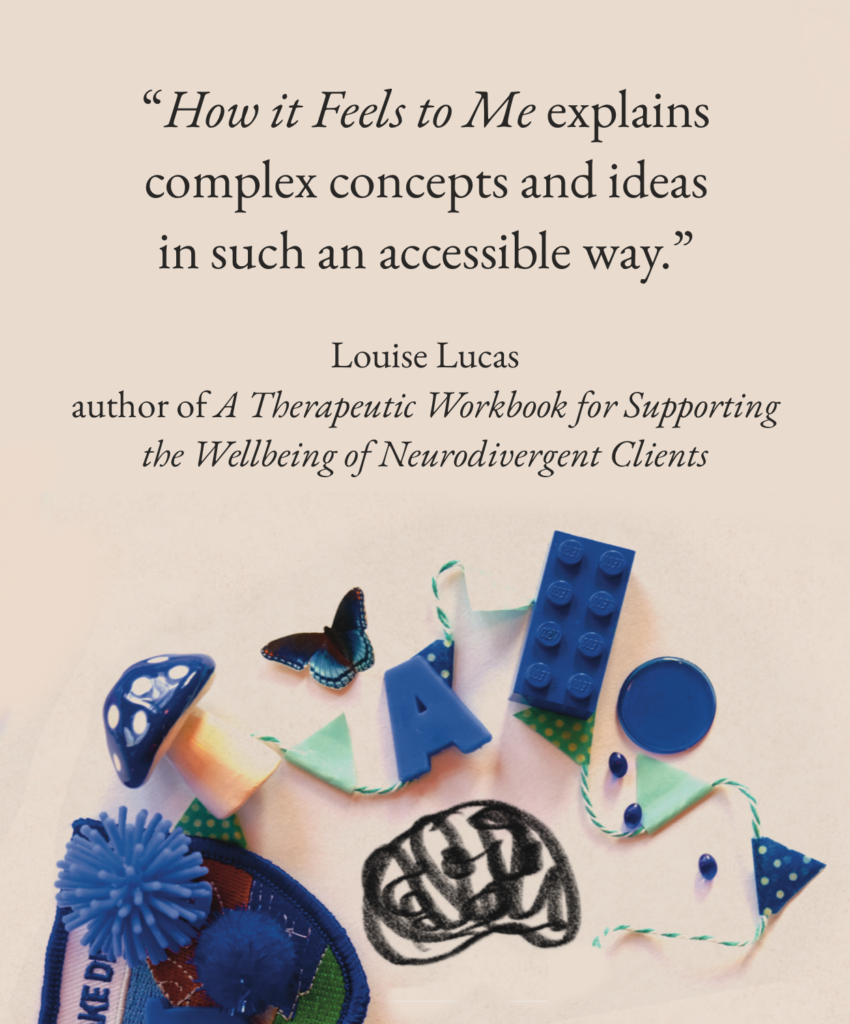
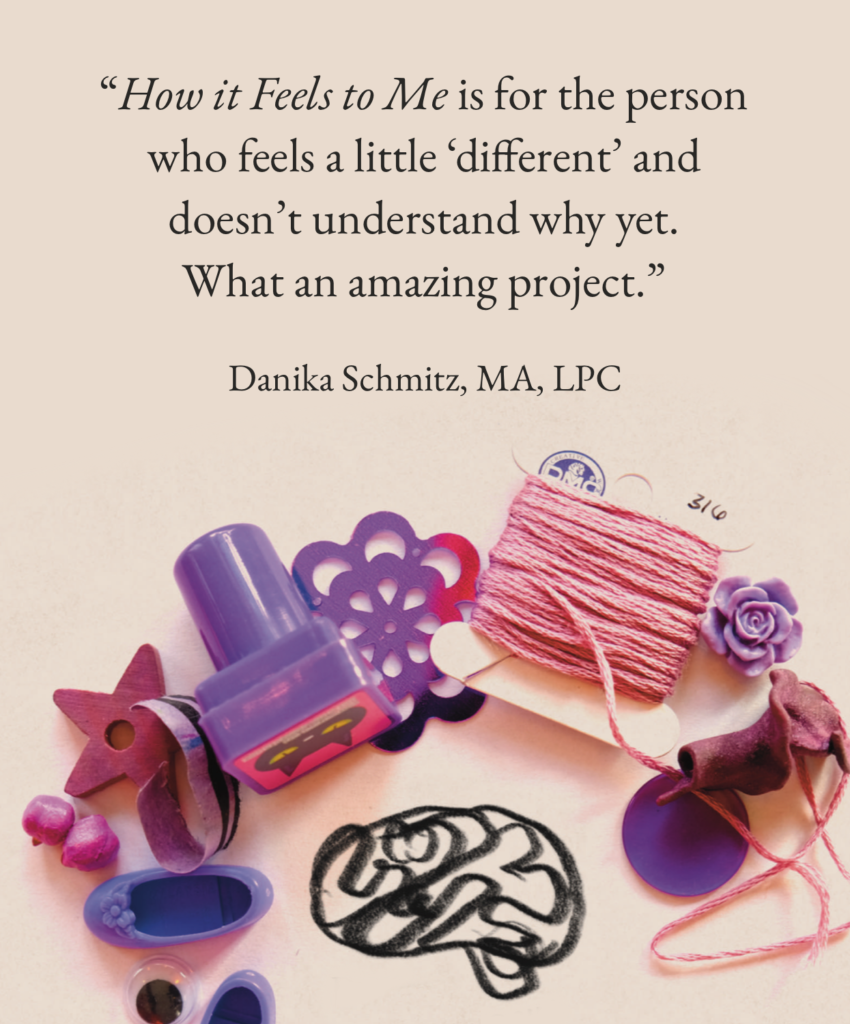
The Neuro Nest podcast is sponsored by How It Feels To Me, a picture book about neurodiversity and sensory processing, which I co-created with Gracie Klumpp.
Welcome to The Neuro Nest, a podcast about autism and neurodivergence.
I’m your host, Sarah Shotts. I’m an artist, author, and late-diagnosed autistic.
This podcast is sponsored by How It Feels To Me, a picture book about neurodiversity and sensory processing, which I co-created with autistic illustrator Gracie Klumpp.
[Sound of lips vibrating.]
Just a little vocal stim to shake out the nerves a little bit. If you’re listening, you probably subscribed to my podcast a long time ago. I have been on a hiatus and I am rusty.
So if you don’t recognize the name of the podcast, you may have subscribed back when I did Kindle Curiosity, a podcast about creativity, or when I was a new parent, I renamed it The Messy Middle before realizing that there were like a dozen different podcasts called The Messy Middle. I still love the concept I was going for there. And then I had a couple different attempts at podcasting over on Substack before coming back to my own self-hosted thing. So this is The Neuro Nest.
My focus now is specifically to talk about neurodivergence, autism, ADHD. I may bring in people who have different kinds of neurodivergence like synesthesia, dyspraxia, dyslexia, dyscalculia. Some of us have multiple.
So the first couple episodes, I’m just going to be talking. And then once I kind of get the groove, I have some neurodivergent friends that I would love to invite on and just have a nice fun chat with about their projects and the things they’re making in the world. I am just going to reintroduce myself for this episode for anybody who has forgotten who I am.
Or if perhaps this podcast was shared with someone and you’re looking for who is the host? What are they talking about? What is this podcast about? So this podcast is specifically from my perspective, I am a late diagnosed autistic adult. I was diagnosed 10 years ago. I think it’ll be 11 come this fall. And it’s really taken most of that time to kind of process that what I thought where my character flaws are actually just how my brain works.
Also I am an artist. I work in a lot of different media. I’m an interdisciplinary artist and an author. And I’m also the parent of a seven-year-old neurodivergent child. And over the past 10 years of knowing that I’m autistic and the past few years of parenting, I’ve really slowly been learning about how to work with our brains and not against them. Kind of reframing that neurodivergence is just how our brains work and sometimes we need a little bit of support and there are challenges with that and there are also strengths. Just like every person has challenges and strengths, ours are just specifically rooted and our brains kind of being wired in a little bit of a different way.
So I’ve typically been blogging. I do a lot of writing about neurodivergence and creativity specifically. I write about those two things because for me, I interface with the world through creativity.
Creativity is how I self-regulate my nervous system.
It’s how I express myself. It’s how I process understanding things. It’s how I connect with others. Autistic people can have lots of different interests and it just so happens that creativity is like almost like one of my go-to languages more so than spoken words which is why podcasting is not really my strength but like I when I was coming back as the middle like it doesn’t have to be perfect to be like a form of communication. So I’m experimenting with coming back to podcasting.
My first experience with podcasts was almost like exposure therapy for talking because I’m a very introverted autistic and growing up I actually learned to read before I spoke. It’s very unusual but it also happened to my child so it must be genetic that some of us have like a proclivity for the written word, especially for read to a lot as babies. It’s called hyperlexia. I guess the opposite of dyslexia, it’s just like you have an affinity, you’re kind of like self taught how to read from a very, very young age. And so to me, I feel like the written language is my first language and spoken is my second.
So growing up, I had, I coped with this by like scripting a lot. Like I never in social circumstances really knew like what to say to even like very simple questions. Even now, if someone asks me like, hey, what are you going to do for the weekend? Or what did you do yesterday? I just like freeze. Everything goes completely out of my mind.
So as a kid, as a teenager, I would spend hours like scripting what I was going to say, how I was going to interact. And yeah, so I just turned 40. I’m 40 years old. And now I’ve found that if I’m in a place where I am comfortable being myself, that that social anxiety can kind of turn off and I can connect more authentically with people, especially other autistic and neurodivergent friends. And especially if it’s something I’m passionate about, I can just talk ad nauseum. But if I’m having to like, kind of like, enter a conversation with lots of different voices, or somebody asked me a question that I don’t already have a lot of thoughts cataloged for, I can still struggle with that.
So here I am, podcasting again. And that first year or so of podcasting, like I said, it really was exposure therapy. I have the episodes archived on YouTube and they are super awkward, but I also spent like five hours a week editing them to make them as smooth as possible. So what into is not what really happened. I definitely had the kind of approach where I like took out all the dead space and all the ums and ahs and I tried to make me and the guests sound as articulate as possible. That was my approach. It was very time consuming and very draining.
So something that I’ve learned from my creative coach Amy McNee is that some things are draining and some things are energizing. And podcasting for me is one of those draining things. And so it doesn’t mean that I can’t do it. But especially if I’m coming at it from a perfectionist lens, and I’m going to spend hours and hours editing, that is not something that gives me a lot of creative energy and joy.
So my new approach post becoming a parent, when I rebranded as the messy metal… messy middle… is just to record. As you can see, I just like misspoke and just kept going. So it’s like a raw ramble style podcast. I might have a direction for where I want to go.
I have a few bullet points here today because I tried to record an introduction off the cuff last week and I just kept talking and talking and talking and it was not, it was unhinged. So I’m a little bit more focused today. I have like a map for where I’m going, but I don’t have the exact words planned.
So the general idea is that when I podcast by I pretty much I might cut off the beginning and the end and I might have a theme song. I’m thinking I’d like to do that have like an intro and outro template that I can pop this into but to try to keep the editing as minimal as possible and then if I have guests hopefully we can have the kind of conversation that it can just go up as is and won’t need a lot of like hours and hours of editing because I don’t have hours and hours of editing nor the energy for that at this point in my life.
So where was I? Yes. So basically what I’m trying, what I was saying is that that first season of podcasting was like exposure therapy for conversations. And what I did notice is that the times that I tried to keep more rigidly to a set of predetermined questions, like the scripting strategy, was actually much worse. And the more I got comfortable with it, and the more that I connected with the guests, and we would just like, go off down these rabbit holes of shared interest, that’s when it got really interesting and exciting.
So that’s kind of what I’m hoping for is to find people and have like, okay, here’s our starting point. And let’s just talk for an hour, like to other and kind of like forget there’s an audience and see what happens. So that’s what I hope this podcast will be.
If I haven’t run you off already, it’s not just for neurodivergent listeners. If you have noticed, we really need neurotypical allies right now. There’s a lot of misinformation going around. There’s a lot of misunderstanding about what it means to be autistic or ADHD or neurodivergent in different ways. And this listening to this podcast is a way that you can have a window into what our brains are like. And when you hear somebody speak up and say something harmful, that you can kind of correct them. And if you have kids, you can talk to them about what this means. And yeah, so I hope that it is not just helpful for neurodivergent listeners, but also for neurotypicals as well. So just a little bit about my background.
So in university, I studied fine art and theatre, I have two degrees in theatre. But I also took like an equal amount of credit hours in fine art. I just didn’t get that on my diploma, because they told me, they told me that I couldn’t have a minor because my credits were quote “too advanced”. So do it that way you will. I was going off to a theater internship and was not about to stick around to retake a bunch of beginner classes that I had transferred from community college.
So that’s another little stubborn autistic streak in me. It’s like I didn’t play all the social games correctly in university to get all of the official, but like I have the education whether my diploma says it or not. So anyway, I spent my time after graduating, working, I did, I did some wedding photography for a while. And then I started teaching theater classes for my alma mater, I taught university for 10 years.
And I stepped away from that just a year ago because of the onset of chronic illness. These are genetic conditions I’ve had my whole life. But the symptoms were really starting to impact my daily life. And the job was very stressful. And the stress flares the chronic illness. It was like this Ouroboros of bad. The stress and the pain and the stress and the pain was like kept going.
And so the year that since I’ve stepped away from doing that, I have started to see some improvement. I’ve very, very recently been diagnosed with hypermobile Ehlers-Danlos syndrome, POTS, and MCAS.
Those are all genetically connected to neurodivergence. I know specifically to autism, but I believe to ADHD as well. We may get into this in a future episode, but there’s a lot of interesting research that are showing that autism and ADHD might be part of the same spectrum.
And it’s more like, you know, two autistic people could be very different. So someone who might consider to be autistic or ADHD probably have some overlapping traits from both, whether it’s enough to get the full diagnosis. But we won’t go down that full rabbit hole today.
So yeah, so some of us, we have these challenges with our brains not working the same as most people. So we’re trying to navigate a world that’s set up for neurotypicals. And then also we have these chronic illnesses. And since our whole life, we’ve kind of gaslit ourselves and people will be like,
Oh, that that doesn’t hurt you. That’s just a little sensitive.
Like, why are you overreacting?
We’ve been told we’re overreacting our whole life. So then we think we’re overreacting to our pain and we have legit health problems. So I’m learning about those things and trying to figure out like how best to support my body as well as my brain.
So let’s see, what else?
I am a home educator. We tried to put my child in public school. There are many different reasons that a neurodivergent child might struggle in school. For us, it was overstimulation, which that’s a really hard one because no matter how many times you offer them to put on like the earphones or whatever, like schools are in general a very overstimulating environment for kids. And just having some ear defenders is not really going to solve that.
But also my child is twice exceptional. So he was late to talk. He didn’t really start forming his own unique sentences until five years old. And then at the same time, when he started speaking, we realized he could already read.
He was reading at a fifth grade level.
And he was, he had already learned multiplication from watching number blocks. Thank you, BBC.
And so trying to send a child to school where they’re supposed to like sit down and be quiet and learn the ABCs when they already had like a massive vocabulary and could pick up like the classic original Winnie the Pooh and read it and tell you the multiplication tables that was just not going to work.
We did try it for a short time. But the school was not able to offer the kind of accommodations that my kid really needed. And my partner and I were both homeschooled. So, you know, I knew how to do it. I actually have, I have a particular interest in education. I was already teaching university. I enjoy teaching. It’s something I feel very passionate about.
So I’m not at all suggesting that every parent of an autistic or neurodivergent child should have to homeschool them. But it’s a skill set that I have. It’s something that I enjoy doing. And it’s something that where we live, there weren’t enough resources available to us. So that’s a choice we made.
It’s not easy when you have a kid with a super spiky profile. So like some trying to figure out like what the right challenge level is for school work and things. So I very occasionally blog about that. It’s not like a main focus of what I write about. But just yesterday, I did a post about hypermobility handwriting supports because we’re trying to figure out handwriting, potentially dyspraxia. We’re going to meet with an occupational therapist and look at that. I had trouble with handwriting as well as a kid. So I really, really get it. A lot of it’s just patience. But I am wondering if there are different supports that we can put in place knowing more than what my parents knew when I was a kid and didn’t have any diagnoses at all.
So now that I don’t teach university anymore, I use my time to make art, to home educate, to write books. I blog pretty much every week, maybe not every single, I’m trying to be a little bit less rigid. So especially with my chronic illness, like even with autism, my energy fluctuates, adding parenting, it’s a lot. But with the chronic illness as well, I’m really trying to allow things to ebb and flow. So rather than I must post my blog and newsletter every single week, it’s more like:
Do I have something to post this week?
Do I have the energy for that?
And that is what I want to bring to this podcast as well. I know I can’t do this every single week. It might be every other week. It might be once a month. I’d like something semi-regularly, but I know I can’t commit to a super rigid upload schedule. And I know I don’t have the energy to show up on video. I know like video is like the thing to do for podcasts now as everyone, I keep getting all these spam emails. I haven’t even uploaded a podcast in ages. I keep getting all these spammers that are like, you are missing out because you’re not posting your podcast to YouTube.
And I’m like, I don’t have to maximize everything to like the extreme perfectionist, like best practices. I am allowed to show up in the way that works for me. And so that’s what I’m attempting to do with this podcast. I do think when I have guests on, I will already be on video call with each other because my auditory processing. So those special episodes may be video. But for me, as soon as I’m on video, there’s a level of like masking or like I have to feel like I have to wear different clothes and make sure my hair is not a mess. And I’m aware of the camera and it’s much more draining for me. So just showing up for the audio is what I’m going to do for most episodes. And we’ll see how often I have the energy to do it.
If I can manage to do it without needing a lot of editing, maybe I can do it every other week. Maybe this can be in place of one of those blog posts that I would be writing because something else I’m trying to do is to balance my time, like I said, with the things that are draining and the things that are energy giving.
And right now I’m in the middle of launching a book. And there’s a lot of admin with that. And that’s the draining side of like, you make the art and you’re so excited. But then you have to like, order proofs and do copy edits and do marketing and like all these little fiddly administrative email things. And what I have learned is that I really need, I can’t let everything be that. I can’t do everything draining and just ignore the things that give me energy and regulate my nervous system.
So something I’ve been doing over the past year is tracking my time specifically with my creative projects.
And I’m doing a pie chart to see like where my time is going. And this year, something new I’m doing is I’m making all of the kind of like draining tech things gray on the pie chart. And then my like life-giving, creative, like using my hands to make zines or make art, colorful. So, so far, I have had a pretty good mix. Since April, it’s all gray. This is going to be gray too.
So I really need to have a balance of, that’s one of the reasons I love that I make zines every month, because that’s something that I do with my hands. So I might type them on my typewriter, or I might, you know, make visual art, I might do a printmaking, or any, I’ve used so many different collage, so many different creative mediums. I think I might do a lino cut this month.
So, yes, if this is in the gray admin draining category, and we’ll see when I am talking to my creative friends, it might feel a little bit less draining, but still you have to like deal with the files and upload them. And there needs to be a transcript for accessibility. There’s a certain level of draining with this. And it might be that I don’t need to write a blog post and do a podcast in a week. So maybe I can just kind of like weave this in as an element. But I think for a lot of us, we have this perfectionist, completist, something about the autism.
It’s like, okay, if I’m going to do something, I want to do it in the best possible way. I want to follow all the rules and I want to, you know, do everything just right. And we don’t have to do that. We can just show up with the capacity we have. And maybe it’s not the same every day. Maybe someday it’s audio. Someday, maybe I want to turn on the video. Maybe I’m interviewing somebody cool. So part of what this is is an experiment in finding a way to make podcasting accessible to me.
But to not let the fact that I can’t, I don’t have the capacity or the time or the resources to show up in podcasting in the like, quote, “best way”, like absolutely every week with video, with this, with that, with whatever. That I think sometimes when we have these like best practices in mind, it can exclude people who just either, you know, for whatever reason, may not be able to do that consistently. So I have some really, really cool guests that I’ve kind of like touch base with and that are interested in coming on the podcast, even though it’s like doesn’t even exist yet.
And I was so excited about that originally, I remember, I had this huge list of people. And I just knew people were going to turn me down. So I sent out tons and tons of invitations. And then everybody said yes. And so I suddenly had this packed schedule where I was recording a podcast every single week, editing and uploading it every single week, and I burned out really fast. So I know I’m not going to do that again. I’m only going to schedule one at a time, definitely not more than one a month interview. But I have a lot of people that I know I would love to talk to that have different creative projects that you need to hear about.
So what else? My books. So I am going to be completely transparent. The main reason I’m coming back to podcasting right now, it’s not a coincidence that I have a book coming out. I stepped away from a lot of social media. I quit Substack. I took my blog back to my own newsletter. and yet when I am trying to figure out like what are healthy accessible ways that I can get the word about the book out that feel in alignment for me so Substack is not it for me right now. I met a lot of you there I’m very glad that we connected I follow a lot of people over there but when I’ve tried to come back to the platform it has not been the right fit so I finally completely cut ties as a as a creator I don’t use Substack at all I merged all my newsletters mailing lists into one and I published directly to my blog so I have my archive on my own website. And then that goes out over email.
I also struggle with Instagram. I am experimenting with that with maybe posting like one time a week. The thing about Instagram is it’s like Russian roulette. So like they design these apps to keep your attention and they design these apps to flare up your nervous system because if you’re upset or excited, you’re going to engage more. And if I hit the wrong post, if I see the wrong thing, it can derail me completely for a day or more. But recently, I hopped on Instagram, I shared a video of the book, and we had a ton of engagement. I had people pre-ordering the book. And so I feel like I’m going to try to see if I can use it in a relatively healthy way.
And this kind of circles back to that whole, there was a time where I used Instagram and I was trying to do best practices and that included posting every single day and doing whatever the algorithm wanted. And it’s like, instead of following everybody else’s external rules, I just need to find a way that I can use the tools that are available to me to communicate with people in a way that’s not too draining.
So I have to figure that out.
I think that’s everything I had on my list. Of course, now I have no idea how to close out the conversation. I believe the other day I recorded an outro. I don’t know if it is usable or not because I haven’t edited it. But I will be coming back to talk more about my picture book. I’m going to invite the illustrator on and we’re going to have a nice little chat about the process.
And I may make other podcast ramble chats like this about certain topics. If there’s something about autism or neurodivergence that you would like to hear me talk about, let me know.
This podcast is sponsored by How It Feels To Me, a picture book about neurodiversity and sensory processing, which I co-created with autistic illustrator Gracie Klump.
Thanks for listening to The Neuro Nest.
You can find links to everything, including show notes and podcast transcripts, at neuronestpodcast.com.
I’m an autistic adult with hypermobillity (recently diagnosed with hEDS) and home educating parent of an autistic child. I’ve experienced pain with handwriting my whole life and thought it was normal or my fault for holding the pen “wrong” when my joints are actually genetically different and need more support.
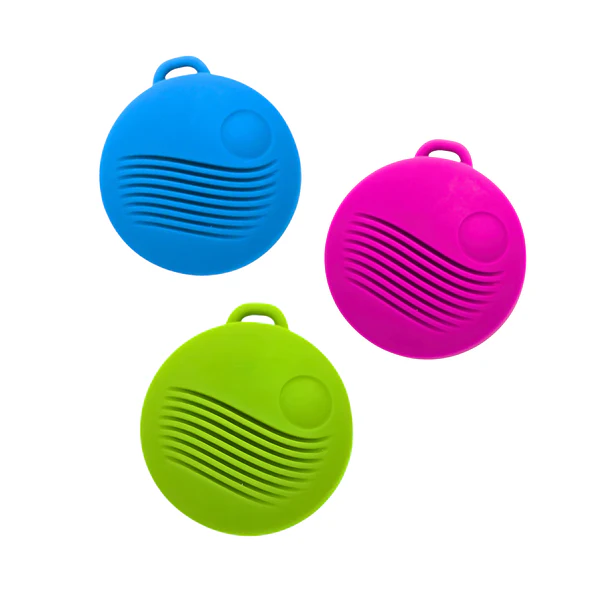
I’ve spent the last year testing out pencil grips and handwriting supports for myself and my neurodivergent child. I started with those egg shaped grips above and found they weren’t helpful at all.
Here are my favorites and the pros and cons of each choice.
The following are affiliate links. I bought these at Amazon so I was able to test and return the grips that didn’t work for me. I wrote more about why Amazon can be essential for some disabled, chronically ill, and neurodivergent people here.
P.S. After writing this post YouTube showed me this video of Taylor Swift using an alternative tripod grip because of hypermobile hands. Maybe I’ll try it out!
Are you new here?
You can see more of my posts about neurodivergence here. I’m newly diagnosed with hEDS, MCAS & POTS and will be sharing resources as I find them. The best way to keep in touch is my email newsletter or subscribing to my blog via RSS.
FOOTNOTES
* I found this after the video and ordered it for further testing. I’m looking for a supportive pen that takes normal size pen refills. If you have a favorite let me know!
That was Amazon Web Services being down. Shop elsewhere if you can, but our household budgets are a drop in the bucket for Amazon. They are raking in money selling cloud computing services to corporate businesses.
If you truly wanted to boycott Amazon you’d have to abstain from a huge swathe of the Internet.
Shopping online is accessible.
I’ve talked to so many chronically ill, disabled, and neurodivergent people who feel guilty about using Amazon.
Here are some of the reasons they may need to shop online.
They experience sensory overload in busy shops.
They experience chronic pain.
They have limited capacity and shopping is too draining.
They have compromised immune systems.
They have children who meltdown after shopping.
They need specific supports that are not available locally.
In cases like these, shopping online can be a necessary support tool.
Why Amazon?
Just because I link to Amazon doesn’t mean you have to shop there.
If you have the capacity and financial privilege to shop elsewhere you can easily take the time to find other places to source the products mentioned.
When I link to Amazon I’m just sharing where I bought the product. (I may also link to Bookshop.org or Libro.fm.) I also know that many disabled, chronically ill, and neurodivergent people are under or unemployed. And Amazon almost always offers the best savings for a price conscious shopper.
Especially for those with access to Prime shipping.
Free returns & exchanges
Buying a fidget, or a pencil grip, or a sleeping compression pod isn’t like buying a book. You sometimes need to feel the texture, to hold it, or to try it on for size before you know if it will meet your need.
Most sellers on Amazon have very flexible return policies.
When I tested the pencil grips for the video I’m making I was able to return the grips that won’t work for me—even though the packages have been used. Amazon will then sell these grips to someone at a discounted rate.
The Pencil Grip website not only charges the customer for return shipping, but will not accept any packs of grips that have been opened & tested.
As a small business owner, I understand. But as someone trying to find the right support tool without spending over $100 on pencil grips I’m thankful for the option to make easy returns. ***
It’s not all or nothing.
For certain purchases I may choose not to shop at Amazon. Here are reasons I may choose to shop elsewhere.
To shop secondhand.
To buy directly from an artist.
To support a small business.
To buy from good.store which donates 100% of profits to charity.
To support local bookstores—in person or online through Bookshop.org (for books or ebooks) or Libro.fm (for audiobooks).
There are many ways to resist.
I may not be able to quit Amazon. But, there are other ways I resist.
All of my books have free versions available to those experiencing financial hardship. (This will continue with How it Feels to Me. We are working on creating a professionally narrated video version free to all.)
Books sold through my web shop are author copies and Amazon does not get a cut of the profits! (Additionally, How it Feels to Me hardcovers are printed by Mixam and not sold through Amazon at all!)
We should stop expecting everyone to be perfect.
It’s easy to get fixated on where to shop and forget other important ways you can advocate for causes you care about. Instead of judging folks for shopping at Amazon, ask what positive action you can take.
Let’s stop wasting energy bickering with each other.
/ rant
Thanks for listening. I appreciate you.
If you’re also a begrudging Amazon shopper I hope you feel less alone. Guilt and shame are toxic and help no one. We’re all doing our best out here.
Cheers,
FOOTNOTES
* This is hyperbole. AWS is not the WHOLE internet, but is a huge portion of it.
** I left my own position as a university instructor last year for health reasons. I do write & sell books, but currently my creative projects are breaking even and not making a profit.
*** I recognize that making returns can be difficult and is not accessible for everyone. I’m really lucky to have a partner who takes care of most of the returns for our family.
**** Yes. I used an em dash in this post. I never use AI, but I have been picking up some tips from my books’ (incredibly patient) copy editor.
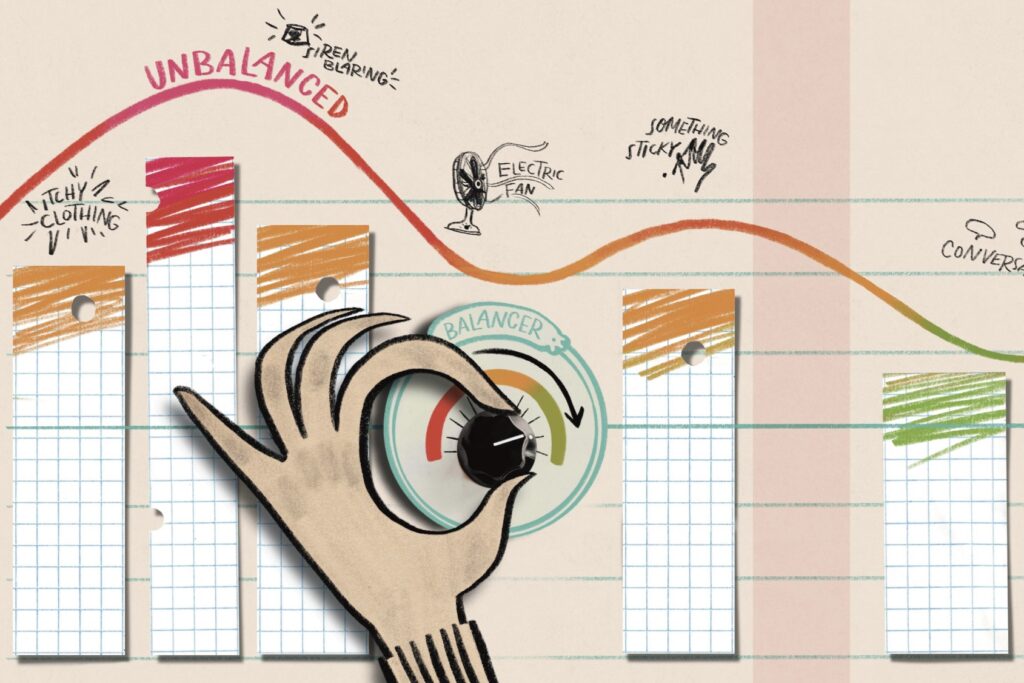
Did you know that most people don’t notice the feeling of clothing tags?
I used to think that everyone felt the same itchy irritation I did, and that I was just worse at coping.
But, when I started researching sensory processing to support my own child, I learned something life shattering.
I wasn’t worse at coping.
I was experiencing the world differently.
Sensory modulation is the brain’s way of balancing sensory input.
Consider how a pupil dilates or constricts to let in the right amount of light. Brains can change the intensity at which we experience sensations. They turn down senses evaluated as “unimportant” so you can better focus on a single input.
This isn’t a conscious choice. It is something that happens for most people with the same ease as a pupil dilating when you step into a dark room.
If you’re listening to someone, you probably don’t need to feel that clothing tag in the back of your shirt, to hear the lightbulb buzzing, or to taste the perfume of the person next to you.
Due to sensory modulation most brains wouldn’t even feel those things.
Meanwhile, neurodivergent brains may feel things so intensely that we can’t hear what the person next to us is saying. Or we may hear them, but it is a struggle that leaves us overstimulated and exhausted.
Our brains are simply processing much more information.
Check out this brain scan of an autistic brain (left) versus a non autistic brain (right).
Image Credit: schneider lab §
These scans were taken while the participants were processing spoken language. The non autistic brain is using sensory modulation to focus on the speaker’s voice. While the autistic brain is taking in lots of additional information.
This is why “exposure therapy” is not appropriate for neurodivergence.
Our brains are simply working differently.
Different isn’t bad.
Even if some people want us to believe so.
Brains with sensory processing differences can observe connections that others can’t. This is a unique skill set to bring to problem solving, art, science, and activism.
The world needs neurodivergent brains.
And we all need to better understand them.
That’s why I teamed up with Gracie Klumpp to co-create a picture book about neurodivergence and sensory modulation. This is the book we wish that we’d had as autistic kids.
We’re in the final stages of copy editing and proofing and can’t wait to share this with you. Books will arrive this summer!
I’ve had a lot of messages tentatively asked me if this book could also help adults.
So let me say it loud and clear… YES!
We believe picture books are for everyone and welcome readers of ALL AGES.
Support needs are not something you outgrow.
This is something Gracie indicates beautifully by including adults, teens, and children in the illustrations.
If you’d like to support the project you can also donate a copy and we’ll find your book a home (like a library, school, or with a neurodivergent family.)
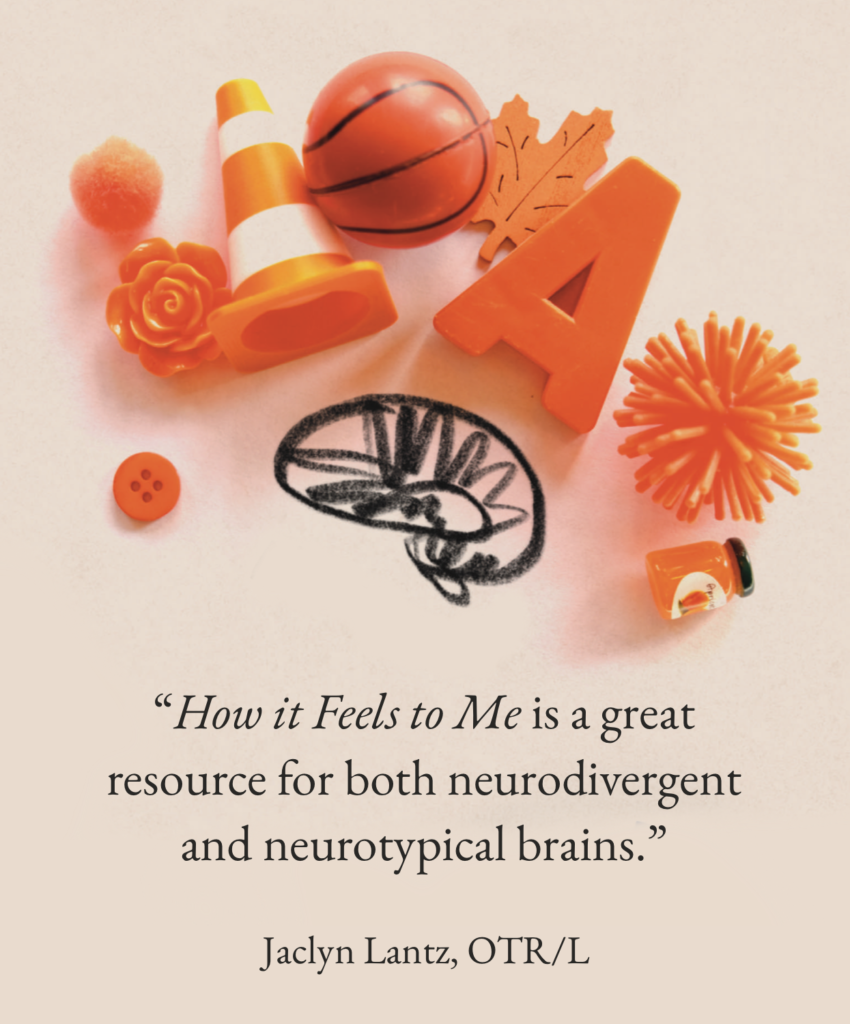
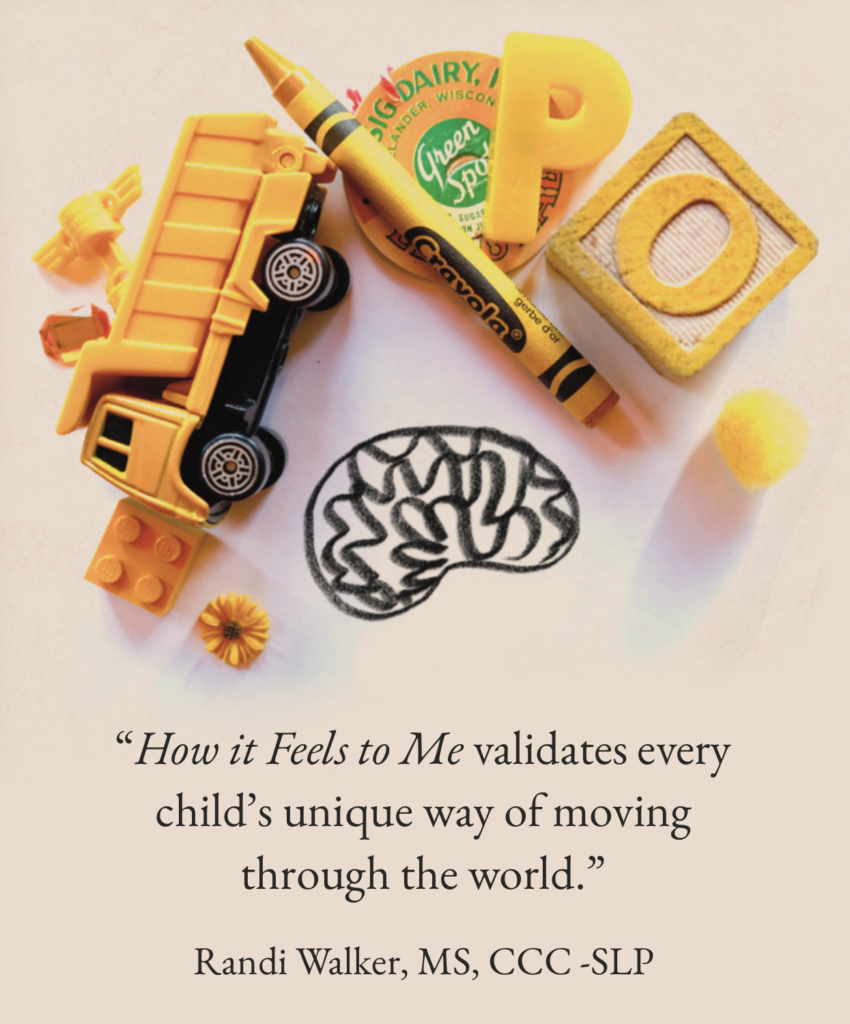
We want to partner with educators, writers, occupational therapists, speech therapists, neurodivergent adults, and affirming mental health professionals to read the book and consider writing a blurb (a short quote) for marketing materials.
I’m also in the early stages of building a launch team to help spread the word.
If you’re interested (or know someone who might be) send me an email.
Much love to everyone who has supported the project so far.
Within a year of giving birth I started making art to process my experience. That was the beginning of This is My Brain on Motherhood.
Seven years later, I think I’ve fully integrated the identity of parent.*
Which means I’d like to complete this collection, celebrate it somehow, and then move on to making art on other themes (like neurodivergence or perhaps chronic illness.)
One of the pieces I’ve struggled to complete is a soft sculpture brain made with baby clothes. From the first little brain noodle (the white washcloth center of the left hemisphere) I had the vision.†
But sewing through layers of fabric is hard on the hands and pretty quickly I had split my skin and it was too painful to continue. I finally realized the easy injury and slow healing was due to a connective tissue disorder (more on that soon).
I tried every thimble under the sun and none of them were dexterous enough to give me the fine motor control I wanted. I put the project down for months on end and picked it up a bit here and there – always ending up a little worse for wear after working on it.
Eventually I discovered the needle puller from Mx. Domestic (in action above!) and was able to sew the second hemisphere of the brain.
But I still felt stuck. It took a while to realize why. The form was coming together, but I was lost on its purpose. I still had no clarity on what the brain was meant to represent.
It all felt a little too sentimental to be fine art, but too weird to not be.
Sometimes my art begins with a concept I want to represent. Other times I start with the form first and find the meaning during the process.
Least week, I saw an upcoming deadline for a project about chronic illness. And I suddenly realized, with a few changes, this piece has the potential to represent brain fog. A symptom of new motherhood and hEDS (one of my new chronic illness diagnosis’.)
Instead of a complete brain my vision is now for half wool roving to spill out representing brain fog.
Ending with this piece feels very full circle.
It wasn’t my first work about motherhood, but was certainly one of the earliest. This piece held space for me to reflect as I sewed scraps of newborn onesies, toddler tees, and tiny socks.
Having a connection to chronic illness – a theme I’d like to explore next – feels right. Perhaps this will even be a work that belongs in both collections.
I’ve intended to write a blog post about ARIM for oh, six or seven years. At this point I’ll probably give it a few months and write a full retrospective.
This body of work was created with the intention of eventually hosting a solo art show. A pop up where I hung my art in my house and invited a handful of friends over to see it.
Little did I know my art would travel to galleries across the U.S. and even be exhibited in New York City.
I have other visions now, for celebrating the collection virtually, in a form that isn’t geographically limited.
But I’m still working out the details.
Would you be interested in…
“This is My Brain on Motherhood” art book / monograph
set of postcards
art prints
virtual artist talk
If so hit reply and let me know!
This project would be slotted for autumn or winter (after the summer book launch for How it Feels to Me.)
I’ll be back next week with more neurodiversity chat.
Perhaps literally! I’ve been working on a new podcasting set up.
If there’s a topic you’d like me to cover send me a note and let me know.
Thanks always for your support.
Cheers,
FOOTNOTES
* I knew autistics struggled with transitions, but this was one heck of a transition. I did NOT expect it would take this long to exit “crisis mode” and feel like I’m a person again. Nevertheless, I’m glad that making these pieces and creating Entwined & Ember were portals for me to explore the identities of mother and parent and what they means for me.
† Shoutout to Mindy Sue Meyers for hosting the soft sculpture workshop and for encouraging me – even when I completely ignored her instructions and took things in my own direction.
Over the last decade I have been neuroqueering my creative practice. Setting aside neurotypical, able bodied, and capitalist expectations for consistency, branding, and profit like the ill fitting shoes they are.*
Looking back, the times in my life I was rigidly consistent I was run deeply outside my own capacity, which over time took a toll on my health (both mental and physical.)
Allowing my creative projects to fluctuate with my capacity, as a chronically ill autistic caregiver means that they ebb & flow. Seasons when my time and energetic capacity expand so does my creative practice. When I am experiencing a pain flare or focusing on caregiving challenges my projects shift into dormancy or ideation.
Having many different mediums means there is always something to fit my capacity.
I NEED ART TO LIVE.
Art is how I self regulate, how I co-regulate with my child, and how I process lived experience and the world around me.
Without art I go to a dark place.
For years, I had inflexible routines and self imposed deadlines that did not serve me. But the newly discovered fluidity of my creative ecosystem has allowed me to flourish in unexpected ways.
This meander map is based on my 2025 Artist’s Log which tracked the time spent on each creative project over the course of the year.
These undulating ribbons represent the four main streams of creativity I pursued in 2025.
Yellow: visual art
Green: self publishing and writing
Blue: redesigning website & blogging
Purple: zines
The process of crafting these prints took several months. Calculating stats, making a graph, drafting the meanders, testing printmaking techniques, paper & inks, creating collagraph plates with unraveling cotton twine, and printing each plate onto wet paper using the Provisional Press.
The prints were digitally combined for the zine cover and overlaid with a key on transparent vellum. This layer can be removed to display the zine as a diptych. The zine was hand typed on my 1950s Smith-Corona typewriter.
The concept and color palette were inspired by the meander maps of geologist and cartographer Harold Fisk.
The above text is from February’s zine. If you’d like a copy you can subscribe for $5 a month or buy a single zine in my shop.
Here’s a peek at how the layers work together with the transparency.
Here’s a peek at how the prints are coming out (ignore the buckled untrimmed paper). They will all be flattened, signed, and numbered. Each print is unique. Remaining prints will be added to my shop, and will be priced at $65.
Collagraph is a printmaking process I learned in university. It feels good to return to it after so much time. I shared more about the process (along with a few other test prints) on the blog a few weeks ago.
Thank You
To everyone who sent kind messages and preordered books after last week’s post about illustrating neurodivergence. Gracie & I really appreciate you and very excited to get this picture book into your hands.
If you’d like to preorder a limited edition hardcover you can do so here.
(Paperbacks will be coming soon at a lower price point.)
In Case You Missed It
If you’re having a hard time with the state of the world I wrote this for you a couple weeks ago.
* Neuroqueering is used here as the verb meaning, “the practice of queering (subverting, defying, disrupting, liberating oneself from) neuronormativity and heteronormativity simultaneously” as coined by Nick Walker Ph. D.
I’m back this week with an update on the picture book How it Feels to Me. This is a book about neurodivergence and sensory processing I’m co-creating with illustrator Gracie Klumpp.
It’s fully crowdfunded and coming out later this year!
Last year we ran into some challenges due to substandard quality of our first proof. Ultimately we had to explore alternatives and change printers. Every printer offered slightly different “trim” sizes which meant this process delayed finalizing the illustrations.
Now that we’ve chosen a printer we’re back on track and the illustrations are nearly complete. Later this month we’ll order the next proof and send the text to our copy editor and beta readers!
Here’s a peek to share how it’s coming along…
It’s completely magical to see my words come to life in this way!
Gracie’s using a cool combination of illustrated and photographed elements to visualize the concepts in this book.
We both see this as the book we wish we’d had as kids and hope it will help autistic and neurodivergent folks of all ages!
We’re running a little over budget (because of rising costs and changing printers).
If you’d like to help us bridge the financial deficit you can do so here.
Samwise: It’s all wrong. By rights we shouldn’t even be here. But we are. It’s like in the great stories Mr. Frodo. The ones that really mattered. Full of darkness and danger they were, and sometimes you didn’t want to know the end. Because how could the end be happy? How could the world go back to the way it was when so much bad happened? But in the end, it’s only a passing thing, this shadow. Even darkness must pass. A new day will come. And when the sun shines it will shine out the clearer. Those were the stories that stayed with you. That meant something. Even if you were too small to understand why. But I think, Mr. Frodo, I do understand. I know now. Folk in those stories had lots of chances of turning back only they didn’t. Because they were holding on to something.
Frodo: What are we holding on to, Sam?
Samwise : That there’s some good in this world, Mr. Frodo. And it’s worth fighting for.
This is what I needed this week. I’m sharing in case you needed it too. If you’d like to hear Samwise himself you can watch the scene here.
We are all going through it.
So today I’m sharing some resources. First for mental health and then accessible forms of advocacy against the Shadow.
Last month I listened to the audiobook of You Will Get Through This Night by Daniel Howell. I can’t recommend it enough to anyone struggling even a bit with mental health (and who isn’t?)
Dan is a YouTuber who experiences chronic depression and social anxiety. He worked with mental health professionals to create a practical guide to supporting your mental health. Dan’s writing style and personal anecdotes make it feel like you’re talking to a friend who gets it. Particularly when listening to the audiobook. (And did I mention he’s British? Love an accent.)
You may even find the book (or audiobook) at your local library so be sure to check Libby.
So many of the tips are simple, but hard to prioritize.
I enjoyed it so much I think I’ll re-listen to it each winter.
Last year I made a zine with self regulation ideas that you may find useful.
I also have to share this beautiful painting by Amie McNee.
This is for anyone who feels their creative projects are frivolous or unimportant. Or anyone who is struggling with sharing their art right now.
Please don’t stop. We need it.
At the same time, if what you need right now is deep rest and reflection, that is an equally important way to tend your creative ecosystem. And is essential for making art.
Find Joy
Another important way to support your mental health is to find sources of joy. I loved this queer twist on this Caemlot inspired romance, Gwen & Art Are Not In Love. It’s a light read, YA romance (no spice), with neurodivergent-coded characters. The author Lex Croucher is queer and nonbinary.
I’m also on the third book in the Seaborn trilogy (queer pirates with magic) which I’m reading with the Livingstans book club.
Fight despair with action.
We all have different strengths and capacities. I’ve shared before that advocacy action items are often for able bodied and neurotypical people. Here are some ways to get involved if you aren’t able to protest and may struggle with phone calls.
While the neurotypical world is chanting “new year, new you” many autistic and otherwise neurodivergent folks are just struggling to get the train back on the tracks in January.
Our family finds the holiday season quite difficult. Even with our best intentions to slow down and do Christmas in our own ways the change of routine and excitement always seems to tip us into dysregulation. Add to that distressing news, weather related pain flares, and chronic illness* and I have been having a particularly hard time.
Yesterday I spent most of the day in acute pain laying on a heating pad and wondering why my body had suddenly turned against me. I’m hurting today, but less intensely and trying to type this up while I can manage to do so.
I think it’s important to show the struggle and not just the highlights reel we’re all encouraged to curate nowadays.
If you’re not fine I made this for you a few months back.
Another regulating tool I can recommend Marina Gross-Hoy’s gentle workshop The Art of Beginnings. (Coming this weekend!) I love Marina’s work and although I can’t attend live I’m planning to brew a nice cup of tea before I watch the recording.
I’m am looking forward to Marina’s gentle presence as we begin piecing together our daily rhythm this January.
When I have the capacity I’ve been working on prototypes for a series of collagraph prints to represent my creative process (based on the data from my 2025 creative ecosystem pie charts.) †
I’m playing around with the form of a meandering river bed, and used the data to create four different paths for visual art, self publishing, blogging, and zines. Here are some mock ups in Procreate.
Then I’ve been testing different printmaking techniques. I’ve decided on collagraph (a process where you collage a plate to print from) with an unraveling cord.
The final print will be four different meanders overlapping each other printed on the same page. These will go out to my print subscribers at the end of January and will also be reproduced on the cover of January’s zine.
I’m keen to get this project done, but my body has been forcing me to pace myself and I am trying to listen.
Here’s a clip of me pulling a test print.
The inspiration behind the shape of overlapping meanders is from last year’s mood board and the meander maps of Harold Fisk. I’ve learned that my process ebbs and flows and will be writing more about this for January’s zine.
I also wanted to share a tip for anyone who’s interested in tracking your time.
After last week’s newsletter one of you kindly sent me the EARLY time tracker app which does almost the same thing with much less friction. I’ve been playing with it for January and honestly it will save a ton of time that I spent tinkering with spreadsheets. (Thanks Katie!)
Over the past few months I’ve also been working on the Alchemy (Trade & Barter) portal on my website. It’s framed as an immserive choose your adventure story and you can read it here.
It’s a whimsical invitation to exchange energy and art outside of the framework of money. Art for art. Book for book. Zines for zines.
Last January I opened a 26 year old time capsule and made a zine about it.
According to my timer app it’s been over an hour of typing (HOW does this take so long??) and my back is warning me to wrap things up. I’m going to queue this up without proofreading again. Thanks for your generosity and understanding.
I’ll be back next week to announce a new project.
Take care.
P.S. Yes, the title is a quote from Daniel Howell. If you know you know. 😉
FOOTNOTES
* I’ve recently been diagnosed with multiple chronic illnesses, but have not had the spoons to sit down and write about the experience. Soon. Maybe next month.
† This is for the ILSSA open call to diagram your creative process.