Hyper sensitivity is real, but the term HSP dehumanizes autistic people.
…
Ok, deep breath.
…
I needed to pull you in with the title, but that may have flared up your nervous system. Let’s start over.
I’m mindful that I’m addressing sensitive humans.
You might find it hard to change your mind because it means admitting that you’re wrong. I get it.
I’ve felt that way too.
We’re all imperfect humans trying to understand the world around us. Let me be clear that I’m not saying anyone is a bad person.
But I am asking you to stop doing something that is hurting me, and I hope you’ll listen. My heart is beating like crazy while I type this, but HSP is trending and it’s only getting more popular.
I don’t think the sensitive souls using it realize how much pain it is causing autistics like myself.
I’m asking you to open yourself to the possibility that you might be using a term you do not fully understand.
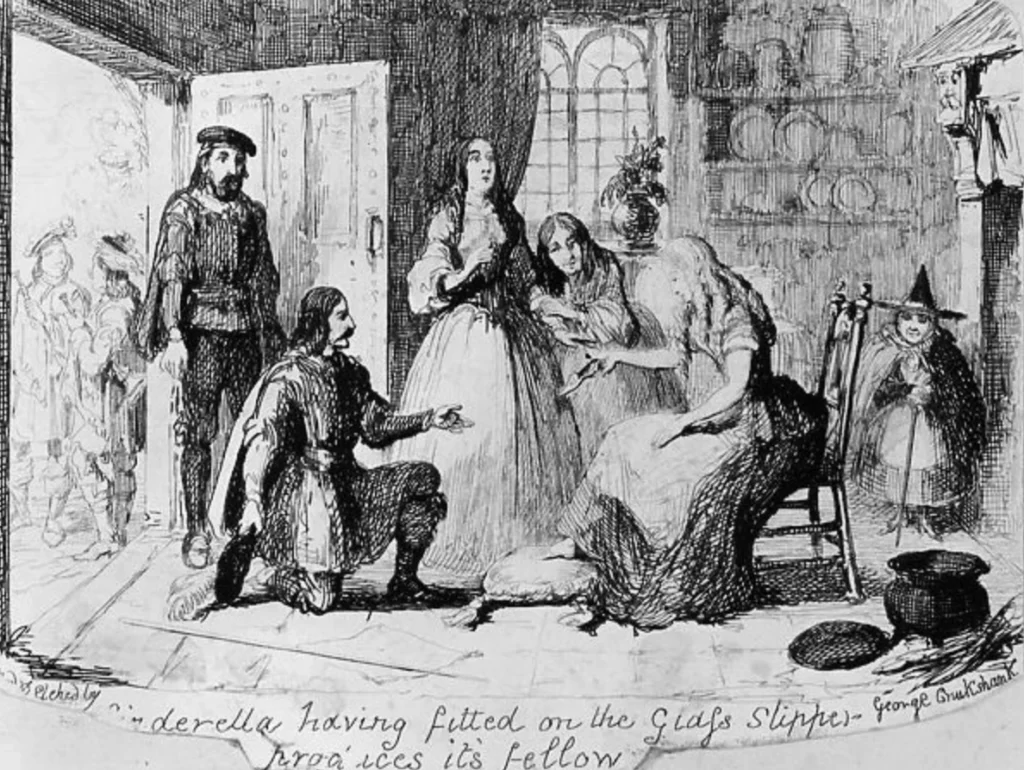
Did you know the term HSP is based on the book “Highly Sensitive Person” by Elaine Aron?
I want to be clear that my issue with HSP is rooted in Aron’s writings. (She coined the term.) I have no doubt that you are highly sensitive and that your body processes sensory input in an intense way. I also remember the relief at realizing that truth for myself and reframing my sensitivity as a difference and not a character flaw.
The term “highly sensitive person” sounds universal and harmlesss. But unfortunately HSP carries a lot of baggage and pain for any autistic person familiar with this book.
Here is a direct quote from Aron concerning autistic people,
“Their problem seems to be a difficulty recognizing where to focus attention and what to ignore.
When speaking with someone, they may find the person’s face no more important to look at than the pattern on the floor or the type of lightbulbs in the room.
Naturally they can complain intensely about being overwhelmed by stimulation… but in social situations, especially they more often notice something irrelevant, whereas HSPs would be paying more attention to subtle facial expressions, at least when not overaroused.”
This passage alone expresses a deeply ill informed and outdated conception of autism. This is unsurprising because the book was first published in 1996 … long before the neurodiversity movement.
Aron’s views toward autistics are harmful and blatantly inaccurate.
- Many autistics are acutely aware of facial expressions and may even be hyper empathic. *
- It is a myth that all autistic people struggle with eye contact. †
- When autistic people do struggle with eye contact one of the main causes is sensory overload. ‡
- It is dehumanizing to judge what the autistic person is looking at or noticing as irrelevant. (Yes, we do notice small details sometimes! But it doesn’t mean we aren’t listening if we aren’t reacting the way you expect.)
This book was published in 1996. It is outdated and should go out of print.
Before we go any further it’s really important to start with this:
If you’ve met one autistic person you’ve met one autistic person.
If you know someone who is autistic you may think that you understand autism, but we are each incredibly unique.
One person may love loud music the other might cover their ears.
One kid plays elbow deep in mud the other can’t bear to touch it.
One person loves running into the ocean the other can’t shower because they hate feeling water on their face.
No single person has every autistic trait.
This is why we say autism is a spectrum.
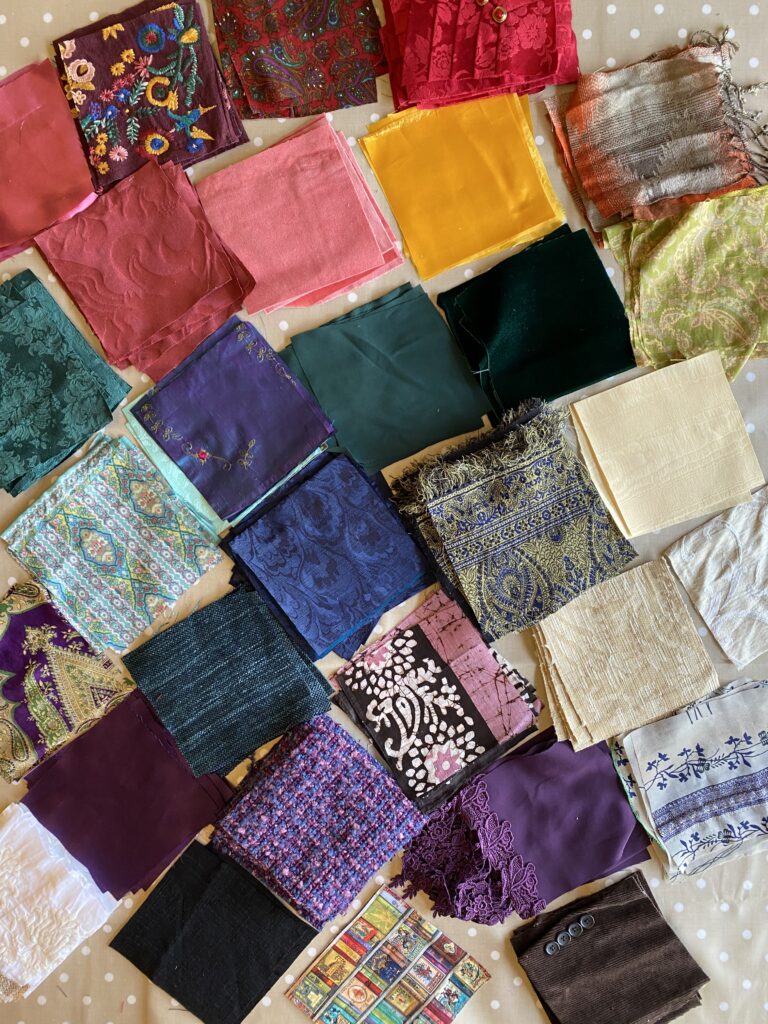
Imagine it like a color wheel.
Each color is a different intensity of a certain autistic trait.

If you identify as HSP you may not identify fully with autism at this time.
That is okay.
You could always call yourself “highly sensitive” or “hyper sensitive” or even just “sensitive.”
But it’s not okay to call yourself an HSP when the term perpetuates harmful stereotypes against autism.
I read the HSP book long ago, when I thought I myself might be an HSP and not autistic. So I know the main premise of the book is that your sensitivity is a difference and not a disorder.
I agree!
And guess what?
It’s no longer the 90’s, and there is better language for that.
Neurodiversity
What is neurodiversity?
“‘Neurodiversity’ is a term that suggests the human race is improved by having a diversity of different kinds of brains – like biodiversity in nature, having lots of different brains in a society means we have people with different strengths who can work together.” §
If you experience more sensitivity than the average person you are… neurodivergent.
It’s that simple.
If you identify as highly sensitive you are welcome and invited to identify as neurodivergent.
No diagnosis necessary.
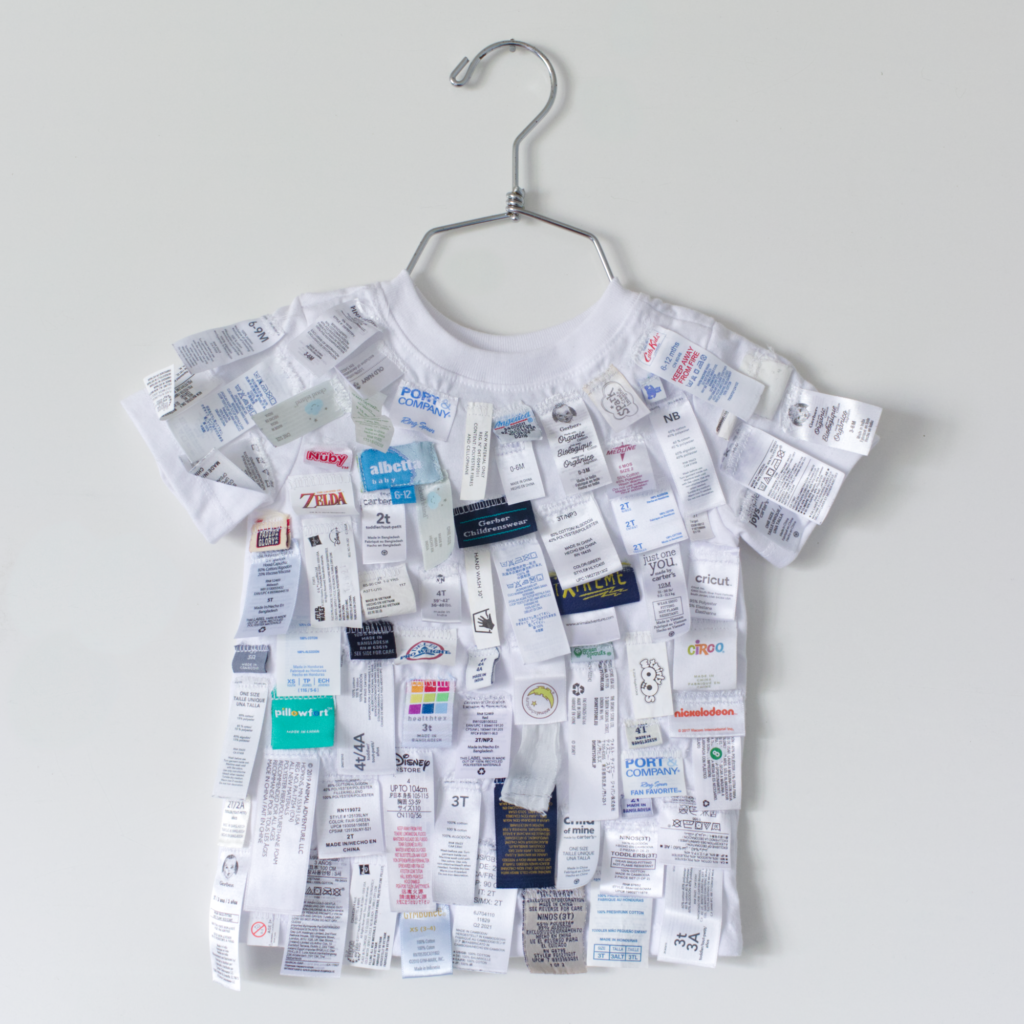
But… you might also be autistic.
Sensory differences are central to the autistic experience.
Many of us believe that our sensory differences are the root cause of all other differences.
Just look at these two brains.
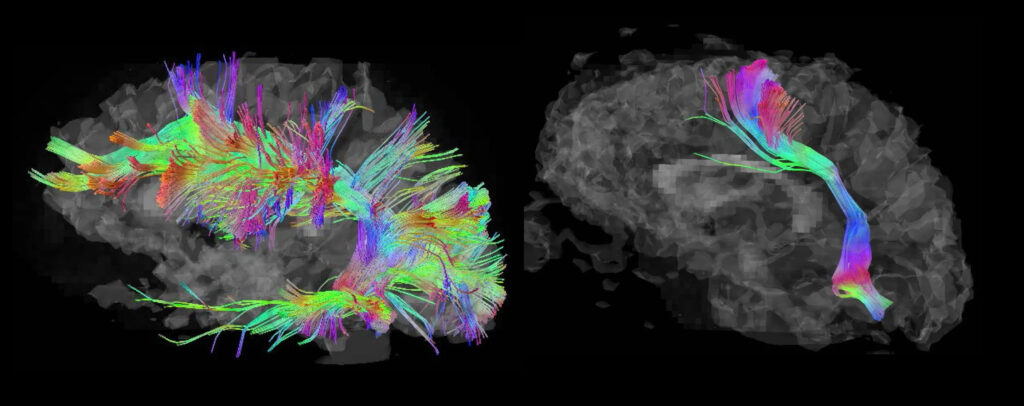
It is clear that the autistic brain (left) is processing much more sensory input than the brain on the right (neurotypical.) Differences in sensory integration may be directly related to language differences, social differences, etc.
There are also so many autistic strengths that are never mentioned! All of that extra information that our brain doesn’t filter out as “unnecessary” makes us excel at pattern recognition and problem solving. Autistic brains notice and make connections that neurotypical don’t even perceive.
But you may not realize this because even the professionals can’t all agree on what adult autism looks like.
Did you know that there isn’t a fixed diagnostic criteria for autism in adults?
They are using a test that was developed for kids and the whole process needs to be reformed. New research is slowly coming in that validates unstereotypical autistic experience.
The field of autism is in flux.
Early autism research was limited to aggressive nonspeaking white boys for a long time and only recently has the field begun to realize the variety of presentations autism can take. **
If you identify as hyper sensitive I’d really encourage you to follow some autistic adults to learn more about the autistic experience and to do some more research on “masked autism”.
Whatever you do I ask that you don’t think of autistic people as “less than” and see more of a kinship in our hypersensitive (or hyposensitive) experiences.
Not sure where to start?
Read my “What is autism?” post.
Visit my library of neurodiversity affirming resources for podcasts, videos, books & more.
Or subscribe for monthly-ish emails from me. I share my own lived experience and often write about creativity and neurodivergence.
As an autistic mum of an autistic kid this topic is close to my heart.
Right now I’m working on a picture book about sensory processing with autistic artist Gracie Klumpp. If you’d like to support the project you can preoder a copy (or donate one to a school or library) here.

FOOTNOTES
* Why so many women don’t know they’re autistic with Katherine May. Glennon Doyle’s We Can Do Hard Things Episode 220.
† Fact or fiction: people with autism never make eye contact. https://www.universiteitleiden.nl/en/news/2023/03/fact-or-fiction-people-with-autism-never-make-eye-contact
‡ How do adults and teens with self-declared Autism Spectrum Disorder experience eye contact? A qualitative analysis of first-hand accounts https://www.ncbi.nlm.nih.gov/pmc/articles/PMC5705114/
§ Autism Resource Page https://katherine-may.co.uk/autism-resource-page
** Gender Differences in Misdiagnosis and Delayed Diagnosis among Adults with Autism Spectrum Disorder
Racial/Ethnic Disparities in the Identification of Children With Autism Spectrum Disorders
Image Credits
Birds Flying: Bernard Hermant via Unsplash
Illustration by @autistic_sketches on Instagram
Brain Scan images via Schneider Lab