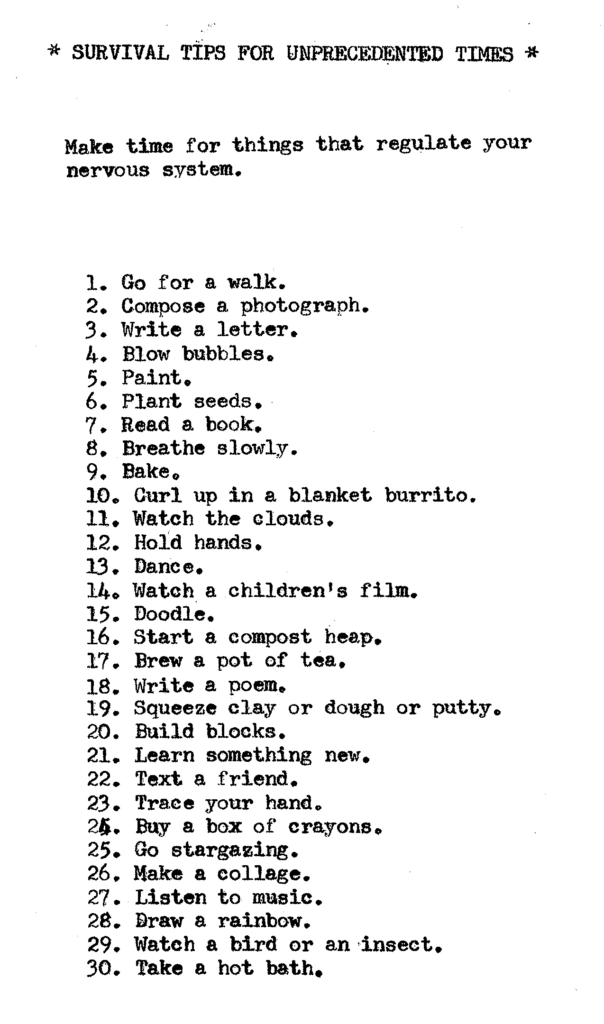
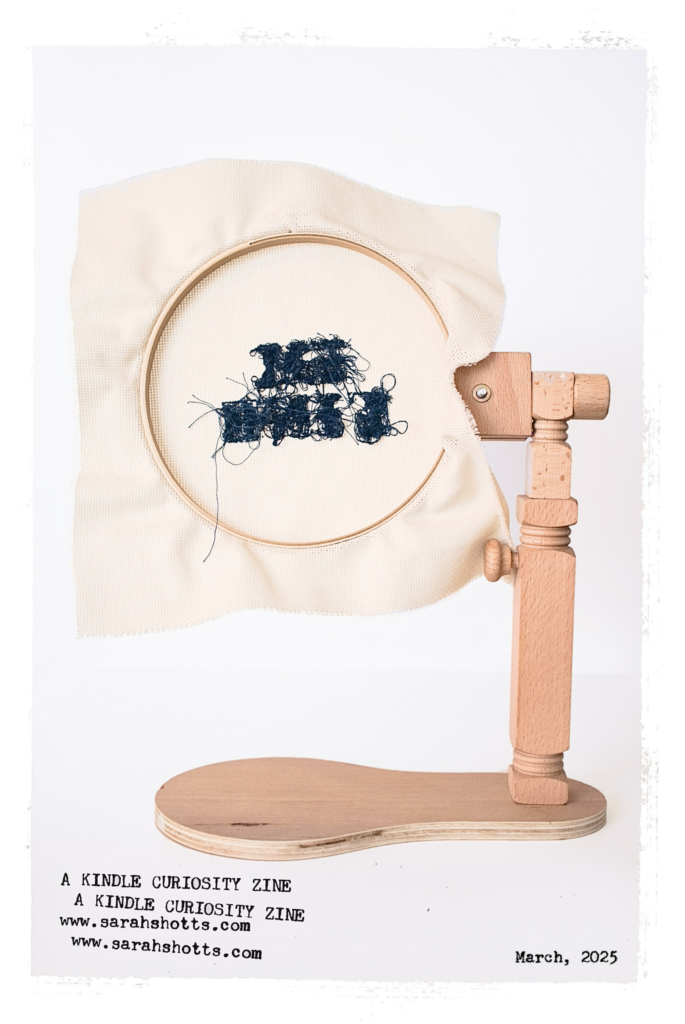
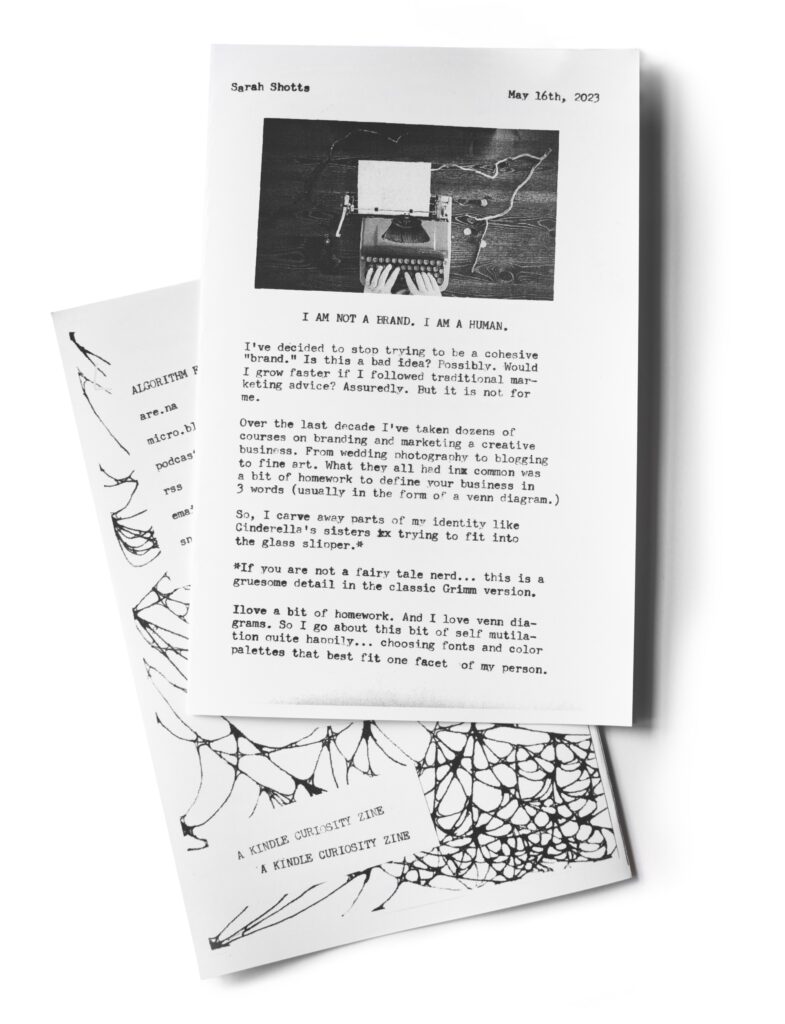
I think I’m finding my groove with zine making. I had a lot of fun going analogue this month and in addition to my typewriter I also incorporated collage and nature rubbings.
Or subscribe for zines delivered to your mailbox every month.


I think I’m finding my groove with zine making. I had a lot of fun going analogue this month and in addition to my typewriter I also incorporated collage and nature rubbings.
Or subscribe for zines delivered to your mailbox every month.

This season of Survivor was close to my heart.
Here’s an update, on How it Feels to Me, the picture book about neurodiversity I’m co-creating with illustrator Gracie Klumpp.
I couldn’t be more excited to share a peek our progress!
Before finalizing color palettes and fonts we decided to order an early proof to see how everything looks on paper. Something I’ve learned about self publishing is that early proofs can really help save time by identifying problems early on before they multiply.
Gracie put together a few spreads to test colors, fonts, and print quality. (Pinch & zoom to really get a good look on mobile.)

Lucky we did because we’ve completely changed our printer! (But more about that later.)
Here’s a really fun spread we’re experimenting with.
This is a visualization of sensory modulation that invites the reader to turn the book upside down to see how the levels change.

The next spread continues on from the first page, “All brains are different.”
“Just like all bodies are different.
We can see some differences, like if someone is tall or has curly hair, but we can’t see people’s brains.”

Here’s one more peek at some of the character work Gracie has been doing. I love seeing the concepts I’ve written about come to life!

These aren’t even finalized illustrations, but I’m already in love.
Two days before my birthday I opened a box to find this beauty inside…

Holding the proof in my hands was absolutely magical. It’s real. We are making this book.
And (unfortunately) it’s more needed than ever.*
Imagine my surprise when I opened the cover found someone else’s book inside.
The first 2/3 of the proof were pages from a completely different picture book. 🤯
I immediately texted Gracie to check the second proof. It had a completely different (but equally egregious) error. That edition had a huge white bar down the center.
The way this printer works these books were considered “final” and not “proofs.” †
Needless to say we are investigating different printers.
We’re currently exploring 48 Hour Books.
There are some pros and cons.
The quality will be excellent. We’re very happy with the sample book they provided.
But, the books are going to cost more than we budgeted. We haven’t finalized how much this will be yet. 48 Hour Books just invested in new printers and updated prices aren’t out yet. But the difference is considerable.
We’ll also be required to purchase a full print run (with a minimum of 100 books) rather than print on demand. This is the only way for the price of each book to come even close to our original budget.

There’s also the small matter that each proof will now be $40 instead of the budgeted $20. But this price difference ensures books (and proofs) are made with care.
I’m prepared (and able) to cover the difference in cost, but if you’d like to pitch in you can send donations via Venmo. I’ll share more concrete information about the pricing differences once we have that.
Here’s a video from our crowdfunding campaign sharing the inspiration behind the book and our goals for self publishing.
If you haven’t preordered a copy yet you can preorder here.
But we’re confident it will be worth the wait.
While we wait for 48 Hour Books to update their printers Gracie will continue refining the illustrations. Allowing me bandwidth to focus on proofs for Entwined & Ember (this is a big year for me!)
THANK YOU SO MUCH, each and every one of you, for all the ways you’ve supported this project!
We appreciate you.
P.S. If you’d like to support the project and don’t need a copy of the book you can also choose to donate a copy which will go to a school, library, or a neurodivergent family in financial hardship.**
* The US Government has recently categorized autism and ADHD as “epidemics” and is spreading harmful misinformation. I addressed it briefly in my new post titled, What is Autism?
† The printer was Ingram Spark, for the curious. We’d already dismissed Amazon for the hardcover edition. (Although we plan to release a paperback through Amazon later on to make the book as easy to find and accessible as possible.)
** If you donate a book we are happy to find the book a home or to send it to the school or library of your choice.
I thought my character flaws were all the times I made mistakes.
Turns out my character flaw was believing I could be perfect.
The most important thing to understand about autism (and more broadly neurodivergence) is that every person is unique.
You may have heard “autism is a spectrum.” This is because there isn’t one way to be autistic. There is a spectrum of experience.
But, this isn’t a rainbow from “less autistic” to “more autistic”.

In my experience it is more like a color wheel that’s constantly in motion.
The reason I describe the autism spectrum as in motion or flux is that my experience varies wildly based on external and internal factors (environment, clothing, health, access to supports, hunger, anxiety, etc.) This means my capacity varies from day to day and moment to moment.
I also find that my autistic traits are almost always rooted in sensory differences. So this a helpful place to start. I made this video to share my experience of overstimulation. (There’s also a shorter 30 second version here.)
That’s how it feels (for me) to experience sensory overload or overstimulation. The internal sensation can range from something like overwhelm and numbness to physical pain depending on the trigger. Remember this varies from person to person.
Why might an autistic person experience “normal” sensory input as pain or sensory overload? Because our brains process information differently.
Take a look at this brain scan.
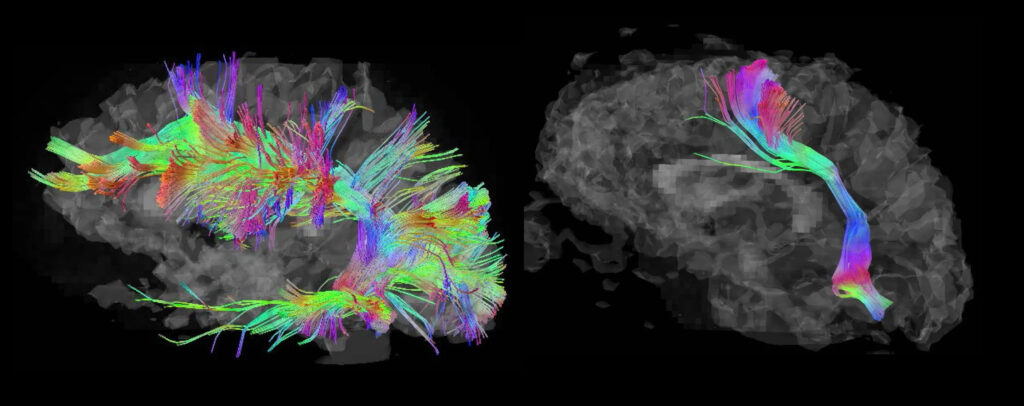
The scan on the left is an autistic brain processing language.
The scan on the right is someone without autism.
I love this image because you can see how much more information an autistic person is processing at any given moment. The non autistic brain is using a process called sensory modulation to focus on the speaker’s voice. The autistic brain continues taking in lots of other information simultaneously.
I believe understanding sensory modulation is essential for properly empathizing with and supporting autistic individuals of all ages.
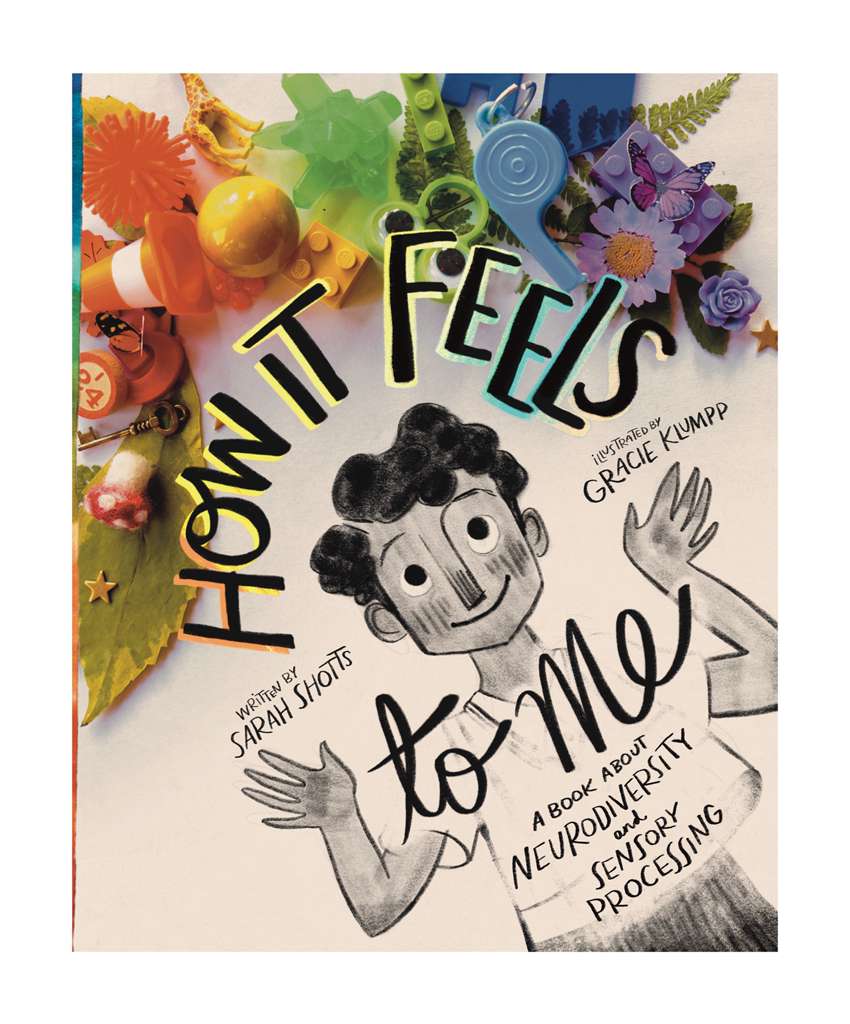
That’s why I co-created the book How it Feels to Me a book about neurodiversity and sensory processing.
* I have been professionally diagnosed with autism, but also have traits of ADHD such as time blindness and difficulties with object constancy. Having knowledge of these traits and functional coping strategies I have no interest in pursuing an ADHD diagnosis at this time.
† Illustration by @autistic_sketches on Instagram
‡ Artwork via Felipe Pantone on Instagram
§ Brain Scan images via Schneider Lab
** Neurotype is a term used to describe your brain’s processing style: autistic, ADHD, OCD, etc. If you are not neurodivergent your neurotype is neurotypical. Being neurotypical just means that your brain is processing the world like most others. This means the dominant culture has been made to support the way your brain processes the world around you. You are surrounded by supports for your neurotype every single day.
† † Printable Cards from Sensory Diet Workbook by Harkla (Affiliate Link)
My creative process is cyclical, but I like to think I am orbiting closer to true north.
I took last month off from blogging and wrote a personal update about mental health for my newsletter instead. I had more replies than ever.
Just another reminder that while I like structure sometimes I create needless work for myself. I need to shift my output to match my capacity. Not the other way around.
Last month I had migraines every other day. They let off when I lessened my computer time. It’s tough because I love blogging and connecting online, but I need to pace myself.
This means I won’t be digitizing the zines any more.
They will be completely analogue.

I need to slow down on migrating my archive. Otherwise my website is nearly “done” except for the Cabinet of Curiosities.
Last month’s newsletter also mentioned how well the boundaries I’ve created to protect my mental health are working. Which means I actually have capacity to take action. It’s unfortunate that my Masters degree, which focused on art for social change, is more relevant by the day.
Rather than spiraling into despair I’m focusing on positive actions that can be done.
My next step is to begin migrating my autism educational resources to my website. This is one small step to combat the misinformation and harm being spread by the US government. As well as proofing our picture book How it Feels to Me which is an #ownvoices book by two autistic adults about sensory processing.
But neurodivergence is just one of many groups being targeted right now.
So I’m working with some friends to create an advocacy resource library that spans multiple issues and suggests ways you can make a positive impact.
With collective action we can support each other and bring about positive change. 🌈
I’ve had a tab open for kening zhu’s post about rituals vs. sprints for nearly a month. It reminds me about something Katherine May once said on a podcast* about the cycle of neurodivergent hyperfocus and recovery. Versus a neurotypical ideal of consistency. It’s something I am still figuring out. Having experienced burn out I find I need to be careful of flying too close to the sun. But trying to force a structure that doesn’t align with my capacity is also not right. I’d love to hear other thoughts on this.
* I can’t seem to find the podcast episode I’m talking about. 🤦
As someone with time blindness I can very easily sink time into something without realizing.
This year I’m experimenting with spreadsheets and time charts as tools to visualize time. Here is how 2025 has been looking (as of March 24.)
I had a lot of loops to close in January and it felt like a ton of admin. This was my first month tracking my time. The pie chart was a game changer. I started it mid month and the wedges for web & self publishing dominated the chart. It took conscious effort to put more time into personal projects to balance the chart out.
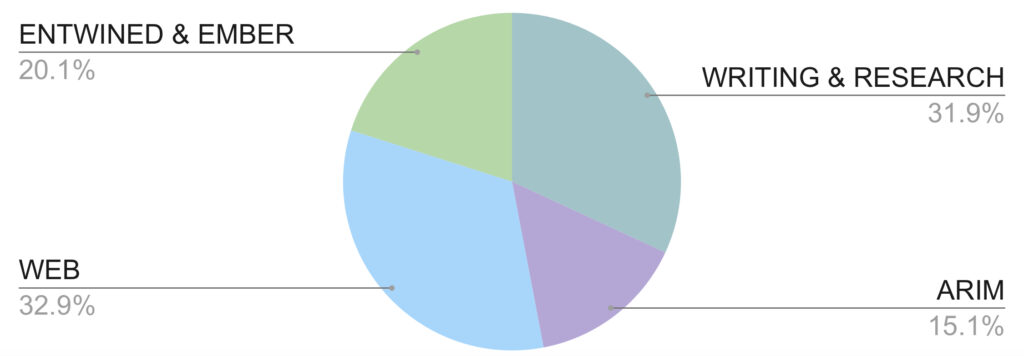
Writing & Research (31.9%)
Most of this was my fantasy novel Mawd.
Web (32.9%)
Mostly Substack – my own newsletter & wrapping up Neurokind.
Entwined & Ember (20.1%)
Admin for self publishing these books.
ARIM (15.1%)
This is time spent on my Artist’s Residency in Motherhood making visual art for My Brain on Motherhood.
This month my biggest wedge was redesigning my website. But seeing how big the blue wedge was motivated me to make time for other things.
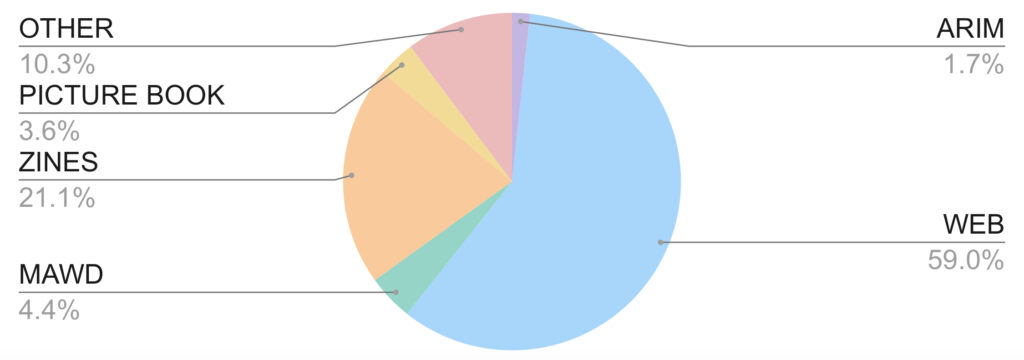
Web (59.0%)
Redesigning my website and migrating my newsletter to Buttondown.
Zines (21.1%)
Making Not About TETRIS and working on illustrations for a zine about the spectrum of neurodivergence. My scanner died this month and created a lot of headaches.
Other (10.3%)
Designed two self inking stamps (folks with zine subs will see these soon) and sewing patches on a denim jacket.
Mawd (4.4%)
Work on my fiction novel. I’m in an ideation phase.
Picture Book (3.6%)
Admin for self publishing How it Feels to Me.
My website wedge is still the largest (although I have a few days to go) based on shop and subscription migration headaches. I hope to continue making this wedge smaller over time.
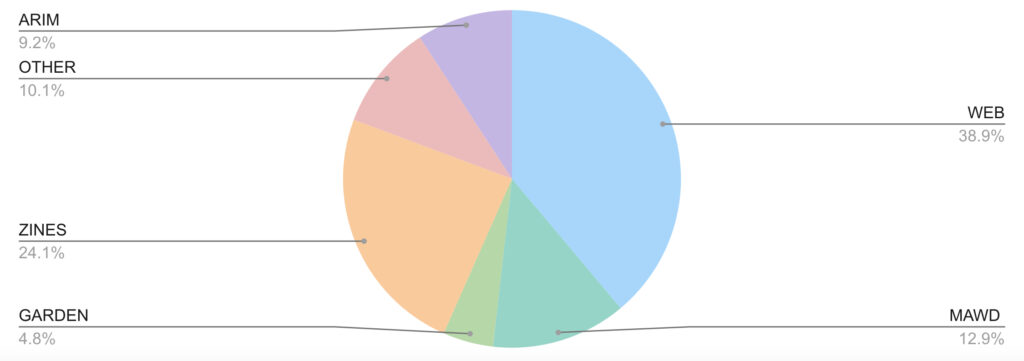
Web (38.9.0%)
Moving zine subs from Big Cartel to Stripe, redoing various opt ins, migrating Neurokind to Beehiiv, archiving March blog posts, and writing for blog & newsletter.
Zines (21.1%)
Making I’m Fine zine and a few Wheel of Time mini zines.
Mawd (12.9%)
Work on my fiction novel. Still in an ideation phase.
Other (10.1%)
Sewing patches & picture book admin (maybe that should be separated.)
ARIM (9.2%)
Working on Bloom Where You’re Planted.
Gardening (4.8%)
I debated over logging this, but it is important self regulating work and part of my creative ecosystem.
I also did a bar chart showing the different parts of the process to see that balance.
Here you see Admin & Prep decreasing and time to Create growing from January to March.
I’m 90% sure this shift would not have happened without this visual tool. It’s too easy to get pulled into neverending admin and website tweaks. This makes me more aware.

I found tracking the time itself really hard until I started using the Tap When app. (Not a sponsor.) I tap when I start and tap when I finish. No math!
P.S. My spreadsheets are in no condition to officially share as a resource, but if you’d like to see the imperfect version I’m working with I’m happy to share the template for you to make your own. Just drop me a line or respond to a newsletter.
Image Credit: Prague Astronomical Clock via Wiki Commons
A year or two before David was born my mom gifted me a weeping cherry tree for my birthday. It bloomed happily for a while and then a freeze split its bark and it became diseased and distressed.
I did my best to save the tree, but last year it didn’t come back after winter. After a year of mentally preparing myself for this I decided to use the sinuous wood to make a sculpture and Nathan helped dig up as much of the root as possible.
This month I’ve started stripping the bark.
My title for this work is Bloom Where You’re Planted. As an autistic person this has always rankled because I am not always able to thrive in unsuitable environments.
Here are some process photos.
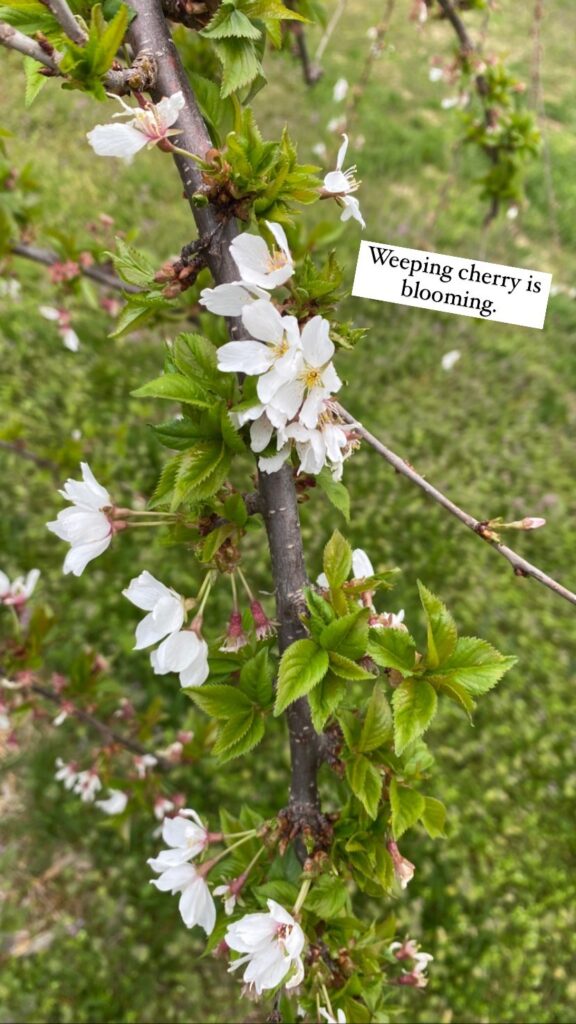
Sad tree half dead and half distressed.

Shoutout to Nathan’s farm boy muscle. I never could have dug this up myself because of my connective tissue disorder.
After pruning and removing some branches I found it balanced nicely upside down.
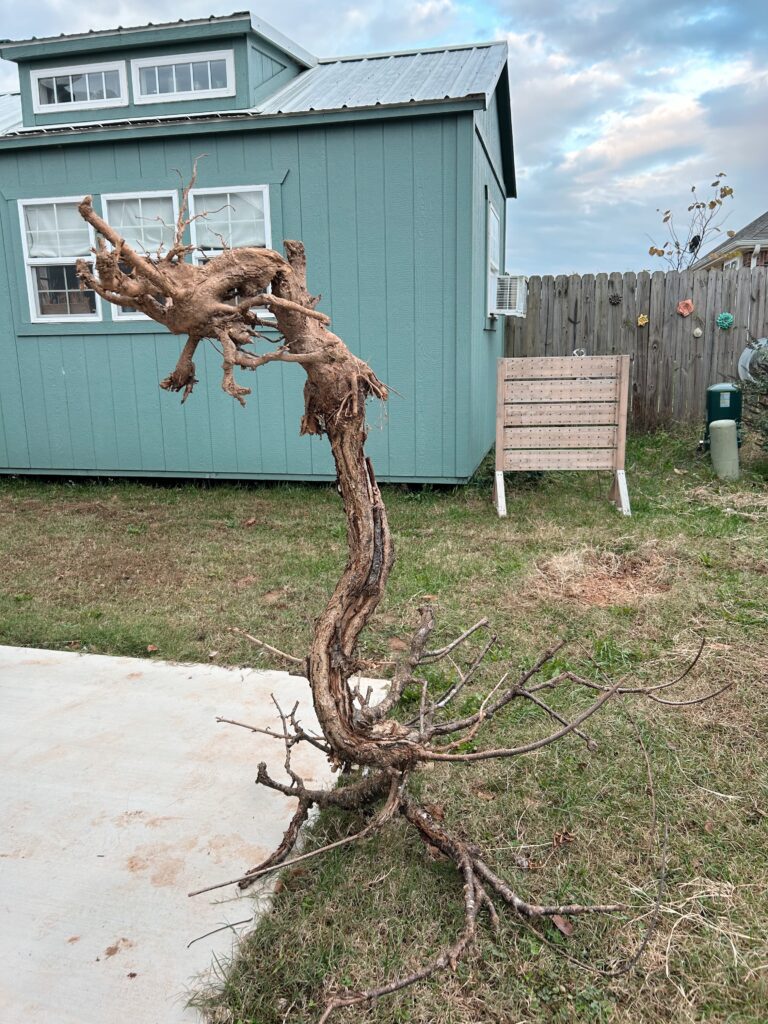
David helped me clean the mud off the root. This project has been a family affair.


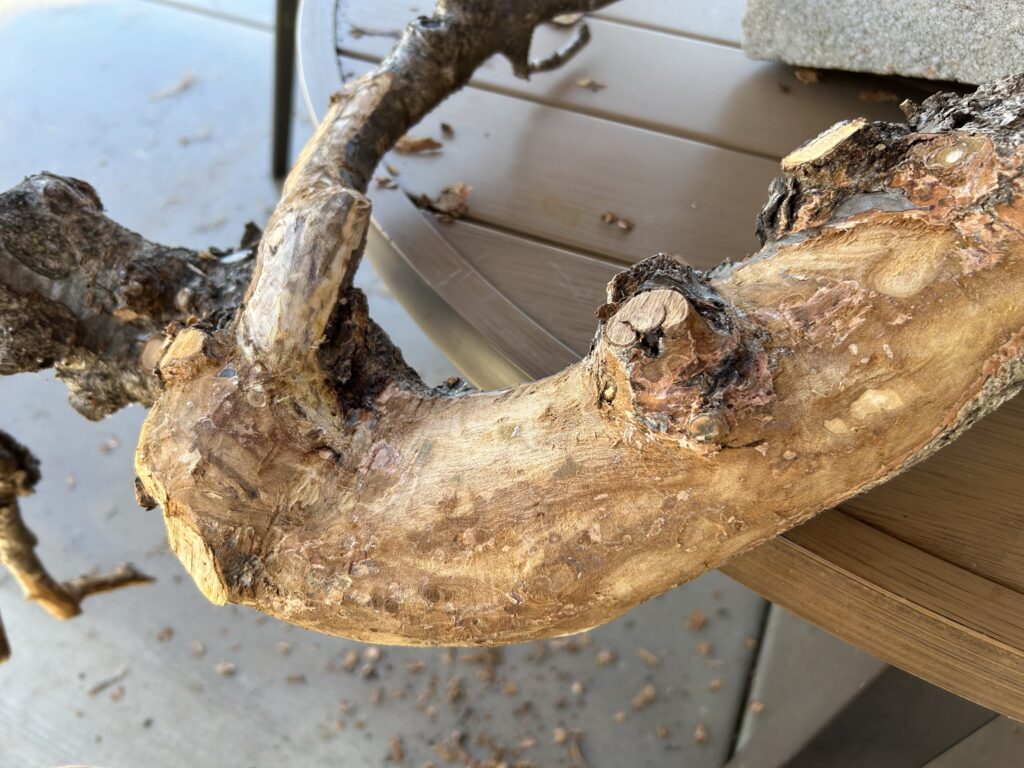
Removing the bark has been a very satisfying (if incredibly slow) process. Because of all the twists and turns in this particular tree I think I’m going to need some finer carving tools soon.
Update: March 2025