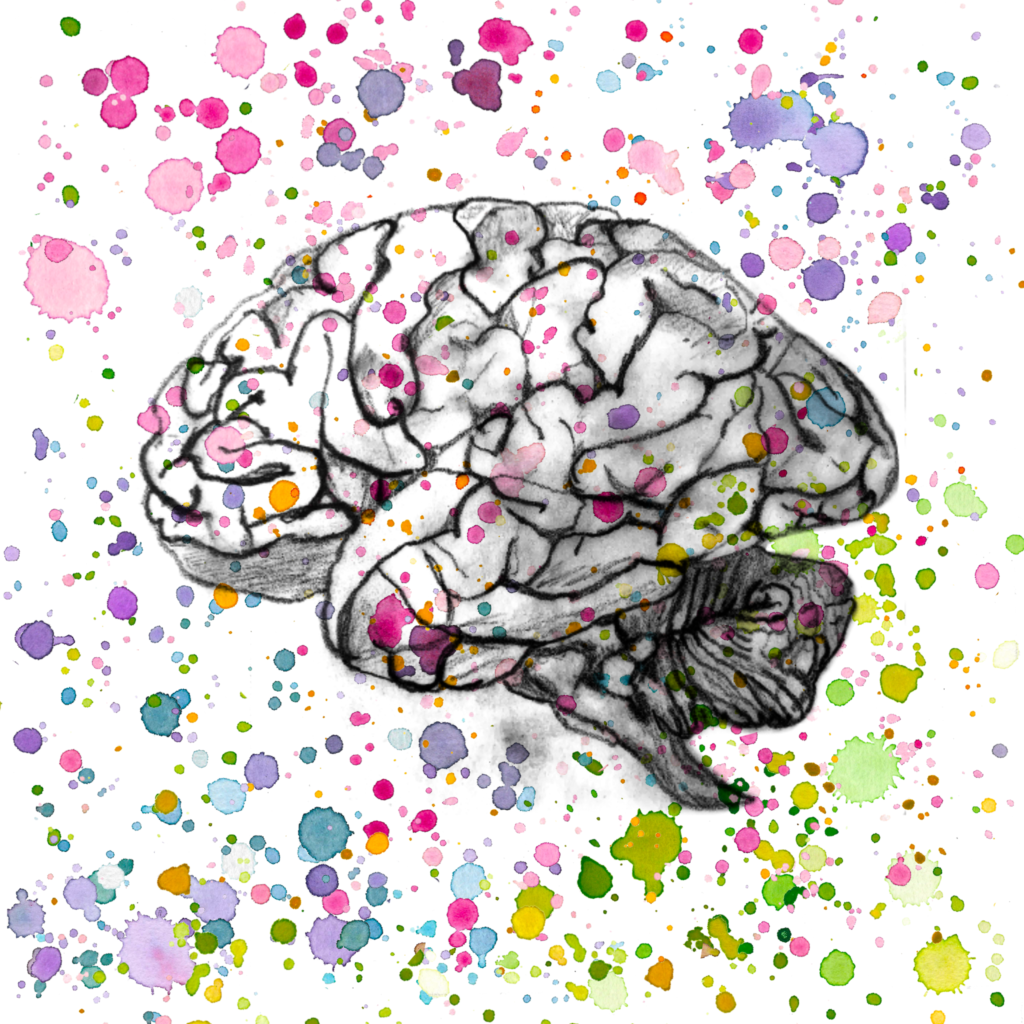
“LIFE IS NOT ABOUT READING OUT A BLUEPRINT, IT’S ABOUT CREATING FLEXIBLE RULES AND RESOURCES FROM WHICH DIVERSE FORMS MIGHT EMERGE.”
Philip Ball, How Life Really Works
via Austin Kleon

“LIFE IS NOT ABOUT READING OUT A BLUEPRINT, IT’S ABOUT CREATING FLEXIBLE RULES AND RESOURCES FROM WHICH DIVERSE FORMS MIGHT EMERGE.”
Philip Ball, How Life Really Works
via Austin Kleon

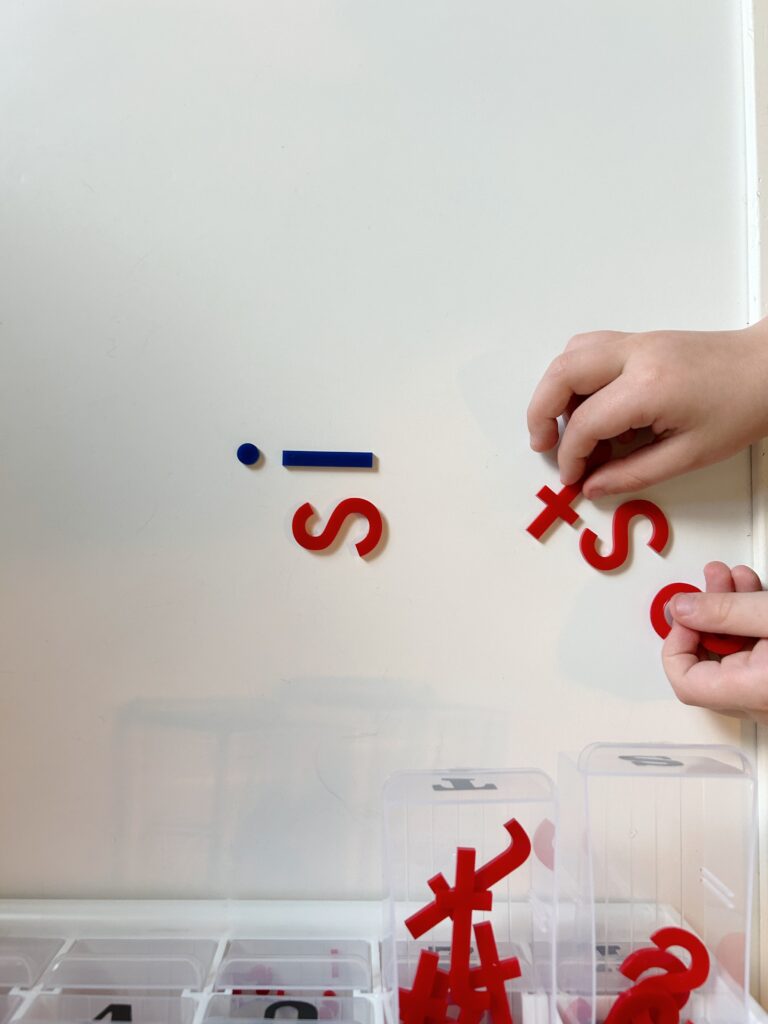
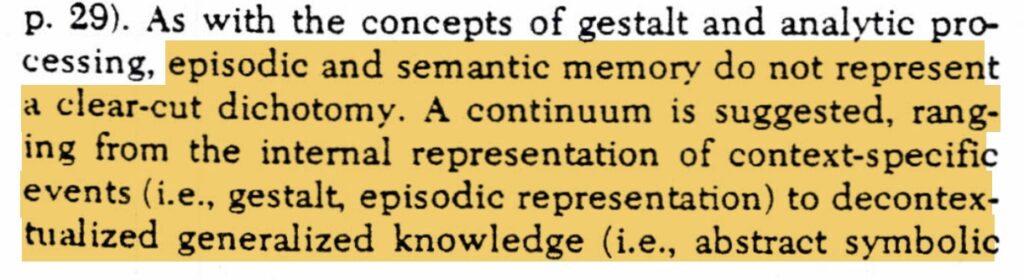
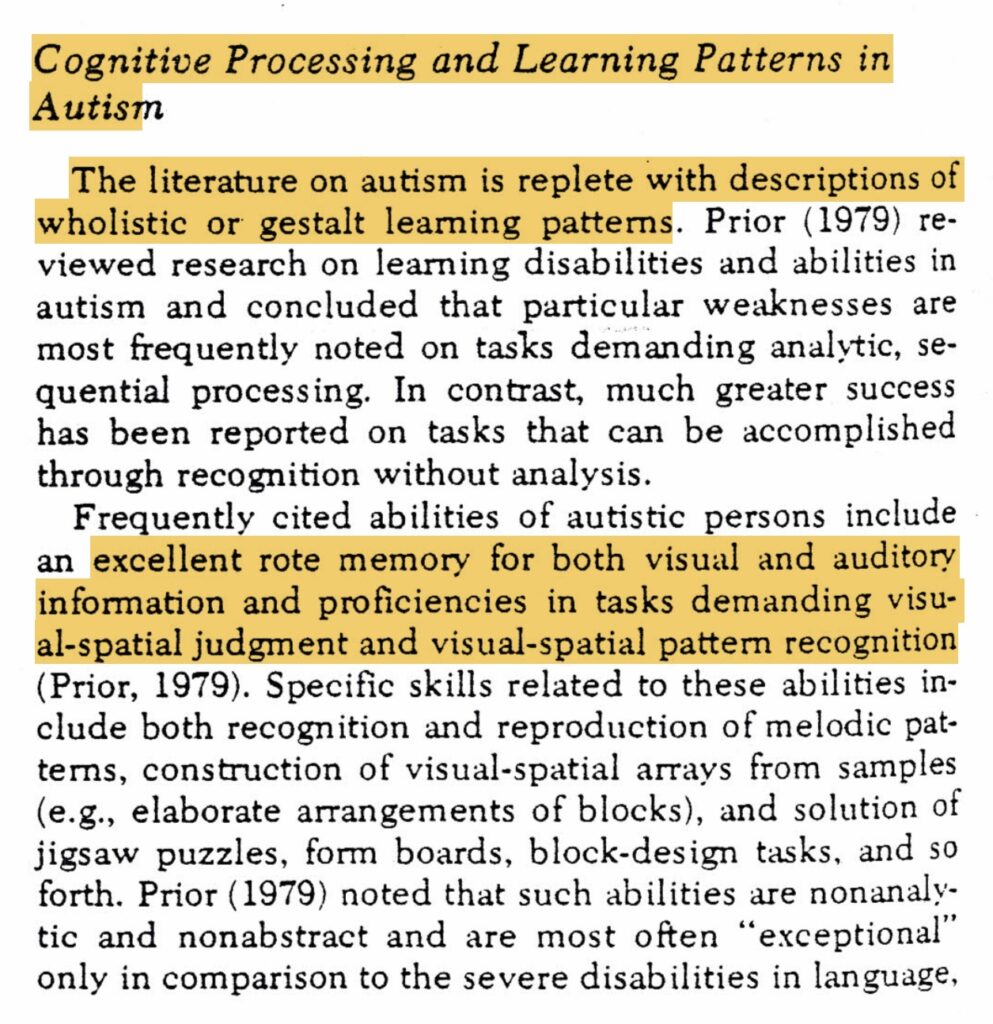
This seems like another potential language for whole to part thinking (gestalt cognitive processing):
Paul Jepson and Cain Blythe wrote in “Rewilding: The Radical New Science of Ecological Recovery,” rewilding pays attention “to the emergent properties of interactions between ‘things’ in ecosystems … a move from linear to systems thinking.”
Rewilding: The Radical New Science of Ecological Recovery
Source: We Need to Rewild the Internet
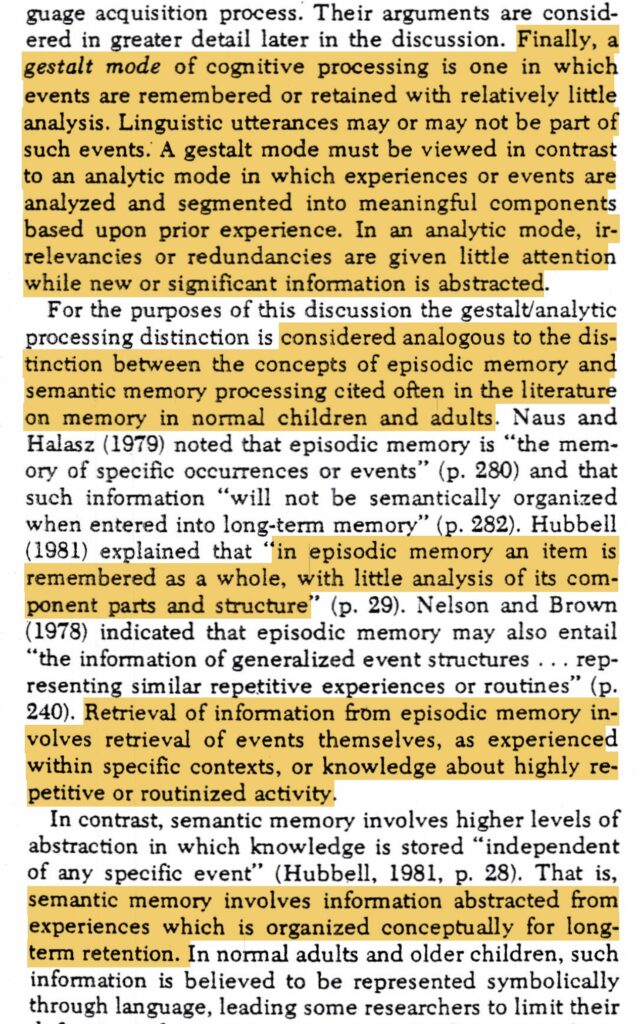
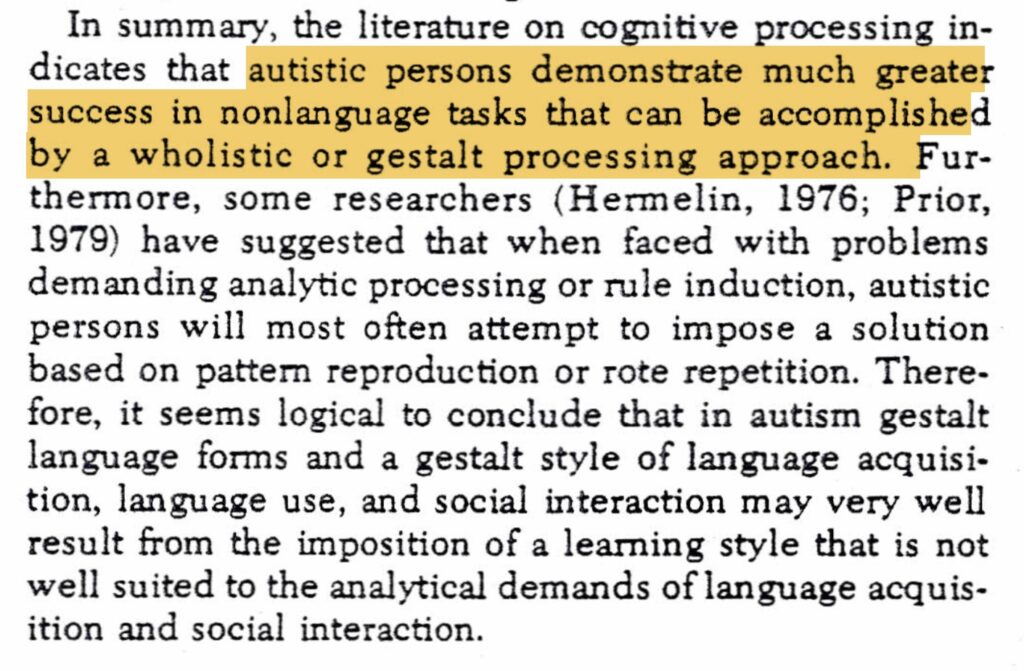
Gestalt cognitive processing is when experiences are held as primarily episodic memories. Gestalt cognitive processors process events as a “whole” that is made up of very specific parts. They are whole-to-part thinkers. They have a hyper-awareness of specifics and details in events that make up the entirety of the event, episode, or “whole” for them. … If something within that whole changes, it can be very distressing for a gestalt cognitive processor.
Alexandria Zachos, MS, CCC-SLP/L
Understanding Perfectionism
by Austin Kleon
Morgan Schafler says that perfectionists are people who “consistently notice the difference between an ideal and a reality,” and more often than not, have “a compulsion to bridge the gulf between reality and an ideal.” In her view, the perfectionist holds a kind of creative tension that contains an energy capable of creation or destruction.
The word Gestalt is used in modern German to mean the way a thing has been “placed,” or “put together.” There is no exact equivalent in English. “Form” and “shape” are the usual translations; in psychology the word is often interpreted as “pattern” or “configuration.”
via Brittanica
ADHD autism gestalt cognitive processing neurodivergence rejection sensitivity
My initial research into GCP seems to originate within the context of SLP who specialize in GLP. One SLP referred to monotropism in relation to GCP.
I’ve saved some quotes here, but I don’t completely agree with everything presented as monotropism in this paper. I think this is based on somewhat outdated research and a narrow view of autism.
“To a person in an attention tunnel every unanticipated change is abrupt and is truly, if briefly, catastrophic: a complete disconnection from a previous safe state, a plunge into a meaningless blizzard of sensations, a frightening experience which may occur many times in a single day. Following such an episode it may take a long time for any other interest to emerge.”
“For a monotropic thinker, if something does not work out as anticipated there are no alternatives available as there would be for a polytropic thinker. Instead of the projected outcome there is total disaster (Lawson, 1998). Total disaster is strongly demotivating.”
“features of the environment which seem obvious to people with diffuse rather than tightly focused attention may be entirely missed.”
https://journals.sagepub.com/doi/pdf/10.1177/1362361305051398?download=true
See also: https://monotropism.org
Questions I’d like to explore… 🔬
Do we get stuck because we see the whole finished thing in our minds?
Do we struggle to find a way in because we are not sequential thinkers and seeing the whole is overwhelming?
The idea does not have to come out fully formed.
Could this be happening because we are reliving every rejection we’ve ever experienced? Does it also happen when we are already struggling with flaws (deviations from our internal gestalt) and someone points them out or criticizes it’s unbearable?
Can we make more space for imperfection, experimentation, iteration, and discovery?
I think I’ve done this with gardening and pottery and it’s all to do with who I learned those things from and how I think about them. Can I invite that sense of ease and curiosity into other pursuits?
Find further research at #gestaltcognitiveprocessing.
Flashback to four years ago…
It was Christmas Day and I was sitting at the kitchen anxiously trying to finish a weaving to submit to an exhibition about motherhood.
Here’s a video showing the weaving process. I made data weavings recording each time I was interrupted by tying a knot.
I barely finished and photographed that work in time for the deadline. Looking back that first weaving (smaller and less textured than the one in this video) wasn’t a strong piece and I’m not surprised it was rejected.
But the rejection stung because I was also told off for being unprofessional by photographing my work on a wall that wasn’t white. I felt like the art world was a secret club I didn’t have the passcode for. *
The next year I submitted another weaving to another show. No snooty response, but it still didn’t connect.
So my 100 Submissions project was born.
This was an energetic shift from holding each submission so closely to casting a wider net.
I managed 11 submissions last year and the strangest thing happened…

Grab yours here.
11 out of 11.
There’s some bit of luck in submitting the right piece at the right time.
But I think the real magic was putting myself out there without worrying if I had a “chance.”
This led to…
– exhibiting my art for the first time
– speaking at my first author event
– my first publication in an academic journal
I’m going to share this process – not to brag – but to encourage you to put your own work out into the world.
I meant to share this process in real time, but I quickly became overwhelmed at the amount of admin work involved (emails, mailing art, etc.) and I couldn’t keep up with writing Substack posts too.
Here goes!
I kept track of everything in Notion. If you have the bandwidth I found this really useful because you can resuse / adapt submission materials instead of starting from scratch each time. This way you can build up some momentum.
Venue: NW Arkansas Book Festival
Cost to Submit: None
The first acceptance I had was to do a book reading and signing at a local book festival (NWA Book Fest). It was a great learning experience which I wrote about here.
What I learned was I simply I don’t have capacity for book festivals at this time. This was a very short appearance and it took me quite a long time to recover. So paying to be a vendor for a full day (or weekend) event would definitely push me past capacity.
Here’s a clip of actual footage of me after the event. †
Venue: Instagram
Cost to Submit: $25
I considered this application to be a complete shot in the dark.
I was stunned at the invitation to takeover Carve Out Time for Art on Instagram. This one gave me big imposter syndrome, but was actually a delight. This was one of the first acceptance emails that came in, but the takeover itself didn’t happen until much later in the year.

The takeover is pinned to @carveouttimeforart’s highlights if you want to see.
Before I did this takeover I pretty much thought “everyone who wants my book already has it so I should stop talking about it.” It’s easy to fall into this trap when growth is slow or nonexistent. Reaching people beyond my normal subscribers brought a breath of fresh air. I made some new friends who followed me here! *waves* And sold a couple copies of my book. Not loads, but it broadened my horizons.
Venue: Art Gallery (Paris, TN)
Cost to Submit: $10
Next, my textile piece Maternal Mental Health was accepted to an art exhibition about paradox in caregiving. Here’s a statement from the curator Tara Carpenter Estrada,
“In Together/Alone, the paradox of emotions between “never alone” and “very lonely” felt by caregivers is given the spotlight. The societal devaluing of care-work places the responsibilities of care (and self-care) on individuals. Without structural support, a tension can arise between love and devotion, and resentment or anxiety— the need for alone time, and the need for togetherness.”

Maternal Mental Health / 2022 / textile / 11” x 15” 17”
Stay Home Gallery is now closed, but you can see the show archived here.
Because this was my first time exhibiting art outside university I really wanted to travel to the gallery opening. The whole situation was confusing because it was a hybrid show. On one hand it was a physical exhibition at an artist retreat – so I had to mail my work. But the main exhibition was on the Stay Home Gallery website. The physical location was not open to the public and was only seen by the artist residents. So there was no opportunity to visit and see the work in person. I was a bit heartbroken, to be honest, because my expectations weren’t aligned with reality. But it was my first tiny baby step into the fine art world.
Venue: Ought: The Journal of Autistic Culture (Grand State University, MI)
Cost to Submit: FREE
The next thing I knew I was being published in an academic journal. My piece, The Benefits of Asynchronous Friendship, exploring my collaborative project with
Claire Venus was accepted to Ought: Volume 4, Issue 2 (2023) The Internet.
I wrote a short introduction to the article here.

I have a lot to say about this one that should probably live behind a paywall, but I found this process very challenging. I’m an academic – my day job is teaching university theatre courses – but I’m a theatre instructor. (Not an autism researcher.) And I’ve never written for an academic journal before.
The challenge came from writing a piece that was “too academic” to be creative and “too creative” to be academic. The editor didn’t quite know what to do with me. They literally said, “it is neither beast nor fowl.” 😂
In the end, we decided to treat it as a creative piece, meaning I had to strip out the research I’d done and root the writing in my lived experience. It was a stronger piece afterward, but the timing couldn’t have been worse. Trying to edit this piece whilst also running a crowdfunder almost killed me.
If I submit in the future it will be a visual artwork which wouldn’t require revision.
Venue: Spilt Milk Gallery (Edinburgh, Scotland)
Cost to Submit: Free to Members
Cut, Torn & Mended was an open call for members of Spilt Milk Gallery including a virtual exhibition and printed zine. I submitted my bricolage, The Mental Load, which I created as a self regulation process after publishing my first book.

The Mental Load / 2023 / broken toys, detritus of motherhood / 28” x 25” x 8”
There’s no way I could afford to ship this piece due to it’s size and fragility so a virtual exhibit & zine was a perfect fit.
View the virtual exhibition or purchase a copy of the Cut, Torn & Mended zine here.
Venue: Three Rivers Art Festival (Pittsburgh, PA)
Cost to Submit: FREE
Anthropology of Motherhood Culture of Care was curated by Amy Bowman-McElhone, PhD and has traveled from Pittsburgh Three Rivers Art Festival to Dyer Art Center at National Institute for the Deaf.
This is also the only exhibition I participated in that had funding to pay the artists.

Experience this work in 360 with the YouTube app.
The work that was originally submitted was my 360 VR piece From Where I Stand. Once we started talking about the logistics of the VR headset the curators asked to show My Brain on Motherhood instead. It felt like a double acceptance because they considered both works worthy of exhibition.
I also learned that this work was not the physical object itself, but the video. This makes sense in retrospect, but wasn’t obvious to me until they asked to exhibit the video. I changed the details in my portfolio to list this as a video piece.
I have a few other video WIPs I need to finish up and get into my portfolio. I’m also keeping an old iPad to display works as needed.
Venue: The Dusty Wheel, YouTube
Cost to Submit: FREE
This one was just for fun.
Every submission was aired, but for me this submission was about putting myself out there and doing something for myself outside of my “professional” portfolio.
If you’re new around here I’m passionately dedicated to the Wheel of Time and have recently reconnected to the community. Last April I submitted a WoT Idol parody video turning Wheel of Time characters into Sesame Street style puppets. I wrote about the experience here:

Venue: Spilt Milk Gallery (Edinburgh, Scotland)
Cost to Submit: Free to Members
Do you hear us… are you listening? was “curated through an open submission to members, without a defined theme, nor a selection process. All members were invited to have their work included. The process of removing the selection committee allowed for a more democratic way of exhibiting our artists’ works, free of judgement or censoring and for all voices to be heard with equal importance.”
For this exhibition, members were invited to submit two works, and I submitted Meltdown and Meltdown Prevention. It felt like a nice opportunity to exhibit these works together and both were included.
If you’d like to see this exhibition it is archived here.
The way Spilt Milk Gallery includes both curated and member exhibitions is a big inspiration in how I’ve decided to structureNeurokind.
Venue: Instagram
Cost to Submit: FREE
When I saw this project by
Euphoria Quilt Project I knew I wanted to submit a block, but I didn’t know if I had time to make one. Eventually I realized I could utilize the crazy quilting skills I’d developed while making my gleeman’s cloak and I made a quilt square from textured scraps.

This piece will be included in a quilt representing gender expansive joy organized by Eliot Anderberg. You can see some of the squares that have been submitted over on Instagram.
I wrote the following about my square, “Embracing into my neuroqueer and nonbinary gender identity means leaning into the fact that I may appear eccentric. I explored that in this project by using the “wrong” side of several fabrics and improvising a “crazy quilted” design. Gender expression is also tied up in sensory experience for me so I also included some soft stimmy textures.”
If you’re new here and didn’t know I was nonbinary maybe give this a read…

Venue: Instagram
Cost to Submit: FREE
HNDL stands for Highlighted Neurodivergent & Disabled Life and is a “magazine featuring the work of creatives who identify as neurodivergent, disabled &/or chronically ill”. Give them a follow over on Instagram.
My piece Domestic Archaeology was included in HNDL Issue 2 (Fall 2023).

Domestic Archaeology / 2023 / lost items
This was a piece I created with things we found under the couch. I wrote a bit about the process here.
I’m also noticing how this magazine has flexible deadlines which inspired the rolling deadline I implemented over at Neurokind.
Venue: All Street Gallery (New York City, NY)
Cost to Submit: FREE
After such a wild run of acceptance I was sure that this one was going to be my first rejection of the year. You’ll notice this is the second work I submitted to a queer space. I’m a baby queer – only openly identifying as nonbinary, ace, and neuroqueer as of last year. So I felt some imposter syndrome stepping into these communitites, but I’ve been embraced into these spaces with open arms.
There’s something about exhibiting in NYC that feels like a right of passage. Even when I was packing up my work to mail it didn’t feel real. Luckily I had some friends who visited the exhibit on my behalf and documented that it was. (Thanks to everyone who sent me photographs and videos. You can see my work in situ here.)

Meltdown / 2023 / shirt & clothing tags / 16” x 20”
QUEER ANXIETIES was curated by Blair Simmons, Eden Chinn, Sarah Hallacher, and Shuang Cai.
“Through sculpture, the 13 exhibiting artists make objects that stand outside of normative interpretations of usefulness and conventionality, thereby expanding our worldview and possibilities for engagement. If queerness is an act of making things strange (or challenging norms), strangeness identifies potential points of rupture within social conditioning.”
I actually created a new piece specifically for this call, but when I saw that there was the opportunity to submit 3 works I also included Meltdown and Unravel. It’s always nice to give the curator choices.
The truth is by serendipity.
Over the years I’ve connected with a variety of artists with similar overlapping interests. Many of them generously share opportunities (often on Instagram stories) which spark my interest.
Huge shoutout to these lovelies who often share art exhibitions and residencies:
Jocelyn Mathewes, Lauren Frances Evans, Catherine Reinhart, and Ashley Jane Lewis.
And Tamzen Bryant who shared the local book festival.
I’ve also really loved being a member of Spilt Milk Gallery who hosted 2 of these exhibits.
I wish you the best in making work and putting it out into the world. The next one I’m working on is a piece about roots for Motherlore Magazine. And if you’re neurodivergent I’d love to see your work submitted to Neurokind.
It’s not scary. We’re all people making things happen.
Cheers,

P.S. I’m rubbish at marketing, and this has been on my “to do” list for over a year. But I finally made a new footer to remind people I wrote a book / have courses / love comments. 🥰

I’m a Renaissance Soul so I always have lots of irons in the fire. Here are just a few of the ways that we can connect. (Psst… comments and shares are my favorite. And they’re free!)

* We don’t have white walls in our house so I purchased a large sheet of white hardboard from the hardware store. There is a small hole drilled that lines up with a nail in Davy’s nursery where I often hang works to photograph them. I also have a smaller board I can set up on an easel and photograph in the backyard. Light is almost always the problem so I tend to use a tripod for portfolio photos even though I hate them. I also have a small white IKEA table I use to photograph 3D works. Here’s a peek at my set up. It’s a relatively inexpensive solution. If your work is small and lightweight you could probably get away with a piece of foamcore and a pin stuck in, but my larger works have needed a nail to hang from.

† (That’s Odo from Star Trek Deep Space Nine.) It took a lot out of me.
Hyper sensitivity is real, but the term HSP dehumanizes autistic people.
…
…
I needed to pull you in with the title, but that may have flared up your nervous system. Let’s start over.
You might find it hard to change your mind because it means admitting that you’re wrong. I get it.
I’ve felt that way too.
We’re all imperfect humans trying to understand the world around us. Let me be clear that I’m not saying anyone is a bad person.
But I am asking you to stop doing something that is hurting me, and I hope you’ll listen. My heart is beating like crazy while I type this, but HSP is trending and it’s only getting more popular.
I don’t think the sensitive souls using it realize how much pain it is causing autistics like myself.
I’m asking you to open yourself to the possibility that you might be using a term you do not fully understand.
I want to be clear that my issue with HSP is rooted in Aron’s writings. (She coined the term.) I have no doubt that you are highly sensitive and that your body processes sensory input in an intense way. I also remember the relief at realizing that truth for myself and reframing my sensitivity as a difference and not a character flaw.
The term “highly sensitive person” sounds universal and harmlesss. But unfortunately HSP carries a lot of baggage and pain for any autistic person familiar with this book.
Here is a direct quote from Aron concerning autistic people,
“Their problem seems to be a difficulty recognizing where to focus attention and what to ignore.
When speaking with someone, they may find the person’s face no more important to look at than the pattern on the floor or the type of lightbulbs in the room.
Naturally they can complain intensely about being overwhelmed by stimulation… but in social situations, especially they more often notice something irrelevant, whereas HSPs would be paying more attention to subtle facial expressions, at least when not overaroused.”
This passage alone expresses a deeply ill informed and outdated conception of autism. This is unsurprising because the book was first published in 1996 … long before the neurodiversity movement.
Aron’s views toward autistics are harmful and blatantly inaccurate.
This book was published in 1996. It is outdated and should go out of print.
Before we go any further it’s really important to start with this:
If you know someone who is autistic you may think that you understand autism, but we are each incredibly unique.
One person may love loud music the other might cover their ears.
One kid plays elbow deep in mud the other can’t bear to touch it.
One person loves running into the ocean the other can’t shower because they hate feeling water on their face.
This is why we say autism is a spectrum.
Imagine it like a color wheel.
Each color is a different intensity of a certain autistic trait.

That is okay.
You could always call yourself “highly sensitive” or “hyper sensitive” or even just “sensitive.”
But it’s not okay to call yourself an HSP when the term perpetuates harmful stereotypes against autism.
I read the HSP book long ago, when I thought I myself might be an HSP and not autistic. So I know the main premise of the book is that your sensitivity is a difference and not a disorder.
I agree!
And guess what?
It’s no longer the 90’s, and there is better language for that.
What is neurodiversity?
“‘Neurodiversity’ is a term that suggests the human race is improved by having a diversity of different kinds of brains – like biodiversity in nature, having lots of different brains in a society means we have people with different strengths who can work together.” §
If you experience more sensitivity than the average person you are… neurodivergent.
It’s that simple.
If you identify as highly sensitive you are welcome and invited to identify as neurodivergent.
No diagnosis necessary.

Sensory differences are central to the autistic experience.
Many of us believe that our sensory differences are the root cause of all other differences.
Just look at these two brains.

It is clear that the autistic brain (left) is processing much more sensory input than the brain on the right (neurotypical.) Differences in sensory integration may be directly related to language differences, social differences, etc.
There are also so many autistic strengths that are never mentioned! All of that extra information that our brain doesn’t filter out as “unnecessary” makes us excel at pattern recognition and problem solving. Autistic brains notice and make connections that neurotypical don’t even perceive.
But you may not realize this because even the professionals can’t all agree on what adult autism looks like.
They are using a test that was developed for kids and the whole process needs to be reformed. New research is slowly coming in that validates unstereotypical autistic experience.
The field of autism is in flux.
Early autism research was limited to aggressive nonspeaking white boys for a long time and only recently has the field begun to realize the variety of presentations autism can take. **
If you identify as hyper sensitive I’d really encourage you to follow some autistic adults to learn more about the autistic experience and to do some more research on “masked autism”.
Not sure where to start?
Read my “What is autism?” post.
Visit my library of neurodiversity affirming resources for podcasts, videos, books & more.
Or subscribe for monthly-ish emails from me. I share my own lived experience and often write about creativity and neurodivergence.
Right now I’m working on a picture book about sensory processing with autistic artist Gracie Klumpp. If you’d like to support the project you can preoder a copy (or donate one to a school or library) here.

* Why so many women don’t know they’re autistic with Katherine May. Glennon Doyle’s We Can Do Hard Things Episode 220.
† Fact or fiction: people with autism never make eye contact. https://www.universiteitleiden.nl/en/news/2023/03/fact-or-fiction-people-with-autism-never-make-eye-contact
‡ How do adults and teens with self-declared Autism Spectrum Disorder experience eye contact? A qualitative analysis of first-hand accounts https://www.ncbi.nlm.nih.gov/pmc/articles/PMC5705114/
§ Autism Resource Page https://katherine-may.co.uk/autism-resource-page
** Gender Differences in Misdiagnosis and Delayed Diagnosis among Adults with Autism Spectrum Disorder
Racial/Ethnic Disparities in the Identification of Children With Autism Spectrum Disorders
Birds Flying: Bernard Hermant via Unsplash
Illustration by @autistic_sketches on Instagram
Brain Scan images via Schneider Lab